
Corner Couch Size Calculator
Find the Perfect Fit for Your Space
Calculate if a corner couch will fit comfortably in your living room. Ideal for small to medium spaces.
If you’ve ever stood in a furniture store staring at a massive L-shaped couch, wondering if it’s worth the space, the price, and the hassle of moving it through your front door-you’re not alone. Corner couches, also called sectional sofas, are everywhere these days. But are they actually a smart buy for your home? The answer isn’t simple. It depends on your space, your lifestyle, and how you really use your living room.
They make small rooms feel bigger
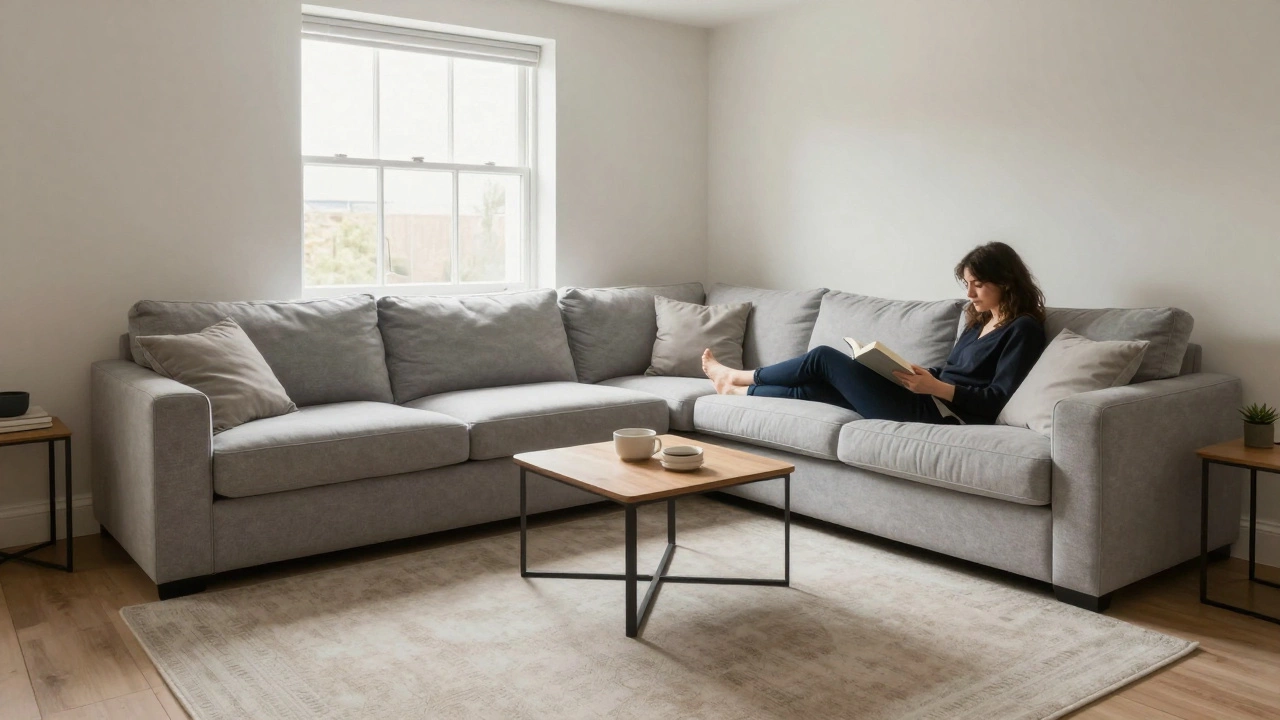
One of the biggest reasons people choose corner couches is how they use space. Unlike two separate sofas or a straight three-seater, an L-shaped design hugs the corner of a room, leaving the center open. This creates a more open flow, especially in narrow or awkwardly shaped living areas. In a typical UK terraced house, where living rooms are often long and thin, a corner couch can turn a cramped space into a cozy seating zone without crowding the floor.
Real-world example: A friend in Birmingham converted her 12x14ft living room by replacing a straight sofa and two armchairs with a compact corner sectional. The result? She gained nearly 2 feet of walking space and still had room for a coffee table and a small side table. The couch didn’t just fit-it made the room feel more intentional.
More seating, less buying
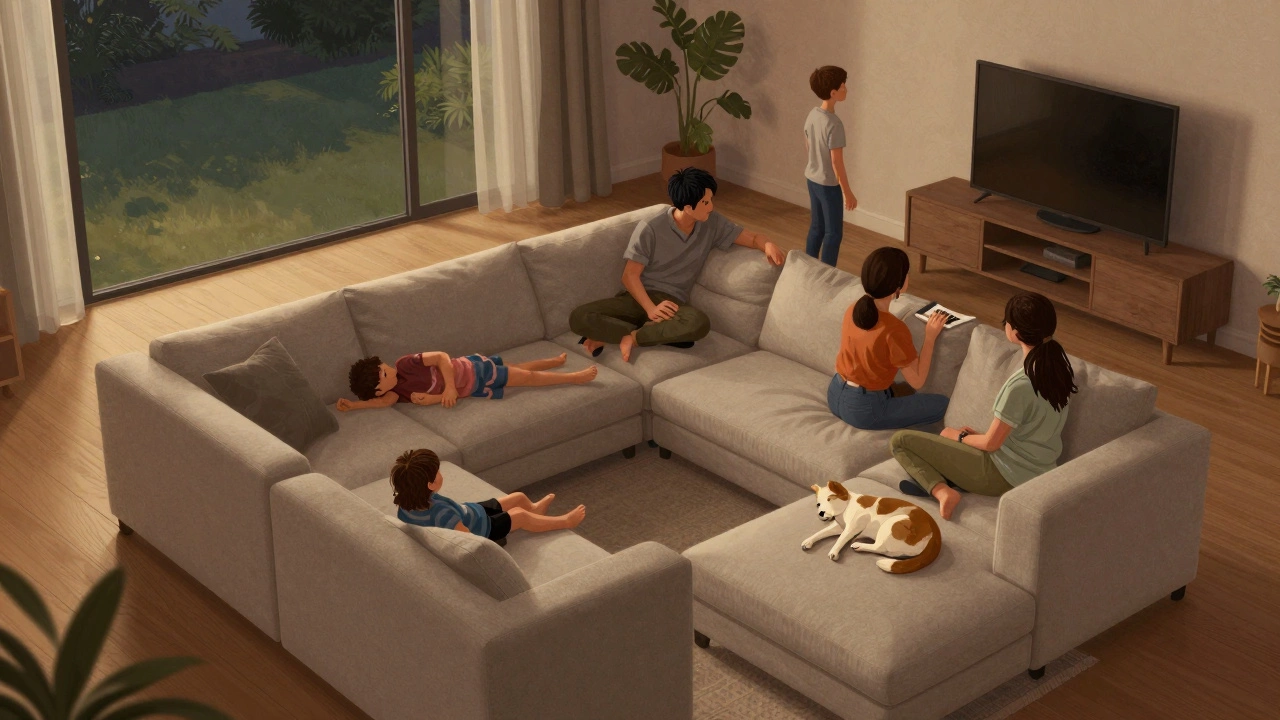
Let’s be honest: families and social households need seating. A corner couch often gives you the equivalent of three or four individual chairs in one piece. That’s a win if you host guests often, have kids who sprawl out, or just like to curl up with a book and a partner. Instead of buying a sofa, two armchairs, and a footstool, you get it all in one purchase.
And it’s not just about numbers. The way people sit on corner couches is different. You can stretch out on the chaise, sit sideways facing the TV, or tuck into the corner with a blanket. That flexibility means fewer arguments over who gets the "best seat."
They’re not always easy to move
Here’s the catch: corner couches are heavy, bulky, and often come in multiple pieces that need assembly. If you live in a flat with a narrow staircase, a tight landing, or an elevator that creaks under weight, you might regret your choice before you even sit on it.
One survey from a UK furniture delivery service found that 37% of corner sofa returns in 2024 were due to delivery issues-not comfort or style. That’s higher than any other sofa type. Some models are designed to be disassembled, but that adds time, tools, and the risk of damaging walls or door frames. If you’re renting or think you might move in the next few years, this is a real consideration.
Cleaning and maintenance are harder
Think about how you clean your current sofa. Vacuuming, spot-cleaning, flipping cushions-easy, right? Now imagine doing that on an L-shaped couch with a deep corner and a chaise that’s bolted in. Dust gets trapped. Pet hair hides in crevices. Spills on the chaise mean you can’t just lift the cushion and wipe it down.
Most corner couches come with fixed covers, meaning you can’t remove the whole seat for washing. Even if it has removable cushions, the corner section often doesn’t. Look for models with zip-off covers or stain-resistant fabrics like microfiber or performance velvet. Avoid leather unless you’re ready to wipe it down weekly-dust and crumbs love to stick to it.
They’re not always comfortable for everyone
Just because a couch looks inviting doesn’t mean it’s built for your body. Many budget corner couches have thin cushions that sink too low, or arms that are too high or too low. The chaise might be too short for taller people. And if the backrest doesn’t support your spine, you’ll be reaching for a pillow by the second episode of your favorite show.
Test before you buy. Sit on it for at least 10 minutes. Lie down on the chaise. Try sitting cross-legged. If you feel any strain in your lower back or shoulders, walk away. A good corner couch should feel like it was made for you, not just your living room layout.
They can look outdated fast
Style matters. Corner couches are a big visual statement. If you pick a bulky, boxy design with thick piping and dark wood legs, you might find it looking dated in five years. Trends shift faster than sofas get replaced.
Right now, the most popular styles are low-profile, clean-lined, and neutral-toned. Think light grey, oat, or soft beige. Avoid overly ornate details or loud patterns unless you’re confident you’ll love them long-term. Modular corner sofas-where you can swap out sections-are a smarter investment because you can reconfigure them as tastes change.

Price isn’t always what it seems
Corner couches range from £500 to over £4,000. That’s a huge spread. But here’s the thing: you’re not just paying for fabric. You’re paying for frame quality, spring support, cushion density, and assembly complexity. A £700 couch might look the same as a £1,800 one, but the cheaper one will sag within a year.
Look for these signs of quality:
- Hardwood or kiln-dried frame (not particleboard)
- 8-way hand-tied springs or sinuous springs (not just foam blocks)
- Cushions with at least 2.5 lb density foam (higher = longer life)
- Removable, washable covers
Brands like DFS, Made.com, and IKEA offer decent mid-range options. For higher-end, check out ScS or local UK makers like The Sofa Company. Don’t just go by sales-read reviews from people who’ve owned it for 12+ months.
What they’re not good for
Corner couches aren’t the answer for every home. Skip them if:
- Your living room is under 10ft wide-you’ll drown in furniture
- You have small children or pets who constantly jump on and off the couch-you’ll spend more time cleaning than relaxing
- You prefer a minimalist look-corner couches dominate a room visually
- You’re planning to sell your home soon-some buyers find them too permanent or hard to rearrange
And if you live alone or rarely entertain, a smaller two-seater with a matching ottoman might be more practical-and cheaper.
Final verdict: Worth it? Maybe.
Corner couches are worth it if you need maximum seating in a limited space, love to lounge, and don’t mind the trade-offs. They’re ideal for families, couples who binge-watch together, and anyone who wants a living room that feels lived-in but not cluttered.
But if you value flexibility, easy cleaning, or plan to move soon, they might be more trouble than they’re worth. The key isn’t whether they’re popular-it’s whether they fit your life.
Before you buy, measure your space twice. Sit on at least three different models. Read reviews that mention long-term use. And ask yourself: will I still love this in three years? If the answer is yes, go for it. If not, keep looking.
Are corner couches good for small living rooms?
Yes, if chosen carefully. A low-profile, compact corner couch can make a small room feel more open by hugging the corner and freeing up floor space. Avoid bulky, high-back designs-they’ll make the room feel smaller. Measure your space and leave at least 24 inches of walking room around the couch.
Can you put a corner couch in a rectangular room?
Absolutely. You don’t need a square room. Many people place corner couches along the longer wall of a rectangular space, with the chaise extending toward the window or TV. The key is to balance the layout so it doesn’t block natural light or doorways. Use rugs and side tables to define the seating area.
Do corner couches come in different sizes?
Yes. They range from compact 2-seater L-shapes (around 180cm wide) to large 4- or 5-seater models over 300cm. Modular options let you add or remove sections. Always check the exact dimensions before buying-some "small" corner couches still take up more space than you expect.
How long do corner couches last?
A well-made corner couch lasts 7-12 years. Cheaper ones with foam cushions and particleboard frames may sag or break after 3-4 years. Look for hardwood frames, high-density foam (2.5 lb+), and quality stitching. Cushion replacement is possible on many models, which can extend life significantly.
Is a corner couch better than a sofa bed?
It depends on your needs. A corner couch offers more seating and comfort for daily use. A sofa bed is better if you need occasional guest sleeping space. Some corner couches now come with pull-out beds, but they’re usually less comfortable than a dedicated mattress. If you rarely have overnight guests, go for the corner couch and use a fold-out air mattress on the floor.
Write a comment