
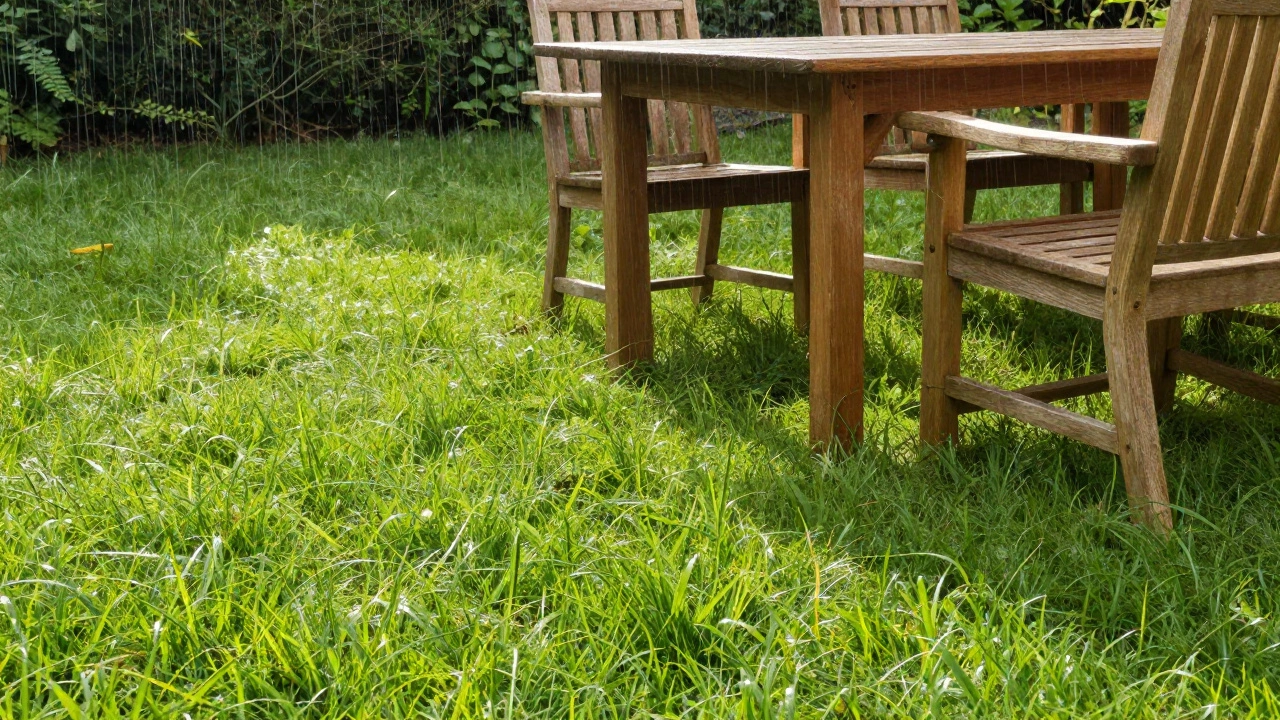
Putting patio furniture on your lawn seems simple-until you notice the brown patches underneath. That’s not just a coincidence. Grass needs sunlight, air, and water to survive. When you leave heavy furniture sitting on it for days or weeks, you’re basically smothering it. The result? Dead spots, mold, and a lawn that looks worse after summer than it did before.
Why Grass Dies Under Patio Furniture
Grass isn’t just a carpet you can walk on. It’s a living plant that needs to breathe. When furniture sits on it, especially for long periods, it blocks sunlight and traps moisture. That creates the perfect environment for fungi and mildew to grow. At the same time, the weight of the furniture-especially metal or wooden frames-presses down on the blades and roots, crushing them. Even lightweight plastic chairs can cause damage if left in one spot for more than a week.
In Birmingham, where rain is frequent and summers are mild but damp, this problem is worse than you think. A study from the Royal Horticultural Society found that 68% of gardeners in the UK saw lawn damage from furniture left in place for over 10 days. The damage doesn’t always show up right away. Sometimes, the grass turns yellow, then brown, and only when you move the furniture do you realize how much you’ve killed.
Simple Solutions That Actually Work
You don’t need fancy gear or expensive tools to protect your lawn. Here are five proven methods, ranked by effectiveness and ease.
- Use wooden slats or decking tiles-Lay down pressure-treated wooden slats or interlocking plastic decking tiles under your furniture. They lift the legs off the grass, letting air and rain flow through. These tiles are designed for patios and gardens. You can buy them in packs of 12 for under £30. They’re easy to move, clean, and store.
- Place a heavy-duty tarp or landscape fabric underneath-A breathable landscape fabric (not plastic) lets water through while protecting the soil from compaction. Lay it flat, then put your furniture on top. Avoid regular plastic tarps-they trap moisture and cook the grass. Look for woven polypropylene fabric labeled as “weed barrier” or “permeable ground cover.”
- Rotate your furniture weekly-If you can’t use slats or fabric, move your chairs, tables, and loungers to a new spot every 7 days. This gives the grass time to recover. Mark the spots with small stones or garden flags so you don’t forget where you’ve been.
- Use outdoor rugs designed for grass-There are rugs made specifically for lawns-thick, non-slip, and permeable. Brands like Frontgate and Ruggable make ones that drain water and don’t hold moisture. They look nice, feel soft underfoot, and protect the grass. Just make sure to shake them out and let them dry every few days to prevent mold.
- Install permanent pavers or gravel pads-If you use your patio furniture daily, consider laying down small concrete pavers or gravel pads where your furniture usually sits. It’s a one-time project that lasts years. Use 4x4 inch pavers under each leg. They cost about £2 each and can be installed in an afternoon with a shovel and level.
What Not to Do
Some common fixes make things worse. Don’t:
- Use plastic sheeting or bubble wrap-it traps moisture and kills grass faster.
- Leave furniture on the grass during wet weather-rain + weight = mud + rot.
- Use thick mulch or wood chips under furniture-they decompose, attract pests, and look messy.
- Assume grass will bounce back on its own-once roots are crushed, recovery takes weeks, even with watering.
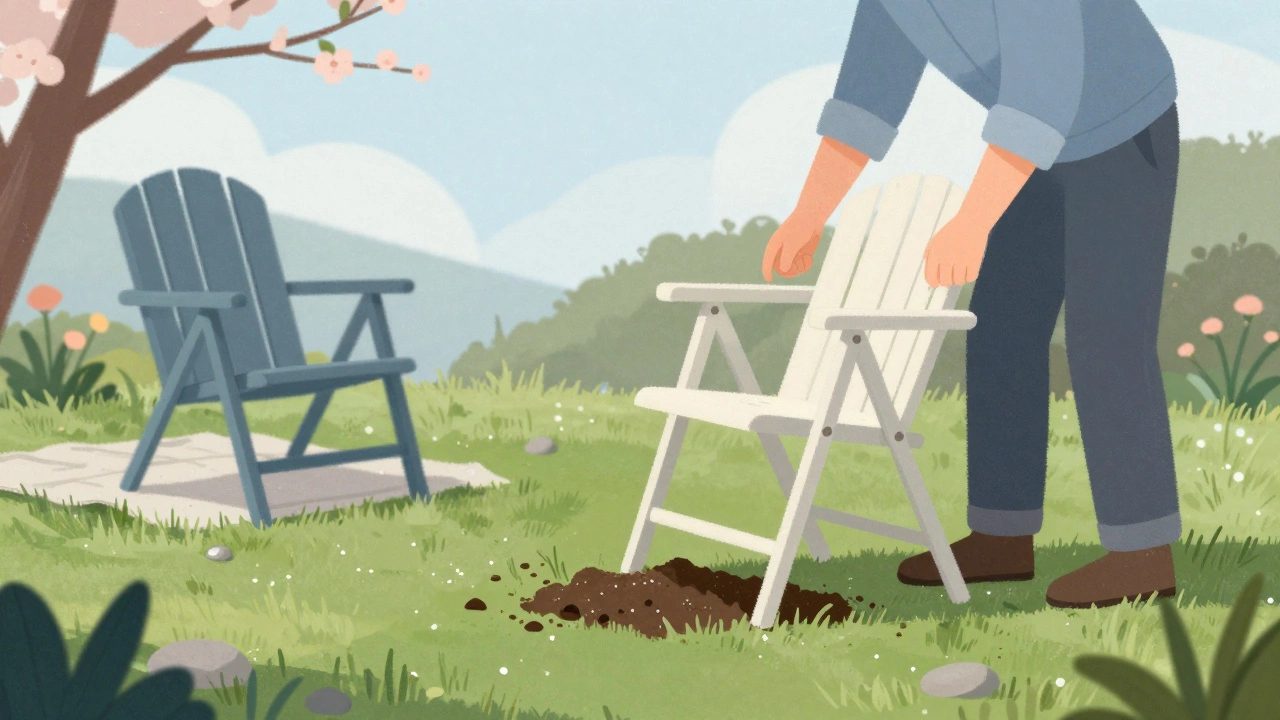
Best Materials for Grass Protection
Not all products are created equal. Here’s what works best based on real-world use in UK gardens:
| Material | Cost (per sq. meter) | Drains Water? | Weight Capacity | Longevity | Best For |
|---|---|---|---|---|---|
| Wooden slats | £8-£12 | Yes | High | 5-8 years | Heavy tables, deep-seated chairs |
| Landscape fabric | £3-£5 | Yes | Medium | 2-3 years | Lightweight furniture, temporary use |
| Outdoor grass rugs | £15-£25 | Yes | Medium | 3-5 years | Style-focused gardens, daily use |
| Concrete pavers | £2-£4 per paver | No (but water flows around) | Very High | 10+ years | Permanent setups, high-traffic areas |
| Plastic tarps | £1-£3 | No | Low | 1 season | Avoid |
How to Fix Damaged Grass
If you already have dead patches, don’t panic. Grass is tougher than it looks. Here’s how to bring it back:
- Remove the furniture and clear away any debris.
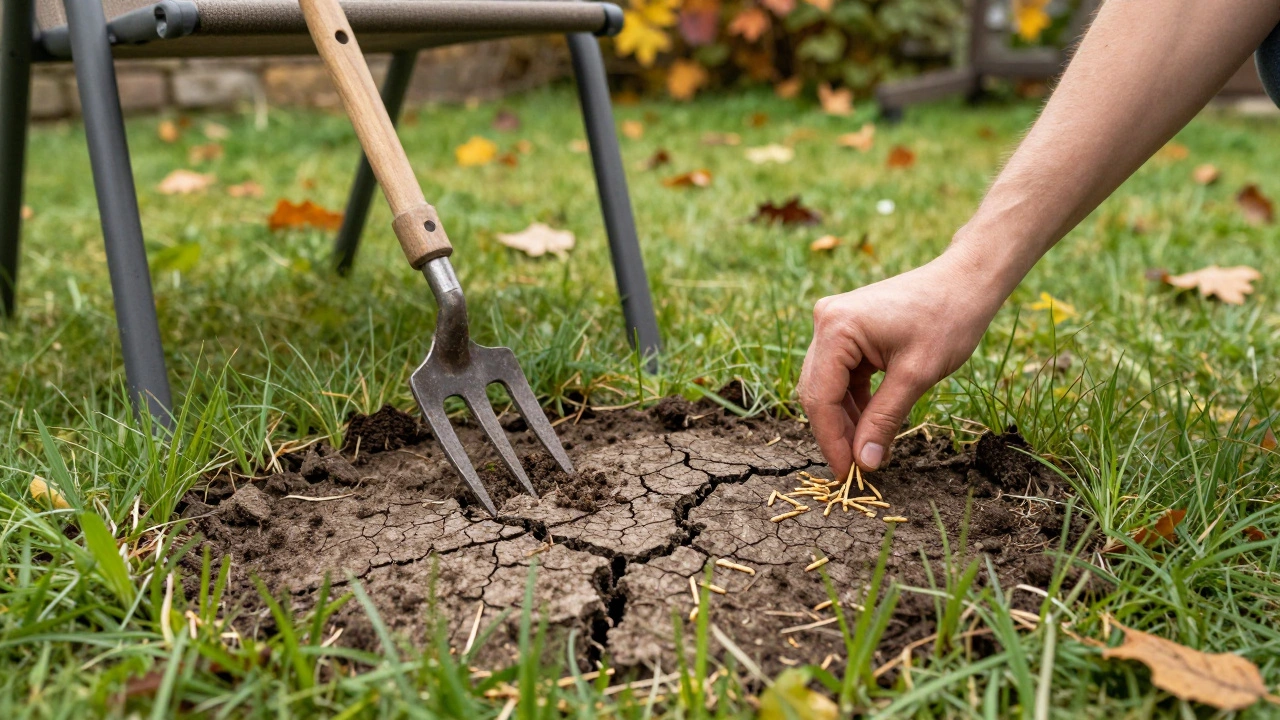
- Loosen the soil with a garden fork-poke holes every 10cm to let air in.
- Scatter grass seed over the bare spots. Use a mix labeled for “shade and high traffic” like Westland Lawn Repair Mix.
- Lightly rake the seed in and water gently-once a day for 10 days.
- Don’t walk on it or put furniture back for at least 3 weeks.
In Birmingham’s cool, damp climate, grass seed usually germinates in 7-14 days. You’ll see green shoots by day 10. Full recovery takes about 6 weeks.
Seasonal Tips for Lawn Care with Furniture
What you do in spring, summer, and autumn matters.
- Spring: Before putting furniture out, aerate the lawn and overseed thin areas. This gives grass a strong start.
- Summer: Move furniture every 5-7 days. Avoid leaving it out during heavy rain.
- Autumn: Clean off leaves and debris from under furniture. Wet leaves + trapped moisture = mold and rot.
- Winter: Store furniture under cover. If you leave it out, lift it onto bricks or blocks to keep it off frozen, soggy ground.
When to Call a Professional
If you’ve tried everything and your lawn still looks patchy, it might be more than just furniture damage. Soil compaction, poor drainage, or fungal disease could be the real issue. A local lawn care service can test your soil and recommend treatments. In the UK, services like Lawnmower Man or GreenThumb offer soil analysis for under £40.
But most of the time, the fix is simple: stop letting your furniture sit in one spot. Move it. Protect it. Give your grass a chance.
Can I use a tarp under my patio furniture on grass?
Only if it’s breathable landscape fabric, not plastic. Regular plastic tarps trap moisture and kill grass faster. Look for woven polypropylene fabric labeled as permeable or weed barrier. Plastic will create a swamp under your furniture.
How often should I move my patio furniture?
Move it every 5 to 7 days, especially during wet weather. This gives the grass time to recover sunlight and airflow. If you’re using protective slats or rugs, you can leave it longer-but still rotate positions every 2 weeks to prevent uneven wear.
Will grass grow back after furniture damage?
Yes, but only if you act fast. Remove the furniture, loosen the soil, reseed, and water gently. Don’t walk on it or put furniture back for 3 weeks. In the UK’s cool climate, grass usually recovers in 4-6 weeks. If the roots are completely dead, you’ll need to replace the sod or reseed the whole patch.
What’s the cheapest way to protect grass under patio furniture?
The cheapest method is using landscape fabric. It costs around £3-£5 per square meter and lasts 2-3 years. Lay it flat under your furniture legs. It’s not the prettiest, but it works. Avoid plastic-no matter how cheap it seems.
Can I put a gazebo or pergola on grass without damaging it?
Yes, but you need to support the legs properly. Use concrete pavers or heavy-duty plastic footplates under each leg. Don’t let the weight press directly into the soil. Even lightweight structures can compact grass over time. If you’re installing a permanent gazebo, consider laying a gravel base first.
Final Tip: Think Like a Lawn, Not a Decorator
Your lawn isn’t just background. It’s alive. It needs space, air, and light-just like you. Protecting it isn’t about hiding damage. It’s about respecting how grass grows. A few minutes of setup before summer starts saves hours of repair later. Pick one method from this list, stick with it, and your lawn will thank you with thick, green grass all season long.
Write a comment