
Medicare Lift Recliner Cost Calculator
Calculate Your Costs
Medicare Part B covers 80% of approved costs after your deductible. Find out how much you'll pay for a lift recliner.
After calculation, your costs will appear here.
Medicare doesn’t cover recliner chairs just because they’re comfortable. But if your doctor says you need one for a medical reason, you might be able to get part of the cost covered-especially if it’s a lift recliner. Most people assume Medicare only pays for wheelchairs or walkers. That’s not true. Medicare Part B can help pay for certain types of recliners that are classified as durable medical equipment (DME). But there are strict rules. You can’t just order one online and expect a refund. You need to follow the right steps.
What Kind of Recliner Does Medicare Cover?
Medicare only covers recliners that are medically necessary and meet the definition of durable medical equipment. That means the chair must:
- Be primarily used for a medical purpose
- Be able to withstand repeated use
- Be appropriate for use in the home
- Not be useful to someone who isn’t sick or injured
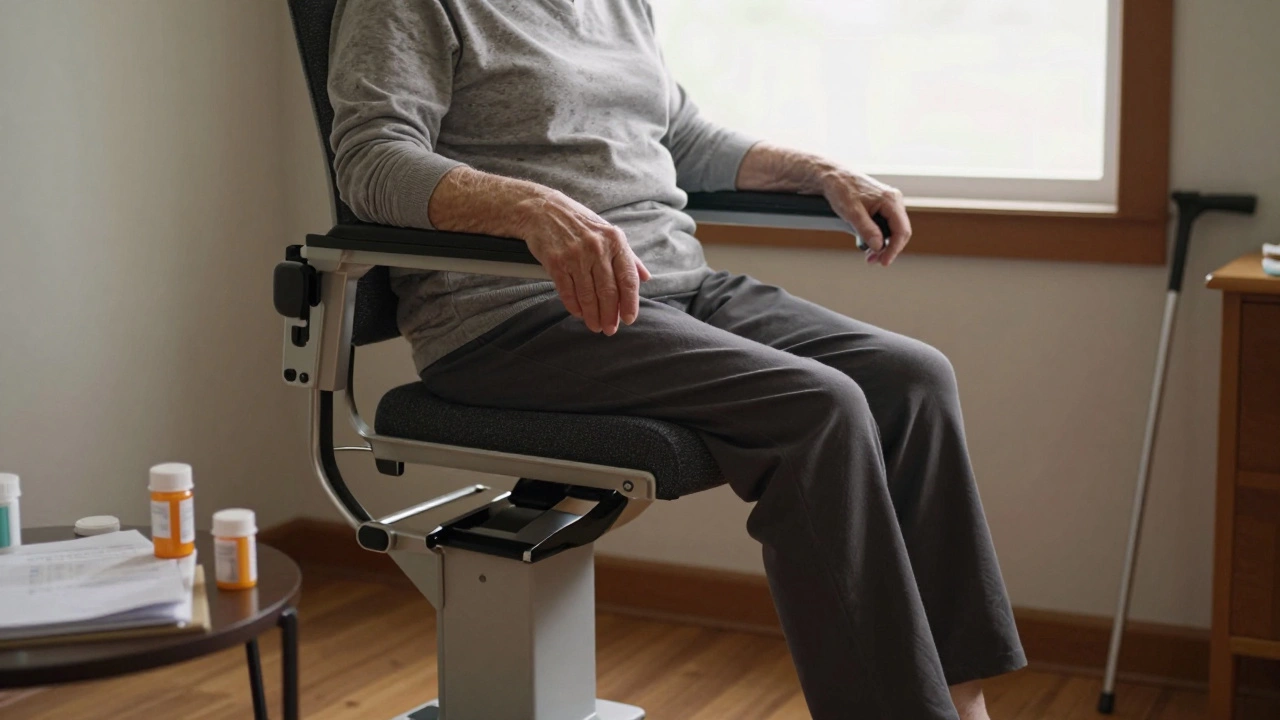
Most of the time, this means a lift recliner. These chairs have a motorized mechanism that helps you stand up and sit down. They’re not just fancy recliners with extra padding. They’re designed for people who have trouble getting out of a regular chair due to conditions like severe arthritis, muscle weakness, Parkinson’s disease, or recovery from hip or knee surgery.
Regular recliners-without a lift function-don’t qualify. Even if you have back pain or spend hours sitting, Medicare won’t cover a standard recliner just because it’s more comfortable. The key difference is function, not comfort.
Who Qualifies for Medicare Coverage?
You must have Medicare Part B and a doctor’s prescription. But that’s not enough. Your doctor must document that you have a medical condition that makes it extremely difficult or unsafe to stand from a regular chair or sofa. Examples include:
- Severe osteoarthritis in the hips or knees
- Neuromuscular diseases like ALS or multiple sclerosis
- Significant weakness in the legs from stroke or injury
- Chronic heart or lung conditions that cause fatigue when standing
Medicare won’t cover a lift chair just because you’re elderly or tired. You need objective evidence. Your doctor will likely need to show that you’ve tried other solutions-like a raised toilet seat or grab bars-and they didn’t work. They’ll also need to prove you can’t stand without assistance from your arms or another person.
How to Get a Lift Recliner Through Medicare
Follow these six steps to get your lift recliner covered:
- See your doctor and explain why you can’t stand from a regular chair. Ask if they think a lift recliner would help.
- Get a written prescription that says you need a lift recliner for a medical reason. The prescription must include your diagnosis and why the chair is necessary.
- Use a Medicare-approved supplier. You can’t buy from Amazon, Wayfair, or any random store. The supplier must be enrolled in Medicare and accept assignment (meaning they agree to Medicare’s payment rates).
- Let the supplier handle the paperwork. They’ll submit the claim to Medicare using the correct HCPCS code (E0950 for a power lift recliner). If they don’t know the code, find another supplier.
- Pay your share. Medicare pays 80% of the approved amount after you meet your Part B deductible. You pay the other 20%. If you have a Medigap plan, it might cover that 20%.
- Keep your receipt and documentation. Even if Medicare covers it, you might need proof later for tax deductions or supplemental insurance.
Many people skip step three and buy online. Then they’re shocked when Medicare denies the claim. You have to use a supplier that’s in Medicare’s network. You can find one by calling 1-800-MEDICARE or checking Medicare’s supplier directory online.

What If Medicare Denies Your Claim?
Denials happen. Sometimes it’s because the doctor’s note wasn’t detailed enough. Other times, the supplier used the wrong code. If your claim is denied, you have the right to appeal. Here’s what to do:
- Get a copy of the denial letter. It will say why Medicare refused payment.
- Ask your doctor to write a letter of medical necessity. It should explain how your condition limits your mobility and why a lift chair is the best solution.
- Submit an appeal within 120 days. Use Medicare’s redetermination request form (Form CMS-20027).
- If that fails, you can go to a second level of appeal. Keep records of every conversation and letter.
Many people give up after the first denial. But if you have strong medical evidence, you can win the appeal. In fact, about 40% of overturned claims are approved on appeal.
How Much Does a Lift Recliner Cost?
Medicare doesn’t cover the full price. A basic lift recliner costs between $600 and $1,200. More advanced models with heat, massage, or multiple positions can go up to $2,500. Medicare’s approved amount is usually around $500-$700 for a standard lift chair. That means your 20% coinsurance could be $100-$140 after the deductible.
Some suppliers offer discounts if you pay upfront. But if you’re using Medicare, you can’t be charged more than the Medicare-approved amount. If a supplier asks you to pay $1,500 and then says they’ll refund the Medicare portion later, that’s not allowed. They must accept assignment.
Watch out for companies that say they’ll “help you get Medicare to pay.” That’s often a red flag. Legitimate suppliers know the rules and won’t promise coverage they can’t guarantee.

Alternatives If Medicare Won’t Cover It
If you don’t qualify for Medicare coverage, you still have options:
- Veterans Affairs (VA): If you’re a veteran, the VA may cover a lift recliner if your condition is service-related.
- State Medicaid programs: Some states cover DME for low-income seniors. Check with your local Area Agency on Aging.
- Charitable organizations: Groups like the Salvation Army, Easterseals, or local senior centers sometimes give away or loan mobility equipment.
- Medical equipment rentals: Some companies rent lift chairs for $50-$100 a month. That’s cheaper than buying, especially if you only need it temporarily after surgery.
- Flexible Spending Accounts (FSAs) or Health Savings Accounts (HSAs): You can use pre-tax money from these accounts to buy a lift recliner-even if Medicare doesn’t pay.
Don’t assume you’re out of options just because Medicare won’t pay. Many people find help through local programs they didn’t know existed.
What You Shouldn’t Do
Here are common mistakes people make:
- Buying a recliner online and hoping to get reimbursed later-Medicare doesn’t reimburse for out-of-network purchases.
- Using a chair with a lift function that’s not FDA-cleared as a medical device-some “lift chairs” sold as home goods aren’t approved for medical use.
- Thinking any recliner with “massage” or “heat” is covered-those features don’t count. Only the lift mechanism matters.
- Assuming your supplemental insurance will cover the rest-some plans don’t cover DME unless Medicare pays first.
Always confirm the chair is labeled as a “power lift recliner” and that the supplier is Medicare-approved. Don’t rely on salespeople’s word. Ask for the HCPCS code E0950 and verify the supplier’s enrollment status on Medicare.gov.
Final Thoughts
Getting a lift recliner through Medicare isn’t easy, but it’s possible if you have a real medical need. The process takes time, paperwork, and patience. But if you’re struggling to stand up from your chair, the right lift recliner can make a huge difference in your independence and safety. It’s not a luxury. For many people, it’s a tool that lets them stay in their own home longer.
Start with your doctor. Get the prescription. Find the right supplier. Follow the steps. Don’t let confusion stop you. Thousands of people get their lift chairs covered every year. You can too-if you know how.
Can Medicare cover a regular recliner without a lift function?
No. Medicare only covers recliners that have a motorized lift mechanism and are prescribed for a medical reason. Regular recliners, even if they have extra padding or lumbar support, are considered comfort items-not medical equipment.
Do I need to pay the full price upfront?
No. If you use a Medicare-approved supplier that accepts assignment, they bill Medicare directly. You only pay your 20% coinsurance and any deductible amount at the time of delivery. You should never pay the full price and then wait for reimbursement.
Can I rent a lift recliner instead of buying one?
Yes. Some Medicare-approved suppliers offer rental options, especially if you only need the chair temporarily-like after surgery. Rental costs are usually $50-$100 per month, and Medicare may cover part of the rental fee under the same rules as purchase.
What if I have a Medicare Advantage plan?
Medicare Advantage plans must cover everything Original Medicare covers, including lift recliners. But they may have different rules about which suppliers you can use. Check with your plan before ordering. Some plans require you to use in-network providers only.
Does Medicare cover the cost of installation or delivery?
Yes, if the supplier is Medicare-approved and includes delivery and setup as part of their service. These costs are bundled into the approved amount for the chair. You won’t be charged extra for delivery if you use an approved supplier.
Can I upgrade my chair later and get more coverage?
No. Medicare only pays for one lift recliner every five years. If you upgrade to a more expensive model, you’ll have to pay the difference out of pocket. You can’t get additional coverage just because you want extra features like heat or massage.
Write a comment