

Patio Cushion Weather Calculator
How Long Can Your Cushions Stay Outside?
Enter your cushion type and weather conditions to estimate how long they can safely remain outdoors.
Results
It’s a crisp January morning in Birmingham, and you’re staring at your patio set. The cushions are still sitting out there, soaked from last week’s rain. You wonder: should you leave patio cushions outside? The answer isn’t as simple as yes or no. It depends on what they’re made of, what the weather’s doing, and how long you want them to last.
Not all patio cushions are built the same
Some cushions claim to be "weather-resistant"-but that doesn’t mean they’re waterproof. A lot of cheap outdoor cushions use polyester fabric that sheds water for a while, then slowly soaks through. The filling inside? Often open-cell foam that holds moisture like a sponge. After a few rainy nights, that foam starts to break down. Mold grows. The fabric fades. The zippers rust.
High-end outdoor cushions use solutions like solution-dyed acrylic (Sunbrella is the most common brand), which resists UV damage and doesn’t absorb water. The fill is usually quick-dry foam or polyester fiber that drains fast. These can handle light rain without damage. But even these aren’t meant to sit out in a storm for weeks.
What happens when cushions stay outside too long
Leaving cushions out all winter in the UK isn’t a matter of "maybe they’ll survive." It’s a matter of when they’ll fail. Here’s what actually happens:
- Moisture buildup: Rain, dew, and humidity soak in. Even if the surface looks dry, the core stays wet for days.
- Mold and mildew: Black or green spots appear. They don’t just look bad-they smell bad too. Once mold sets in, cleaning often doesn’t remove it completely.
- Fabric fading: UV rays break down dyes. Bright reds turn pink. Navy blues turn gray. After two seasons, the color looks washed out.
- Foam degradation: Wet foam loses its bounce. It gets flat, lumpy, and smells musty. You can’t dry it out fully once it’s ruined.
- Zippers and stitching: Metal zippers corrode. Thread weakens. Seams split open, spilling filling everywhere.
One homeowner in Solihull left her cushions out for 14 months. When she finally brought them in, the foam was crumbling, the fabric was stiff, and the smell made her gag. She had to replace all four sets-£320 wasted.
Real weather conditions in the UK make it worse
People think: "It’s not that cold here." But UK weather doesn’t need snow to ruin cushions. It just needs damp.
From October to March, Birmingham averages 12-18 rainy days per month. Nights often dip below 2°C. That means dew forms every morning. Rain doesn’t just fall-it lingers. The ground stays wet. The air stays humid. Your cushions sit in a constant damp environment.
Wind adds another problem. It blows leaves, dirt, and pollen into cushion seams. That grit acts like sandpaper on fabric. Over time, it wears down the protective coating.
Even "all-weather" cushions aren’t designed for year-round exposure. They’re built to survive a surprise shower or a weekend in the sun-not months of damp, chilly nights.
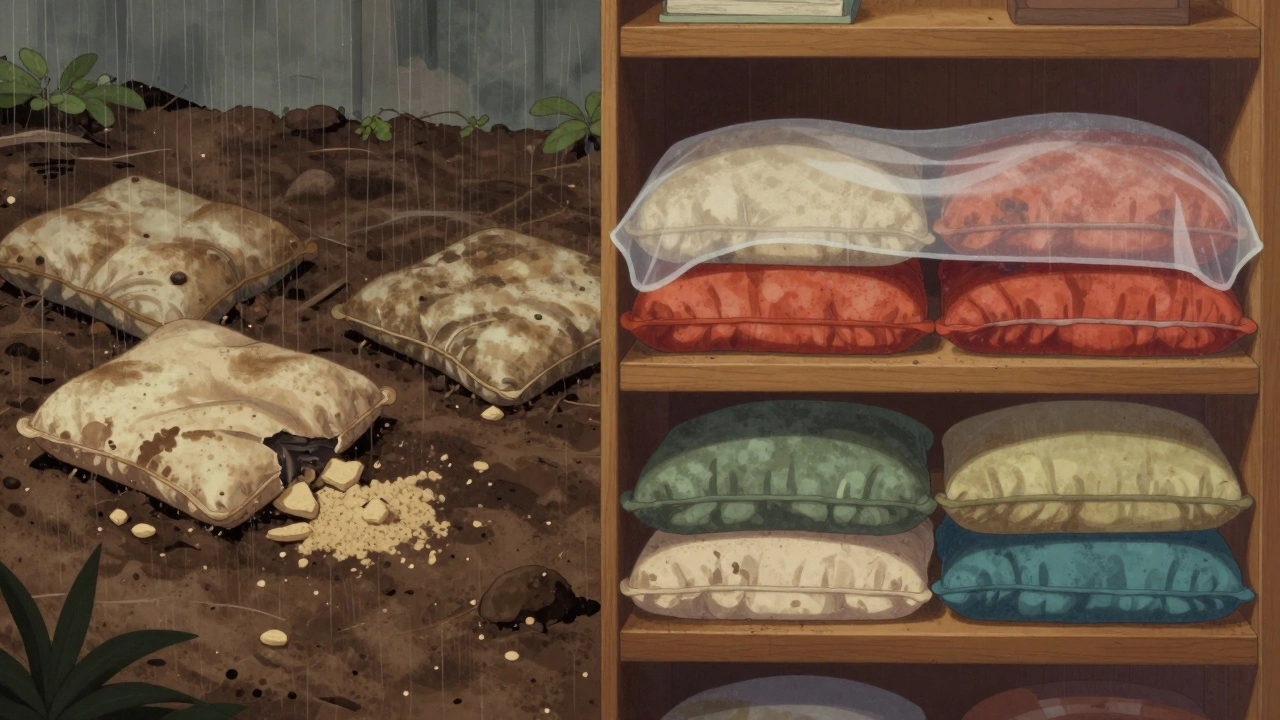
What you should do instead
You don’t need to store cushions in a shed or garage. But you do need to protect them.
- Use waterproof covers: Get heavy-duty, breathable covers with elastic hems and ventilation flaps. Don’t use plastic tarps-they trap moisture underneath and cause mildew.
- Store them indoors during winter: A dry basement, utility room, or even under the bed works. Just keep them off the floor. Place them on a shelf or pallet to avoid damp.
- Take them in after heavy rain: If there’s a forecast for 3+ days of rain, bring them inside. Even 48 hours of constant wetness can start damage.
- Clean them before storing: Brush off dirt. Spot-clean with mild soap and water. Let them dry completely before packing away.
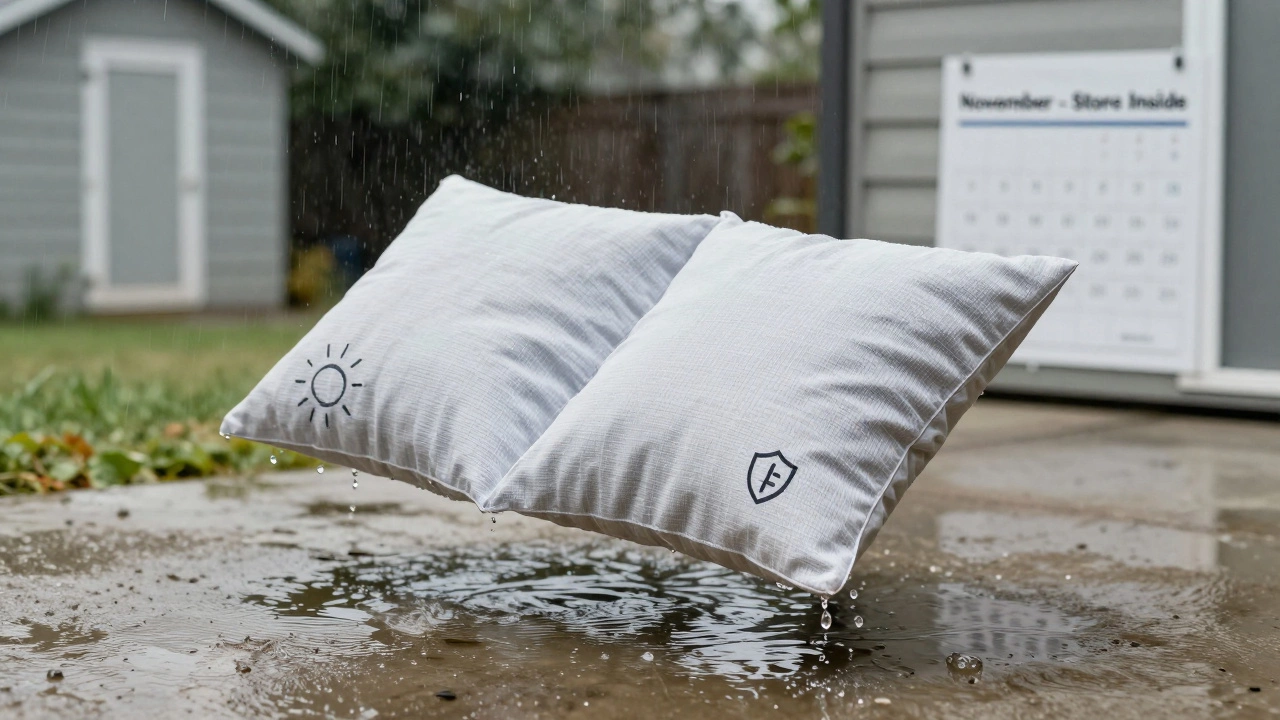
One gardener in Solihull started bringing her cushions in every November. After five years, they still look new. She says it’s the only thing that’s saved her from buying replacements.
What about those "all-season" cushions you see online?
Marketing loves the word "all-season." But in reality, no cushion is truly designed to sit out in UK winters without protection. Brands that claim otherwise are either exaggerating or selling low-quality products.
Check the manufacturer’s care instructions. If they say "store indoors during winter," that’s your answer. If they don’t mention storage at all? That’s a red flag.
Some high-end brands like Kettler or Garden Trading make cushions with better materials-but even they recommend indoor storage for long-term use. You’re paying for durability, not immortality.
When it’s okay to leave them out
There are exceptions. If you live in a sheltered courtyard with no rain exposure, or if you’re only leaving them out for a few days during a dry spell in April, it’s fine.
Also, if you use removable, machine-washable cushion covers, you can take them off after rain and wash them easily. That’s a good middle ground. But the inner foam still needs to dry out.
Bottom line: if you’re not actively managing moisture, you’re not protecting your cushions.
How to tell if your cushions are beyond saving
Try this quick test:
- Squeeze: If the foam doesn’t bounce back, it’s gone.
- Smell: Musty, damp, or sour? That’s mold. It won’t come out.
- Feel: Is the fabric stiff, cracked, or peeling? That’s UV damage.
- Look: Are there dark spots inside the seams? That’s mold growing from the inside out.
If two or more of these are true, it’s time to replace them. Don’t try to clean your way out of it. Mold spores stay in the foam. You’re just delaying the problem.
What to look for when buying new cushions
Don’t just buy the cheapest ones. Look for these features:
- Fabric: Solution-dyed acrylic (Sunbrella, Outdura) or polyester with UV protection.
- Filling: Quick-dry foam or high-loft polyester fiber (not regular foam).
- Zippers: YKK or other corrosion-resistant brands.
- Warranty: A 3+ year warranty on fabric and fill means the maker believes in it.
Brands like Sunbrella, Outdura, and WeatherMax are trusted in the UK garden market. You’ll pay more upfront, but you’ll save money over time.
Final thought: It’s not about convenience-it’s about value
Leaving cushions outside might feel easier. But replacing them every year? That’s expensive. A good set costs £80-£200. If you replace them every 12 months, you’re spending £80-£200 a year. If you protect them, they last 5-8 years. That’s £10-£25 a year.
It’s not about being fussy. It’s about being smart.
Can I leave patio cushions out in the rain?
Short-term rain won’t destroy quality cushions, but prolonged exposure will. If rain lasts more than 2 days, bring them in. Moisture trapped in the foam leads to mold, odor, and foam breakdown.
Do I need to store cushions indoors every winter?
Yes, if you want them to last more than 2-3 years. UK winters are damp, not just cold. Even "weatherproof" cushions degrade faster when left outside for months. Storing them in a dry place like a shed, garage, or under the bed extends their life by 3-5 times.
Are waterproof covers enough?
They help, but they’re not foolproof. Covers can trap moisture if they’re not breathable or if they’re left on too long after rain. Always remove covers after storms and let cushions air out. Best practice: use covers for short-term protection, but store cushions indoors for the winter.
Can I wash patio cushions in the washing machine?
Only if the manufacturer says it’s safe. Most outdoor cushion covers can be machine-washed on a gentle cycle with mild detergent. Always air-dry them completely-never put them in the dryer. The inner foam should never go in the washer.
What’s the cheapest way to protect patio cushions?
Buy a good-quality, breathable storage bag (around £15-£25) and store cushions indoors during wet months. Or, if space is tight, place them on a raised pallet in a dry corner of the shed. The key is keeping them off damp ground and away from humidity.
Write a comment