

Window-Couch Placement Calculator
Input Your Window & Couch Details
Results
Light Blockage
Energy Impact
UV Damage Risk
Putting a couch in front of a window sounds like a cozy idea-until you realize it blocks the light, traps heat, or makes your favorite spot feel like a prison. It’s a common mistake, especially when you’re trying to maximize space in a small living room or you love the view. But before you drag that corner sofa into position, there are real consequences you can’t ignore.
Light Gets Blocked, and So Does Your Mood
Natural light doesn’t just make a room look nice-it affects your sleep, your energy, and even your vitamin D levels. A couch placed directly in front of a large window cuts off up to 70% of the daylight that would normally flood the room. That’s not just about aesthetics. A 2023 study from the University of Oregon found that people in homes with poor daylight access reported 34% higher levels of fatigue during winter months. If your window faces south or west, you’re losing hours of free, warm sunlight every day. And no, turning on a lamp doesn’t fix it. Artificial light doesn’t have the same spectrum or intensity.Heat Builds Up Like a Greenhouse
Windows, especially single-pane ones, let in heat during the day. When you put a thick, upholstered couch right in front of it, that heat gets trapped between the glass and the fabric. In summer, your sofa becomes a heat sink. You’ll feel it-your legs sticking to the fabric, the cushions warming up even when the AC is running. In winter, it’s the opposite: cold air from the window sinks down and chills the bottom of the couch, making it uncomfortable to sit on. This isn’t just about comfort-it’s about your energy bill. The extra strain on your HVAC system can add $15-$30 a month to your utility costs, depending on your climate.View? Maybe Not Anymore
You bought that corner sofa because you love the view outside. But if you put it right against the glass, you’re not enjoying the view-you’re staring at the back of your own couch. People who sit on a sofa facing a window usually end up turning their heads sideways or leaning forward to see past the armrest. That’s not relaxation; that’s awkward posture. And if you have a balcony, garden, or city skyline? You’re paying for a view you can’t actually enjoy. A better move? Place the sofa perpendicular to the window, so you can glance out while sitting comfortably. Or better yet, put it at a 45-degree angle to create a cozy reading nook that still lets light in.Cleaning Becomes a Nightmare
Dust, pollen, and pet hair don’t care about your interior design plans. They collect on windowsills, and if your couch is right there, it’s a magnet. You’ll be vacuuming the front of your sofa every week. And don’t forget UV damage. Sunlight fades fabric over time. A light-colored linen sofa in direct sunlight? It’ll look washed out in 18 months. Darker fabrics fade slower, but they absorb more heat. You’re trading durability for style-and losing both.
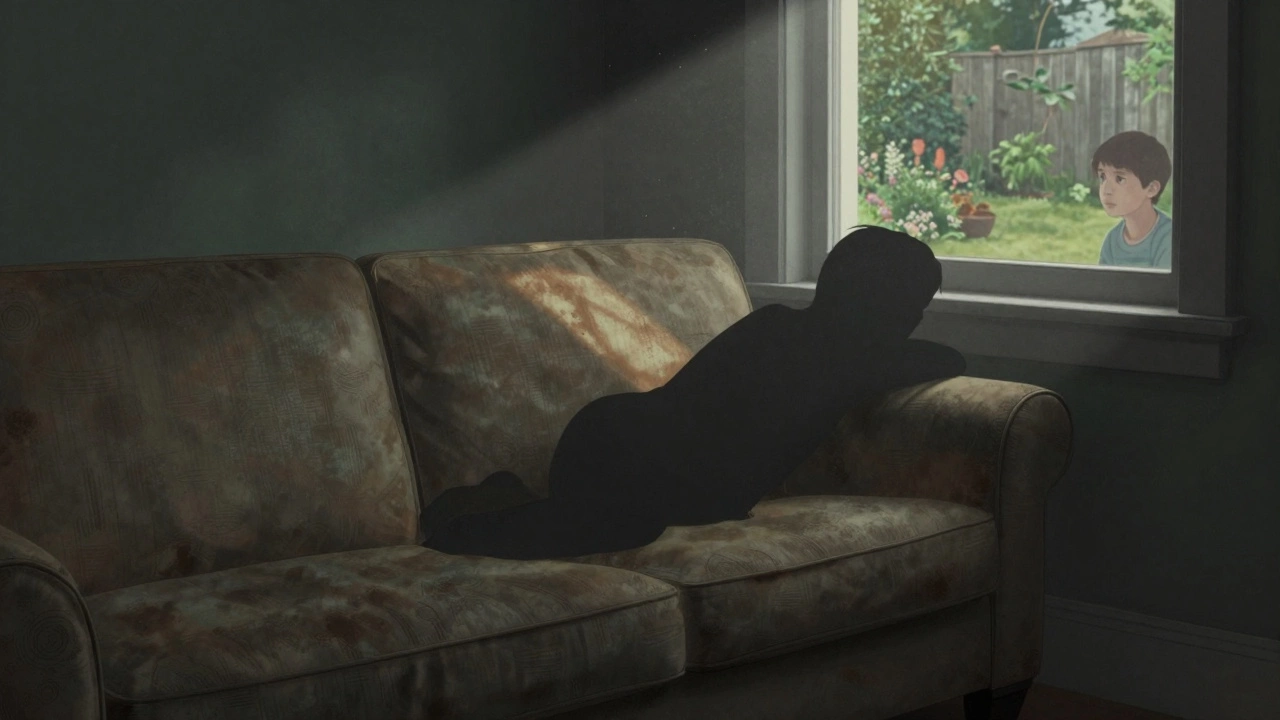
What Works Better Than a Couch in Front of a Window?
There are smarter ways to use window space without sacrificing comfort or light.
- Place the sofa parallel to the window. Leave 12-18 inches of space between the back of the sofa and the glass. This lets light flow into the room while keeping the sofa functional.
- Use a low-profile sofa. If you must put it near the window, choose a sofa with a low back. That way, light passes over it instead of being blocked.
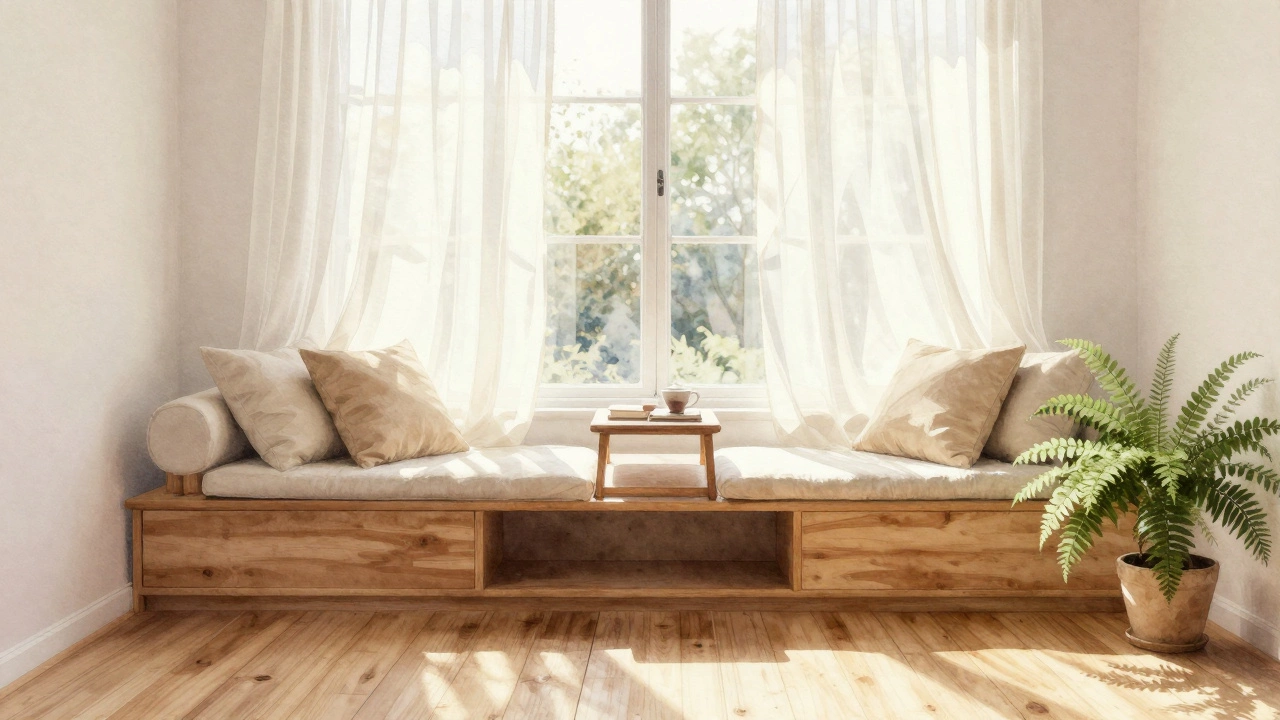
- Add a bench or window seat. Instead of a full couch, install a built-in bench with storage underneath. It’s perfect for reading, takes up less visual space, and lets sunlight hit the floor.
- Use sheer curtains. If you’re worried about glare or privacy, go for lightweight, light-diffusing fabrics. They soften the sun without blocking it.
Corner Sofas Are Trickier Than You Think
Corner sofas are popular because they fit snugly into awkward spaces. But that also makes them harder to move. If you’ve already bought a large L-shaped sectional and are wondering if it fits in front of the window, ask yourself: Can you walk around it? Can you open the blinds fully? Can you clean behind it without pulling the whole thing out? If the answer is no to any of those, it’s not worth it. A corner sofa in front of a window often turns into a dead zone-unused, uncleaned, and unloved.
Real-Life Example: The Living Room That Changed
A client in Portland had a 9-foot corner sofa pushed right up against a large east-facing window. The room felt dark even at noon. The couch was stained from sun exposure, and the family rarely sat there because it got too hot. We moved the sofa 2 feet away from the window, added a slim console table behind it for storage, and put a small armchair on the other side of the window. The room became 40% brighter. The couch lasted twice as long. And they started using the space every day.
When It’s Actually Okay
There are exceptions. If your window is small, or you have blackout curtains you pull shut all day, it’s fine. If you live in a cold climate and want to trap heat near the window (and you’re okay with the fading fabric), it’s a trade-off. If the window is in a hallway or unused corner, and the couch is more for visual balance than seating, then go ahead. But if you’re putting a couch there because it’s the only spot left in the room, you’re not solving a problem-you’re creating one.
Final Rule: The 18-Inch Rule
Here’s a simple trick that works every time: leave at least 18 inches of space between the back of your sofa and the window. That’s enough room for light to flow, for curtains to open fully, for air to circulate, and for you to clean without moving furniture. It’s not magic-it’s basic physics. And it’s the difference between a room that feels alive and one that feels stuck.
Can I put a couch in front of a window if I have blinds?
Blinds help with privacy and glare, but they don’t fix the core problems. If the couch is right against the glass, it still blocks daylight, traps heat, and collects dust. Blinds also limit how far you can open the window for ventilation. The 18-inch gap rule still applies-even with blinds.
Will putting a couch in front of a window damage the fabric?
Yes, especially if it’s a light-colored or natural fiber fabric like cotton, linen, or wool. UV rays break down dye molecules and weaken fibers over time. After 1-2 years, you’ll notice fading, brittleness, or discoloration along the back of the sofa. Darker fabrics fade slower, but they absorb more heat, making the couch uncomfortable. UV-protective sprays help a little, but they’re not a long-term fix.
What’s the best alternative to a couch in front of a window?
A window seat with storage underneath is the best alternative. It uses the space efficiently, lets light through, and gives you a place to sit without blocking the view. If you need more seating, add two armchairs on either side of the window. They’re easier to move, don’t block light as much, and create a more balanced layout.
Can I use a loveseat instead of a full couch?
A loveseat is better than a full-sized sofa, but only if it’s low-backed and placed at least 12 inches from the window. A loveseat still blocks more light than a single chair. If you’re trying to save space, consider a pair of small side chairs or a floating bench instead. They take up less visual weight and let more light reach the floor.
Does the direction of the window matter?
Yes. South-facing windows get the most sunlight all day, making them the worst for placing a couch in front of. North-facing windows get soft, indirect light, so the risk is lower. East-facing windows get morning sun, which is gentler but still strong enough to fade fabric over time. West-facing windows get hot afternoon sun-the most damaging. If your window faces west, avoid putting any upholstered furniture in front of it.
Can I put a couch in front of a window if I have blinds?
Blinds help with privacy and glare, but they don’t fix the core problems. If the couch is right against the glass, it still blocks daylight, traps heat, and collects dust. Blinds also limit how far you can open the window for ventilation. The 18-inch gap rule still applies-even with blinds.
Will putting a couch in front of a window damage the fabric?
Yes, especially if it’s a light-colored or natural fiber fabric like cotton, linen, or wool. UV rays break down dye molecules and weaken fibers over time. After 1-2 years, you’ll notice fading, brittleness, or discoloration along the back of the sofa. Darker fabrics fade slower, but they absorb more heat, making the couch uncomfortable. UV-protective sprays help a little, but they’re not a long-term fix.
What’s the best alternative to a couch in front of a window?
A window seat with storage underneath is the best alternative. It uses the space efficiently, lets light through, and gives you a place to sit without blocking the view. If you need more seating, add two armchairs on either side of the window. They’re easier to move, don’t block light as much, and create a more balanced layout.
Can I use a loveseat instead of a full couch?
A loveseat is better than a full-sized sofa, but only if it’s low-backed and placed at least 12 inches from the window. A loveseat still blocks more light than a single chair. If you’re trying to save space, consider a pair of small side chairs or a floating bench instead. They take up less visual weight and let more light reach the floor.
Does the direction of the window matter?
Yes. South-facing windows get the most sunlight all day, making them the worst for placing a couch in front of. North-facing windows get soft, indirect light, so the risk is lower. East-facing windows get morning sun, which is gentler but still strong enough to fade fabric over time. West-facing windows get hot afternoon sun-the most damaging. If your window faces west, avoid putting any upholstered furniture in front of it.
Write a comment