
Couch Sleep Risks: What You Need to Know Before Sleeping on Your Sofa
When you couch sleep risks, the health consequences of regularly sleeping on a sofa instead of a proper bed. Also known as sofa sleep dangers, it’s not just about comfort—it’s about how your body reacts over time. Many people do it out of habit, stress, or space limits, but that doesn’t make it safe. Your couch isn’t designed to support your spine through eight hours of sleep. It’s made for lounging, not for keeping your hips, neck, and lower back aligned.
When you sleep on a couch, your head often tilts at a weird angle, your lower back sinks into a hollow, and your legs dangle without support. This isn’t just uncomfortable—it’s poor sleep posture, a body position during rest that misaligns joints and strains muscles. Studies show this leads to morning stiffness, chronic neck pain, and even sciatica. Over months, your spine adapts to these unnatural curves, making it harder to sleep well even on a proper mattress. And if you’re using a recliner as a bed, you might think you’re doing better—but angled positions can restrict breathing and worsen acid reflux, especially for older adults.
The problem gets worse if you’re doing this regularly. One night? Probably fine. Every night? That’s a different story. Your body needs consistent support, pressure distribution, and spinal alignment—things a couch simply can’t deliver. Even the firmest sectional or the most expensive leather sofa lacks the layered support of a memory foam or innerspring mattress. And if you’re sleeping on a couch because you’re avoiding a partner, dealing with snoring, or just too tired to move to the bedroom, you’re trading short-term convenience for long-term pain.
It’s not just about your back. Poor sleep posture from couch sleeping can mess with your breathing, reduce deep sleep cycles, and leave you feeling groggy even after "getting enough hours." You might not notice it right away, but over time, your body pays the price in aching muscles, headaches, and disrupted sleep patterns. And if you’re a senior, or have existing back issues, the risks are even higher. Recliners might feel supportive, but they’re still not designed for full-night use—the way a bed is.
What you’ll find below are real, practical insights from people who’ve dealt with this. From how to spot early warning signs of couch-induced pain, to what to do if you’re stuck sleeping on the sofa for now, to how to make your couch a little safer until you can switch back to a proper bed. These aren’t guesses—they’re lessons from real experiences, backed by what works in homes across the UK. You don’t need to buy a new bed tomorrow. But you do need to understand what your couch is really doing to your body.
Why You Shouldn't Fall Asleep on the Couch
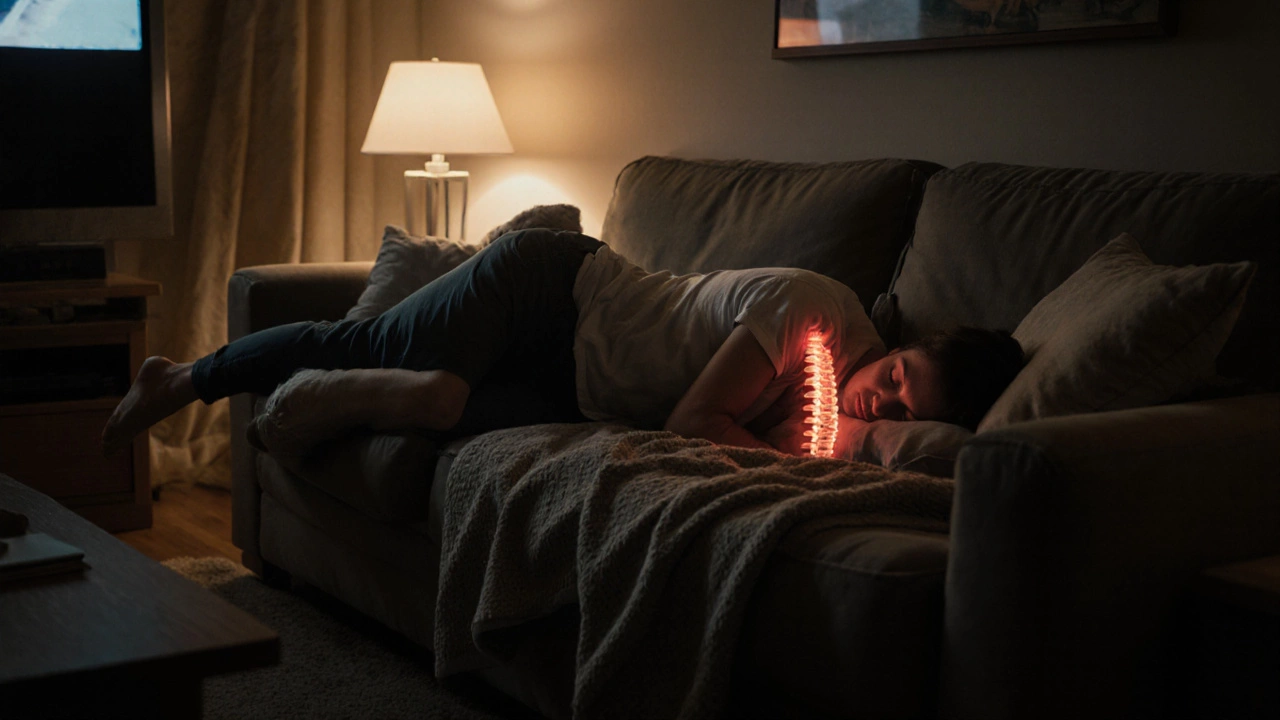
Falling asleep on the couch might feel relaxing, but it harms your spine, disrupts sleep, and causes chronic pain. Learn why your body needs a proper mattress-not a sinking cushion.
More