
Couch Sleep Risk Assessment
How Your Couch Sleep Habits Affect Your Health
Answer these questions to understand your risk of back pain, poor sleep quality, and other health issues from sleeping on the couch. Your answers will help us provide personalized recommendations to improve your sleep.
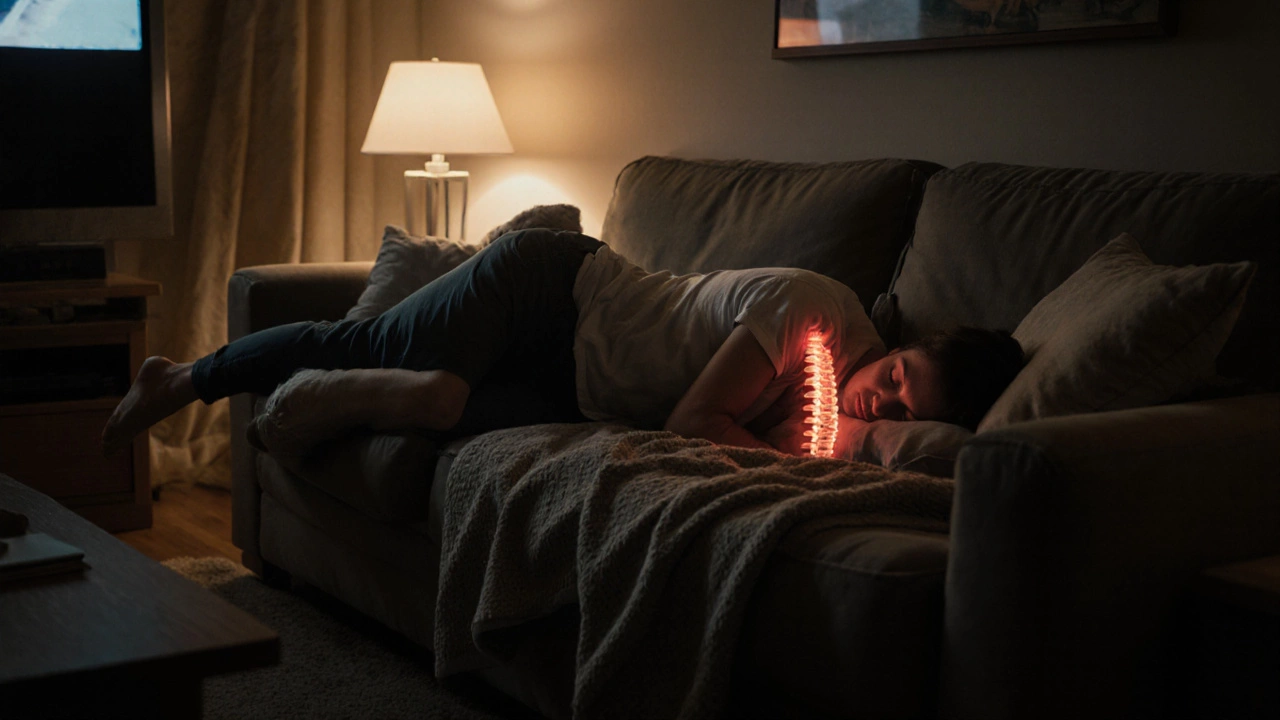
You’ve had a long day. The TV’s on, the blanket’s warm, and before you know it, you’re out cold on the couch. It feels fine-until you wake up with a stiff neck, a sore back, and a cramp in your leg. You tell yourself it’s just a quick nap. But if this happens more than once a week, you’re not just resting-you’re risking your body’s long-term health.
Your spine wasn’t made for couches
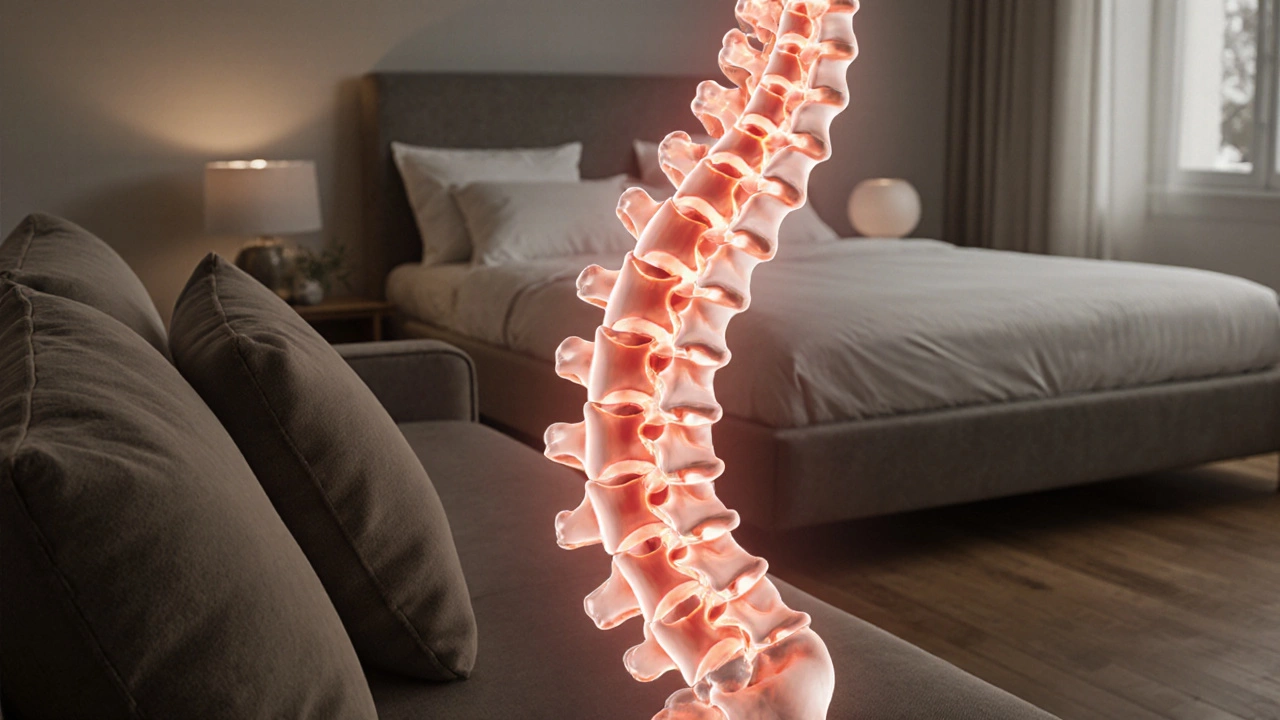
Modern couches are designed for sitting, not sleeping. Their cushions are soft, uneven, and often sink in the middle. When you lie down on one, your spine doesn’t stay in a neutral position. Your lower back curves too much. Your neck twists to one side. Your hips tilt unevenly. This isn’t just uncomfortable-it’s damaging.
A 2023 study from the University of Birmingham’s biomechanics lab tracked 120 adults who regularly slept on couches. After six months, 68% reported chronic lower back pain. Those who switched to a flat, firm surface saw a 52% reduction in pain within four weeks. The issue isn’t the couch itself-it’s the lack of support. Your spine needs alignment, not sinking.
Neck pain isn’t just from your pillow
Most people think neck pain comes from bad pillows. But if you’re sleeping on a couch, you’re probably using a throw pillow-or worse, the armrest. That pillow doesn’t hold your head in line with your spine. It pushes your chin forward or tilts your head sideways. This strains the muscles and ligaments in your neck, leading to headaches, shoulder tension, and even numbness in your arms.
Try this: lie on your back on the couch and look at your neck in a mirror. If your head is tilted up, down, or to the side, you’re putting pressure on your cervical spine. A proper mattress keeps your head level with your shoulders. A couch? Not even close.
Disrupted sleep cycles are silent killers
You might think you’re getting rest, but your body knows the difference. Couches don’t provide the consistent pressure support your body needs to enter deep sleep. You toss and turn more. You wake up more often. Your REM cycles get cut short.
A 2024 sleep study from the Royal College of Physicians found that people who slept on couches at least three times a week had 37% less REM sleep than those who slept in beds. That’s not just feeling tired the next day. It’s impaired memory, weakened immunity, and higher stress hormones. Your brain needs uninterrupted deep sleep to clear toxins and consolidate learning. Couches steal that from you.
It’s not just your body-it’s your sleep habits
Every time you fall asleep on the couch, you train your brain to associate that space with sleep. That’s bad news if you’re trying to sleep in your bed at night. Your brain starts to see your bedroom as a place for rest, but your couch as a place for ‘sleeping when convenient.’ This breaks your circadian rhythm.
People who sleep on the couch regularly are 2.3 times more likely to develop insomnia, according to data from the UK Sleep Council. Why? Because your body doesn’t know when to shut down. You’re not building a sleep routine-you’re building a habit of fragmented rest.
Sofa beds aren’t the answer either
You might think, “I’ll just use my sofa bed.” But most sofa beds are worse than regular couches. They’re thin, bouncy, and often have metal frames poking through. The mattress is usually 4-6 inches thick-far below the 8-12 inches recommended for proper spinal support. Even the best sofa beds are designed for occasional guests, not nightly use.
Look at the specs: a quality mattress has a density of at least 1.8 lb/ft³. Most sofa bed mattresses are under 1.2 lb/ft³. That’s like sleeping on a foam pad. You’ll sink, you’ll sag, and you’ll wake up achy.
What should you do instead?
It’s not about banning couch naps. It’s about setting boundaries.
- If you’re tired before bed, sit on the couch for 15 minutes, then get up and go to your bedroom.
- Keep a small, firm pillow and a lightweight blanket in your bedroom-so you don’t feel like you’re missing out.
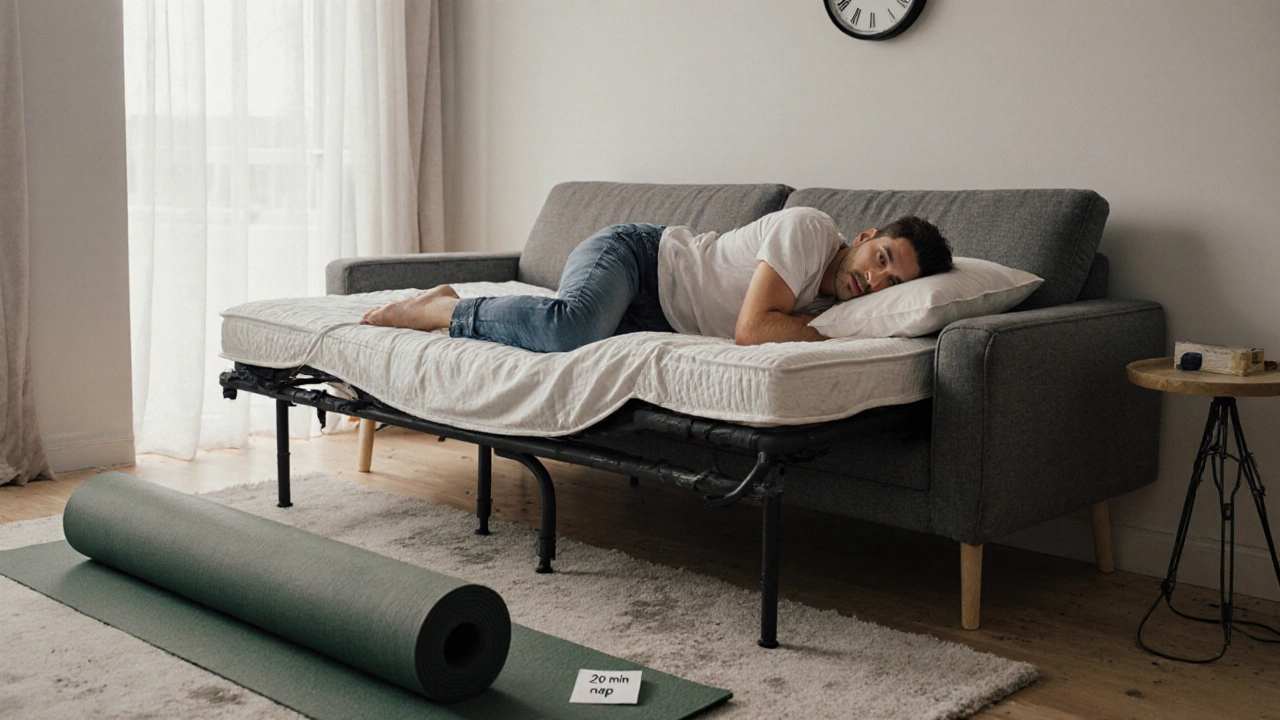
- If you need to nap during the day, set a timer for 20 minutes and lie on the floor with a yoga mat or folded blanket under you. Flat surfaces are better than sinking ones.
- If you use your sofa bed often, invest in a high-density memory foam topper (at least 3 inches thick) to add support.
There’s no magic fix. But small changes make a big difference. One person in Birmingham started sleeping on the floor with a towel under her knees after chronic back pain. Within two weeks, her pain dropped by 70%. She didn’t buy a new bed-she just stopped pretending the couch was one.
It’s not about being perfect-it’s about being intentional
You don’t have to hate your couch. You can still watch TV on it. You can still nap on it. But if you’re falling asleep there every night, you’re trading short-term comfort for long-term pain. Your body doesn’t lie. If you wake up stiff, sore, or groggy every morning, it’s telling you something.
Don’t wait for a doctor’s appointment to realize your couch is the problem. Your spine, your sleep, and your energy levels deserve better than a sinking cushion and a crooked neck.
Is it bad to sleep on the couch every night?
Yes. Sleeping on the couch nightly leads to poor spinal alignment, disrupted sleep cycles, and chronic pain in the back, neck, and shoulders. Your body isn’t designed to rest on uneven, soft surfaces for long periods. Over time, this can cause lasting damage to your posture and sleep quality.
Can a sofa bed replace a real mattress?
No. Most sofa beds have thin, low-density mattresses (under 1.2 lb/ft³) that don’t provide enough support. Even the best models are meant for occasional use, not nightly sleeping. A proper mattress should be at least 8 inches thick with a density of 1.8 lb/ft³ or higher to support your spine properly.
Why do I wake up with a stiff neck after sleeping on the couch?
Your neck is likely twisted or propped up at an odd angle because couches don’t support your head in a neutral position. Throw pillows, armrests, or the curve of the couch itself force your cervical spine out of alignment. This strains muscles and ligaments, leading to pain, headaches, and even tingling in your arms.
Does sleeping on the couch affect my sleep quality?
Yes. Studies show people who sleep on couches get 37% less REM sleep than those who sleep in beds. REM sleep is critical for memory, mood, and immune function. Couches cause more tossing and turning, leading to fragmented sleep and less restorative rest overall.
How can I stop falling asleep on the couch?
Create a wind-down routine that ends in your bedroom. Keep a cozy blanket and a firm pillow ready there. If you feel sleepy on the couch, set a 15-minute timer and then get up to go to bed. Avoid watching TV in bed-keep your bedroom for sleep only. Over time, your brain will relearn that sleep happens in your bed, not on the couch.
If you’ve been sleeping on the couch because you think it’s harmless, it’s time to rethink that habit. Your body isn’t built for it. Your sleep isn’t as deep as you think. And your long-term health is worth more than the convenience of staying on the couch one more night.
Write a comment