
Sofa Bed Posture: How to Sit and Sleep Right Without Back Pain
When you think of a sofa bed posture, the way your body aligns when sitting or sleeping on a sofa bed. It’s not just about comfort—it’s about whether your spine stays in a neutral position or gets twisted into a painful shape overnight. Many people use sofa beds as guest furniture, but if you’re sleeping on one regularly, your posture matters more than you think. A bad sofa bed can turn a night’s rest into a morning of stiffness, lower back pain, or even nerve tingling. It’s not the bed’s fault alone—it’s how you use it.
Think of your spine like a stack of blocks. When you sit or lie on a sofa bed that’s too soft, too low, or too short, those blocks slump out of alignment. Your lower back loses its natural curve. Your neck strains forward. Your hips sink too far, pulling your pelvis out of balance. This isn’t just uncomfortable—it’s damaging over time. Compare that to a good ergonomic sofa bed, a sofa bed designed with proper lumbar support, firm cushioning, and a frame that holds its shape. It doesn’t need fancy features. It just needs to hold your body like a supportive hug. And don’t forget the sleeping on sofa bed, the act of using a sofa bed as a regular sleeping surface. If you do it often, you’re not just resting—you’re training your body to adapt to poor alignment. That’s why people who sleep on sofa beds for weeks end up needing chiropractic care. It’s not magic. It’s physics.
What makes one sofa bed better than another? It’s not the fabric or the price tag. It’s the foundation. A good one has a solid metal or hardwood frame, not flimsy plastic. The mattress should be at least 6 inches thick and made of high-density foam or memory foam—not just a thin pad slapped over springs. The backrest should support your shoulders and neck when you’re sitting up, not let your head loll sideways. And if you’re using it as a bed, make sure it unfolds into a flat surface without gaps or bumps. You wouldn’t sleep on a mattress that’s sagging in the middle. Don’t settle for the same on a sofa bed.
And here’s the thing: posture isn’t just about what you’re sitting or lying on. It’s also about how you move. If you curl up like a shrimp on a sofa bed, or stretch out with your knees bent too high, you’re still putting pressure on your spine. Try sleeping on your back with a pillow under your knees. Or if you’re a side sleeper, tuck a thin pillow between your legs. Small adjustments make a big difference.
You’ll find posts below that dig into real cases—people who switched from couches to better sofa beds and stopped waking up sore. Others who tried DIY fixes, like adding plywood under the mattress or using foam toppers. There’s even a guide on how to pick a sofa bed that won’t wreck your back, based on actual user experiences, not marketing claims. These aren’t theories. They’re lessons learned from people who’ve been there.
Why You Shouldn't Fall Asleep on the Couch
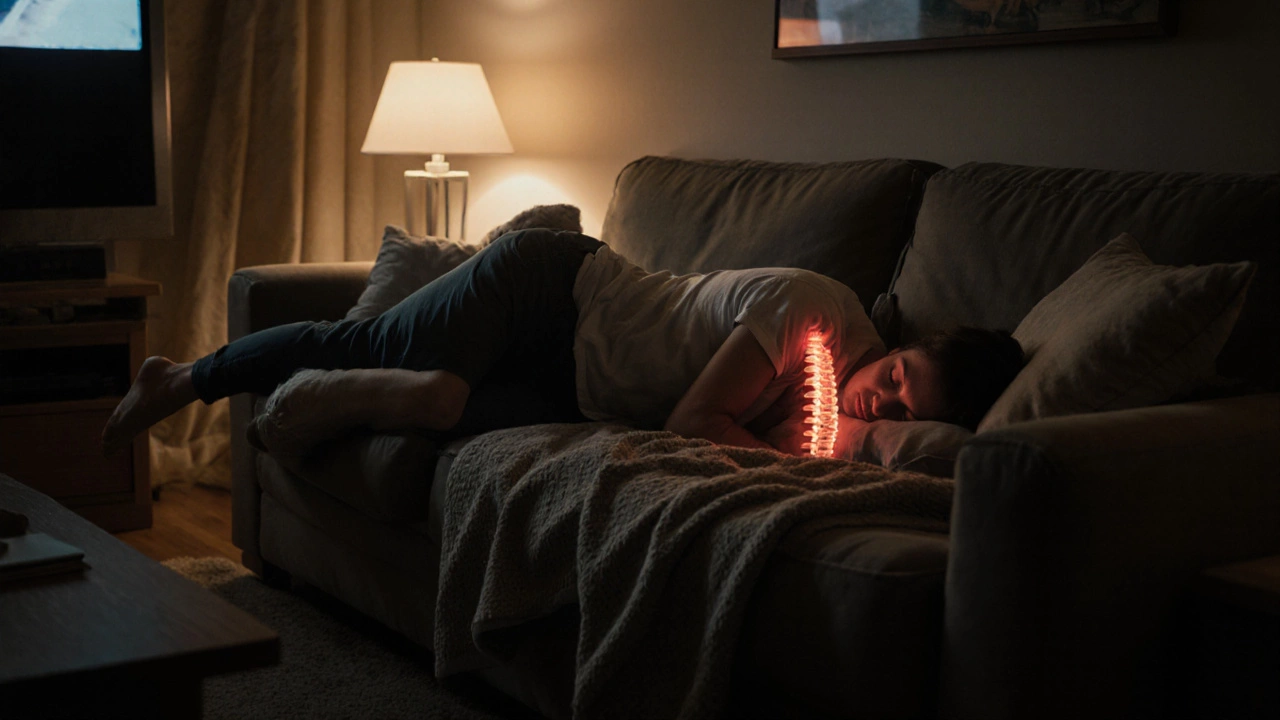
Falling asleep on the couch might feel relaxing, but it harms your spine, disrupts sleep, and causes chronic pain. Learn why your body needs a proper mattress-not a sinking cushion.
More