
Corner Sofa Space Calculator
Calculate whether your room has enough space for a corner sofa while maintaining safe walkways and furniture clearance. Based on the article's findings about how corner sofas "eat up space" and create "dead zones" in smaller rooms.
Enter your room and sofa dimensions to see if you have enough space.
Corner sofas look great in photos. They promise cozy movie nights, extra seating, and a sleek modern look. But if you’ve actually lived with one, you know they come with hidden headaches. They’re not the magic solution they’re sold as. Let’s cut through the marketing and talk about what really doesn’t work with corner sofas - the stuff no showroom will tell you.
They eat up space, even when they seem perfect
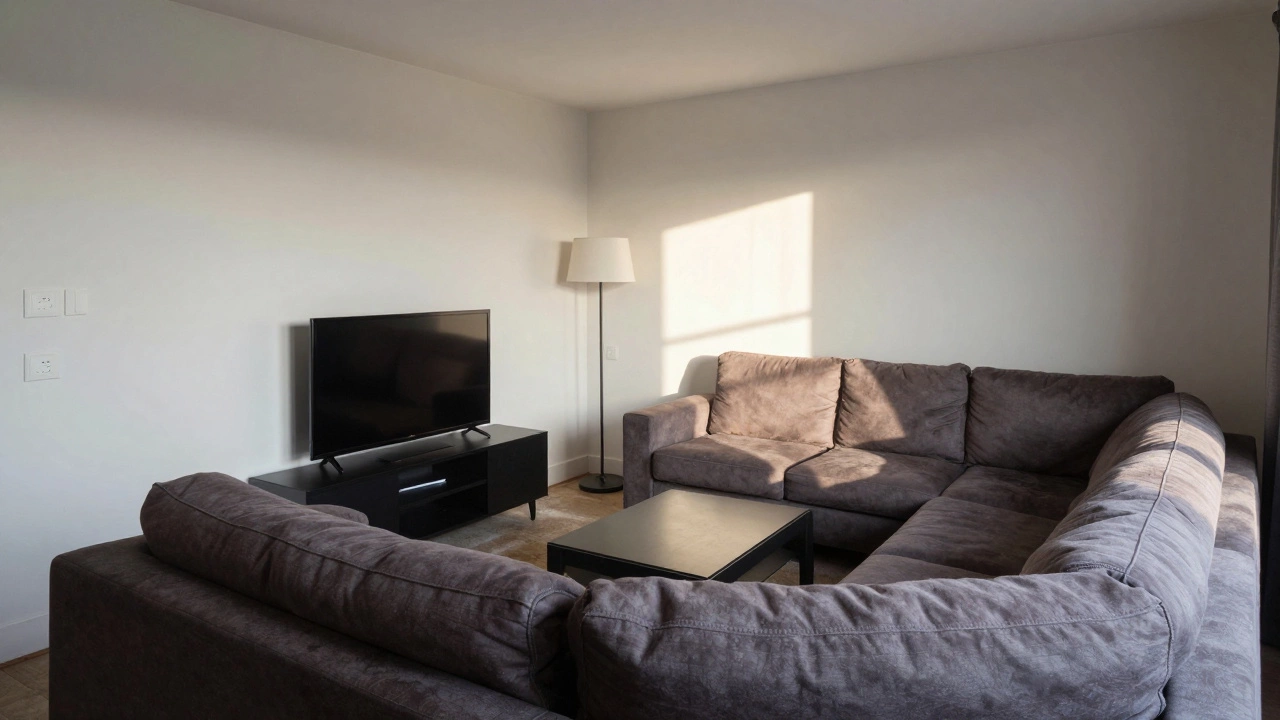
You buy a corner sofa because your living room feels empty. You measure twice, pick the right size, and it fits - barely. But here’s the catch: corner sofas are designed to fill the corner, not leave room for anything else. That means your TV stand, floor lamp, or side table gets pushed to the edge. You end up with a room that feels boxed in. Even if the sofa fits on paper, it can make walking around the room feel like navigating a maze. In smaller homes, especially in places like Birmingham where space is tight, that corner sofa can turn your living room into a dead zone.
Cleaning is a nightmare
Ever tried vacuuming under a corner sofa? It’s not just hard - it’s nearly impossible. Most corner sofas sit flush against two walls, leaving no gap underneath. Dust, pet hair, and crumbs pile up and stay there. You can’t slide it out without moving heavy furniture or calling in help. And don’t get me started on the crevices where the two sections meet. Those spots collect crumbs, socks, and who-knows-what else. Regular cleaning? Forget it. You need a specialized tool, a lot of patience, or a professional cleaner - and none of those are cheap.
Moving one is a full-day project
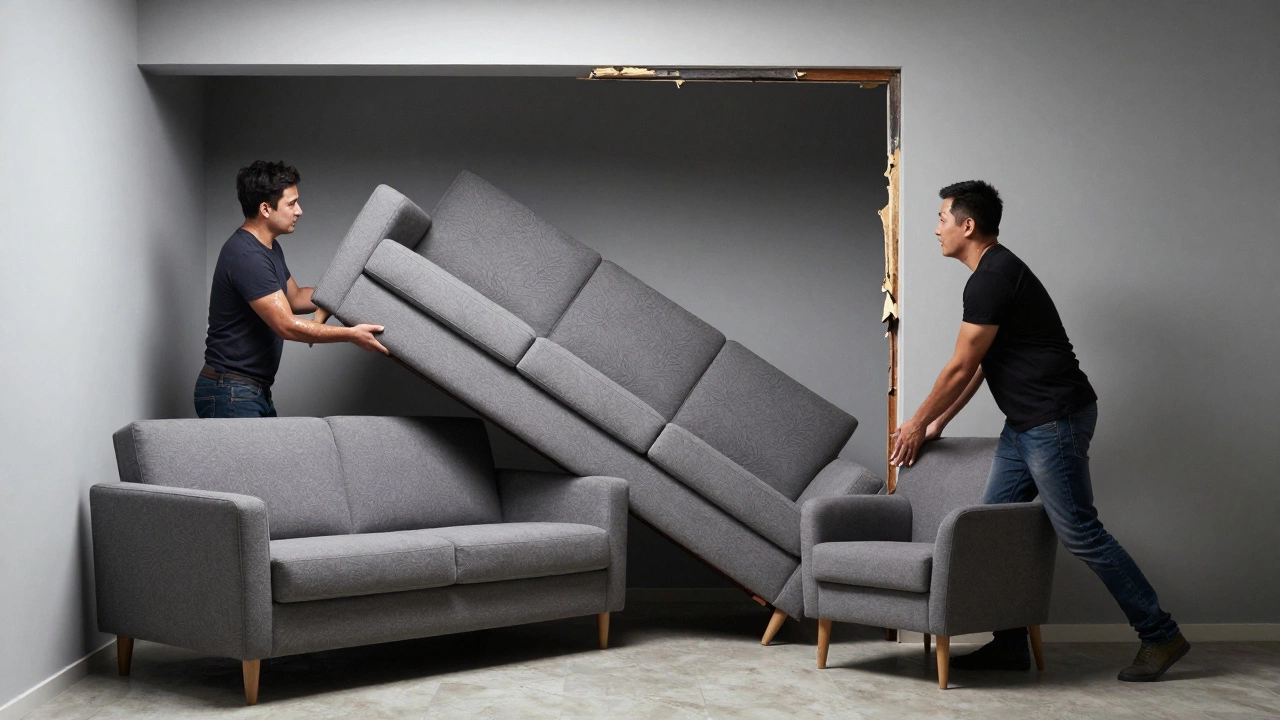
Corner sofas don’t come apart. Not really. Even if they’re labeled “modular,” most are held together with heavy clips or bolts you can’t reach without tools. If you ever need to move house, rearrange your room, or even just clean behind it, you’re looking at a two-person job that takes hours. I once helped a friend move one into a new flat. We had to take off the legs, tilt it sideways, and squeeze it through two doorways. It took five hours. A regular three-seater would’ve taken twenty minutes.
They’re awkward for small families or guests
Corner sofas look great for lounging - until someone wants to sit down properly. The long side is great for stretching out, but the short side? It’s shallow. If you’re taller than average, your knees stick out awkwardly. And if you have kids or guests who want to sit facing each other for a conversation? Good luck. The L-shape forces people into a line, not a circle. You end up shouting across the room or leaning awkwardly to hear someone. It’s fine for binge-watching, but terrible for actual interaction.

They don’t work well with most layouts
Not every room has a perfect corner. Many homes have windows, radiators, doorways, or uneven walls that break up the space. A corner sofa that looks ideal in a showroom might block a radiator, cut off a window view, or leave you with a useless 18-inch gap next to the door. And if you ever want to change your layout - say, swap out your TV or add a bookshelf - you’re stuck. Corner sofas are permanent fixtures. Once you commit, you’re locked in.
They’re expensive for what you get
Corner sofas cost more than two regular sofas put together. You pay extra for the design, the complexity, and the marketing. But you don’t get more comfort. In fact, you often get less. The seat depth is usually too shallow for tall people. The backrests are uneven - one side is tall, the other low. And the cushions? They shift, sag, and lose shape faster than a standard sofa. You’re paying premium prices for a design that compromises on function.
They’re hard to match with other furniture
Try pairing a corner sofa with a round coffee table. Or a bookshelf. Or even a simple side table. It doesn’t work. The angular shape clashes with curves. The scale feels off. Most decor styles - farmhouse, Scandinavian, mid-century - were designed around straight-line furniture. A corner sofa breaks the flow. You end up buying more pieces just to balance it out, which adds cost and clutter. It’s like trying to fit a square peg in a round hole - and the hole is your living room.
You can’t reupholster or repair them easily
When your sofa starts to wear out, you can’t just swap the cushions or reupholster the arms. Corner sofas are built as one unit. If one section gets stained or torn, you can’t replace just that part. You either live with the damage or replace the whole thing. That’s a big problem if you bought a high-end model and only used it for three years. Most sofa repair shops won’t touch them - they’re too complicated. You’re stuck with the manufacturer, and their prices? Not cheap.
They don’t age well
Styles change. Five years ago, a large L-shaped sofa was the trend. Today, people want lighter, modular, flexible seating. A corner sofa looks dated fast. It’s bulky, heavy, and doesn’t adapt. If you ever want to downsize, move to a smaller home, or just refresh your look, you’re stuck with a piece that’s hard to sell and impossible to repurpose. I’ve seen people give theirs away on Freecycle just to get it out of the house.
They’re not great for pets or kids
If you’ve got dogs that like to curl up on the sofa, or kids who jump on it, corner sofas are a disaster. The tight angles trap fur, dirt, and toys. Cleaning becomes a daily chore. And if your dog likes to scratch the corners? That’s where the fabric wears out fastest. You can’t flip the cushions because the shape doesn’t allow it. The high-traffic spots stay damaged. You end up buying a sofa cover - which looks cheap - or replacing the whole thing sooner than expected.
They’re not always as comfortable as they look
That deep, plush corner you see in ads? It’s often just a marketing trick. The actual seating depth is shallow, and the backrest is usually angled for a reclining pose, not sitting upright. If you like to read or work on your laptop while sitting on the sofa, you’ll end up with a sore neck. The armrests are uneven. One side might be padded, the other hard. The cushions don’t support your lower back the way a well-designed sofa should. Comfort isn’t about size - it’s about design. And corner sofas rarely get that right.
What to do instead
If you love the idea of extra seating and a cozy corner, there are better options. Two regular sofas placed at right angles give you the same effect - but you can move them, clean under them, and replace them easily. A loveseat plus an armchair? You get flexibility, better airflow, and easier cleaning. Modular sectionals that actually come apart? Those exist now. Brands like IKEA and Article offer pieces that click together but can be rearranged or replaced individually. You get the look without the headaches.
Corner sofas aren’t evil. They work for some people - mostly those who watch TV all day and never move furniture. But if you value flexibility, ease of cleaning, or long-term value, they’re a bad investment. Think twice before you buy one. Your future self - and your back - will thank you.
Are corner sofas worth the extra cost?
Usually not. Corner sofas cost 30-50% more than two standard sofas combined, but they offer less flexibility, harder cleaning, and no real comfort advantage. Unless you need maximum seating in a very specific layout, the extra price doesn’t justify the downsides.
Can you move a corner sofa through narrow doorways?
Most can’t. Corner sofas are built as one solid unit. Even if labeled "modular," the pieces are often bolted or clipped together. Moving one through a standard 30-inch doorway usually requires removing doors, tilting at awkward angles, or hiring professionals. It’s not a DIY job.
Do corner sofas fit in small apartments?
They look like they should, but they rarely do. A corner sofa fills the space it’s meant to occupy - and then some. In small flats, they block walkways, hide windows, and make the room feel cramped. A loveseat with a side chair often gives more usable space without the bulk.
How often do corner sofas need replacing?
They wear out faster than regular sofas. Because you can’t flip or rotate cushions, one side takes all the wear. Fabric fades, cushions sag, and the corner joint loosens. Most last 5-7 years before looking worn - half the lifespan of a well-made standard sofa.
Is it possible to clean under a corner sofa?
Not without moving it. Most corner sofas sit flush against two walls, leaving no gap underneath. Vacuuming or sweeping under them requires lifting or sliding the entire piece - which is heavy and often impossible without help. Dust and debris build up over time and become a hidden allergen source.
Write a comment