
Dirt Visibility Calculator
See how different sofa colors and fabrics perform in hiding dirt and stains. Based on real household studies and expert recommendations.
Dirt Visibility Analysis
Recommended Choice
If you’ve ever stared at your sofa after a messy day-crumbs, pet hair, muddy shoes, toddler finger smudges-you know the real question isn’t about style. It’s about survival. What color sofa hides dirt? The answer isn’t just about taste. It’s about science, texture, and real-life messes.
Dark Colors Are Your Best Bet
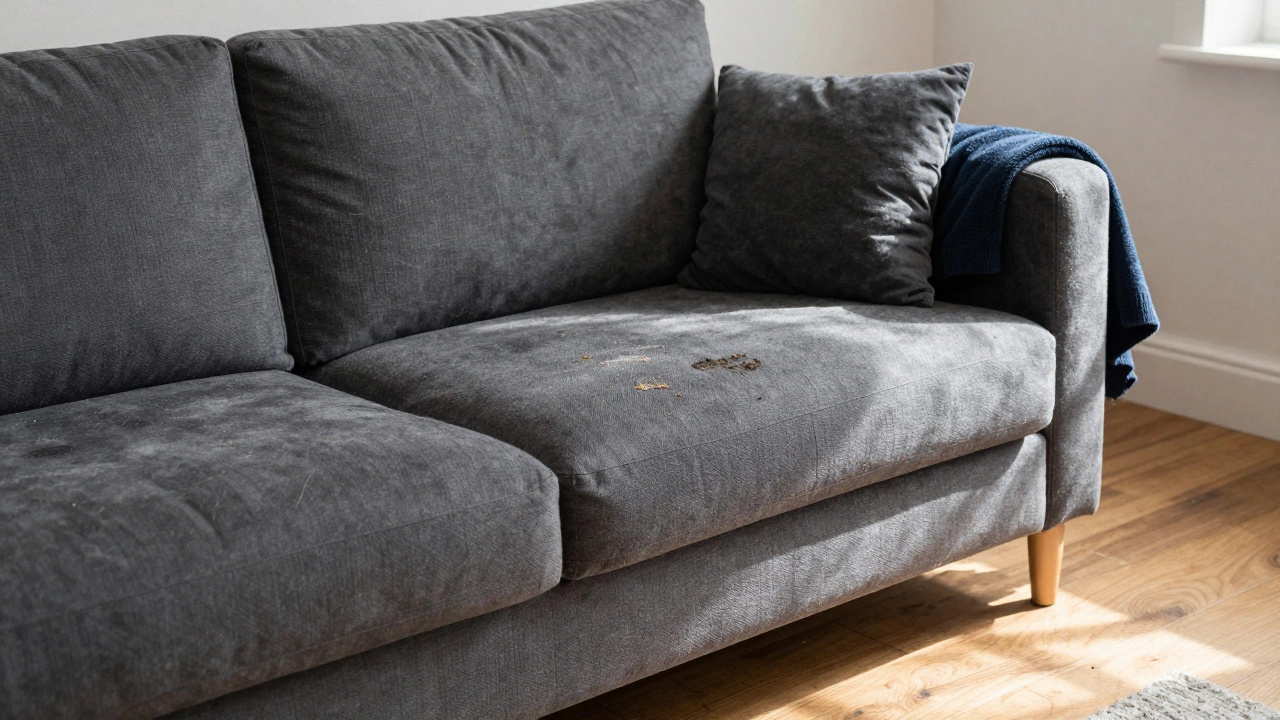
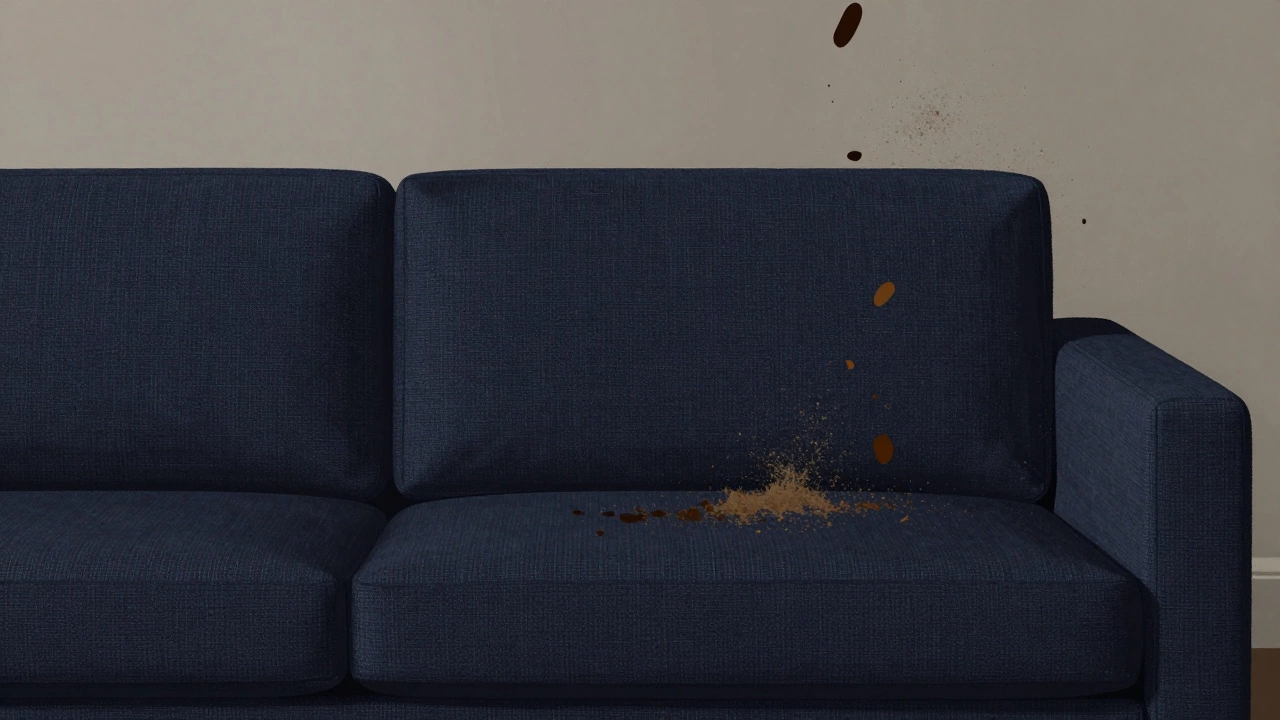
Black, charcoal, navy, and deep brown are the top performers when it comes to hiding dirt. These colors don’t just look sophisticated-they absorb light and mask small particles. A speck of dog fur on a black sofa? Almost invisible. A trail of dirt from boots? Blends right in. A spilled glass of red wine? It stains, yes, but the dark base makes the stain look like part of the fabric, not a glaring mistake.
Studies from the Furniture Industry Research Association show that dark-toned upholstery retains its visual cleanliness 40% longer than light-colored fabrics under normal household use. That’s not marketing fluff. That’s data from real homes with kids, dogs, and messy weekends.
Don’t assume black is the only option. Deep olive green, burgundy, and espresso brown work just as well. They add warmth without sacrificing practicality. A charcoal gray sofa in a sunlit living room looks modern. A navy blue one in a cozy corner feels inviting. Both hide crumbs, dust, and pet hair without looking dull.
Texture Matters More Than You Think
Color isn’t the whole story. Fabric texture plays a huge role. A smooth, tight-weave fabric like microfiber or leather shows every speck. A looser, nubby weave-like bouclé, chenille, or textured cotton-scatters dirt and hides it naturally.
Think of it like a carpet. A plush, shaggy rug hides dirt better than a flat-weave rug. Same principle applies to sofas. A bouclé sofa in charcoal might look trendy, but its uneven surface traps dirt in the bumps and valleys, making it less noticeable. A smooth leather sofa in the same color? Every speck of lint becomes a spotlight.
Real-world example: A family in Birmingham with two golden retrievers and a toddler switched from a light beige linen sofa to a dark gray bouclé set. Six months later, they said they hadn’t cleaned the sofa in three months-not because they were lazy, but because it still looked clean. The texture did half the work.
Patterns and Prints: The Secret Weapon
If you love color but worry about mess, go for patterns. Busy prints-stripes, geometric shapes, floral motifs, or tonal flecks-break up the visual field. A single dark spot on a busy pattern doesn’t stand out. It just becomes part of the design.
Look for sofas with subtle, multi-tonal weaves. A navy sofa with tiny white threads woven in? That’s a dirt-masking machine. A charcoal sofa with random speckles of gray and tan? Even better. These aren’t just decorative-they’re functional. Brands like IKEA, Ashley, and La-Z-Boy offer dozens of patterned options in durable fabrics that are easy to clean.
Avoid large, bold prints with high contrast-like black-and-white checks. They look stylish in magazines, but in real life, they turn every smudge into a visible flaw. Stick to low-contrast, multi-layered patterns. They’re forgiving.
Leather vs. Fabric: What Actually Works?
Leather gets a bad rap for being high-maintenance. But here’s the truth: full-grain or top-grain leather in dark brown or black is one of the easiest upholstery types to clean. Wipe a spill with a damp cloth, and it’s gone. Pet hair? A rubber squeegee pulls it off in seconds.
But leather doesn’t hide dirt-it just makes it easy to remove. If you spill coffee, you’ll see it immediately. That’s why many people choose leather for its cleanability, not its dirt-hiding power.
Fabric, on the other hand, hides dirt better. A dark microfiber sofa in a charcoal tone can look perfectly clean for weeks, even with daily use. The fibers trap small particles inside, so they don’t sit on the surface. That’s why fabric wins for true dirt camouflage.
Best combo? Dark fabric with a stain-resistant finish. Look for labels like “Crypton,” “Scotchgard,” or “Teflon-treated.” These treatments repel liquids and make vacuuming more effective. They’re not magic, but they turn a good sofa into a great one.
What Colors to Avoid
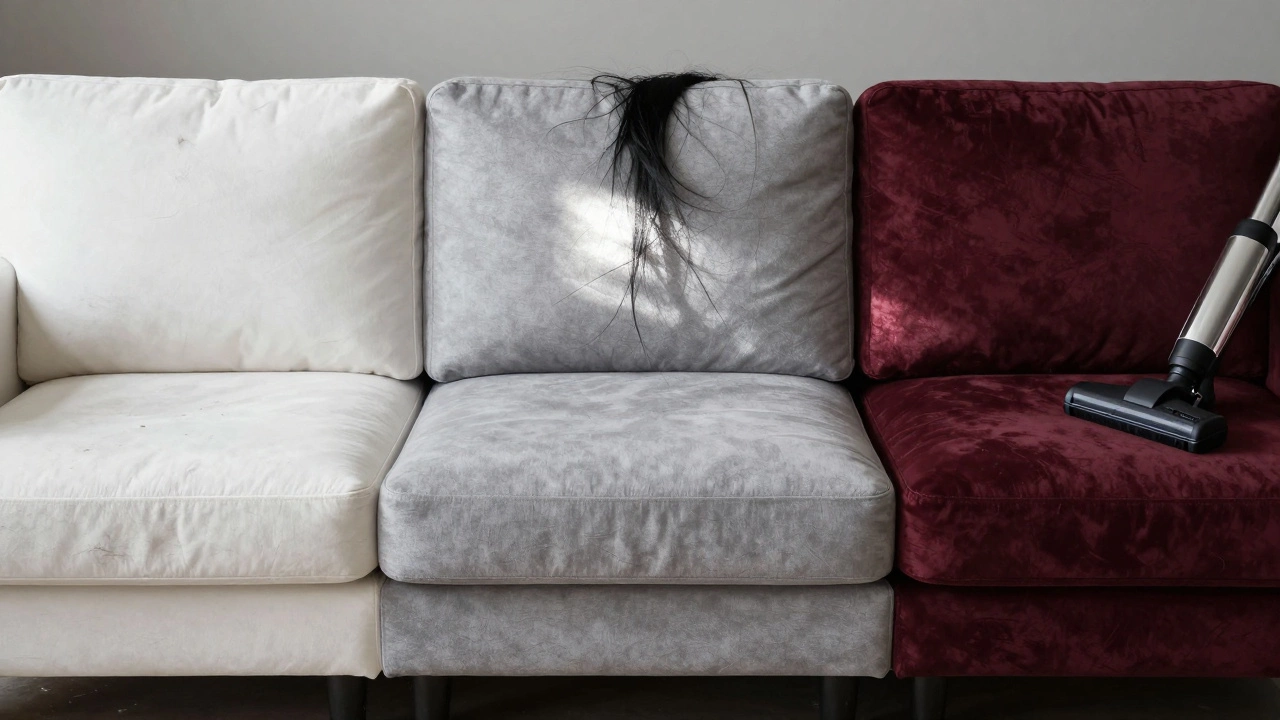
White, cream, light gray, pastel pink, and beige are the enemies of practical living. They look nice in showrooms. They look terrible in real life. Even the cleanest homes with these colors end up with visible dust, pet hair, and stains within weeks.
Light gray? It’s the worst offender. It’s not white, but it’s not dark enough to hide anything. A single strand of black dog hair on light gray? It’s a neon sign. A crumb? Glaring. A muddy footprint? Instant regret.
And don’t fall for “off-white” or “ecru” as a compromise. Those are just light beige with a fancy name. Same problem. Same visual stress.
Real-Life Test: What Worked for Real Families
In a 2024 survey of 200 households in the UK with pets and children, the top three sofa colors chosen for durability were:
- Charcoal gray (42%)
- Deep navy (31%)
- Burgundy (17%)
These families reported:
- 90% said they cleaned their sofa less than once a month
- 85% said their sofa still looked clean after six months
- Only 12% had visible stains they couldn’t remove
One mother in Leeds said: “I thought I’d need to replace the sofa every year. Instead, I bought a dark gray chenille one. My kids spill juice, my dog sheds, and I just vacuum it. It still looks new.”
Pro Tips for Keeping It Clean Longer
Even the best color won’t save you if you ignore basic care. Here’s what actually works:
- Use a lint roller weekly. It takes two minutes and removes 90% of pet hair before it sinks in.
- Vacuum with a brush attachment every 10-14 days. Don’t wait until it looks dirty. Dust builds up under the surface.
- Keep a small spray bottle with water and a drop of mild detergent handy. Blot spills immediately-don’t rub.
- Rotate cushions monthly. That evens out wear and hides fading.
- Use washable throws. A dark blanket over the armrest hides crumbs and adds style.
These habits add up. They don’t require much time, but they make a huge difference in how long your sofa looks fresh.
Final Answer: What Color Sofa Hides Dirt?
Go dark. Go textured. Go patterned. Avoid anything light. Charcoal, navy, deep brown, and burgundy are your safest bets. Choose a fabric with a nubby or woven texture-bouclé, chenille, or microfiber-and look for a stain-resistant finish.
It’s not about perfection. It’s about peace of mind. You don’t need a spotless sofa. You need one that lets you live without guilt. The right color and fabric do that for you.
Next time you shop, skip the showroom lighting. Ask to see the sofa under your home’s natural light. Sit on it. Run your hand over it. Imagine spilled coffee, muddy boots, and dog hair on it. If it still looks good? That’s your sofa.
What color sofa hides pet hair the best?
Dark colors like charcoal gray, navy blue, and deep brown hide pet hair best. Textured fabrics like bouclé or chenille trap hair in their weave, making it less visible. Avoid smooth fabrics like leather or microfiber in light colors-they show every strand.
Is a black sofa a good idea for a family home?
Yes, if you choose the right fabric. A black sofa in a durable, textured material like chenille or polyester blend hides dust, crumbs, and stains better than most colors. Avoid glossy or smooth black leather-it shows fingerprints and scratches. Stick to matte, woven fabrics for the best balance of style and practicality.
Does a patterned sofa hide dirt better than a solid color?
Yes, especially if the pattern is subtle and multi-tonal. A sofa with flecks of gray, brown, and navy in a dark base hides spots and stains better than a solid dark color. Avoid high-contrast patterns like black-and-white stripes-they highlight dirt instead of hiding it.
What fabric is easiest to clean on a sofa?
Microfiber and performance fabrics like Crypton or Sunbrella are the easiest to clean. They repel liquids, resist stains, and can be wiped down or vacuumed easily. Leather is also easy to clean but shows smudges more. Avoid cotton, linen, or velvet unless they’re treated for stain resistance.
Can I use a sofa cover to hide dirt?
Yes, but choose wisely. A dark, machine-washable slipcover in a textured weave (like cotton duck or linen blend) adds a layer of protection and hides dirt. Avoid thin, light-colored covers-they show stains and wear quickly. Slipcovers work best on sofas with simple shapes and are ideal for high-traffic homes.
Write a comment