
IKEA Global Scale Comparison Tool
Compare IKEA's Scale
See how IKEA stacks up against countries and major companies
Key Facts
Annual Revenue: €47,000,000,000
More than GDP of 140 countries
Store Count: 530+
Over 53 countries, 53 US locations
Customer Reach: 1.5B+
Nearly 1 in 5 people on Earth
Comparison Results
When you walk into an IKEA store, you don’t just see bookshelves and Billy cabinets-you step into the world’s most recognizable furniture brand. But how big is it really? Where does IKEA rank among global companies, not just in furniture, but across all industries? The answer might surprise you.
It’s Not Just a Furniture Store
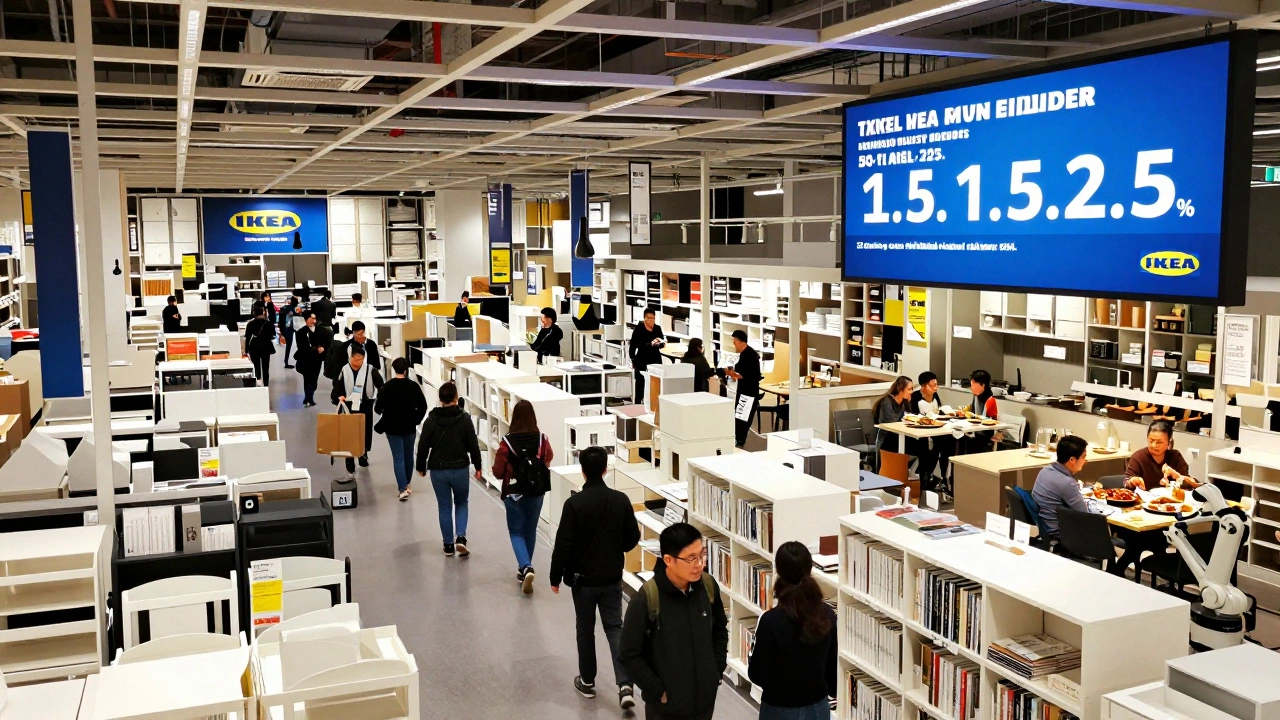
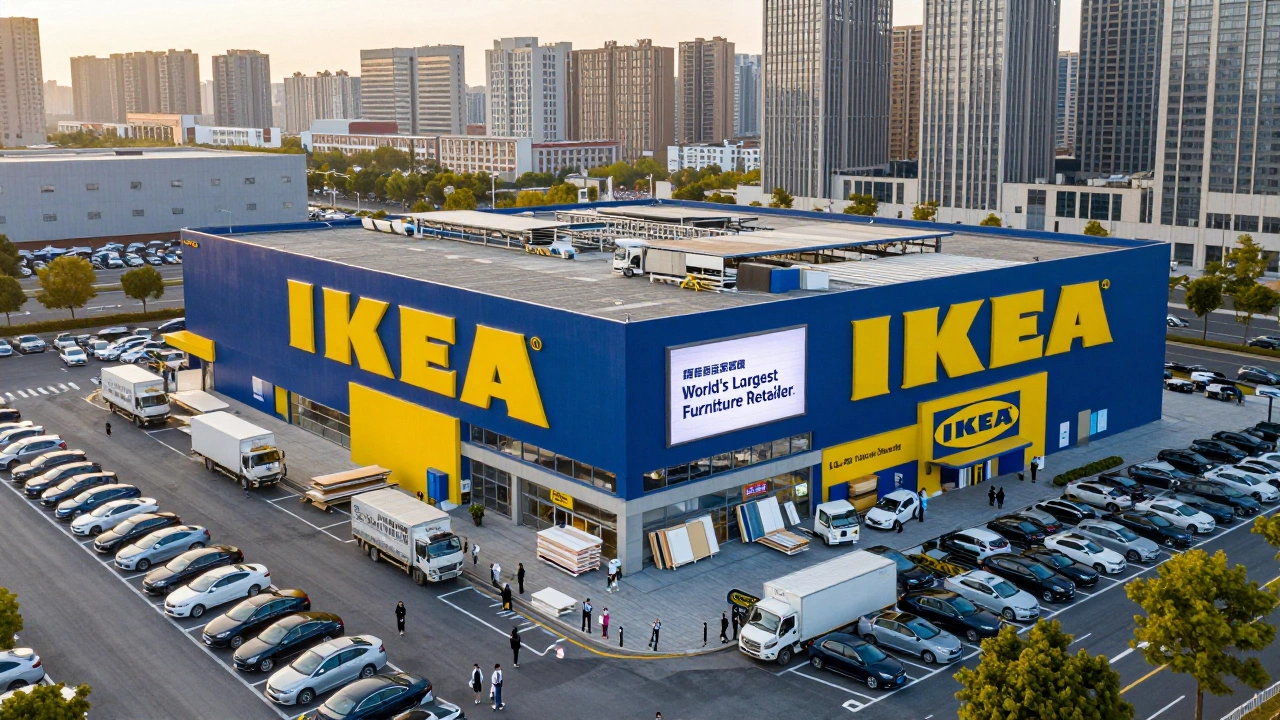
IKEA doesn’t just sell flat-pack furniture. It operates like a retail giant with the scale of Amazon or Walmart. In 2025, IKEA reported annual sales of over €47 billion. That’s more than the GDP of 140 countries. It’s also more than the combined revenue of its next three largest competitors: Ashley Furniture, Wayfair, and Home Depot’s furniture division. This isn’t a local chain. It’s a global force.How many stores? Over 500 in 53 countries. The U.S. alone has 53 locations, with California, Texas, and New York hosting the busiest. In China, IKEA opened its largest store in the world in 2023-27,000 square meters of showroom, warehouse, and dining space. And it’s still growing. New stores opened in India, Brazil, and Saudi Arabia in 2024.
Ranked Among the World’s Largest Retailers
If you ranked every company in the world by revenue, IKEA would land somewhere between #200 and #250. That puts it ahead of brands like Under Armour, Tesla (in 2024), and even some major tech firms. But here’s the twist: IKEA isn’t a publicly traded company. It’s owned by a Dutch foundation and a charitable trust. That means no quarterly earnings reports, no stock price, no pressure from shareholders. It can plan 10 years ahead, not just the next fiscal quarter.For context, Walmart ranks #1 in retail sales globally. Amazon is #2. IKEA sits comfortably in the top 10 retail brands by store count and customer reach. It’s bigger than Target. Bigger than Best Buy. Bigger than Lowe’s in terms of international footprint. And unlike those brands, IKEA controls its entire supply chain-from forests in Sweden to shipping containers in Rotterdam to assembly lines in Poland.
Bookcases Are Just the Tip of the Iceberg
You think of the Billy bookcase when you think of IKEA. And yes, over 25 million Billy units are sold every year. That’s more than the population of Canada. But that single product is only 1.2% of IKEA’s total sales. The real money comes from storage systems, kitchen cabinets, bedroom sets, and modular living solutions. The KUNGSBACKA kitchen line alone brings in over €1.5 billion annually. The POÄNG chair? Sold 22 million times since 1976. The HEMNES dresser? A staple in over 10 million homes.What makes IKEA’s ranking so impressive isn’t just volume-it’s consistency. While other furniture brands chase trends, IKEA sticks to its core: affordable, functional, design-driven products. Its 2025 product catalog featured 12,000 items. Over 80% of them were redesigned or updated from the previous year. That’s not stagnation. That’s relentless iteration.
Customer Reach: 1.5 Billion People a Year
IKEA doesn’t just sell furniture. It sells a lifestyle. In 2025, over 1.5 billion people visited an IKEA store, website, or app. That’s nearly one in five people on Earth. The average visit lasts 120 minutes. People don’t just shop-they eat meatballs, browse interiors, and take home inspiration. The IKEA restaurant serves 800 million meals annually. That’s more than McDonald’s in Germany. More than Starbucks in Japan.Online sales jumped 37% in 2024, hitting €8.5 billion. Mobile app downloads hit 120 million. The IKEA Place AR app lets you see how a KALLAX shelf looks in your living room before you buy. That kind of tech integration isn’t common in furniture retail. But IKEA built it. And it works.
Why It Beats Competitors
Competitors like Wayfair and Ashley Furniture rely on e-commerce or big-box retail. IKEA does both-and more. It owns its factories, its logistics, its design teams, and even its forest holdings. It sources 100% of its wood from FSC-certified or recycled sources. That’s not a marketing slogan-it’s a legal requirement in its supply contracts.Its pricing strategy? No discounts. No sales. No flash deals. Instead, IKEA cuts costs by designing for mass production. A SKÅDIS wall shelf costs €19.99 because it’s made in 15 minutes on an automated line in Romania. No middlemen. No warehouse markups. That’s why it can undercut everyone.
And here’s the real secret: IKEA’s design team works in silence. No PR stunts. No influencer campaigns. No celebrity endorsements. Their marketing is the product itself. People share photos of their IKEA setups because they’re beautiful, functional, and affordable. That’s organic reach worth billions.
Where It Stands in 2026
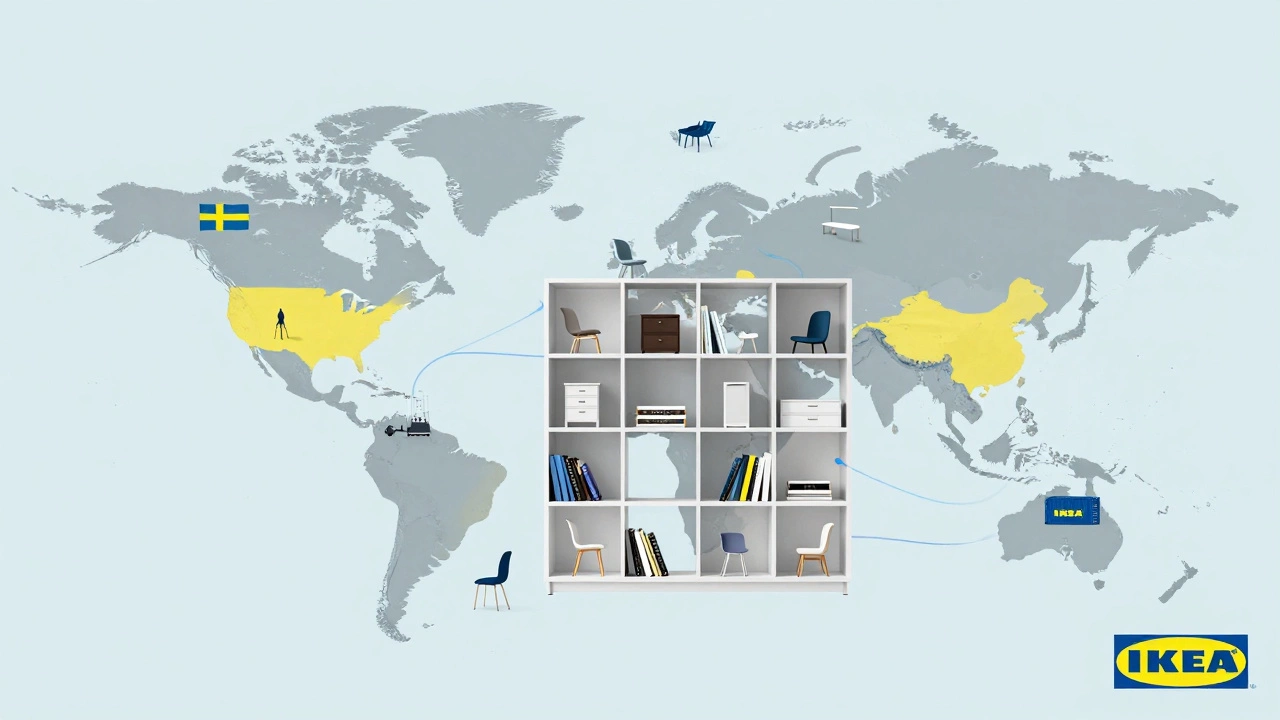
In 2026, IKEA is the undisputed #1 furniture retailer in the world by revenue, store count, and customer volume. It’s the only brand that combines mass production, Scandinavian design, and global accessibility. No other company sells more bookshelves, wardrobes, or kitchen units. No other brand has that level of control over its entire ecosystem.It’s not just ranking high. It’s defining the category. When someone says "I need a bookcase," they don’t say "I need a shelf." They say "I need an IKEA." That’s brand power.
What’s Next?
IKEA’s next move? Sustainability at scale. By 2030, it plans to make all its products from renewable or recycled materials. It’s testing furniture leasing in Sweden. It’s building modular homes in the Netherlands. And it’s opening its first fully automated fulfillment center in Poland-where robots pick and pack orders for online delivery.The Billy bookcase started it all. But IKEA’s real legacy isn’t one product. It’s proving that good design, mass production, and affordability don’t have to be enemies. They can work together. And that’s why it’s not just the biggest furniture brand in the world. It’s one of the most influential consumer companies on the planet.
Is IKEA the largest furniture company in the world?
Yes. By revenue, store count, and global reach, IKEA is the largest furniture retailer in the world. In 2025, it generated €47 billion in sales-more than its next three competitors combined. It operates over 500 stores across 53 countries and serves 1.5 billion visitors annually.
How does IKEA compare to Amazon or Walmart?
While Amazon and Walmart are larger overall, IKEA ranks among the top 250 companies globally by revenue. It outperforms many major retailers in its niche. Unlike Amazon, IKEA controls its entire supply chain-from raw materials to final assembly. Unlike Walmart, it doesn’t rely on third-party sellers. Its business model is vertically integrated, which gives it unmatched pricing and quality control.
What’s IKEA’s most popular product?
The Billy bookcase is IKEA’s best-selling item, with over 25 million units sold each year since its 1979 launch. But in terms of total revenue, the KUNGSBACKA kitchen line and HEMNES bedroom collection generate more income. The Billy remains iconic because it’s simple, affordable, and endlessly customizable.
Why doesn’t IKEA have sales or discounts?
IKEA avoids sales to maintain consistent pricing and reduce waste. Instead of markdowns, it lowers costs through efficient design, bulk production, and direct control of manufacturing. This lets them offer low prices year-round. It also prevents customers from waiting for sales, encouraging steady demand and predictable inventory planning.
Does IKEA make its own furniture?
IKEA doesn’t manufacture furniture in its own factories, but it designs every product and owns the production process. It works with over 1,000 suppliers worldwide, mostly in Eastern Europe and Asia, and requires them to follow strict IKEA standards for materials, labor, and environmental impact. This gives it control over quality and cost without owning factories.
Write a comment