
Bookshelf Placement Calculator
Location Assessment
Safety & Structural
Placement Score
Recommendations
Where you put your bookshelf isn’t just about fitting it in a corner-it affects how often you read, how your space feels, and even how much light your books get. A bookshelf isn’t just storage. It’s part of your daily rhythm. If it’s hidden away, you’ll forget it exists. If it’s in the right spot, it becomes a quiet anchor in your home.
Start with the light
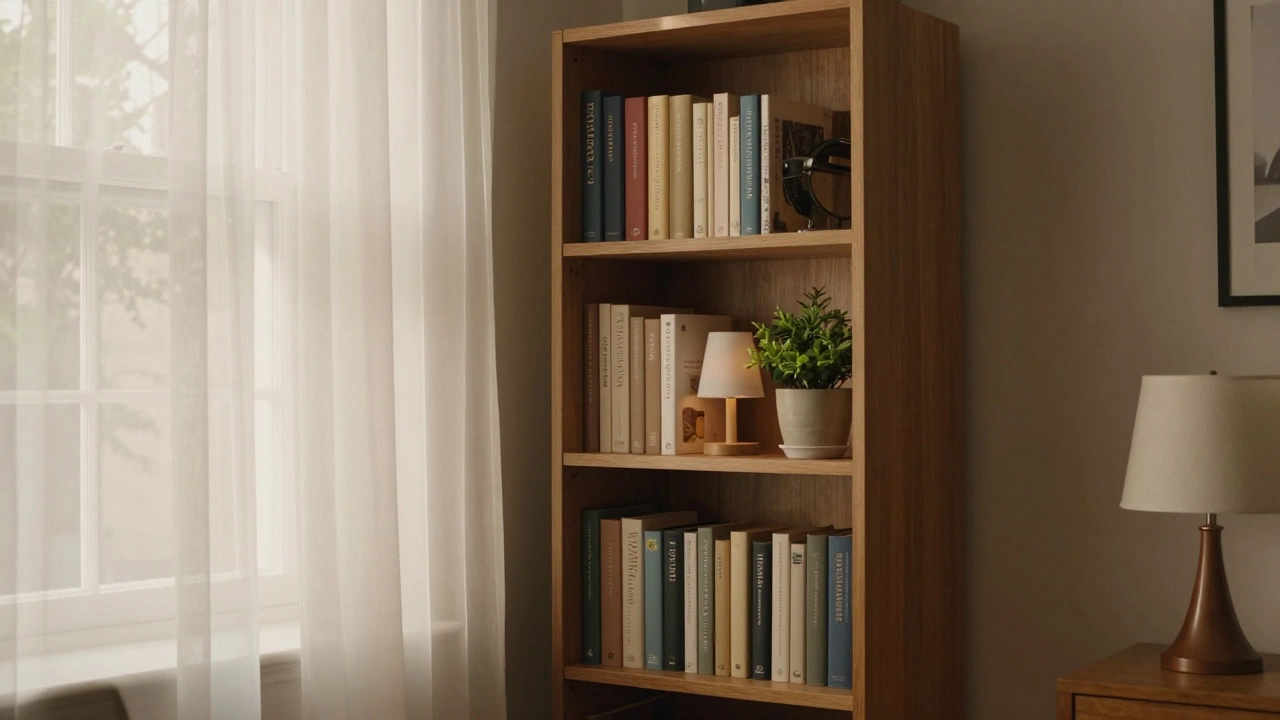
Books don’t like direct sunlight. UV rays fade spines, dry out glue, and warp paper over time. That means placing your bookshelf right against a south-facing window in the Northern Hemisphere might look nice, but it’s a slow killer for your collection. Instead, aim for natural light that’s indirect. A north-facing wall in the UK, where sunlight is softer, works well. Or position your bookshelf perpendicular to a window, so light filters in without hitting the books head-on. If you’re stuck with a sunny wall, use sheer curtains or move the shelf back a foot or two. A simple trick: check the spot at 10 a.m. and 3 p.m. If you can’t read a book’s title without squinting, it’s too bright.
Make it part of your routine
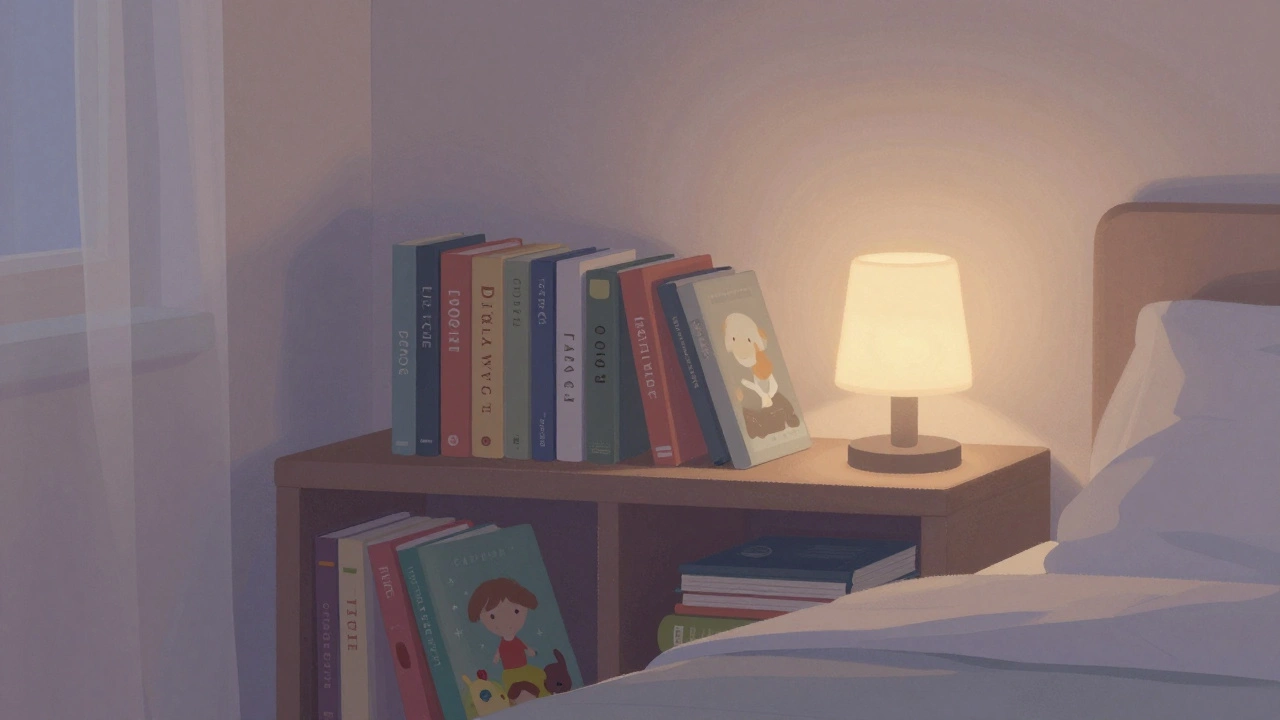
The best bookshelf is the one you actually use. If you read before bed, put it beside your bed. If you unwind with a cup of tea in the evening, place it near your favorite armchair. If you work from home and need quick access to reference books, put it within arm’s reach of your desk. People don’t read because they have space-they read because the book is visible and easy to grab. A bookshelf tucked behind a door or crammed into a hallway? It becomes invisible. One placed where you sit, stand, or pause every day? It becomes part of your life.
Avoid high-traffic areas
Bookshelves don’t like being bumped. Kids, pets, and busy doorways are the enemy. A bookshelf right next to a front door or in a narrow hallway? You’ll end up with crooked shelves and bent covers within months. Even in quiet homes, people swing open doors, carry laundry baskets, or rush past with coffee. Give your bookshelf breathing room. At least 18 inches of clear space in front. If you have a narrow hallway, consider a floating shelf or a low, wide unit that doesn’t stick out. Stability matters more than looks.
Think about weight and floor support
A full bookshelf can weigh over 300 pounds. That’s heavier than a small refrigerator. Not all floors handle that load equally. Older homes in Birmingham, like many in the UK, have floor joists spaced farther apart. If you’re placing a tall, heavy bookshelf on the second floor over a living room, make sure it’s positioned perpendicular to the floor joists-not parallel. That spreads the weight better. If you’re unsure, place it against an interior load-bearing wall. These are usually thicker, and you can often tell by tapping: they sound solid, not hollow. For added safety, anchor tall units to the wall. A tip: use anti-tip straps, not just screws. They’re cheap, invisible, and prevent disasters.
Balance aesthetics and function
People often place bookshelves for how they look, not how they work. A sleek, minimalist shelf in the living room might look great in a magazine, but if you never open it, it’s just decoration. On the flip side, a cluttered shelf full of random items feels messy. The sweet spot? Mix function with calm. Keep frequently read books at eye level. Store heavier reference books on the bottom. Leave some empty space-it’s not clutter, it’s breathing room. Add a small lamp or a single plant. That tells your brain: this is a place to pause, not just store.
Consider room flow
Bookshelves shouldn’t block movement. If you walk into a room and have to sidestep a tall shelf, it’s in the wrong place. Think about your natural path. Where do people naturally turn? Where do they pause? In a living room, a bookshelf along the side wall, away from the main walkway, works better than one right in front of the sofa. In a bedroom, the side of the bed is ideal-not the foot, unless you have a wide, low unit. In a home office, put it behind you, not in front of your view. Cluttered sightlines make your brain work harder. A clear path means a clear mind.
Temperature and humidity matter more than you think
Books are paper and glue. They hate dampness. In the UK, damp walls are common, especially in older homes. Avoid placing bookshelves directly against exterior walls. These walls get colder in winter and can sweat in spring. Condensation builds up, and books get moldy. If you have to place it near an outside wall, leave a 2-inch gap between the shelf and the wall. Use a dehumidifier in the room if you notice musty smells. Basements? Avoid unless you’ve sealed them properly. Attics? Too hot in summer. Stick to interior rooms with stable temperatures-like living rooms, studies, or bedrooms with good ventilation.
What about corners?
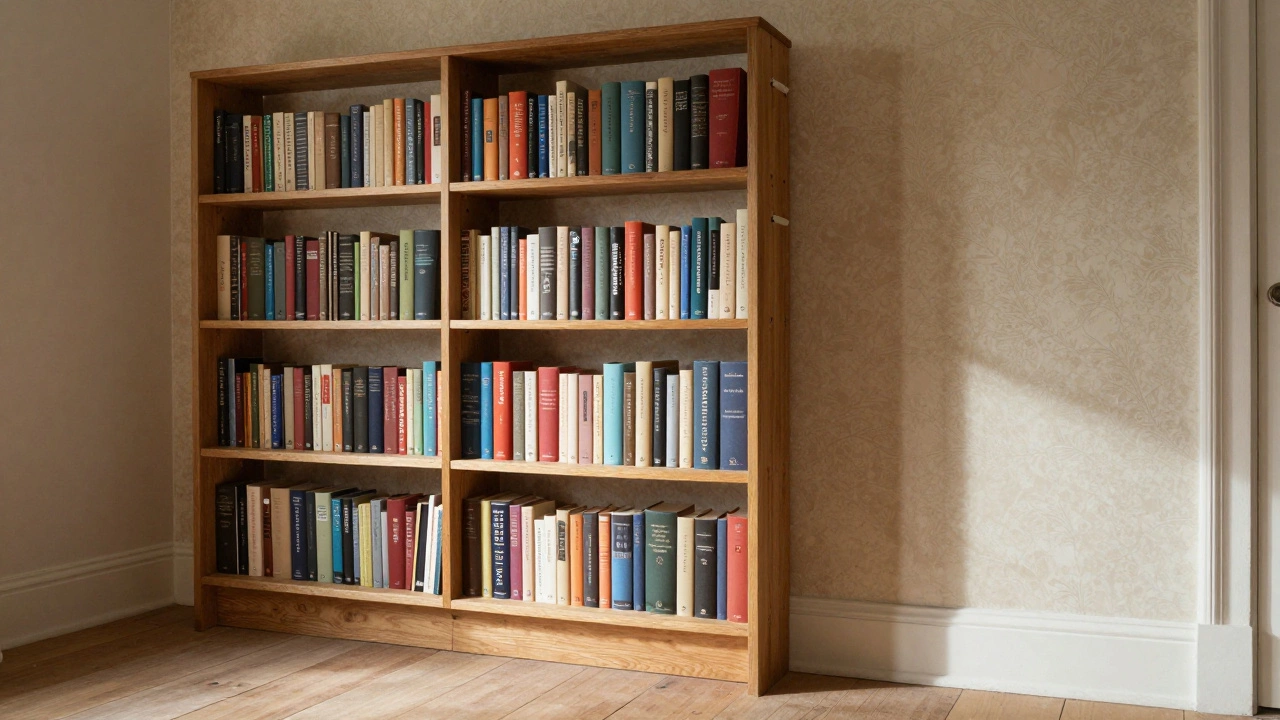
Corners are tempting. They feel like wasted space. But corner bookshelves can be tricky. A tall, narrow unit in a corner can feel unstable. A wide, low unit works better. L-shaped shelves are great if they’re anchored properly. But don’t force a corner fit if the shelf sticks out into a walkway. Better to have a smaller shelf in the right spot than a big one that blocks traffic. If you love the corner look, try a floating shelf on one wall, angled slightly. It gives the illusion of depth without crowding the room.
Don’t forget the back wall
The back of the shelf matters too. A dark, bare wall makes books look like a blur. A light-colored wall, a subtle wallpaper, or even a single row of framed art behind the shelf makes everything pop. If you’re using dark wood books, go for a pale wall. If your books have bright covers, a neutral tone helps them stand out. This isn’t about style-it’s about visibility. You want to see what’s there, not guess.
What if you have kids or pets?
If you have small children or curious cats, height matters. A bookshelf with heavy, top-heavy books? That’s a falling hazard. Keep heavy books on the bottom. Use low, wide units instead of tall ones. Secure them to the wall. And don’t put your favorite novels at kid-height if you’re worried about torn pages. Create a lower shelf just for kids’ books. Make it colorful. Make it theirs. It keeps them away from the rest-and teaches them to respect books.
Final rule: Test it before you commit
Before you drill holes or buy a shelf, try this: tape out the footprint of your bookshelf on the floor with painter’s tape. Live with it for three days. Walk around it. Sit near it. Read beside it. Does it feel natural? Or does it feel like an obstacle? If it feels like an afterthought, move it. Your bookshelf should feel like it belongs-not like it was shoved in because there was no other space.
Can I put a bookshelf in the bathroom?
Not unless it’s a very dry, well-ventilated bathroom. Moisture from showers and sinks can warp wood and cause mold on book spines. Even with a fan, humidity levels in bathrooms rise daily. If you must, use a waterproof shelf with sealed backing and keep only waterproof items like cookbooks or decorative books. Never store paperbacks, first editions, or sentimental books there.
Should I put a bookshelf in front of a window?
It’s not ideal. A bookshelf in front of a window blocks natural light and makes the room feel smaller. It also exposes books to direct sunlight, which fades covers and damages paper. If you want to use the space, try a narrow, low shelf below the window-like a window seat with storage. That way, light still enters, and books stay protected.
Is it okay to put a bookshelf in a bedroom?
Yes, and it’s often one of the best places. A bookshelf beside your bed encourages reading before sleep. Just keep it away from the headboard if you move around a lot at night. Use a low, stable unit so it doesn’t feel like a barrier. Avoid placing it directly across from your bed if it’s full of clutter-it can make the room feel busy. A clean, organized shelf adds calm.
How far should a bookshelf be from a radiator?
At least 12 inches. Radiators dry out the air, which can crack glue and warp wood. Books stored too close will become brittle over time. If your radiator is on the same wall as your shelf, move the shelf back or choose a different wall. If you can’t move it, use a small humidifier nearby to balance the air.
What’s the best height for a bookshelf?
It depends on your height and how you use it. For most people, eye level is between 5 and 6 feet. That’s where you should place your most-read books. Tall shelves (over 7 feet) need to be anchored. Low shelves (under 3 feet) are safer for kids and pets. The sweet spot is a 6-foot shelf with the top shelf just below ceiling height-gives you storage without feeling overwhelming.
Write a comment