
Lazy Boy Recliner Noise Diagnosis Tool
Identify Your Recliner Noise
Select the symptoms you're experiencing to get personalized repair recommendations
Your Diagnosis
Recommended Solution
Important: Do NOT use WD-40. Use silicone-based lubricant only as mentioned in the article.
If you’ve ever sat back in your Lazy Boy recliner only to be greeted by a loud creak, clunk, or squeak, you’re not alone. These chairs are built to last, but over time, they can start making sounds that feel more like a rusty door hinge than a relaxing lounge. It’s not just annoying-it makes you wonder if something’s broken or if you should just replace the whole thing. The good news? Most of the time, the noise isn’t a sign of failure. It’s a simple maintenance issue you can fix yourself.
What’s Actually Making the Noise?
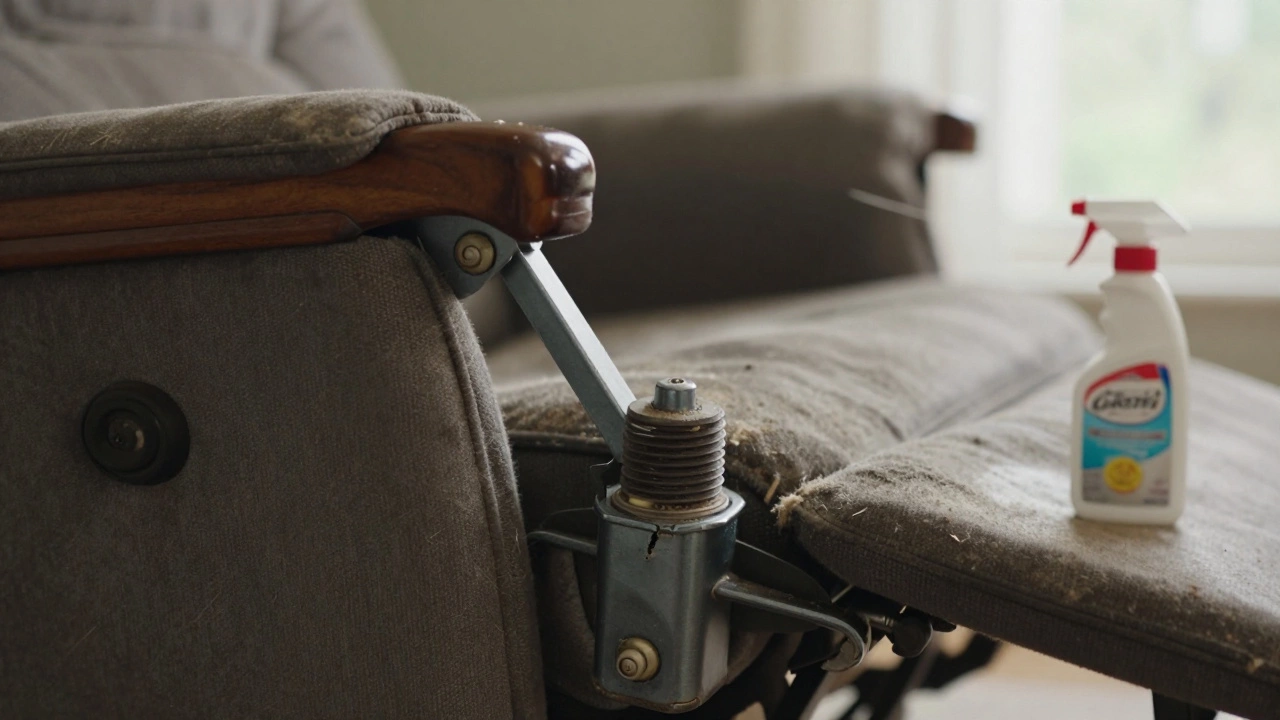
Lazy Boy recliners use a mechanical system to shift from upright to reclined positions. Inside, you’ve got metal frames, pivot points, springs, and sometimes plastic or nylon bushings. When any of these parts wear down, get dirty, or lose lubrication, they start rubbing against each other in ways that create sound.The most common culprits:
- Loose bolts or screws in the frame or footrest mechanism
- Worn-out nylon bushings that used to cushion metal-on-metal contact
- Dried-out lubrication on pivot points and levers
- Debris trapped in the moving parts-dust, pet hair, crumbs
- Uneven floor causing the chair to tilt and stress the frame
It’s rarely one big break. More often, it’s ten tiny things rubbing together over years of use.
Why Lazy Boy? Isn’t It a Premium Brand?
Yes, Lazy Boy is known for quality. But that doesn’t mean it’s immune to wear. Even the best-made chairs have moving parts. And if you’ve had your recliner for 8-12 years, you’re past the point where factory lubrication still works. The materials used in the mechanism-steel, nylon, rubber-are durable, but not eternal.Some people assume expensive means silent forever. That’s not true. A $2,000 recliner will still creak if it’s never been cleaned or lubricated. Lazy Boy chairs are designed for comfort, not silence. Their mechanisms prioritize smooth motion over noise reduction. That’s why you notice the sound more than you might on a cheaper chair-it’s louder because the movement is more pronounced.
Step-by-Step: How to Stop the Noise
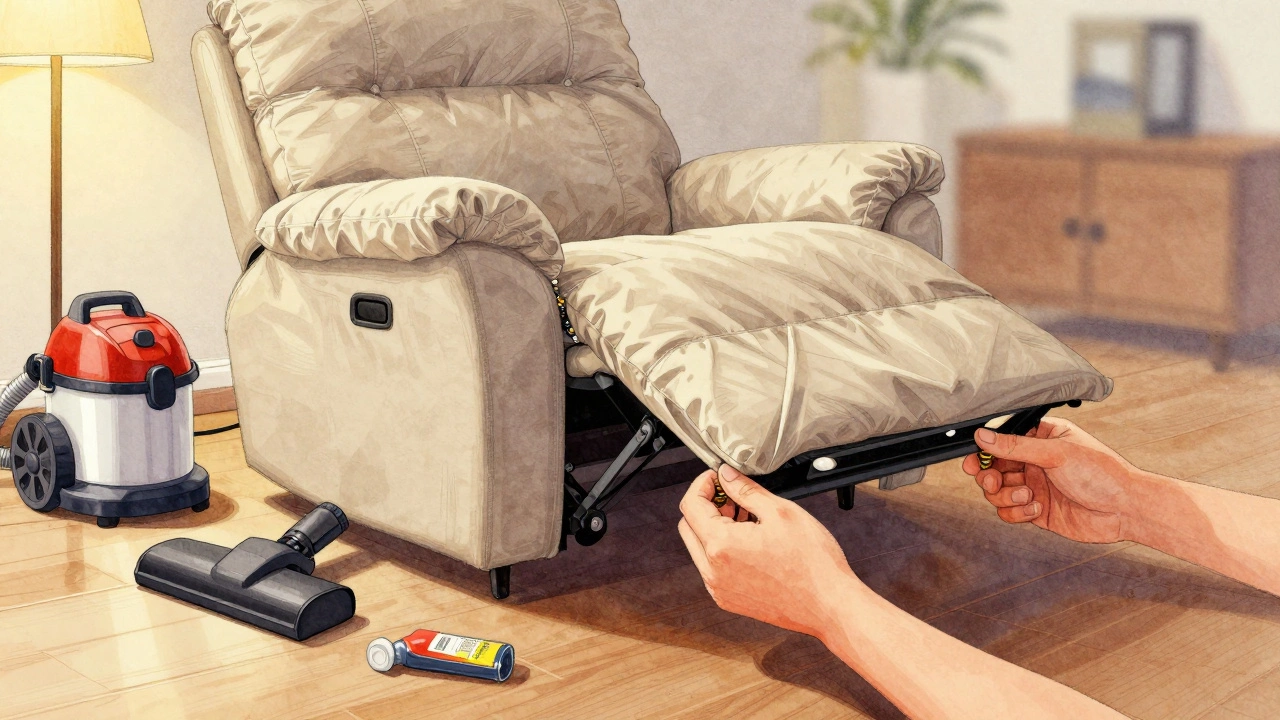
You don’t need tools or training. Just follow these steps, and you’ll likely silence most of the noise in under an hour.- Move the chair away from the wall and onto a hard surface so you can fully recline it without hitting anything.
- Remove the cover (if possible). Most Lazy Boy models have removable slipcovers. This gives you access to the frame underneath.
- Inspect all visible bolts and screws. Use a screwdriver or socket wrench to tighten any that feel loose. Pay special attention to the footrest hinge, the lever assembly, and where the backrest connects to the base.
- Use a vacuum with a brush attachment to clean out dust and pet hair from the moving joints. You’d be surprised how much buildup hides in the crevices.
- Apply a silicone-based lubricant to all pivot points. Do not use WD-40. It’s a solvent, not a lubricant-it’ll dry out faster and attract more dirt. Look for a dry lubricant spray labeled for furniture or door hinges. Spray lightly on the metal rods, levers, and where the frame slides.
- Test the recliner slowly. Recline and return to upright five times. Listen. If the noise is gone, great. If not, move to the next step.
- Check the nylon bushings. These are small plastic or rubber rings that sit between metal parts. If they’re cracked, flattened, or missing, that’s your problem. You can order replacement bushings directly from Lazy Boy’s parts website using your chair’s model number.
Most people fix the noise at step five. If you’ve done all this and it’s still noisy, the issue might be a broken spring or a warped frame. Those require professional repair.
When to Call a Pro
You don’t need to replace the whole chair just because it’s noisy. But if you notice any of these, it’s time to call a technician:- The chair doesn’t lock in recline position
- You hear a sharp crack or feel a sudden jerk when moving
- One side of the chair reclines slower than the other
- The frame looks bent or the wood is splitting
Lazy Boy offers repair services through authorized dealers. Many local furniture repair shops can also handle these issues for under £100. It’s usually cheaper than buying new-and better for the planet.
Preventing Noise Before It Starts
Once you’ve fixed the noise, don’t let it come back. Here’s how to keep your recliner quiet for years:- Check bolts every 6 months. Just a quick twist with a screwdriver.
- Keep the area clean. Vacuum under and around the chair weekly to prevent dust buildup.
- Lubricate annually. Even if it’s quiet, a light spray of silicone once a year prevents drying.
- Use a rug under the chair. This evens out floor slopes and reduces stress on the frame.
- Avoid sudden movements. Don’t slam the footrest down or force the recline. Let it glide.
Lazy Boy chairs are meant to be used. They’re not museum pieces. But treating them with a little care means they’ll stay comfortable-and quiet-for decades.
What About the ‘Click’ Sound When Reclining?
Some people hear a single click when the chair locks into place. That’s normal. It’s the internal latch engaging. It’s not a defect. It’s a safety feature. If the click is loud but consistent, leave it alone. Only worry if the click changes-becomes louder, happens in the wrong spot, or is followed by a wobble.Why Doesn’t Lazy Boy Make Quieter Recliners?
It’s a design trade-off. Quieter mechanisms often mean less durability. Thicker bushings? Heavier frame? More parts? That adds cost and weight. Lazy Boy focuses on comfort, support, and longevity. A little noise is the price of a chair that lasts 15-20 years. Compare that to a $500 recliner from a big-box store that squeaks after six months and breaks after three.If silence is your top priority, look at power recliners with hydraulic systems. But those cost more, need electricity, and aren’t as easy to repair. The manual Lazy Boy mechanism is simpler, more reliable, and easier to fix yourself.
Final Thought: Noise Doesn’t Mean Failure
Your Lazy Boy recliner isn’t broken because it’s noisy. It’s just reminding you it’s been used. Every creak is a story-of movie nights, naps, and quiet mornings. Fixing it isn’t about restoring perfection. It’s about keeping comfort alive.Take an hour. Tighten a few bolts. Spray some silicone. Clean out the dust. You’ll be back to silent relaxation in no time. And if you do it right, you might just extend the life of your chair by another decade.
Why does my Lazy Boy recliner squeak only when I lean back?
That’s usually a sign of dry or worn bushings in the backrest pivot. When you lean back, pressure shifts on the frame, causing metal parts to rub. Lubricating the pivot points with silicone spray usually fixes it. If the squeak returns after a few weeks, the bushings may need replacing.
Can I use WD-40 on my recliner?
No. WD-40 is a water-displacing solvent, not a lubricant. It will clean off old grease but leave the parts dry and prone to faster wear. It also attracts dust, which makes the noise worse over time. Always use a dry silicone lubricant designed for furniture or hinges.
How do I find my Lazy Boy recliner’s model number?
Look under the seat or on the side of the frame near the footrest. It’s usually on a white or silver tag with a barcode and numbers like "LBR-2478" or "Model 3012". You’ll need this number to order replacement parts like bushings or springs.
Is it worth repairing a 10-year-old Lazy Boy recliner?
Yes-if the frame and cushions are still in good shape. A full repair (bushings, lubrication, bolt tightening) typically costs under £80. A new recliner starts at £600. Repairing saves money, reduces waste, and keeps a chair you’re already comfortable in.
Why does the noise get worse in winter?
Cold air dries out lubricants and makes materials like plastic and rubber more brittle. Humidity drops in winter, which can cause wood frames to contract slightly, increasing friction in joints. Lubricating the mechanism in late autumn helps prevent seasonal noise spikes.
Write a comment