
Wardrobe Cost Estimator
How much does a quality wardrobe really cost?
Find out the true price based on materials, hardware, and customization
Estimated Cost Breakdown
Ever walked into a furniture store and stared at a wardrobe priced at $2,000 or more, wondering how a box with doors and rods could cost more than a decent laptop? You’re not alone. Wardrobes aren’t just storage-they’re investments in your daily life. But why do they carry such a heavy price tag? The answer isn’t just about size or style. It’s about materials, craftsmanship, engineering, and the hidden costs behind what looks like a simple piece of furniture.
It’s Not Just Wood-It’s Quality Wood
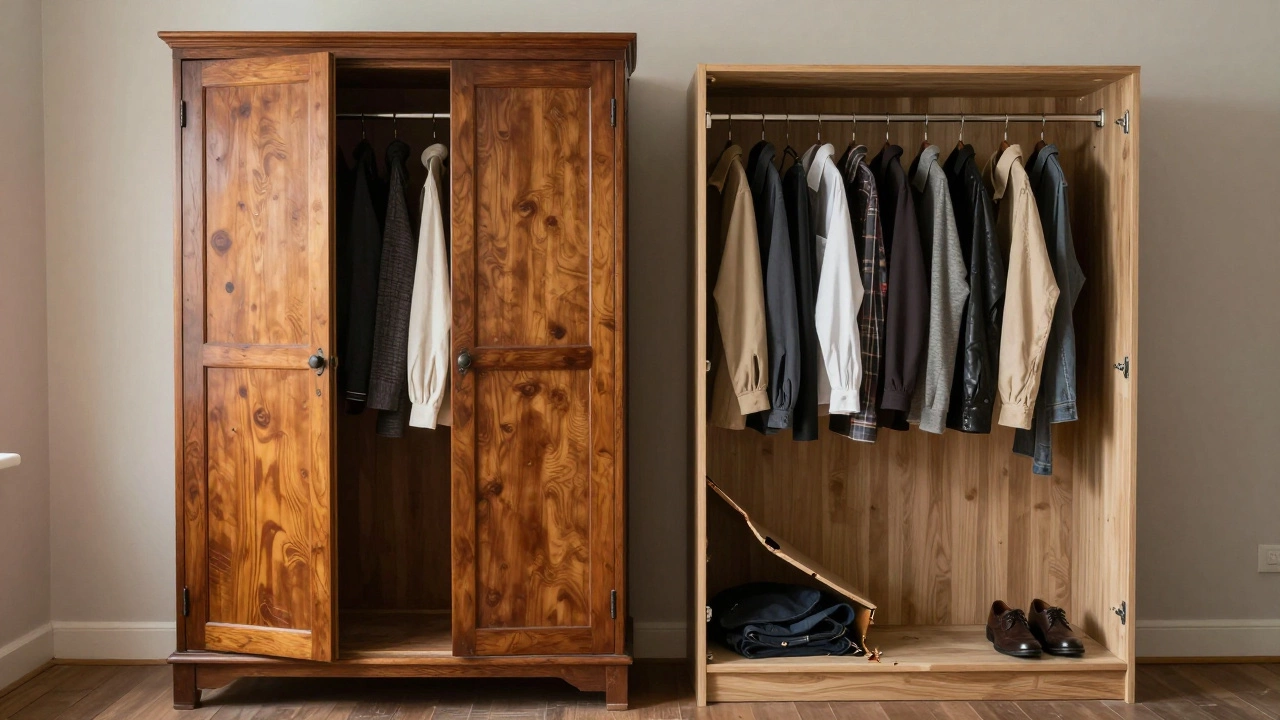
One of the biggest drivers of wardrobe cost is the material. Cheap wardrobes use particleboard or MDF-pressed wood scraps glued together with resin. These materials are light, easy to ship, and cheap to produce. But they also warp, swell in humidity, and fall apart after a few years. A $300 wardrobe made from particleboard might look fine on day one, but after two rainy seasons, the shelves sag and the hinges loosen.
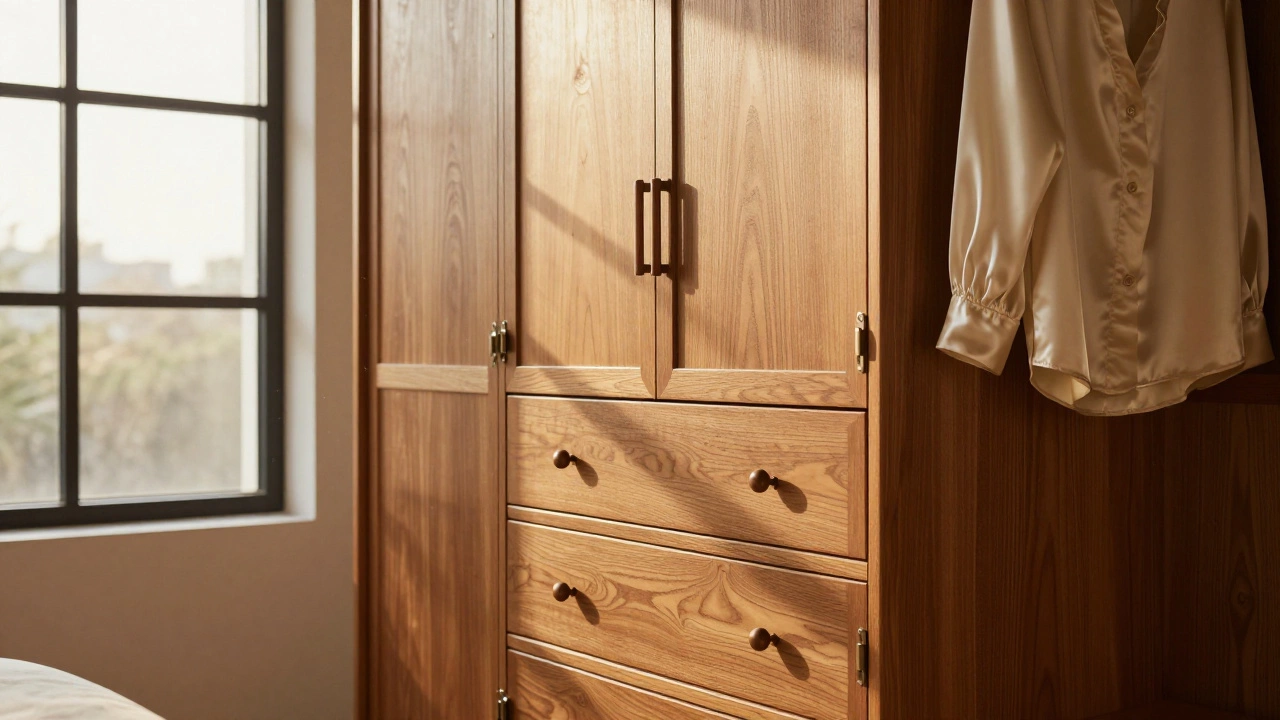
High-end wardrobes use solid wood: oak, walnut, teak, or maple. These woods are dense, durable, and age beautifully. Solid wood doesn’t just last longer-it resists dents, scratches, and moisture. A wardrobe made from solid oak can easily last 30 to 50 years. That’s not just furniture. That’s a legacy piece. The cost of sourcing, kiln-drying, and hand-finishing solid wood adds hundreds, sometimes thousands, to the price.
Hardware Isn’t an Afterthought-It’s the Backbone
Think about how often you open and close your wardrobe doors. Dozens of times a week. Over a decade, that’s thousands of movements. Cheap wardrobes use flimsy plastic hinges and thin metal tracks. They squeak, stick, or break within a year. High-quality wardrobes use soft-close hinges made from zinc alloy or stainless steel. These are engineered to handle 100,000+ cycles without failing.
The same goes for drawer slides. A $500 wardrobe might have basic metal slides that jam when overloaded. A $1,500+ wardrobe uses full-extension, ball-bearing slides rated for 75 pounds per drawer. These aren’t just upgrades-they’re safety features. You don’t want your clothes crashing to the floor because a drawer gave out.
Custom Fit Costs More Than Off-the-Shelf
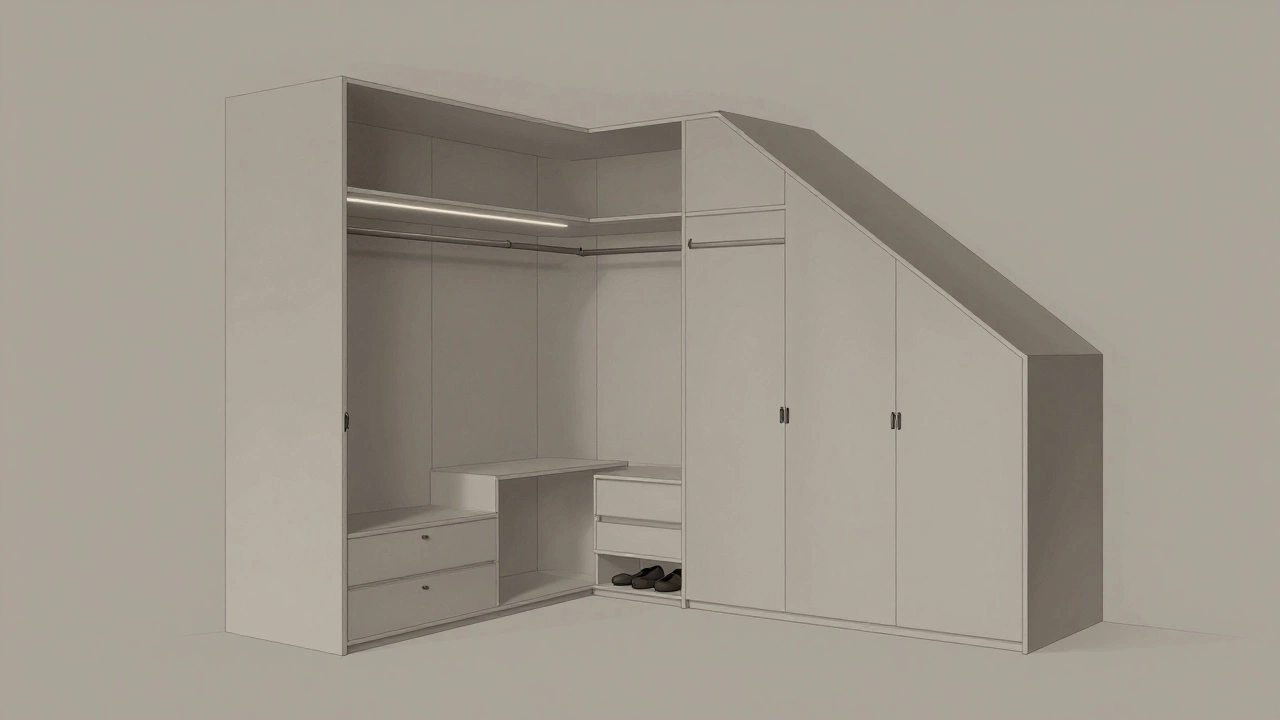
Most wardrobes you see in big-box stores are made in bulk, standardized to fit 80% of rooms. But if your room has an angled wall, a sloped ceiling, or an odd corner, you need something built to measure. Custom wardrobes are designed, cut, and assembled specifically for your space. That means no wasted material, no awkward gaps, and no compromises.
Custom work requires skilled carpenters, detailed measurements, and extra labor. A designer might spend 10-20 hours planning the layout, then another 30-40 hours building and installing it. That labor doesn’t come cheap. And because custom pieces are made one at a time, manufacturers can’t benefit from bulk discounts on materials or shipping. That’s why a custom wardrobe can cost 2-3 times more than a similar ready-made one.
Design Isn’t Just About Looks-It’s About Function
A good wardrobe isn’t just a place to hang clothes. It’s a system. High-end models include pull-out shoe racks, tie and belt drawers, jewelry trays, and mirrored doors that double as full-length mirrors. Some even have built-in lighting, USB charging ports, or humidity sensors to protect delicate fabrics.
These features aren’t gimmicks. They’re solutions to real problems. If you own 20 pairs of shoes, a shelf won’t cut it-you need angled, ventilated racks. If you wear silk blouses, you need padded hangers and space to avoid creasing. These thoughtful details require extra materials, precise engineering, and more assembly time. All of that adds up.
Branding and Retail Markup
When you buy a wardrobe from a well-known brand like IKEA, you’re paying for reliability and design consistency. When you buy from a luxury brand like Roche Bobois or Poliform, you’re paying for the name, the reputation, and the experience. These brands invest heavily in marketing, showrooms, customer service, and global distribution networks. That overhead gets passed on.
Then there’s retail markup. A wardrobe that costs a manufacturer $800 to make might retail for $2,500 in a high-end store. That’s because the store pays for floor space, staff, returns, and inventory management. You’re not just paying for the wardrobe-you’re paying for the entire buying experience.
Shipping, Assembly, and Installation
Wardrobes are big. Really big. A full-height, floor-to-ceiling wardrobe can weigh over 200 pounds. Shipping one across the country isn’t like sending a book. It needs special crating, lift-gate delivery, and sometimes two-person handling. That adds $150-$400 to the final price.
And if you want it assembled? That’s another $100-$300. Most people don’t realize how hard it is to assemble a large wardrobe correctly. One misaligned hinge, one uneven leg, and the whole thing won’t close right. Professional installers know how to level it on uneven floors, anchor it to the wall for safety, and make sure every drawer glides smoothly. That expertise isn’t free.
What You’re Really Paying For
When you buy a cheap wardrobe, you’re paying for convenience. You’re trading durability for price. You’ll likely replace it in 5-7 years. That’s not a bargain-it’s a cycle of repeated spending.
When you buy a high-quality wardrobe, you’re paying for longevity. You’re buying a piece that will outlast your furniture, your car, maybe even your first apartment. You’re paying for peace of mind: no sagging shelves, no broken hinges, no awkward gaps. You’re paying for a system that works, every day, for decades.
Think of it like buying shoes. A $40 pair might last six months. A $200 pair might last five years. One feels expensive upfront. The other feels like a smart investment. Wardrobes are the same.
Is There a Middle Ground?
Yes. You don’t need to spend $3,000 to get a wardrobe that lasts. Look for solid wood frames with high-quality hardware, even if the panels are engineered wood. Brands like Sauder, IKEA’s higher-end lines, or local cabinetmakers often offer good balance. Check the drawer slides-ball-bearing is a must. Look for soft-close hinges. Avoid anything with plastic parts in high-stress areas.
Buy secondhand. A well-maintained wardrobe from the 1980s or 90s made of solid oak can be found for under $500. These often have better build quality than today’s mass-produced pieces.
Or go modular. Systems like Elfa or IKEA’s PAX let you build your own custom layout with high-quality components, at a fraction of the cost of fully custom cabinetry.
Final Thought: It’s Not About the Box-It’s About the Life Inside
Your wardrobe holds your identity. Your work clothes. Your favorite sweater. Your wedding dress. It’s not just storage. It’s the quiet guardian of your daily life. A cheap one will fail when you need it most. A good one will hold up through breakups, moves, kids, and decades of laundry.
So yes, wardrobes are expensive. But the real question isn’t why they cost so much. It’s whether you’re willing to pay for something that lasts.
Are expensive wardrobes worth the money?
Yes-if you plan to keep your furniture long-term. A high-quality wardrobe can last 30-50 years, while a cheap one may need replacing in 5-7. Over time, buying once costs less than buying repeatedly. Plus, better materials mean less maintenance, fewer repairs, and no sagging shelves or broken drawers.
What’s the difference between particleboard and solid wood wardrobes?
Particleboard is made from wood chips and glue, pressed into panels. It’s cheap and lightweight but weak under weight and moisture. Solid wood is cut from a single tree, sanded, and finished. It’s heavier, stronger, and resists warping. Solid wood can be sanded and refinished if scratched. Particleboard cannot.
Why do custom wardrobes cost so much more?
Custom wardrobes are built to fit your exact space, not a standard size. That means no mass production savings. Each piece is measured, cut, and assembled by hand. Design time, labor, and materials are all customized. A custom wardrobe can take 2-4 weeks to build and requires skilled carpenters, which adds to the cost.
Can I save money by buying a wardrobe online?
Sometimes, but not always. Online retailers cut out showroom costs, so prices can be lower. But shipping a large wardrobe can add $150-$400. Assembly is usually DIY. If you’re not handy, you’ll need to hire someone. Always check return policies-wardrobes are hard to return once assembled.
What should I look for in wardrobe hardware?
Look for soft-close hinges made of metal (not plastic) and full-extension ball-bearing drawer slides rated for at least 50 pounds. Avoid any wardrobe with plastic glides or flimsy metal tracks. Test the doors and drawers in-store-if they feel wobbly or stick, walk away.
Are secondhand wardrobes a good option?
Absolutely. Many wardrobes made before the 2000s used solid wood and real joinery, not glue and nails. You can find sturdy, well-built pieces at thrift stores, estate sales, or Facebook Marketplace for under $300. Sand and refinish them if needed-they often outperform new budget models.
Write a comment