
Coffee Table Size Calculator
Calculate your ideal coffee table size using these practical guidelines from the article:
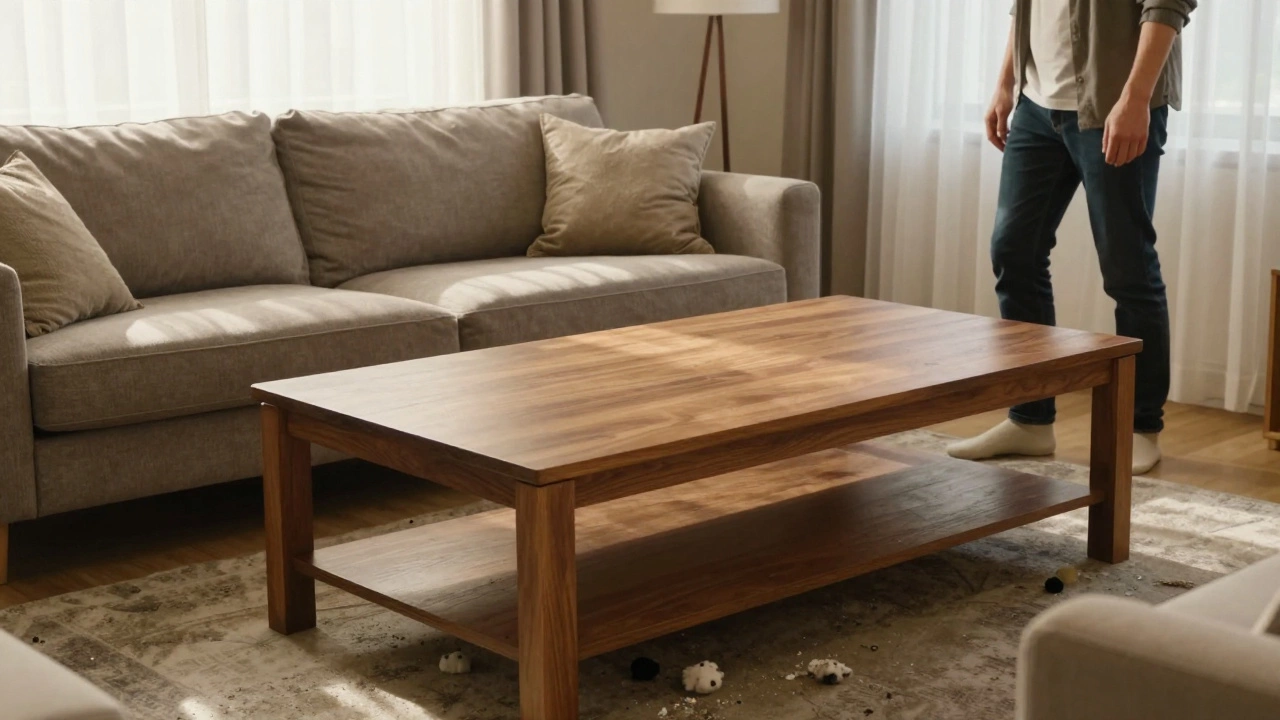
Ever walked into a room and felt like the coffee table was staring back at you? Not because it’s ugly, but because it’s massive-like it took up the whole living room and then some? You’re not alone. Coffee tables come in all shapes and sizes, but size matters more than most people realize. A table that’s too big doesn’t just look awkward-it can make your space feel smaller, harder to move through, and even less inviting.
How big is too big?
There’s no single answer, but there’s a simple rule: your coffee table should leave at least 18 inches of walking space all around it. That’s the minimum you need to comfortably get up from the sofa, walk to the side table, or let someone pass by without bumping knees. If your table sticks out more than that, it’s crowding the room.
Most standard coffee tables are between 40 and 50 inches long. If yours is over 60 inches, especially in a small or mid-sized living room, you’re probably pushing it. I’ve seen people bring in 72-inch tables because they thought "bigger looks more luxurious." But in a typical 12x14-foot room, that leaves just 12 inches of space on each side. That’s not luxury-it’s a traffic jam.
Why does size matter beyond looks?
It’s not just about aesthetics. A coffee table that’s too big affects how you live in the space. Imagine trying to get up from the sofa to grab a glass of water, and you have to twist sideways because the table’s edge is blocking your path. Or worse-you kick the table leg every time you stand up. That’s not a design flaw-it’s a daily annoyance.
Large tables also make it harder to clean around. Vacuuming under a 6-foot table with only 10 inches of clearance? Good luck. Dust bunnies multiply under there. And if you have kids or pets, a massive table becomes a hazard. Tripping over the edge? Easy. Knocking over a lamp? Even easier.
Then there’s the visual weight. A huge table can dominate the room, making your sofa look smaller than it is. It throws off the balance. Furniture should work together, not fight for attention.
What size should your coffee table be?
Here’s how to get it right:
- Length: Choose a table that’s about two-thirds the length of your sofa. If your sofa is 84 inches, aim for a 56-inch table. That’s the sweet spot.
- Height: Should match or be within 2 inches of your sofa seat height. Most sofas sit at 17-19 inches, so a 16-18 inch table works best.
- Width: Keep it between 18 and 24 inches deep. Anything wider than 26 inches starts to feel like a desk, not a coffee table.
Measure your space before you buy. Tape out the footprint of the table you’re thinking about on the floor. Sit on your sofa. Walk around it. See how it feels. If you feel cramped, go smaller.
When a big table actually works
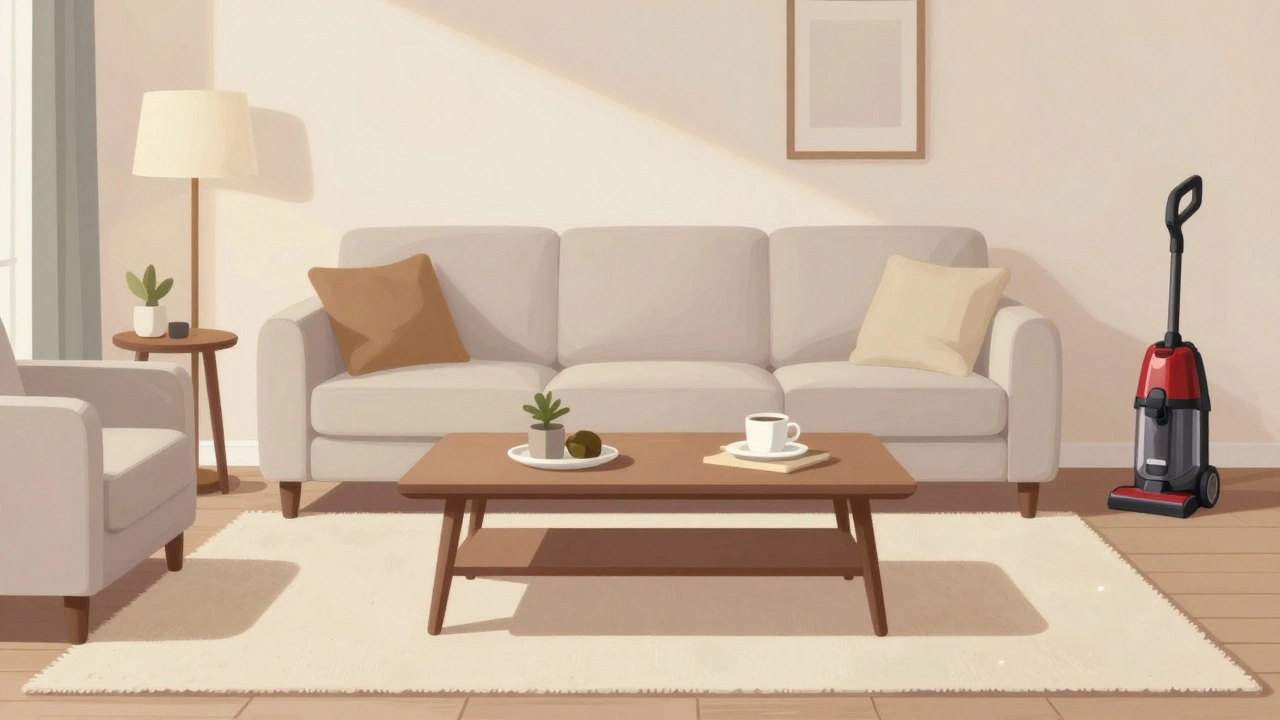
There are exceptions. If you have a large sectional, a long L-shaped sofa, or a spacious open-plan living room-say, over 20 feet wide-a bigger table can look intentional, not overwhelming. In those cases, a 72-inch table with 24-inch depth can anchor the space nicely.
But even then, you need to think about proportion. A 72-inch table should be paired with a sofa that’s at least 96 inches long. Otherwise, it looks like you stuck a dining table in front of a loveseat. That’s a mismatch, not a design choice.
Also, consider shape. A long, narrow table (like a console-style coffee table) can work better in narrow rooms than a wide, square one. It doesn’t block movement the same way.
What to do if you already have a too-big table
Maybe you bought it on sale. Maybe you inherited it. Maybe you just realized too late that it’s eating your living room. Don’t panic. You have options.
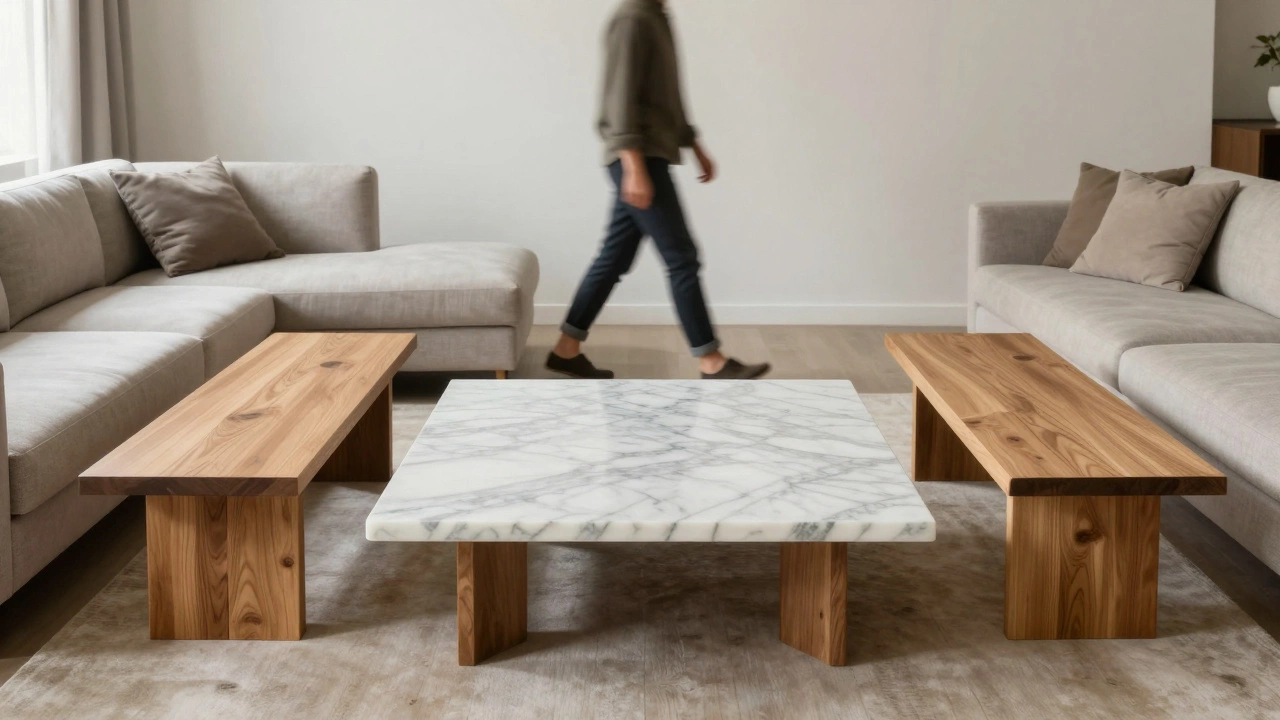
- Swap it for two smaller tables. Place them on either side of the sofa. It creates symmetry, adds flexibility, and opens up walkways.
- Use it as a side table. Move it to the corner or beside a chair. It still serves a purpose, just not as the center of the room.
- Add wheels. Some modern tables come with hidden casters. If yours doesn’t, a professional can install them. Suddenly, it’s easy to move aside for cleaning or entertaining.
- Layer with rugs. A large rug under the table can visually anchor it and make it feel more intentional, even if it’s oversized.
One client in Birmingham had a 78-inch marble table she loved but hated the way it blocked the doorway. We replaced it with two 36-inch oak tables on either side. She said it felt like the room got 20% bigger. No magic-just better proportion.
Common mistakes to avoid
- Choosing a table based on what looks good in a showroom. Showrooms are staged with empty space. Your living room isn’t.
- Thinking "I’ll just move the sofa back." That might work in theory, but then your TV placement is off, your lighting doesn’t hit right, and your rug doesn’t fit.
- Ignoring traffic flow. People need to move. If your table forces them to walk sideways or duck around, it’s not functional.
- Buying based on storage alone. Yes, a table with drawers is handy. But if you can’t get past it, those drawers are useless.
Final rule of thumb
If you can’t fit two people walking side by side between your sofa and the coffee table, it’s too big. That’s it. Simple. No math. No guesswork.
Living rooms are for living-not for displaying furniture. A coffee table should serve you, not the other way around. Size matters because comfort matters. And comfort isn’t about how much surface area you have. It’s about how easy it is to move, relax, and breathe in your own space.
Go measure your room today. Tape out the space. Sit down. Walk around. If it feels tight, it is. And there’s no such thing as a coffee table being "too stylish" to be too big.
Write a comment