

Bookcase Safety Risk Calculator
Input Your Bookcase Details
Every year, over 15,000 children in the U.S. alone end up in emergency rooms because of falling furniture. Bookcases, dressers, and shelves aren’t just storage-they’re potential hazards if they’re not secured. And yes, you have to anchor a bookcase if you have kids, pets, or even just a curious teenager who likes to climb. It’s not optional. It’s not a suggestion. It’s basic home safety.
Why Bookcases Fall
Bookcases don’t fall because they’re broken. They fall because they’re unbalanced. A tall, narrow bookcase filled with heavy hardcovers on the top shelves? That’s a recipe for disaster. The center of gravity shifts forward, and when someone pulls open a drawer below, leans on it, or even just bumps into it, the whole thing tips. It doesn’t need to be knocked over. Just a little force-like a cat jumping off the top shelf or a toddler pulling a book out-is enough.The National Association of Home Builders found that 75% of furniture tip-over incidents involve storage units taller than 30 inches. Bookcases are the third most common culprit, right after dressers and TVs. And they’re especially dangerous because people assume they’re stable. They look solid. They’re made of wood or metal. But weight distribution is everything.
What Happens When a Bookcase Tips Over
A bookcase falling isn’t like a book sliding off a shelf. It’s a 100-pound, 7-foot-tall object crashing down. The top shelves often land first, but the whole unit pivots, and the base can crush limbs, crush heads, or trap someone underneath. In 2024, a child in Birmingham was hospitalized after a 6-foot bookcase toppled onto her while she was reaching for a book. She was fine-thanks to the quick response of her parents-but the damage to her bedroom wall and the trauma to her family? That’s the kind of thing you don’t forget.And it’s not just kids. Elderly people, pets, even adults with poor balance can get hurt. A bookcase falling on someone’s leg can cause fractures. On the head? Traumatic brain injury. On the chest? Internal injuries. There’s no such thing as a "minor" furniture tip-over when it involves heavy, sharp-edged objects.
When You Absolutely Must Anchor a Bookcase
You need to anchor a bookcase if:- You have children under 10
- You have cats or dogs that climb or jump on furniture
- The bookcase is taller than 30 inches
- You live in an area prone to earthquakes
- The bookcase is on carpet or a raised floor
- You’ve ever noticed the bookcase wobbling when you touch it
Even if you think your kids are too careful, or your cat is too lazy, accidents happen in seconds. One moment of distraction-a phone ringing, a doorbell, a spilled drink-and suddenly a child is climbing for a toy on top. Anchoring takes five minutes. The alternative? A lifetime of regret.
How to Anchor a Bookcase (Step by Step)
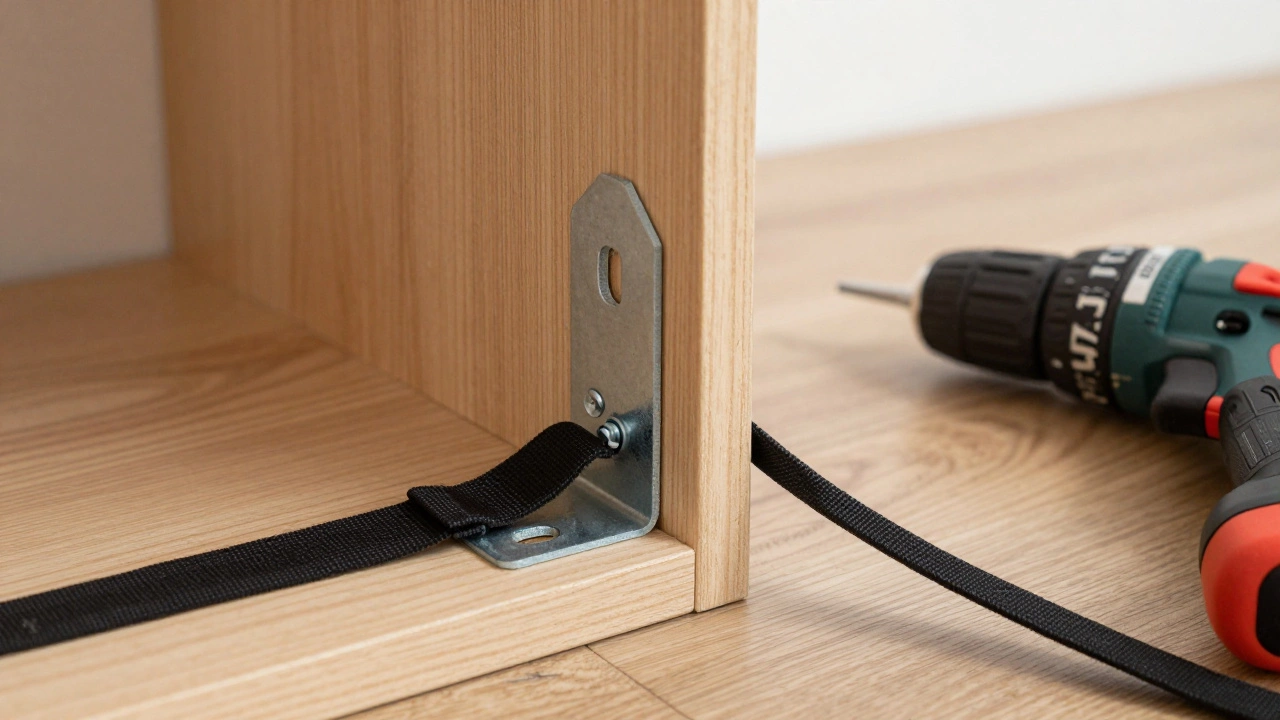
Anchoring isn’t complicated. You don’t need tools from a hardware store you’ve never heard of. Here’s what you need and how to do it:- Get an anti-tip kit. Look for one that includes wall anchors and straps or brackets. Most cost under £10. Brands like Safety 1st a brand of child safety products that manufactures furniture anchoring kits widely used in UK homes or Furniture Anchor a UK-based manufacturer of furniture safety restraints designed for homes with children and pets are common and reliable.
- Find a wall stud. Use a stud finder or tap the wall-solid sound means stud. If you can’t find one, use heavy-duty drywall anchors rated for at least 50 pounds.
- Attach the bracket to the back of the bookcase. Most kits come with screws. Drill them into the frame, not just the panel.
- Drive the wall anchor into the stud. Then connect the strap or bracket to the one on the bookcase. Pull it tight but not so tight it warps the wood.
- Test it. Give the bookcase a firm push from the top. It shouldn’t move more than half an inch.
Don’t just use adhesive strips. They don’t hold. Don’t use tape. Don’t rely on "it’s heavy enough." Weight doesn’t stop tipping-it just makes the fall worse.
What If You Can’t Anchor to a Wall?
Some homes have plaster walls, stone fireplaces, or rented apartments where drilling isn’t allowed. You still have options:- Use a top-heavy furniture anchor a type of floor-to-furniture restraint that connects the bottom of a bookcase to a heavy base or floor anchor without wall drilling. These are designed for renters and use weight distribution instead of wall mounting.
- Place the bookcase against a load-bearing wall with a heavy rug or mat underneath to add friction.
- Use a low, wide bookcase instead of a tall, narrow one. The lower the center of gravity, the less likely it is to tip.
- Put heavier items on the bottom shelves and light ones on top. This keeps the weight centered.
These aren’t perfect, but they’re better than nothing. And if you’re renting, ask your landlord for permission to install anchors. Most will agree-it protects their property too.
Common Myths About Bookcase Safety
Let’s clear up some lies people tell themselves:- "My bookcase is too heavy to tip." False. A 200-pound bookcase can still tip if the center of gravity shifts. A child climbing to the top? That’s all it takes.
- "I don’t have kids. I’m fine." What about guests? Grandparents? Nephews? Pets? Accidents happen when you least expect them.
- "I’ll just keep it away from the kids." Kids find things. Cats jump. Toddlers crawl. You can’t predict where they’ll go.
- "It’s just a bookcase. It’s not a TV." A TV weighs 40 pounds. A full bookcase can weigh 300. Which one do you think hits harder?
What About IKEA and Other Flat-Pack Bookcases?
IKEA, Wayfair, and similar brands include anchoring kits with nearly every tall piece of furniture. Why? Because they’ve been sued. Over 1,500 furniture tip-over lawsuits in the U.S. between 2010 and 2023 led to new safety rules. The Consumer Product Safety Commission now requires all tall furniture sold in the U.S. to include anchoring hardware. The UK follows similar guidelines under BS EN 12221:2020.So if you bought a bookcase from IKEA and didn’t anchor it? You didn’t follow the instructions. And if something happens? Insurance might not cover it. Liability could be yours.
Real-World Examples
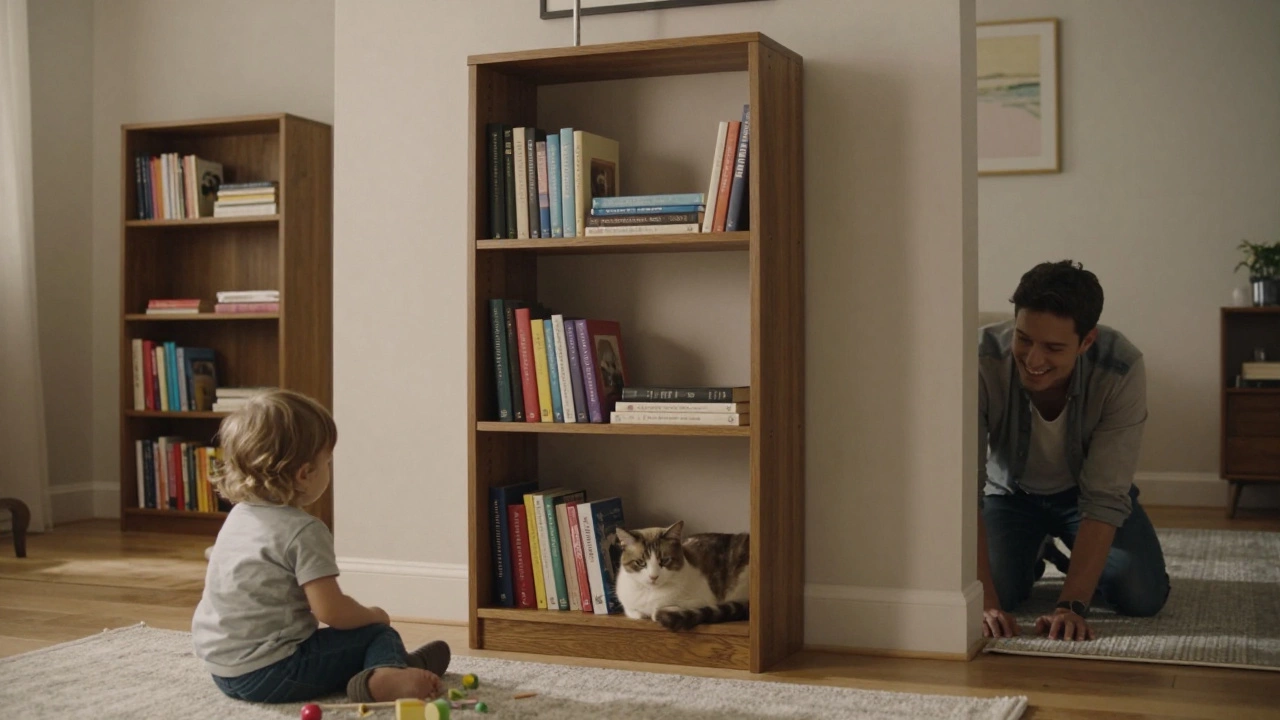
In 2023, a family in Birmingham lost their 3-year-old after a 7-foot IKEA KUNGSBACKA bookcase fell during a game of hide-and-seek. The child was found under the shelves, unconscious. He survived, but with lasting injuries. The parents later told reporters: "We thought we were safe because we put it in the corner. We didn’t know we had to screw it to the wall."That story isn’t unique. It’s common. And it’s preventable.
How Often Should You Check Your Anchors?
Anchors don’t last forever. Screws can loosen. Drywall anchors can crack. Straps can stretch. Check them every six months. Give the bookcase a good shake. If it moves, tighten it. If the wall anchor is loose, replace it. Don’t wait for a wobble to become a crash.Also, if you move the bookcase-even a few inches-you must re-anchor it. The wall connection is only as good as the last time you installed it.
What Else Should You Anchor?
Bookcases aren’t the only danger. You should also anchor:- Tall dressers
- TV stands
- Shelving units
- File cabinets
- Armoires
- Bookshelves with glass doors
If it’s tall and has a top-heavy design? Anchor it. It takes five minutes. The cost? Under £15. The risk of not doing it? Your child’s life.
Do I really need to anchor a bookcase if I don’t have kids?
Yes. Even if you don’t have children, you still have guests, pets, or aging relatives who might trip or lean on the bookcase. A bookcase tip-over isn’t just a child safety issue-it’s a home safety issue. A cat jumping onto the top shelf, a visitor bumping into it, or even a minor earthquake can cause a fall. Anchoring protects everyone.
Can I use adhesive strips instead of screws?
No. Adhesive strips, like those sold for TVs, are not designed for heavy furniture. They fail under weight and vibration. A bookcase can weigh 200 pounds or more. Adhesives are meant for lightweight items like mirrors or picture frames. Relying on them is dangerous and false security.
What if I rent and can’t drill holes in the wall?
Use a floor-to-furniture anchor system. These connect the bottom of the bookcase to a heavy base plate on the floor without wall drilling. You can also place the bookcase against a heavy rug or use a low, wide model instead of a tall one. Always check with your landlord-many will allow small, hidden anchors if they’re properly installed and removed later.
Is it enough to just put heavy books on the bottom shelf?
It helps, but it’s not enough. Weight distribution reduces the risk, but doesn’t eliminate it. A bookcase can still tip if it’s tall and narrow, especially if someone pulls open a drawer or climbs on it. Anchoring is the only guaranteed way to prevent a fall.
Do I need to anchor a short bookcase under 30 inches?
Generally, no. Bookcases under 30 inches have a low center of gravity and are much harder to tip. But if it’s narrow, made of lightweight materials, or holds heavy items on top, it’s still worth anchoring-especially if you have pets or young children. When in doubt, anchor it.
Write a comment