
Nothing kills the vibe of a living room faster than a couch that sags in the middle. You bought it new, maybe even splurged a little, and now - after just a year or two - it’s got a permanent dip where you sit. It’s not just uncomfortable. It feels like a waste of money. The truth? Most couches sag because they were built to look good in a showroom, not last in your home. But you don’t have to accept that. Picking a couch that won’t sag isn’t about spending the most - it’s about knowing what to look for.
Start with the frame
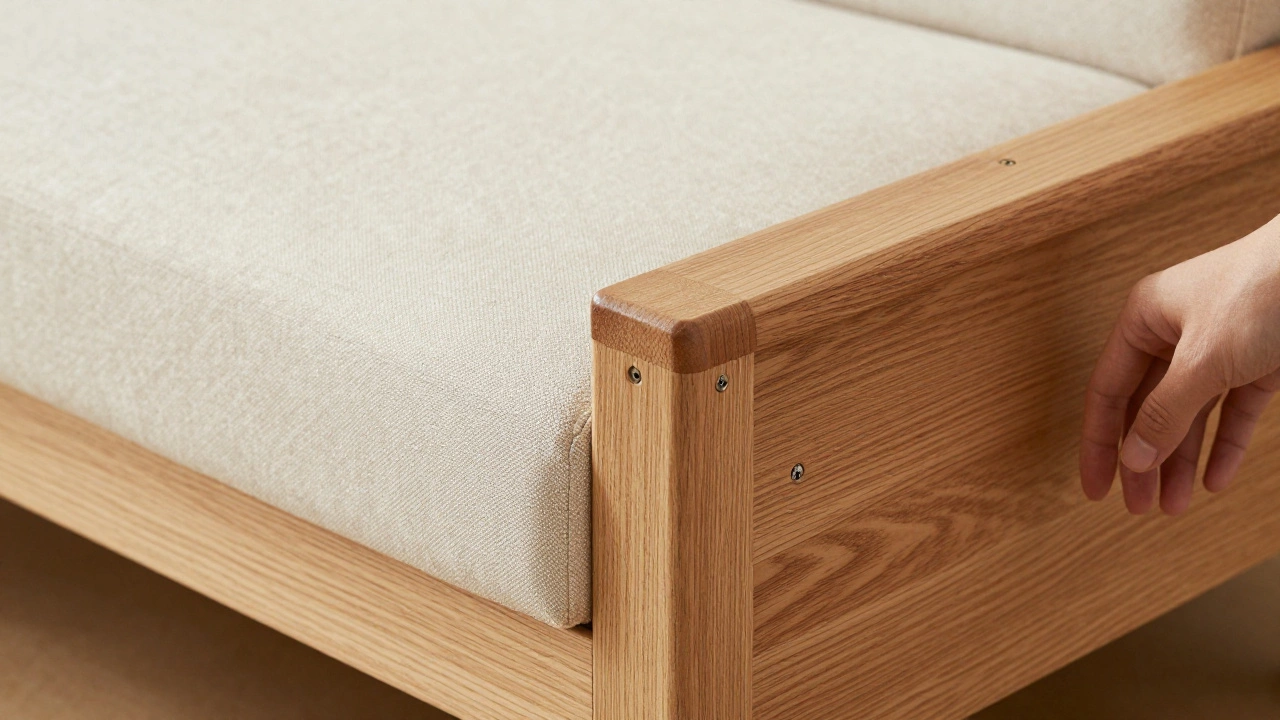
The frame is the skeleton of your couch. If it’s weak, nothing else matters. Look for kiln-dried hardwood frames. That means the wood was dried in a controlled oven to remove moisture, so it won’t warp or crack over time. Avoid softwoods like pine or particleboard - they bend under weight and break down fast. Most budget couches use these because they’re cheap. High-quality brands use hardwoods like oak, maple, or beech. You won’t always see this on the tag, but ask the salesperson. If they hesitate or say "it’s all the same," walk away.Check the joints. A good frame is held together with dowels, corner blocks, and screws - not just staples or glue. Try to lift one corner of the couch off the floor. If the whole thing wobbles or creaks, the frame isn’t solid. A sturdy frame should feel locked in place, like a piece of furniture meant to last decades.
Spring system matters more than you think
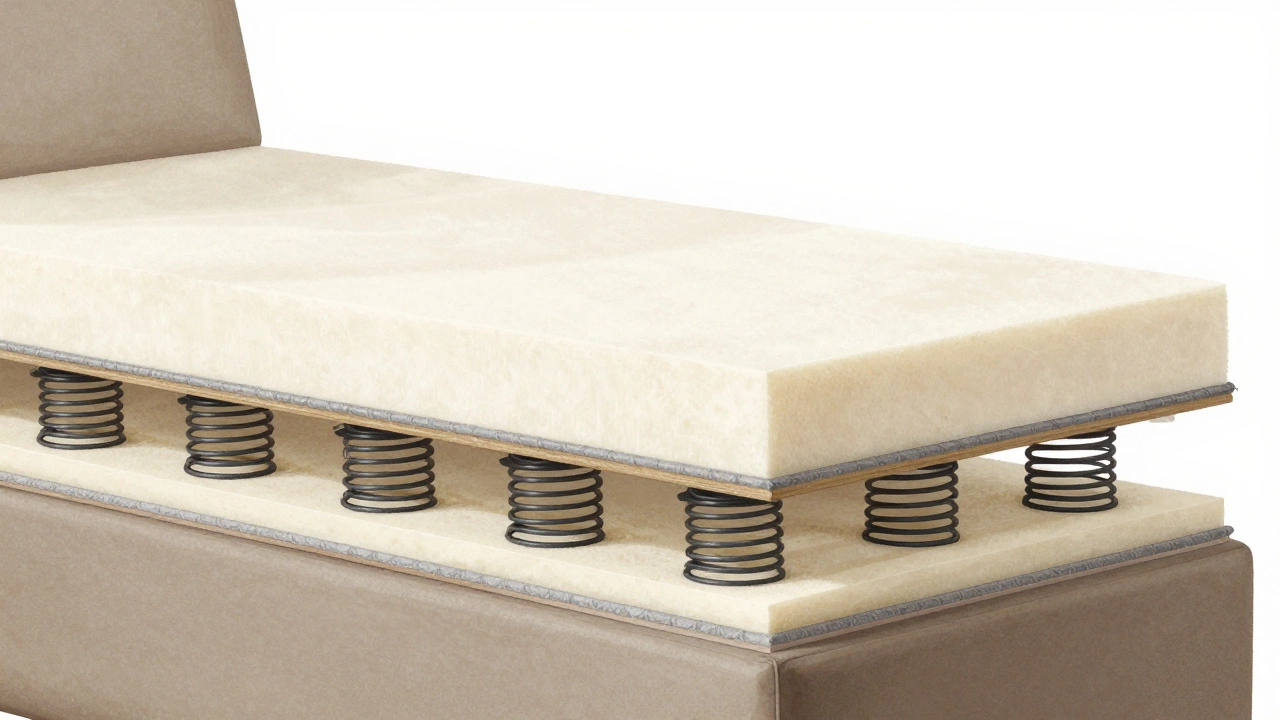
Cushions sit on springs. And springs decide how long the couch holds its shape. The best system is eight-way hand-tied springs. Each spring is individually tied with durable twine in a grid pattern. This gives even support across the whole seat and lets the couch flex naturally without collapsing. It’s the same system used in high-end furniture from the 1950s - and it still works today.Less expensive couches use sinuous S-shaped springs. These are metal wires that run front to back, clipped to the frame. They’re faster to install and cheaper, but they lose tension over time. If you sit on one spot for years, those wires stretch out and the seat sinks. You can spot them by looking under the cushion. If you see long, wavy metal wires running across the seat, you’re looking at a couch that will sag.
Choose the right cushion foam
Foam density is the secret no one talks about. Most couches use low-density foam - 1.5 to 1.8 pounds per cubic foot. It feels soft at first, but it compresses like a sponge after a few months. You want high-resilience foam with a density of at least 2.0 pounds per cubic foot. For heavy use or larger bodies, aim for 2.5 or higher.Here’s a simple rule: the heavier the cushion feels when you lift it, the better the foam. A 2.5 density foam cushion for a standard seat should weigh around 12 to 15 pounds. If it feels light, like styrofoam, skip it. Also, look for cushions with a layer of fiber wrap around the foam. That keeps the foam from shifting and helps it hold its shape longer. Some brands even mix in down or feathers, but those are for softness, not support. If you want durability, foam is your friend.
Look for removable, replaceable cushions
A couch with fixed cushions is a couch you’ll eventually have to replace. Why? Because the foam inside wears out, and you can’t fix it. But if the cushions are removable, you can flip them, rotate them, or even replace them later. That extends the life of the whole sofa by years.Check if the cushion covers have zippers. If they do, you can unzip them and see what’s inside. You should see a layer of foam, maybe some fiber wrap, and a sturdy cotton or canvas inner cover. No zippers? That’s a red flag. It means the manufacturer doesn’t expect you to ever open it up - so they cut corners on the materials inside.
Test it like you live on it
Don’t just sit on the couch for five seconds and smile. Sit like you do at home. Lean back. Cross your legs. Put your feet up. Press down hard on the center of the seat. Does it sink too far? Does it feel like it’s bottoming out? Now stand up and look at the seat. Does the fabric bounce back, or does it stay indented?Try the armrests too. Squeeze them. They shouldn’t feel hollow or floppy. A good armrest has a solid wood or high-density foam core inside. If it gives way like a beanbag, it won’t support your arms over time.
Check the warranty - and what it really covers
A 10-year warranty sounds great - until you read the fine print. Many warranties cover only the frame, not the cushions. Some say "limited" and exclude sagging if it’s under 1.5 inches. That’s meaningless. You want a warranty that covers both the frame and the cushions, with a clear clause about sagging. Look for terms like "no more than 1 inch of compression" over the warranty period.Brands like Stickley, Pottery Barn, and Crate & Barrel offer solid cushion warranties. Some smaller, local makers even offer 15-year coverage on foam. Ask for the warranty document before you buy. If they can’t give it to you, that’s a sign they’re not confident in their product.

What to avoid at all costs
Here are the top three couch killers:- Low-density foam (under 1.8 lbs/ft³) - it turns to mush in 12 to 18 months.
- Sinuous springs - they stretch, sag, and rattle.
- Particleboard or plywood frames - they warp, split, and break under pressure.
Also avoid couches marketed as "luxury" but sold at deep discounts. If it’s priced like a budget item, it’s built like one. You’re paying for the brand name, not the build.
Real-world example: What worked for me
I bought a couch in 2022 after testing six different ones in Birmingham showrooms. I ignored the ones with soft, pillowy cushions. I picked a simple, no-frills sectional from a local upholsterer who showed me the frame, the springs, and the foam density on a spec sheet. The foam was 2.8 density, the frame was kiln-dried oak, and the springs were hand-tied. It cost £1,800 - more than I planned - but it’s still firm and supportive in early 2026. My kids jump on it. My dog sleeps on it. It hasn’t sagged a millimeter.That’s the difference. You don’t need the fanciest fabric or the most stylish design. You need a couch built to last.
Final checklist before you buy
Use this quick list before handing over your money:- Frame: Is it kiln-dried hardwood? (Ask for proof.)
- Springs: Are they hand-tied or sinuous? (Look under the cushion.)
- Foam density: Is it 2.0 lbs/ft³ or higher? (Lift the cushion - if it’s light, skip it.)
- Cushions: Are they removable and zipped? (If not, walk away.)
- Warranty: Does it cover cushion sagging? (Must specify compression limits.)
- Test: Did you sit, lean, press, and move like you do at home?
If you check all six, you’re not just buying a couch. You’re buying peace of mind.
Can I fix a sagging couch instead of replacing it?
Yes, but only if the frame and springs are still good. You can replace the foam cushions with higher-density ones - many upholstery shops offer this service for £100 to £250 per seat. But if the frame is warped or the springs are stretched, it’s not worth repairing. The cost of fixing will be close to buying new.
Is leather better than fabric for preventing sag?
No. Leather doesn’t stop sagging - it just hides it better. The issue is inside the couch, not the cover. A leather couch with low-density foam and sinuous springs will sag just like a fabric one. Choose based on comfort and maintenance, not durability claims.
How long should a good couch last?
A well-built couch with a hardwood frame, hand-tied springs, and high-density foam should last 10 to 15 years with normal use. Some last 20+ years if you rotate cushions and avoid heavy, constant pressure on one spot.
Are IKEA couches likely to sag?
Most IKEA couches use particleboard frames and low-density foam (1.5-1.8 lbs/ft³). They’re fine for short-term use, but they typically start to sag within 2 to 3 years. They’re designed for renters or temporary setups, not long-term homes.
Does the size of the couch affect how quickly it sags?
Yes. Larger couches - especially sectionals - put more stress on the frame and springs. A 3-seater with weak construction will sag faster than a small loveseat. Always check the support system, even on big models. Look for extra center supports or additional legs under the middle section.
Write a comment