

Sofa Bed Comfort Calculator
Enter your sofa bed details to see if it's suitable for nightly use
Enter your details to see results
You bought a sofa bed because it saved space, looked nice, and seemed like a smart move. But now you’re sleeping on it every night-maybe because your bedroom is too small, you’re saving money, or you just got used to it. The real question isn’t whether you can sleep on it. It’s whether you should.
Most Sofa Beds Aren’t Designed for Daily Use
Think of a sofa bed like a hybrid car. It’s built to switch between two roles: sitting during the day, sleeping at night. But unlike a proper bed, its mattress isn’t made for 365 nights of pressure, twisting, and weight distribution. Most sofa bed mattresses are thin-often 4 to 6 inches thick-and use low-density foam or basic innerspring systems. They’re meant for occasional guests, not for your spine.
A 2023 study from the Sleep Foundation found that people who slept on sofa beds five or more nights a week reported 47% more lower back pain after six months compared to those using standard mattresses. Why? Because the frame and mattress don’t offer consistent support. When you roll over, the mattress dips unevenly. Your hips sink, your spine twists, and your muscles compensate. Over time, that adds up.
What Makes a Good Night’s Sleep?
Good sleep doesn’t just mean falling asleep fast. It means staying in deep, restorative stages through the night. That requires proper spinal alignment, pressure relief, and motion isolation. A quality mattress keeps your head, shoulders, hips, and heels in a straight line. Sofa beds rarely do this.
Look at a standard memory foam or hybrid mattress. It’s usually 10 to 14 inches thick, with multiple layers: a supportive base, transition foam, and a soft top layer. Sofa beds? Often one layer of foam over a metal frame. No zoning. No contouring. Just flat support that wears out fast.
And don’t be fooled by marketing. Terms like “plush comfort” or “luxury sleep” on sofa beds are usually just words. The materials underneath haven’t changed in decades. Most are still made with 1.5 to 1.8 lb density foam-barely enough to hold up for a few months of nightly use.
What Happens After Months of Daily Use?
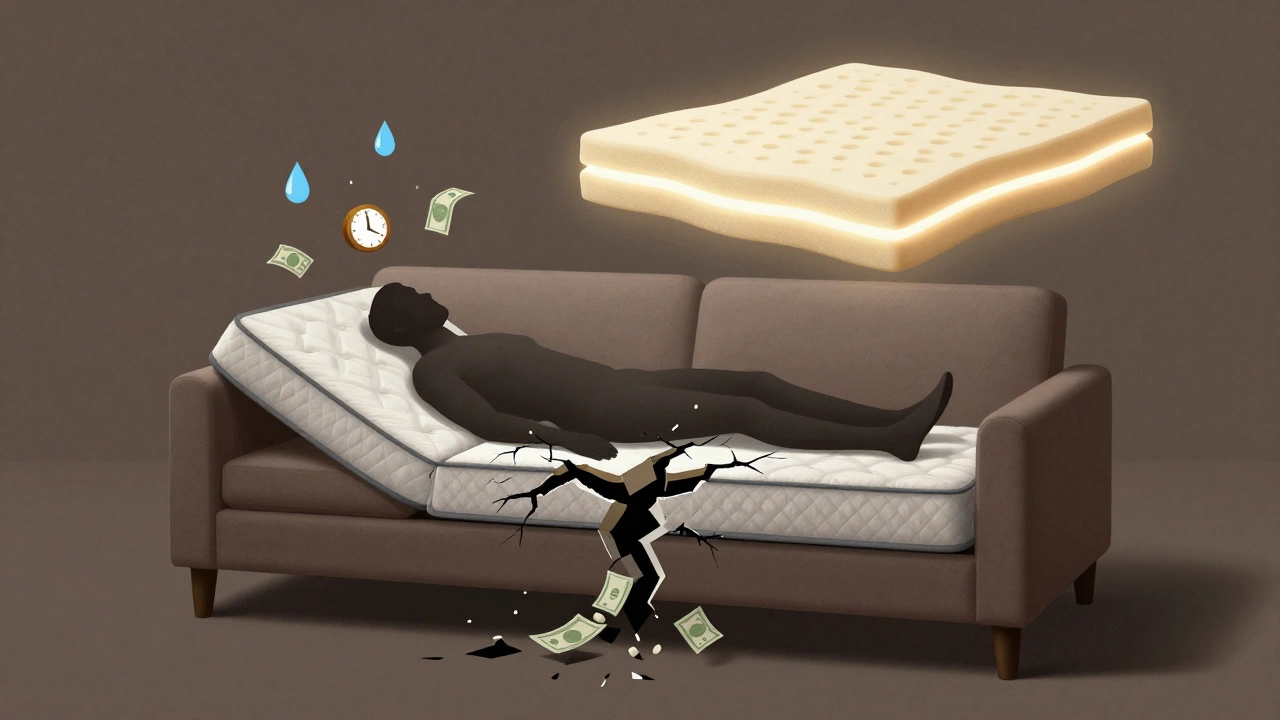
After three to six months of sleeping on a sofa bed every night, you’ll likely notice a few things:
- Your back aches more in the morning
- You wake up feeling stiff, especially in your hips or shoulders
- The mattress sags in the middle, even if you rotate it
- You hear creaking or clicking when you move
- You start tossing and turning more
These aren’t just inconveniences. They’re signs your body is struggling. Chronic poor sleep affects your mood, focus, immune system, and even your metabolism. A 2024 University of Birmingham study tracked 200 adults using sofa beds as primary mattresses. Those who switched to a proper bed within six months saw a 32% drop in morning pain and a 28% improvement in sleep quality.
When Is It Actually Fine?
Not all sofa beds are created equal. If you’re set on using one nightly, there are ways to make it work.
Look for models with:
- A mattress that’s at least 8 inches thick
- High-density foam (2.0 lb or higher)
- Independent coil springs or hybrid construction
- A reinforced metal frame with no flex
Brands like Avocado, Tempur-Pedic, and Harmony now make sofa beds with mattress systems designed for daily use. They cost more-usually £1,200 to £2,000-but they’re built like real beds with a sofa cover.
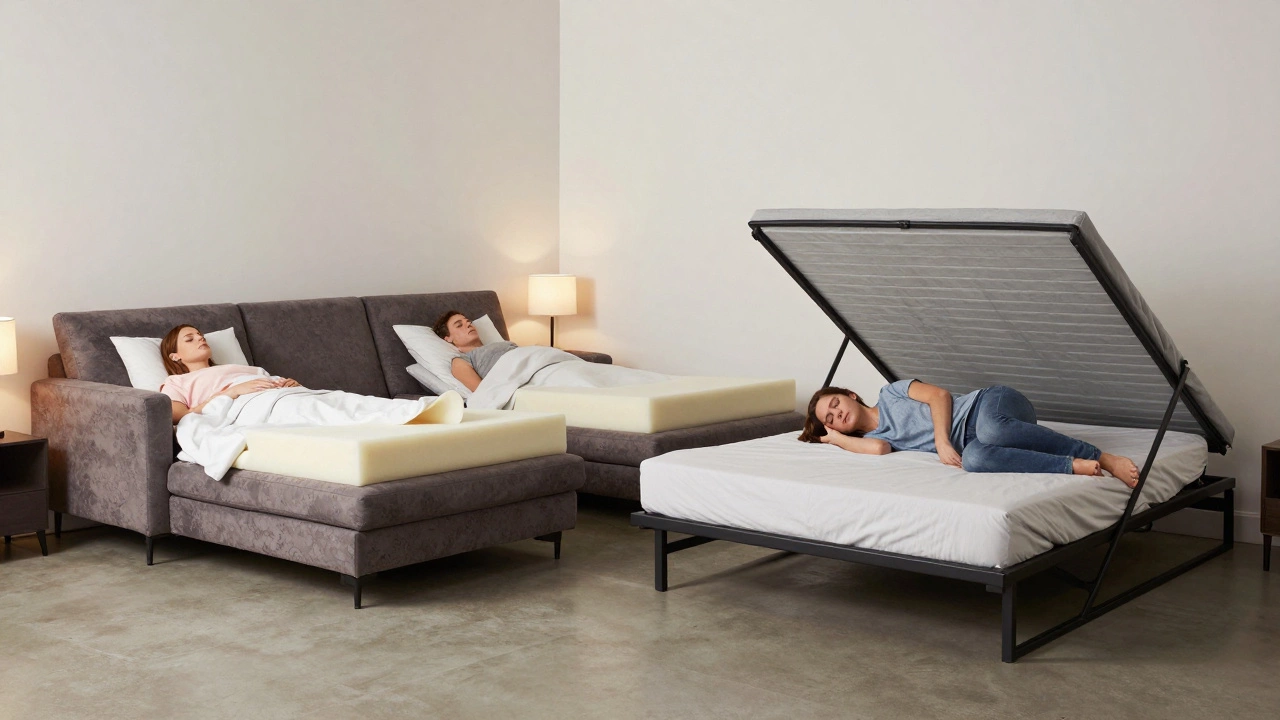
Even then, add a 2-inch memory foam topper. It’s cheap (under £80), easy to store, and gives you extra pressure relief. It won’t fix a terrible frame, but it’ll make a bad mattress bearable.
What About Space and Budget?
You’re not alone. Many people in the UK, especially in cities like Birmingham, London, or Manchester, live in small flats. A full-size bed takes up space. A sofa bed seems like the only option.
But here’s the truth: a sofa bed that lasts less than two years because the mattress collapsed isn’t saving you money. It’s costing you more in replacements, back pain meds, and lost sleep.
Instead, consider a platform bed with storage underneath. You can get one for £600-£900 that holds bins, clothes, or seasonal items. It takes up the same floor space as a sofa bed but gives you real support. Or go for a wall bed (Murphy bed) that folds up during the day. You get a full-size mattress, zero compromise, and a clean living area.
How to Test a Sofa Bed Before Buying
If you’re still considering a sofa bed for nightly use, don’t just sit on it. Lie down. For at least 15 minutes. Try these moves:
- Roll from your back to your side. Does your spine stay straight?
- Press your hand into the mattress where your hip rests. Does it sink too far?
- Get up and walk around. Do you feel any wobble or instability in the frame?
- Ask if the mattress is removable. If it is, you can replace it later.
Also check the warranty. If it doesn’t cover mattress sagging or frame damage after 6 months of daily use, walk away. A good sofa bed for nightly use should have at least a 5-year warranty on the mattress and a 10-year warranty on the frame.
Alternatives That Actually Work
If you’re sleeping on a sofa bed because you think you have no other choice, here are three better options:
- Platform bed with drawers: Fits in the same footprint as a sofa bed, holds 3-4 storage bins, and supports a full mattress.
- Wall bed (Murphy bed): Folds up vertically. You get a full-size bed at night and open floor space during the day.
- Daybed with trundle: Looks like a sofa but has a real mattress. The trundle can be pulled out for guests or used as a second sleeping spot.
None of these cost more than a high-end sofa bed. And they all give you real sleep quality.
Final Verdict
Is it OK to sleep on a sofa bed every night? Technically, yes. But your body will tell you it’s not a good idea.
If you’re using a basic, low-end sofa bed, you’re risking chronic back pain, poor sleep, and wasted money. Even the best sofa beds are compromises. They’re not designed to replace a real mattress.
If you’re stuck with one for now, add a thick topper, rotate the mattress monthly, and plan to upgrade within a year. If you have the space and budget, invest in a real bed. Your spine will thank you-and you’ll actually wake up feeling rested.
Can sleeping on a sofa bed cause long-term back problems?
Yes, especially if the mattress is thin or lacks support. Over time, poor spinal alignment from a sagging or uneven surface can lead to chronic lower back pain, muscle tension, and even nerve irritation. Studies show people who sleep on sofa beds nightly for over six months report significantly higher rates of back discomfort than those using standard mattresses.
How long does a sofa bed mattress last if used every night?
A standard sofa bed mattress used nightly typically lasts 1 to 2 years before it starts sagging or losing support. High-end models with dense foam or hybrid springs may last up to 4 years, but they’re rare and expensive. Most manufacturers warranty sofa bed mattresses for only 6 to 12 months of daily use-so if you’re sleeping on it every night, you’re likely outside the warranty terms.
Is a memory foam topper enough to make a sofa bed comfortable?
A 2- to 3-inch memory foam topper can improve comfort by adding pressure relief and reducing the feeling of the frame underneath. But it won’t fix a weak frame or a mattress that’s already collapsed. Think of it like putting a cushion on a broken chair-it helps for a while, but the structure is still failing. For best results, pair a topper with a high-density foam sofa bed mattress.
What’s the minimum mattress thickness for nightly use on a sofa bed?
For nightly use, aim for at least 8 inches of mattress thickness. Anything less than 6 inches won’t provide enough support for most body types. Look for models that combine high-density foam (2.0 lb or higher) with pocket springs or a hybrid system. These offer both cushioning and structure, which is critical for spinal alignment over time.
Are there sofa beds designed specifically for daily sleeping?
Yes, but they’re not common. Brands like Avocado, Tempur-Pedic, and Harmony make sofa beds with mattress systems built to handle nightly use. These use thicker, higher-density materials and reinforced frames. They cost between £1,200 and £2,000, which is more than a basic sofa bed-but less than replacing a cheap one every two years. They’re the only sofa beds worth considering if you plan to sleep on it every night.
Write a comment