
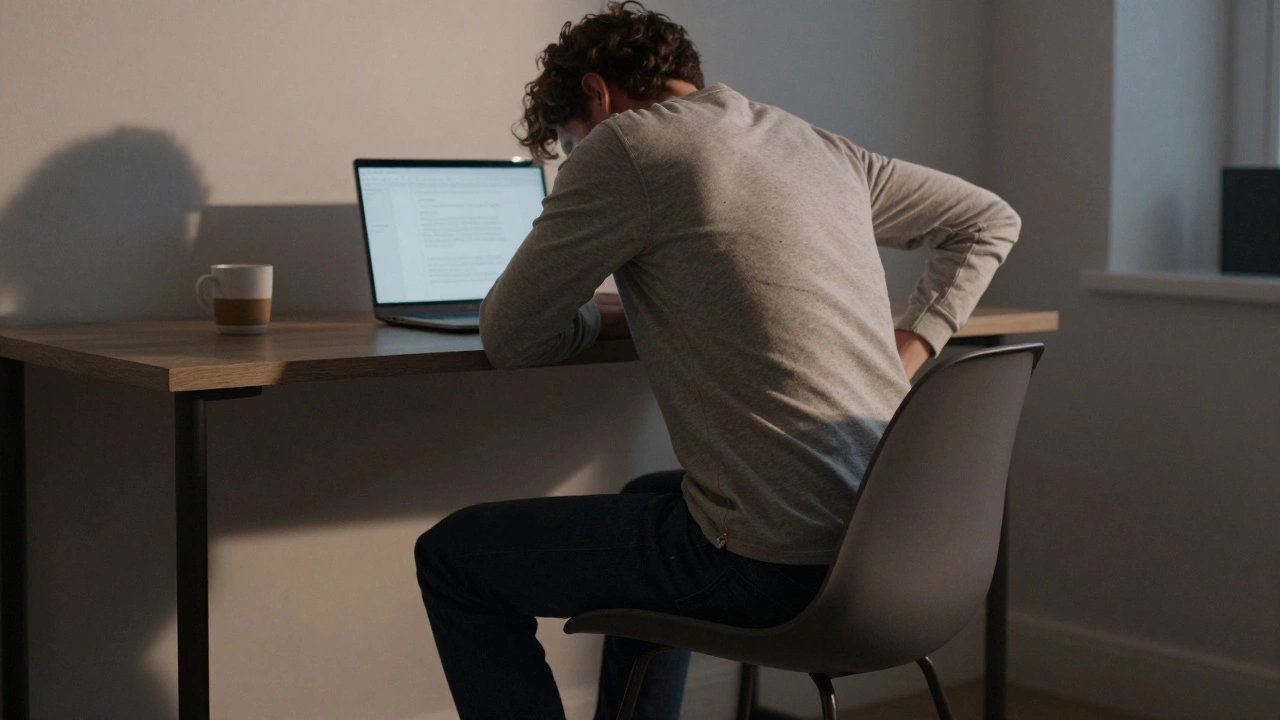
You see them everywhere-coffee shops, workshops, modern home offices. Sleek, simple, no backrest. Stools. They look cool. They save space. And maybe you’ve started using one because your coworker swears it’s better for your posture. But here’s the question no one tells you: is sitting on a stool bad for your back? The answer isn’t yes or no. It’s more complicated than that.
Why People Think Stools Are Better
A lot of the hype around stools comes from the idea that they force you to sit up straight. No backrest means no slouching. No leaning. You’re forced to engage your core. That sounds great, right? Some fitness coaches even recommend them for short bursts of work, claiming they activate your muscles more than a traditional chair. There’s truth to that. When you sit on a stool without support, your abs, lower back, and glutes do work harder to keep you upright. A 2023 study from the University of Birmingham’s Ergonomics Lab found that people using height-adjustable stools burned about 12% more calories per hour than those in standard office chairs. That’s not nothing. But here’s what they didn’t measure: how long people could actually stay on them.The Problem With No Support
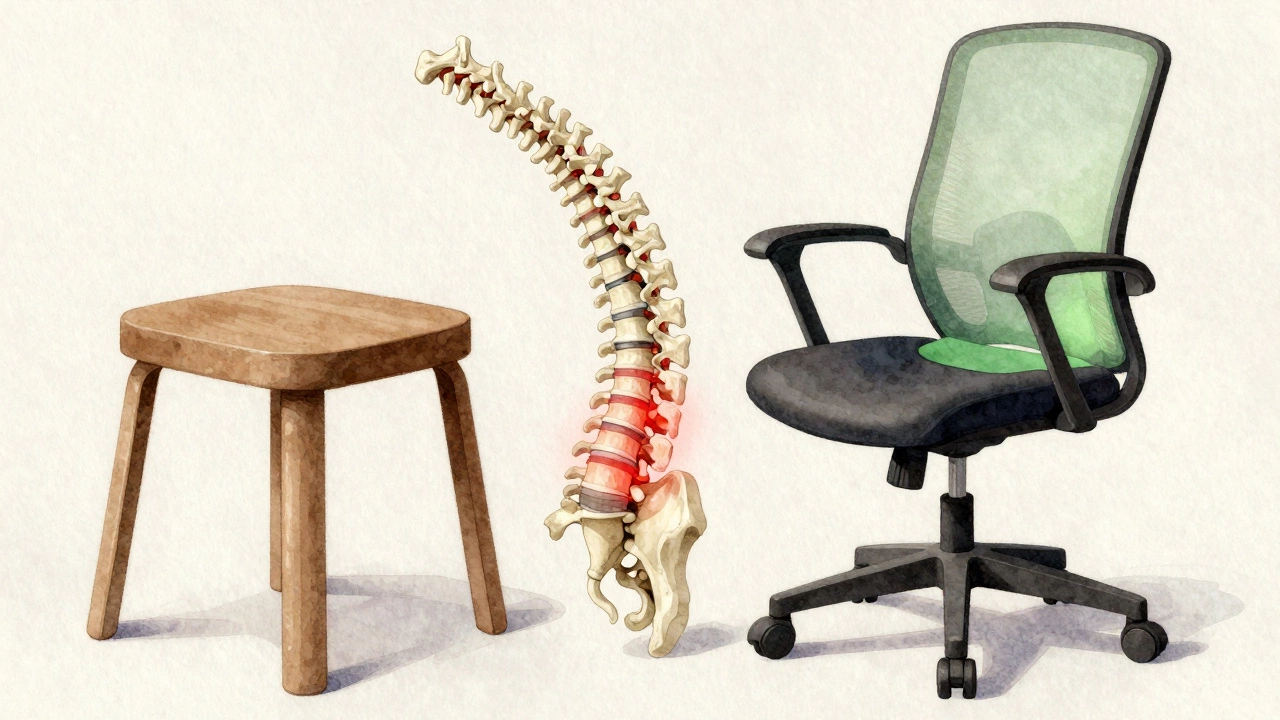
Your spine isn’t designed to hold itself upright for eight hours straight. It’s built to move, shift, and rest. When you sit on a stool without a backrest, your lower back (the lumbar region) loses its natural curve. That curve-called the lordosis-isn’t just for looks. It’s your body’s shock absorber. Without it, pressure shifts to your discs, ligaments, and nerves. Think about it this way: if you stood for eight hours with no support, your feet would ache, your legs would tremble, and your back would scream. Sitting on a stool without support does the same thing, just in a different position. A 2024 survey of 1,200 remote workers in the UK found that 68% of those using stools daily reported increased lower back discomfort within three weeks. Half of them switched back to chairs with lumbar support. One user, a graphic designer from Manchester, told me: “I thought I was being healthy. Turns out I was just punishing my spine.”Stools Work-If You Use Them Right
Stools aren’t evil. They’re just misunderstood. Used the right way, they can be part of a healthy setup. The key is not to sit on them all day. Use them for short tasks: sketching, standing meetings, quick emails, or when you need to move around more. Here’s how to use a stool safely:- Keep your hips slightly higher than your knees. Your thighs should slope gently downward.
- Use a footrest if your feet don’t touch the ground. This keeps your pelvis stable.
- Limit use to 20-30 minutes at a time. Then stand, stretch, or switch to a chair.
- Choose a stool with a slight curve on the seat. It helps distribute pressure better than a flat surface.
- Don’t use a stool if you have existing back pain. It’ll make it worse.
Stool vs Chair: What’s the Real Difference?
Let’s cut through the marketing. Here’s what actually happens when you sit on each:| Feature | Stool | Office Chair |
|---|---|---|
| Lumbar Support | None | Usually built-in or adjustable |
| Seat Depth | Fixed, often too shallow | Adjustable to fit your thigh length |
| Armrests | Rare | Common, reduce shoulder strain |
| Height Adjustment | Some models only | Standard on most |
| Best For | Short tasks, movement, standing desks | Long work sessions, focus, computer use |
The bottom line? A good office chair doesn’t just hold you-it supports your spine’s natural shape. A stool just holds you. And that’s not enough for sustained use.
What About Active Sitting?
Some stools come with a tilting base or a balance disc. These are called “active sitting” tools. The idea is that wobbling keeps your muscles engaged. Sounds smart, right? It is-until you try it for 30 minutes straight. The constant micro-movements create fatigue in your lower back and hips. A 2025 study from the University of Leeds found that people using active stools for more than 45 minutes a day had higher muscle tension in their lumbar region than those using standard chairs. Active sitting isn’t bad. But it’s not a replacement for proper support. Think of it like running barefoot. It’s great for short sprints. Not for a marathon.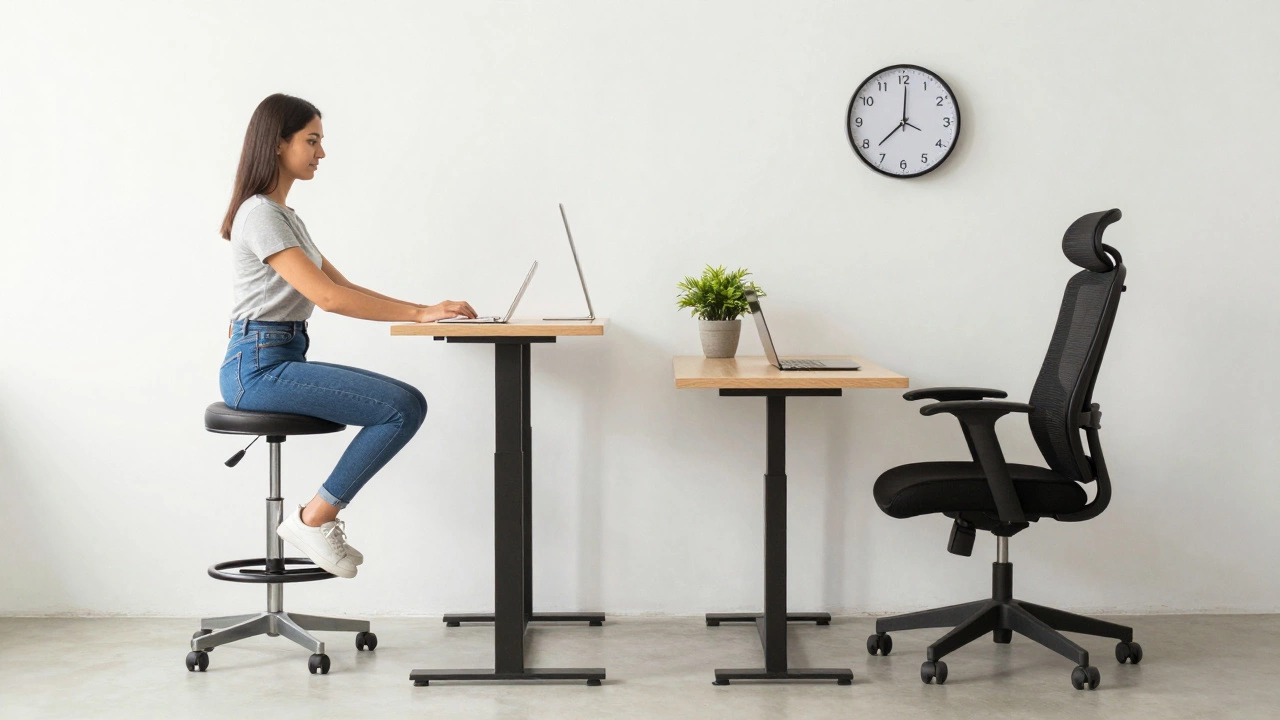
What Should You Do Instead?
If you’re serious about back health, here’s what actually works:- Use a chair with adjustable lumbar support. Look for one that lets you push the curve into your lower back.
- Set your chair height so your feet are flat on the floor, knees at 90 degrees.
- Take a 2-minute break every 30 minutes. Walk, stretch, or just stand.
- Use a standing desk. Alternate between sitting and standing every hour.
- Strengthen your core. Planks, bird-dogs, and dead bugs help your spine stay stable naturally.
Stools can be a tool-not a solution. Use them for variety, not endurance.
When a Stool Might Actually Help
There are exceptions. If you’re a barber, a mechanic, or a potter, stools make sense. You’re moving constantly. Your work demands mobility. In those cases, a stool with a padded seat and a low profile is ideal. Even in an office, if you use a high stool at a standing desk, it can be perfect. You’re not sitting for long. You’re perching. That’s different. Perching is active. Sitting is passive.Final Verdict
Is sitting on a stool bad for your back? It can be-if you sit on it for hours without moving. But it’s not the stool’s fault. It’s the habit. Your spine doesn’t care if you’re on a stool or a chair. It cares if you’re still. If you sit in one position for too long, no matter what you’re sitting on, you’ll feel it. Stools are fine for short bursts. They’re great for movement. But if you’re doing deep work, writing, coding, or staring at a screen for hours, you need support. Your back will thank you.Can I use a stool instead of an office chair?
Only for short periods-no more than 30 minutes at a time. Stools don’t support your lower back, so using one as your main chair can lead to chronic pain. A proper office chair with lumbar support is better for long workdays.
Are kneeling stools better for your back?
Kneeling stools shift your weight forward and open your hip angle, which can reduce lower back pressure. But they put strain on your knees and shins. They’re not ideal for people with knee issues, and they still lack back support. Use them sparingly, not all day.
Why do some people say stools improve posture?
Because without a backrest, you can’t slouch. But forcing yourself upright without support isn’t the same as good posture. Good posture means your spine is in its natural S-curve, supported at the right points. A stool doesn’t provide that-it just makes you tense up.
What’s the best seat for back pain?
A chair with adjustable lumbar support, a slightly reclined backrest (100-110 degrees), and a seat depth that leaves 2-3 inches between the edge and your knees. Add a footrest if needed. Avoid stools, cushions, or inflatable balls for daily use.
Can I use a stool with a backrest?
Yes-and you should. If you want the look of a stool but need back support, look for a “backless stool with optional backrest” or a “task chair with minimal back.” These give you mobility and support. Avoid anything labeled as a “stool” that has no lumbar curve.
Write a comment