
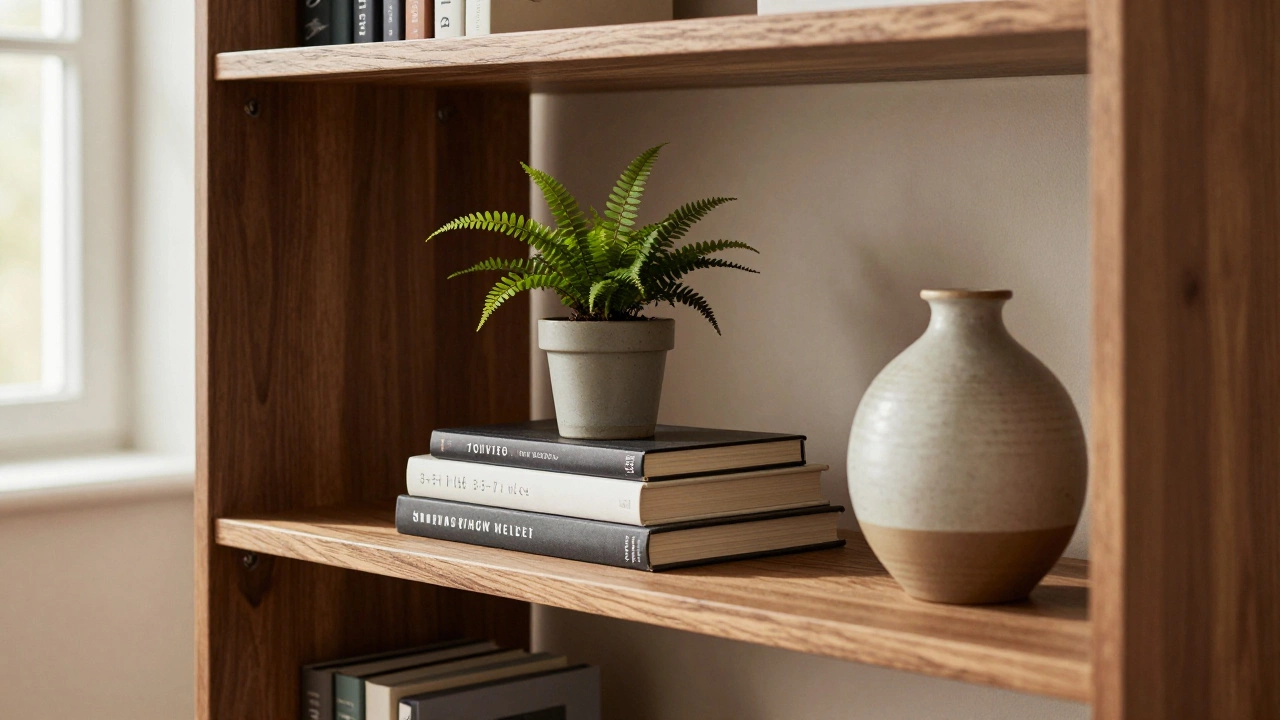
3-5-7 Bookcase Styling Simulator
Configure Your Shelf
Visual Preview & Feedback
Adjust the slider and click 'Analyze' to see how your arrangement aligns with the 3-5-7 rule.
Styling Tips:
- • Start with a group of 3 for small spaces.
- • Use groups of 5 for larger shelves.
- • Reserve groups of 7 for large units.
Styling a bookcase is a piece of furniture used for storing books and decorative objects can feel like trying to solve a puzzle without the picture on the box. You have too many knick-knacks, not enough space, and the urge to fill every inch with clutter. This is where the 3-5-7 rule is an interior design principle suggesting that odd numbers of items create more visually appealing arrangements comes in. It’s not just a random number game; it’s a practical framework that helps you create balanced, inviting shelves without the stress.
The core idea behind this rule is simple: humans find odd numbers more natural and interesting than even ones. Even numbers tend to look static and symmetrical, like a pair of identical vases sitting side-by-side. Odd numbers introduce asymmetry and movement, which keeps the eye engaged. When applied to bookshelves, this rule prevents your display from looking like a museum archive or a chaotic junk drawer. Instead, you get a curated, lived-in look that feels intentional.
Why Odd Numbers Work Better in Design
To understand why the 3-5-7 rule works, you need to look at how our brains process visual information. Symmetry is safe, but it can be boring. Asymmetry creates tension and interest. When you place three items on a shelf, there is no center point that divides them equally. Your eye has to travel across the group, examining each object individually before seeing them as a whole. This creates a narrative flow.
Consider a shelf with two identical photo frames. They compete for attention, and if one is slightly higher or lower, it looks like a mistake. Now add a third frame, perhaps leaning against the wall behind the others. Suddenly, the composition has depth. The brain accepts the imbalance because it feels organic. Nature rarely gives us perfect pairs; think of leaves on a branch or stones on a beach. Mimicking this natural randomness makes your home feel more comfortable and less rigid.
This psychological preference for odd numbers isn't new. Artists and photographers have used the "rule of thirds" for centuries to compose images. In interior design, applying this same logic to physical objects ensures that your bookcase becomes a focal point rather than background noise. It turns storage into storytelling.
Breaking Down the 3-5-7 Structure
The numbers 3, 5, and 7 aren't arbitrary limits on how many things you can own. They are guidelines for grouping items within specific zones. Here is how you apply them to different parts of your bookcase:
- Groups of 3: Use this for small clusters or individual shelves. For example, place a stack of three books horizontally, topped by a single candle or a small plant. Alternatively, arrange three distinct objects-like a vase, a sculpture, and a framed photo-in a triangular formation. The key is variety in height and texture.
- Groups of 5: This works well for larger shelves or when you want to create a broader statement. Think of five books standing vertically, interspersed with two small decorative objects. Or, group five similar items, such as five mugs hanging from hooks or five jars lined up on a bottom shelf. The repetition creates rhythm.
- Groups of 7: Reserve this for large, open shelving units or floor-to-ceiling bookcases. Seven items allow for more complex layering. You might have seven books of varying heights, mixed with three smaller accessories. The goal here is density without chaos. Ensure there is still some negative space (empty shelf) visible so the eye can rest.
Remember, these groups don't have to be isolated. You can have a group of three on the top shelf, a group of five on the middle shelf, and a group of seven on the bottom. The consistency lies in the odd-numbered grouping, not in repeating the exact same count everywhere.
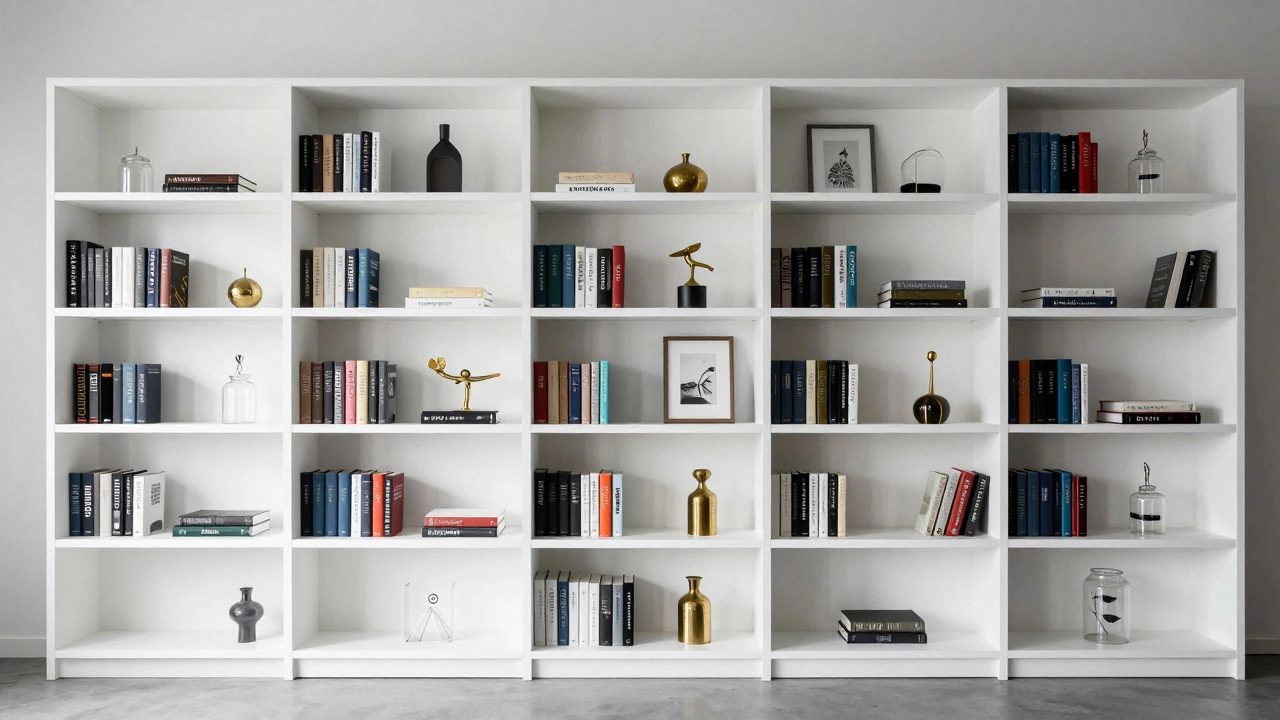
Practical Steps to Style Your Bookcase
Knowing the theory is one thing; executing it is another. Here is a step-by-step approach to applying the 3-5-7 rule to your own bookcase:
- Pull Everything Out: Start with a blank slate. Remove all books and decor from the shelves. This allows you to see the true structure of the furniture and plan your layout without distractions.
- Select Your Anchors: Identify the largest items you want to display. These could be large hardcover books, tall vases, or baskets. Place these first to establish the vertical lines of your shelves.
- Create Odd Groups: Arrange your remaining items into groups of 3, 5, or 7. If you have four items, remove one or add another to make the number odd. Group similar colors or textures together within these sets.
- Vary Heights and Depths: Avoid placing all items flat against the back of the shelf. Lean some books forward, stack others horizontally, and place objects at different depths. This adds dimension and prevents the display from looking flat.
- Leave Negative Space: Don't fill every inch. Leave about 10-20% of the shelf empty. This breathing room highlights the items you do have and makes the overall arrangement look lighter and more elegant.
As you work, step back frequently. View the bookcase from a distance to check the balance. Does one side feel heavier than the other? Adjust the placement of your heaviest items to distribute visual weight evenly. The goal is harmony, not perfection.
Common Mistakes to Avoid
Even with a solid rule, it's easy to slip into bad habits. Here are the most common pitfalls people face when styling bookcases:
- Overcrowding: Just because you can fit ten books on a shelf doesn't mean you should. Overcrowding defeats the purpose of the 3-5-7 rule. If you have too many items, edit ruthlessly. Store excess books in bins or boxes.
- Ignoring Color: Arranging books strictly by color can look sterile. Mix colors and patterns. Group books by size or theme instead. Add pops of color with decorative objects to break up monotony.
- Forgetting Functionality: Your bookcase should still be functional. Keep frequently read books accessible. Use the 3-5-7 rule primarily for decorative sections or less-used areas. Don't sacrifice usability for aesthetics.
- Being Too Rigid: The rule is a guide, not a law. If a group of four looks better in a specific spot, trust your eyes. Sometimes breaking the rule creates a unique focal point. Flexibility is key to personal style.
Avoid matching everything perfectly. Mix materials like wood, metal, glass, and fabric. Combine old books with modern art pieces. This eclecticism makes your space feel collected over time, rather than bought all at once.
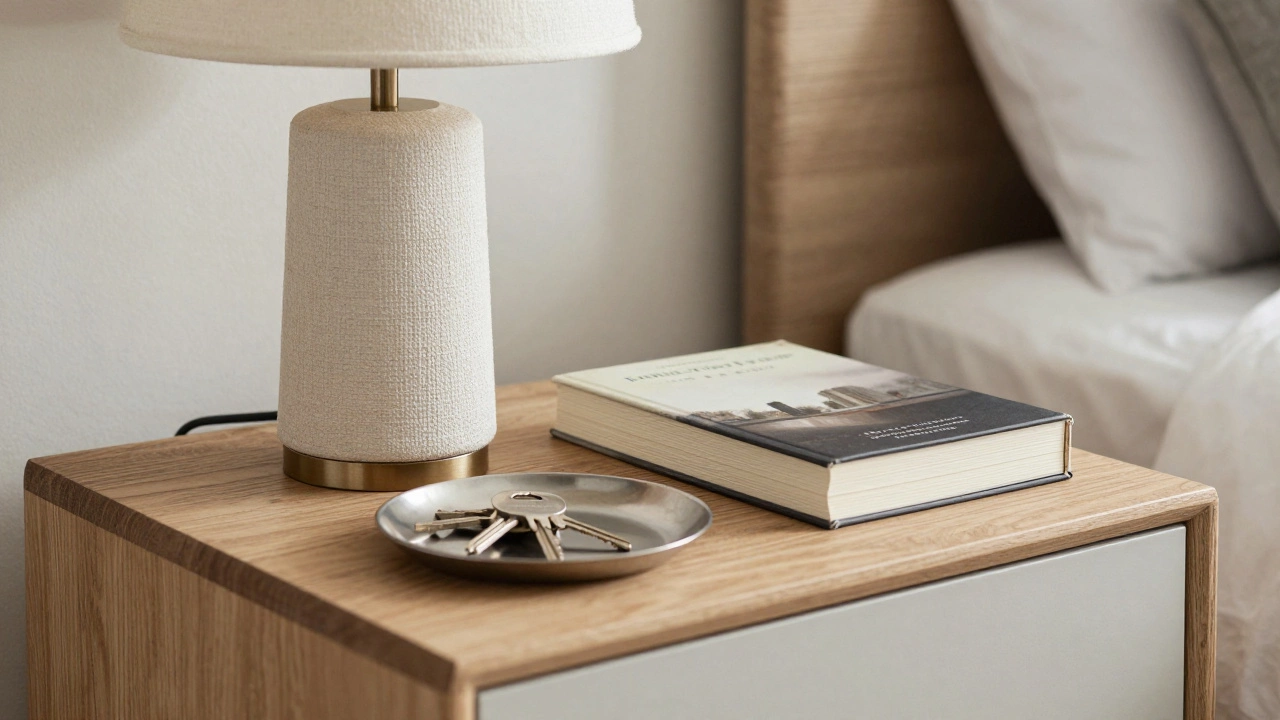
Adapting the Rule for Different Spaces
The 3-5-7 rule isn't limited to traditional wooden bookcases. You can apply it to any shelving unit in your home. Here is how it translates to different contexts:
| Furniture Type | Application Strategy | Example Items |
|---|---|---|
| Kitchen Cabinets | Use clear glass-front cabinets to display dishes. | 3 plates stacked, 5 mugs, 7 wine glasses |
| Bathroom Vanities | Style open shelves with toiletries and decor. | 3 soap dispensers, 5 towels, 7 candles |
| Entryway Consoles | Create welcoming vignettes near the door. | 3 trays, 5 keys/hooks, 7 mail organizers |
| Bedside Tables | Keep surfaces tidy and balanced. | 3 books, 5 jewelry pieces, 7 small trinkets |
In smaller spaces, like a bedside table, stick to groups of 3. A lamp, a book, and a small plant create a complete look without clutter. In larger areas, like a living room bookcase, you can experiment with groups of 5 and 7 to fill the space meaningfully. The scale of the room dictates the complexity of the grouping.
Also consider the lighting. Good lighting enhances the visual impact of your odd-numbered groups. Install LED strips inside shelves or use small spotlights to highlight key items. Light draws the eye to the details, making the effort you put into styling worth it.
Maintaining Your Styled Bookcase
Once your bookcase is styled, maintaining it requires minimal effort but consistent attention. Dust regularly to keep items looking fresh. Rotate seasonal decor to keep the display feeling current. Swap out summer-themed items for autumn ones, for instance. This keeps your home dynamic and engaging throughout the year.
If you acquire new books or objects, integrate them thoughtfully. Don't just dump them on an existing shelf. Re-evaluate the grouping. Maybe a new book fits better in a horizontal stack of three, while an old one moves to a vertical row of five. Treat your bookcase as a living collection that evolves with you.
Finally, remember that the 3-5-7 rule is a tool to help you make decisions, not a constraint to limit your creativity. Use it to build confidence in your styling choices. Over time, you'll develop an intuitive sense for balance and composition, allowing you to break the rules intentionally when it serves your vision.
What is the origin of the 3-5-7 rule?
The 3-5-7 rule stems from general principles of composition in art and photography, particularly the preference for odd numbers due to their asymmetry. It gained popularity in interior design blogs and magazines as a simple heuristic for homeowners to achieve professional-looking results without formal training.
Can I use the 3-5-7 rule for digital content?
Yes, the principle applies to digital layouts as well. Web designers often use grids based on odd numbers to create balanced user interfaces. Photographers use the rule of thirds to compose shots. The underlying psychology of visual processing remains the same across mediums.
How do I handle books of different sizes?
Mix vertical and horizontal placements. Stack smaller books horizontally to create platforms for taller objects. Place larger books vertically to anchor the shelf. This variation in orientation adds visual interest and helps manage uneven heights.
Is it okay to mix styles on one shelf?
Absolutely. Mixing styles, such as vintage books with modern sculptures, creates a more personalized and engaging display. The key is to maintain cohesion through color, material, or theme, ensuring the odd-numbered groups feel connected despite stylistic differences.
What if I only have even numbers of items?
If you have four items, try removing one to make a group of three, or adding another to make five. Alternatively, split them into two separate groups of two, but ensure they are spaced apart distinctly so they don't appear as a single even set. Editing your collection is part of the styling process.
Write a comment