
Posture Risk Analyzer
Answer these questions about your current chair or workspace to generate a personalized risk report.
Assessment Summary
Specific Recommendations
Have you ever sat down after a long day and felt like your spine was made of jelly? You’re not imagining it. The chair you sit in all day might be the silent culprit behind your back pain, neck stiffness, and that weird ache between your shoulder blades. We spend roughly one-third of our lives sitting, yet most of us choose seats based on price or looks rather than how they treat our bodies.
Bad posture isn’t just about looking slouched; it’s a mechanical failure caused by poor support. When your chair doesn’t align with your body’s natural curves, your muscles have to work overtime to keep you upright. Over time, this leads to chronic strain, reduced circulation, and even nerve compression. So, what exactly makes a chair bad for posture? Let’s break down the specific designs and features that are quietly ruining your spine.
The Deep-Seat Trap: Why Big Isn’t Better
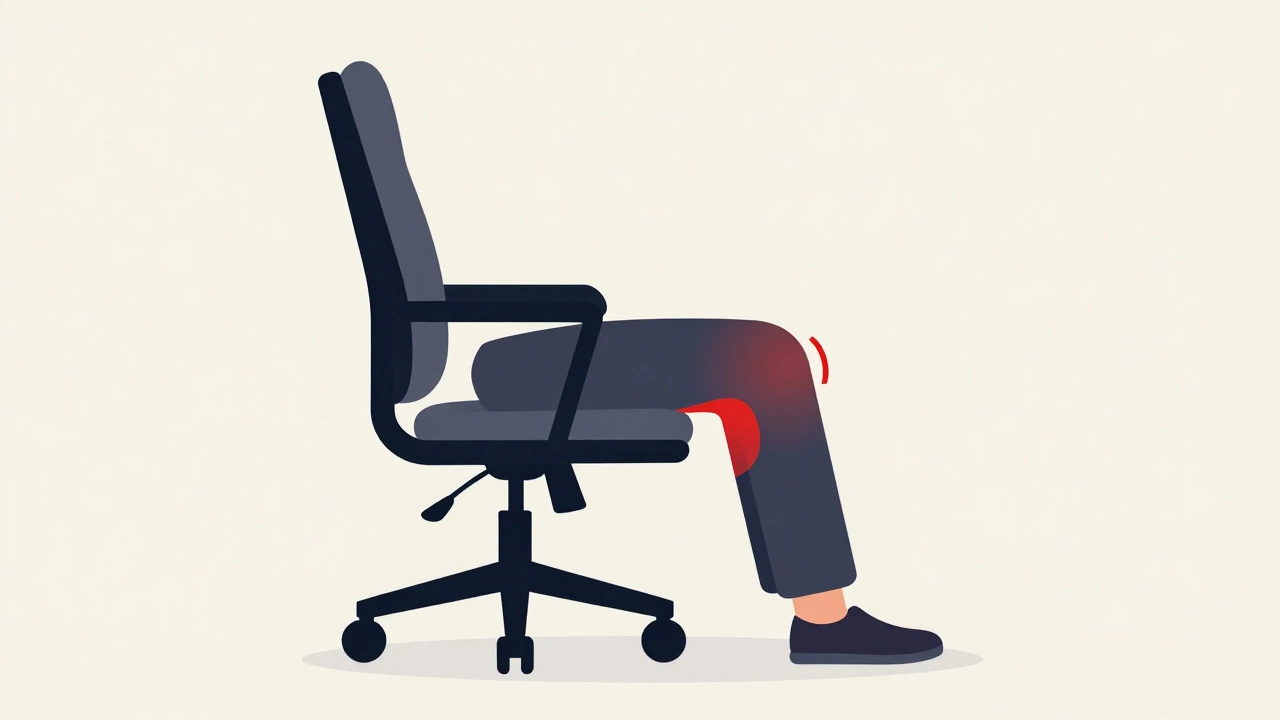
One of the most common mistakes people make is choosing a chair with a seat depth that is too large. This is often called the "deep-seat trap." If the edge of the seat cushion presses against the back of your knees, it cuts off blood flow to your legs. To relieve this pressure, you instinctively slide forward or cross your legs. Both actions destabilize your pelvis.
When your pelvis tilts backward, your lower spine loses its natural inward curve (lordosis). Instead, it flattens or curves outward (kyphosis). This forces your upper back to round out to compensate, leading to the classic "C-shape" slouch. A good rule of thumb is to leave about two to three fingers’ width between the front edge of the seat and the back of your knees. If you can’t do that, the chair is too deep for you.
- Signs of a seat that is too deep: Numbness in the feet, constant urge to shift position, inability to reach the floor flat-footed while touching the backrest.
- The fix: Look for chairs with adjustable seat depth (sliding rails) or use a smaller seat cushion if the frame allows.
Hard, Flat Surfaces: The Enemy of Natural Curves
Your spine is not straight; it has four distinct curves that act as shock absorbers. A hard, flat surface-like a wooden dining chair, a basic plastic stool, or a cheap office chair without padding-forces your spine into an unnatural alignment. Without contouring, your weight distributes unevenly across your sit bones (ischial tuberosities), causing pressure points.
This type of seating fails to support the Lumbar Region, which is the lower part of your back. Without support here, the discs in your spine bear excessive pressure. Studies show that sitting on a flat surface increases intradiscal pressure by up to 40% compared to standing. Over months, this can lead to disc degeneration and herniation.
If you must use a hard chair, you need external help. A simple wedge cushion can tilt your pelvis slightly forward, restoring the natural curve of your lower back. However, relying on accessories shouldn’t be the primary solution for daily work seating.
| Seat Type | Pressure Distribution | Risk Level |
|---|---|---|
| Ergonomic Contoured | Even across sit bones | Low |
| Flat Hard Surface | Concentrated on edges | High |
| Soft Sagging Cushion | Uneven, sinking center | Medium-High |
The Soft Sofa Problem: Why Comfort Can Be Dangerous
It seems counterintuitive, but overly soft furniture is often worse for your posture than hard chairs. Think about your favorite sofa. It’s plush, inviting, and makes you want to sink in. But that sinking action is exactly the problem. Soft cushions compress under your weight, causing your hips to sink below your knees. This position locks your pelvis into a posterior tilt.
When your hips drop, your lower back rounds. Your head then juts forward to maintain eye level with screens or books. This creates a domino effect: rounded shoulders, forward head posture, and compressed chest. This is why many people feel stiff after watching TV on a couch for hours. The lack of structural support means your muscles are constantly fighting gravity to keep you from collapsing further.
For short relaxation, sofas are fine. For working or studying, they are terrible. If you must work from a sofa, prop yourself up with firm pillows behind your lower back and ensure your feet are flat on the floor, not dangling.

Missing Lumbar Support: The Silent Killer
Lumbar support is non-negotiable for healthy posture. Many budget office chairs and dining chairs completely ignore this feature. They offer a vertical backrest that touches your upper back but leaves a gap at the waist. This gap forces your lower back to arch unsupported or slump forward.
A chair with proper Lumbar Support should fit snugly into the small of your back. It should be adjustable in height and depth because everyone’s spine is different. Fixed lumbar rolls often end up being too high or too low for average users, providing false security. If a chair doesn’t allow you to adjust the support to match your body, it’s likely doing more harm than good.
Look for dynamic lumbar support systems that move with you. Static supports can dig into your spine when you lean back, causing discomfort that makes you avoid using them altogether.
Armrests That Force Shoulder Hunching
We often overlook armrests, but they play a crucial role in posture. Armrests that are too high force you to shrug your shoulders to rest your arms comfortably. This constant elevation of the trapezius muscles leads to tension headaches, neck pain, and restricted breathing.
Conversely, armrests that are too low cause you to slump your shoulders downward, straining the rotator cuff. The ideal height is where your elbows rest at a 90-degree angle, parallel to the floor, with your shoulders relaxed. Many gaming chairs and older executive styles have fixed, high armrests that look impressive but wreak havoc on your neck over time.
- Check your armrests: Sit normally. Are your shoulders raised? Lower the armrests or remove them.
- Check your elbow angle: Is it bent sharply? Raise the armrests.
- Mobility matters: Adjustable armrests that move up, down, and inward are best for different tasks.

Non-Tilt Mechanisms: Rigidity Causes Stiffness
Your body is designed to move. Sitting in a rigid, upright position for hours restricts blood flow and causes muscle fatigue. Chairs without a tilt mechanism force you to stay static. This rigidity increases pressure on your spinal discs and reduces oxygen supply to the tissues.
A good chair allows you to recline slightly (up to 15 degrees) while keeping your feet on the floor. This shifts some weight from your spine to the backrest, reducing disc pressure. Non-tilt chairs also prevent you from changing positions easily, leading to "static loading" injuries. If your chair locks you into one position, it’s bad for your long-term health.
Wheels and Base Stability: The Foundation Matters
You might focus on the backrest, but the base of the chair is equally important. An unstable base makes you subconsciously tense your core and leg muscles to maintain balance. This micro-tension adds up over the day, contributing to fatigue.
Cheap casters (wheels) that catch on carpet or squeak distract you and disrupt your workflow. More importantly, a wobbly five-star base can tip you forward, forcing you to lean back to compensate. Always check the weight capacity and stability of the base. A solid, smooth-rolling base ensures you can move freely without engaging unnecessary muscles to stay balanced.
Is a mesh chair better for posture than a foam chair?
Mesh chairs are often preferred for breathability and consistent support. Foam can sag over time, losing its shape and failing to support your lumbar region properly. Mesh maintains its structure, ensuring your spine stays aligned throughout the day. However, cheap mesh can be too firm, so look for high-quality tension-adjustable mesh.
Can I fix a bad chair with a cushion?
You can mitigate some issues with cushions, but you cannot fully fix a structurally bad chair. A lumbar roll can help with missing lower back support, and a seat wedge can correct depth issues. However, if the armrests are wrong or the base is unstable, no cushion will solve those problems. It’s better to invest in a proper chair long-term.
Why does my chair hurt after only one hour?
Pain after one hour usually indicates poor ergonomics. Your muscles are likely compensating for a lack of support. Check if your feet are flat, if your lower back is supported, and if your screen is at eye level. If any of these are off, your body strains immediately to maintain balance, leading to quick fatigue.
Are gaming chairs good for posture?
Many gaming chairs are marketed as ergonomic, but they often prioritize aesthetics over function. They frequently have fixed, high armrests and aggressive bucket-seat shapes that force your legs apart. While some high-end models are excellent, most standard gaming chairs encourage slouching due to their deep, reclined design. Look for adjustable features rather than racing-style designs.
How often should I replace my office chair?
Most quality office chairs last 7 to 10 years. If you notice visible sagging, broken mechanisms, or persistent pain despite adjustments, it’s time to replace it. Cheap chairs may degrade in just 2-3 years. Regular maintenance, like tightening screws and cleaning tracks, can extend life, but structural wear is inevitable.
Your chair is a tool, not just furniture. Choosing the right one protects your health and boosts your productivity. Avoid the traps of deep seats, hard surfaces, and missing support. Invest in a chair that moves with you and respects your spine’s natural geometry. Your back will thank you every single day.
Write a comment