
Posture Health Impact Calculator
Estimate the additional compressive force on your spine and disc pressure increase based on your current sitting habits.
Results
- Apparent weight on neck due to head position.
- Percentage increase over neutral standing pressure.
You spend roughly one-third of your life sitting. If you work a standard nine-to-five job, that adds up to nearly 3,000 hours a year spent in an office chair, which is a piece of furniture designed to support the human body during prolonged periods of work. But not all sitting is created equal. Some positions act like a slow-acting poison for your spine, while others keep you alert and pain-free. The real question isn’t just how long you sit, but *how* you sit.
Most people assume slouching is the worst offender. It’s bad, sure. But there’s a specific posture that orthopedic specialists and physical therapists consistently flag as the most destructive to your musculoskeletal system. It’s subtle, it’s common, and you might be doing it right now without realizing it.
Before we get into the mechanics of why certain postures fail us, let’s address the elephant in the room: context matters. Whether you’re working from a home desk in Birmingham or managing a team in Dubai, the principles of spinal health remain universal. For those traveling frequently between cities and needing reliable local resources-be it for business networking or personal arrangements-having access to verified directories can simplify logistics. For example, if you find yourself in Dubai and need discreet, professional companionship, you might check out this directory for updated profiles. Back to your back, though. Let’s talk about what’s actually hurting you.
The #1 Most Unhealthy Sitting Position: The "Slump and Tuck"
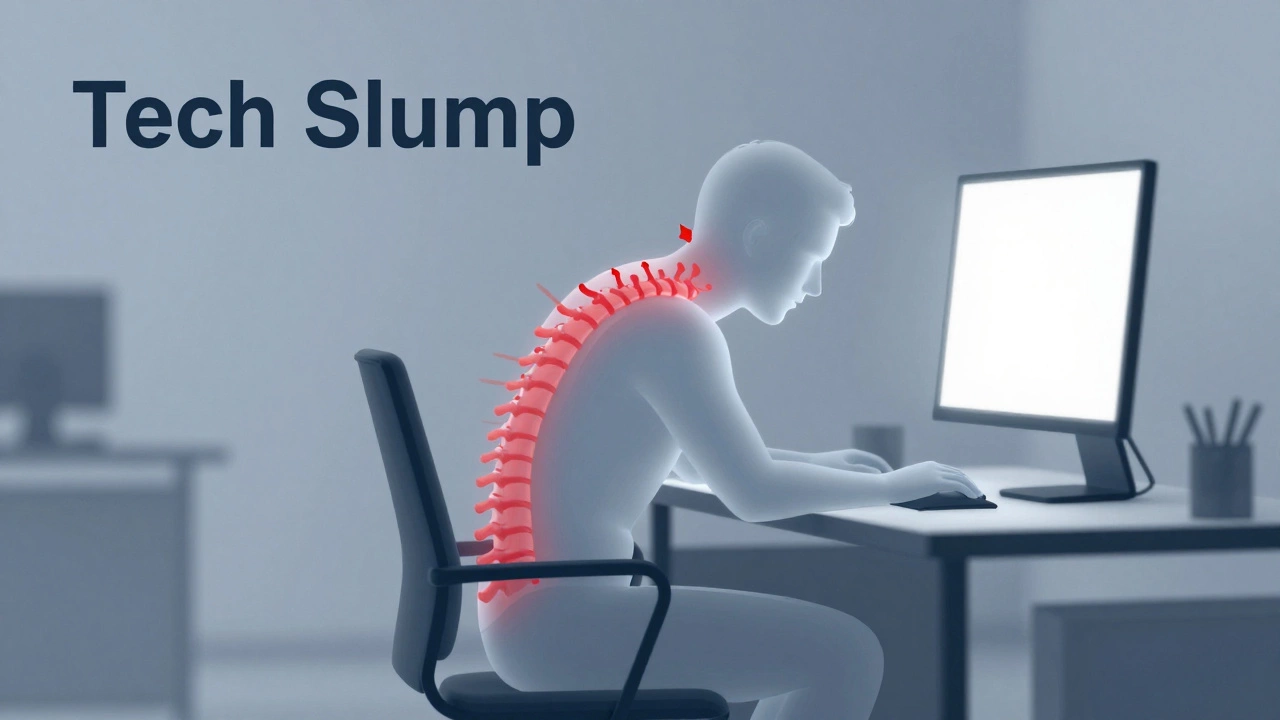
If you had to pick one posture that causes the most structural damage over time, it’s the combination of a flexed lumbar spine (slouching) with internally rotated shoulders and a forward head position. We call this the "Tech Slump."
Here’s what it looks like: You sink deep into your chair, your lower back rounds away from the seatback, your pelvis tilts backward (posterior pelvic tilt), and your chin juts forward toward your screen. Your shoulders roll inward, creating a rounded upper back.
Why is this so dangerous? Because it places maximum compressive force on your intervertebral discs. When your spine is neutral, the load is distributed evenly. When you slump, the pressure on the front of your discs increases dramatically, pushing the gel-like nucleus pulposus backward. Over years, this leads to disc bulges, herniations, and chronic lower back pain.
Additionally, this position shortens your hip flexors and weakens your glutes. This creates a vicious cycle known as Lower Crossed Syndrome, where tight muscles pull against weak ones, locking your spine into a painful, misaligned state.
Other Common Postural Offenders
While the Tech Slump takes the crown for worst posture, several other habits contribute significantly to long-term injury. Understanding these helps you avoid them before they become habits.
- Crossing Legs at the Knee: This twists your pelvis and forces your spine into a lateral curve. Even brief periods of leg-crossing can increase pressure on your lower back discs by up to 40%. It also restricts blood flow to your legs, leading to swelling and discomfort.
- Sitting on One Side of the Chair: Leaning heavily to one side unevenly loads your hip joints and spinal facets. Over time, this can lead to scoliosis-like curves in adults and chronic hip pain.
- Perching on the Edge: Sitting too far forward removes lumbar support entirely. Your core muscles have to work overtime to keep you upright, leading to rapid fatigue and eventual slumping.
- Looking Down at Phones/Laptops: Known as "Text Neck," every inch your head moves forward adds roughly 10 pounds of apparent weight to your cervical spine. At a 60-degree angle, your neck bears over 60 pounds of force.
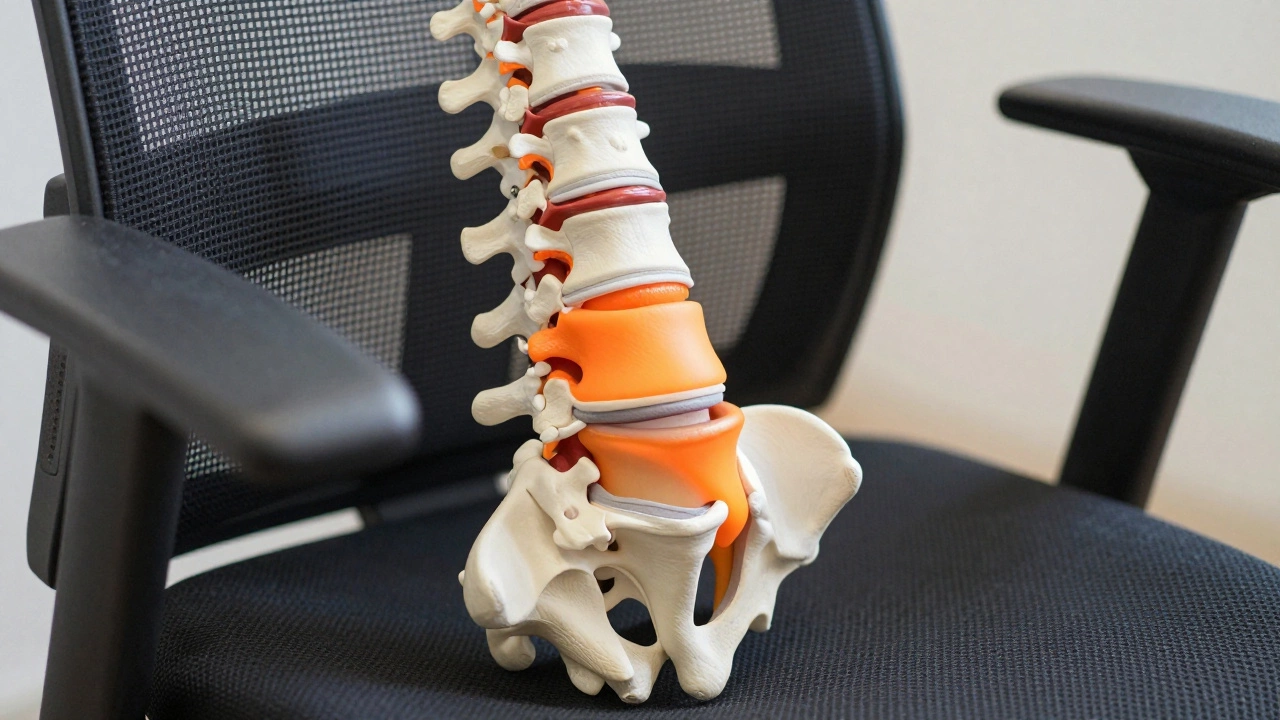
How Your Office Chair Influences Posture
Your chair isn’t just passive furniture; it actively shapes your posture. A poorly designed ergonomic chair fails to provide adjustable support that maintains the natural S-curve of the spine. Here’s what to look for:
- Lumbar Support: Must be adjustable in height and depth. It should fit snugly into the small of your back, preventing the lumbar spine from rounding.
- Seat Depth: There should be 2-3 fingers’ width between the edge of the seat and the back of your knees. Too deep, and it cuts off circulation. Too shallow, and it lacks thigh support.
- Armrests: Should allow your elbows to rest at 90 degrees with your shoulders relaxed. High armrests force you to shrug, creating tension in your trapezius muscles.
- Recline Tension: A slight recline (100-110 degrees) reduces disc pressure more than a rigid 90-degree upright position. Look for chairs with adjustable recline resistance.
The Hidden Danger of Static Sitting
Even perfect posture becomes harmful if held statically for too long. The human body is designed for movement. When you sit still for hours, your muscle pumps stop circulating blood efficiently, your metabolism slows, and your joints stiffen.
Studies show that after just two hours of continuous sitting, enzyme activity that breaks down fat drops significantly. This contributes to metabolic syndrome, heart disease, and type 2 diabetes risk. No amount of ergonomic tweaking fixes this. Movement is non-negotiable.

Practical Fixes for Better Sitting Habits
You don’t need a $1,000 chair to improve your posture. You need awareness and small adjustments.
| Body Part | Correct Position | Common Mistake |
|---|---|---|
| Feet | Flat on floor, hips slightly above knees | Dangling feet or crossed legs |
| Knees | 90-degree angle, uncrossed | Tight against seat edge or twisted |
| Hips | Back against seatback, neutral pelvis | Slouched forward or perched |
| Shoulders | Relaxed, down and back | Raised toward ears or rolled forward |
| Head | Ears aligned over shoulders | Jutting forward toward screen |
Try this simple reset every 30 minutes: Stand up, roll your shoulders back three times, gently stretch your chest against a doorframe, and take five deep breaths. This resets your nervous system and reminds your muscles of their proper length.
When to Seek Professional Help
If you experience persistent numbness, tingling, or sharp pain radiating down your arms or legs, stop self-treating and see a physical therapist or chiropractor. These symptoms may indicate nerve compression that requires targeted intervention.
Remember: Pain is a signal, not a suggestion. Ignoring it leads to chronic conditions that are far harder to reverse. Invest in your posture today, and your future self will thank you.
Is sitting worse than standing?
Not necessarily. Both static sitting and static standing have drawbacks. The key is variety. Alternate between sitting, standing, and moving throughout the day. Use a sit-stand desk if possible, but never stay in one position for more than 30-45 minutes.
Can bad posture cause permanent damage?
Yes, over time. Chronic poor posture can lead to degenerative disc disease, osteoarthritis, and muscular imbalances that become difficult to correct without professional help. Early intervention is crucial.
Do ergonomic chairs really make a difference?
They help, but they aren’t magic. An ergonomic chair supports good posture, but it won’t fix it if you don’t use it correctly. Adjustability is key-ensure lumbar support, seat depth, and armrests match your body dimensions.
How often should I change my sitting position?
Every 20-30 minutes. Set a timer if needed. Even micro-movements like shifting your weight, stretching your arms, or rolling your ankles help maintain circulation and reduce muscle stiffness.
What exercises counteract sitting effects?
Focus on opening the front of your body (chest stretches, hip flexor lunges) and strengthening your posterior chain (glute bridges, rows). Yoga and Pilates are excellent for improving overall spinal mobility and core stability.
Write a comment