
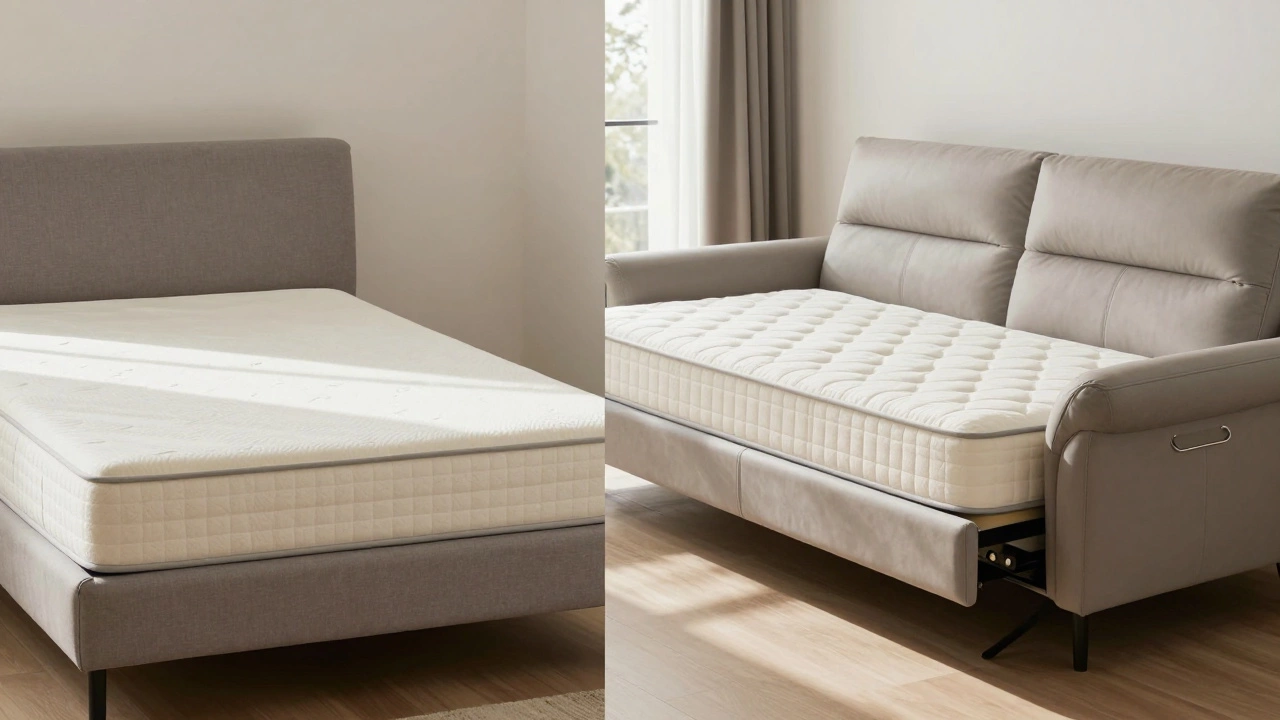
People often use the terms sofa bed and sleeper sofa like they mean the same thing. But they don’t. If you’re shopping for a space-saving piece that doubles as a bed, knowing the difference could save you from a frustrating purchase. One might look perfect in the showroom, only to leave you sleeping on a lumpy mattress the first night you try it out.
It’s All About the Mechanism
The biggest difference between a sofa bed and a sleeper sofa comes down to how the bed part works. A sofa bed usually has a simple fold-out frame. You pull the seat cushion forward, and the hidden mattress unfolds beneath it. Think of it like a futon - the mattress stays in place, and the frame just shifts. It’s lightweight, easy to use, and often found in studios or guest rooms.
A sleeper sofa, on the other hand, uses a more complex mechanism. The entire seat base lifts or slides out, revealing a full-length mattress stored inside the frame. This isn’t just a folded cushion - it’s a proper mattress, often with springs or memory foam, designed to feel like a real bed. The mechanism is heavier, more durable, and usually requires two hands to operate.
Comfort Levels Are Not the Same
If you’ve ever woken up with a sore back after sleeping on a sofa bed, you’re not alone. Many sofa beds use thin, foam-only mattresses that flatten over time. They’re fine for occasional guests, but if you’re planning to use it nightly, you’ll feel the difference.
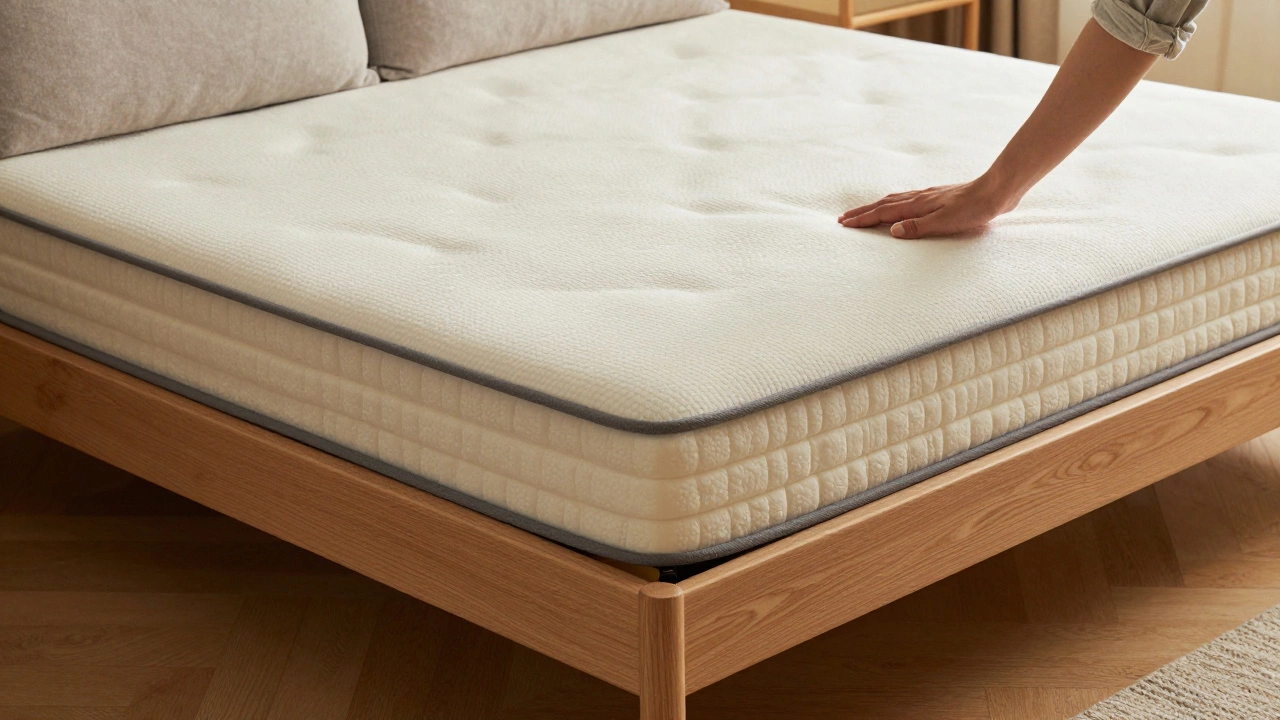
Sleeper sofas are built for comfort. Most models come with mattresses that are 5 to 7 inches thick, often with innerspring coils or layered memory foam. Some even have zoned support, like a real bed. Brands like IKEA, Ashley, and La-Z-Boy now offer sleeper sofas with mattress ratings that match standard twin or full-size beds. You can find ones with cooling gel layers, hypoallergenic covers, and even adjustable firmness.
Design and Aesthetics
When you’re sitting on it, a sofa bed often looks like a regular couch - but with a noticeable seam where the mattress folds. The upholstery might be thinner, and the frame can look bulkier because it’s not designed to hide a thick mattress.
Sleeper sofas are designed to look like premium sofas first. The mattress is fully concealed, so the lines are clean. The arms are often deeper, the backrest taller, and the fabric choices more upscale. Many people buy sleeper sofas because they want something that looks like a real sofa in the daytime and transforms seamlessly at night.
Size and Space Requirements
Not all sofa beds fit in small spaces. Because they rely on a fold-out design, the mattress often extends beyond the sofa’s frame when open. That means you need extra room in front of it - sometimes 18 to 24 inches - to fully extend the bed.
Sleeper sofas, by contrast, slide out horizontally. The mattress stays within the footprint of the sofa. This makes them better for tight corners, apartments with narrow hallways, or rooms where you can’t clear space in front. If you live in a studio or a small bedroom, a sleeper sofa might be the only practical option.
Price and Longevity
Entry-level sofa beds start around £200. They’re great for temporary use, dorm rooms, or rental properties. But they rarely last more than 2 to 3 years of regular use. The fabric wears out, the foam compresses, and the mechanism gets stiff.
Sleeper sofas start at £500 and go up to £1,500+. That’s a big jump, but you’re paying for durability. A good sleeper sofa can last 8 to 10 years with daily use. Many come with 10-year warranties on the frame and 5-year warranties on the mattress. If you’re using it as a primary sleeping surface, this isn’t an upgrade - it’s an investment.
Which One Should You Choose?
Here’s the quick guide:
- Choose a sofa bed if you need a basic, affordable solution for occasional guests. Think of it as a backup option - not a daily bed.
- Choose a sleeper sofa if you plan to sleep on it regularly. Whether you’re in a small home, a studio apartment, or just want a second bedroom without building one, this is the way to go.
Also consider your lifestyle. If you have kids, pets, or frequent visitors, a sleeper sofa with a removable, machine-washable cover is a game-changer. Some models even have hidden storage compartments under the seat - perfect for blankets, pillows, or extra bedding.
Common Myths Debunked
Let’s clear up a few misunderstandings:
- Myth: All sofa beds are the same as futons. Truth: Futons are a type of sofa bed, but not all sofa beds are futons. Futons are usually thinner, harder, and meant to be used as both seat and bed. Sleeper sofas are designed to prioritize comfort in both modes.
- Myth: Sleeper sofas are too bulky. Truth: Modern designs are sleek. Many have slim arms, low profiles, and come in mid-century or Scandinavian styles that blend into any living room.
- Myth: You can’t find a sleeper sofa that looks nice. Truth: In 2025, brands like BoConcept, West Elm, and even Amazon Basics offer sleeper sofas that look like high-end furniture. You just have to know where to look.
Real-Life Example: A Birmingham Flat
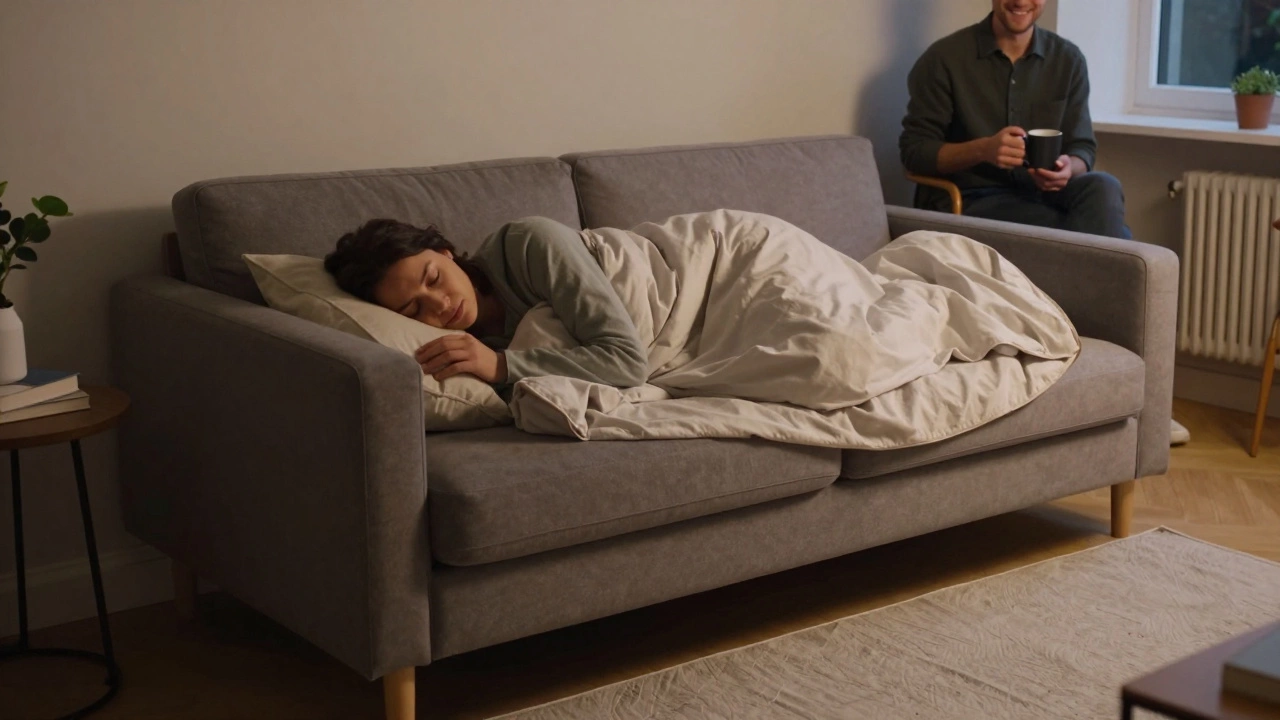
A friend of mine lives in a one-bedroom flat in Moseley. She uses her living room as a bedroom when her sister visits. She bought a £250 sofa bed first. After three months, she was waking up with back pain every time her sister stayed over. She replaced it with a £700 sleeper sofa from IKEA. The difference? The mattress is 6 inches thick, has a zip-off cover, and slides out with one smooth motion. Now her sister sleeps like she’s in a hotel. And the sofa still looks like a proper couch.
Final Thought
It’s not about which one is better. It’s about which one fits your life. If you only need a bed once a year, a sofa bed works. But if you need comfort, durability, and style - especially if you’re using it regularly - don’t settle for less. A sleeper sofa isn’t just a piece of furniture. It’s a solution.
Is a sleeper sofa the same as a sofa bed?
No. A sofa bed typically has a fold-out mattress that lies flat on a simple frame, often with thin foam. A sleeper sofa has a more complex mechanism that slides or lifts the seat to reveal a thicker, spring-based mattress designed to feel like a real bed. Sleeper sofas are more comfortable, durable, and better suited for regular use.
Can you sleep on a sofa bed every night?
It’s possible, but not recommended. Most sofa beds use low-density foam that flattens over time, leading to poor spinal support. If you’re using it nightly, you’ll likely develop back pain. Sleeper sofas with proper mattresses are built for daily use - sofa beds are meant for occasional guests.
Are sleeper sofas worth the extra cost?
Yes, if you plan to use it as a bed regularly. While a sofa bed might cost £200, a quality sleeper sofa starts at £500 and lasts 8-10 years. You’re paying for a proper mattress, durable frame, and better upholstery. For many, the comfort and longevity make it a smarter long-term investment.
Do sleeper sofas take up more space when opened?
No, they actually take up less space than most sofa beds. Sleeper sofas slide out horizontally, so the mattress stays within the sofa’s footprint. Sofa beds often extend forward, requiring 18-24 inches of clearance in front. This makes sleeper sofas better for small rooms or tight corners.
What’s the best fabric for a sleeper sofa?
Microfiber and performance fabrics are top choices. They’re stain-resistant, soft, and durable enough for daily use. Avoid delicate materials like linen or silk if you have pets or kids. Look for removable, machine-washable covers - many modern sleeper sofas come with them.
Write a comment