
Bookcase Balance Simulator
Item Palette
Drag items to the shelves to organize your bookcase. Remember: Heaviest items belong at the bottom!
Quick Wins for Your Bottom Shelf
- Heavy items: Art books, textbooks, and large binders.
- Hidden storage: Wicker baskets and fabric bins.
- Stable objects: Heavy sculptures or large storage boxes.
- Low-frequency items: Seasonal albums or archived files.
The Physics of Visual Balance
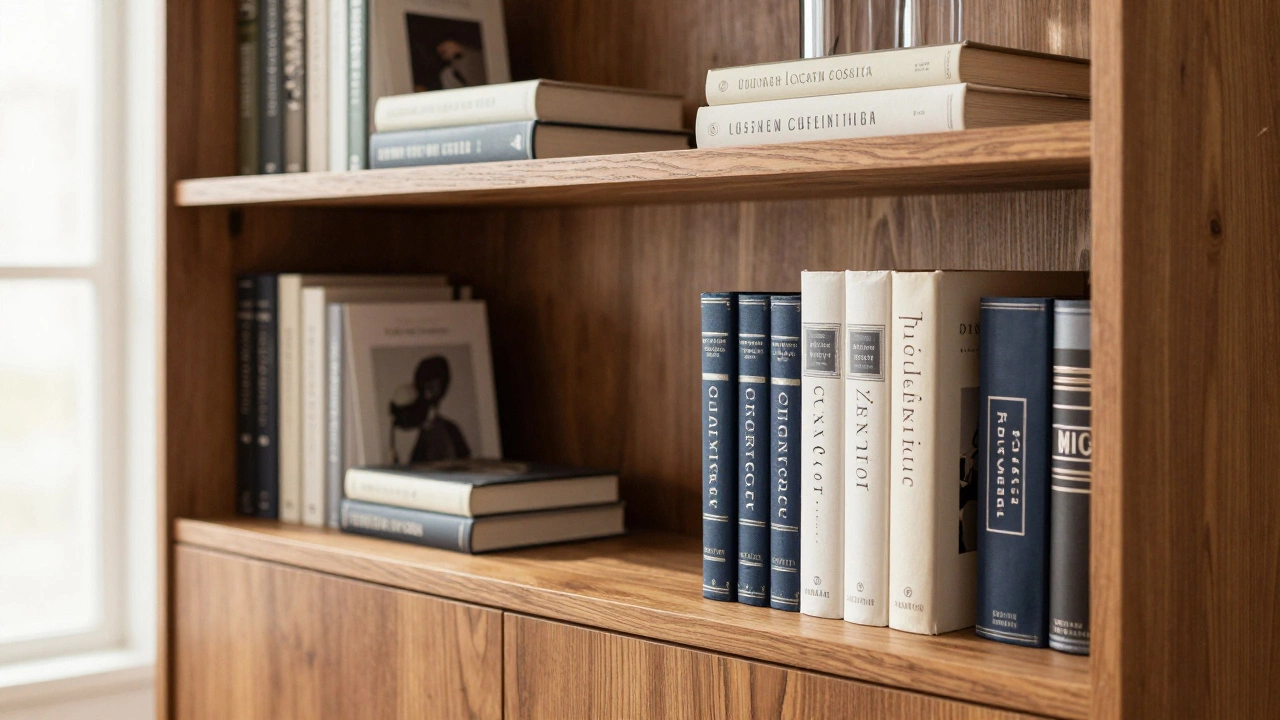
When you're styling a bookcase, you have to think about Visual Weight is the perceived heaviness of an object based on its size, color, and material. If you put a few thin paperbacks on the bottom shelf and a massive set of encyclopedias at the top, your brain tells you the unit is top-heavy. This creates a subconscious feeling of instability in the room. To fix this, you want to anchor your shelves.
Start by placing your heaviest items at the very bottom. We're talking about those oversized Coffee Table Books that are too wide for standard shelves. These books usually have thick hardcover bindings and heavy glossy paper, making them perfect anchors. By keeping the bulk at the base, you create a pyramid effect that draws the eye upward and makes the rest of your collection feel light and airy. Have you noticed how professional libraries always have the massive folios on the lowest levels? It's not just for easy access; it's about structural and visual harmony.
Hiding the Clutter with Baskets
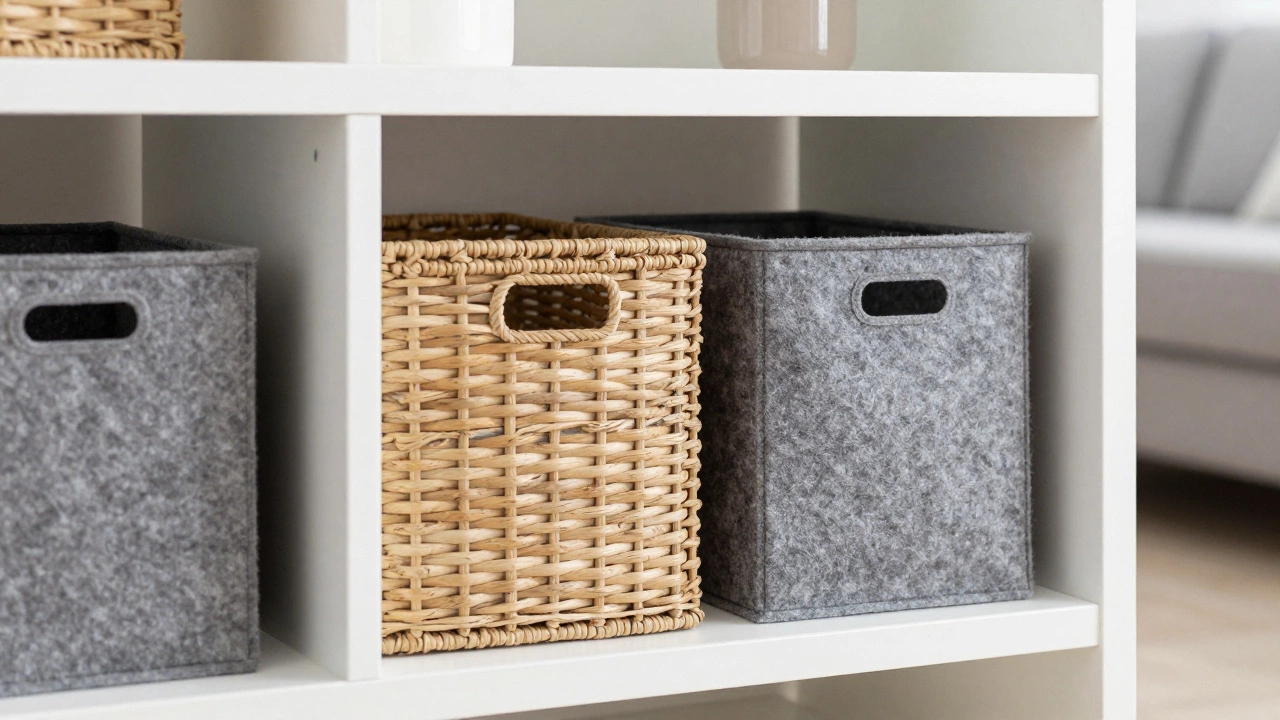
Let's be honest: not everything is a beautiful leather-bound book. You probably have a mess of charging cables, spare batteries, or a stack of mail that you aren't ready to file. This is where Storage Baskets come into play. Instead of letting the bottom shelf become a catch-all for chaos, use bins to categorize the mess.
Choose materials that complement your furniture. If you have a dark oak bookcase, try seagrass or jute baskets to add some natural texture and brightness. If you're rocking a modern white MDF Furniture unit, sleek grey felt bins look clean and intentional. The trick is to ensure the basket fits the shelf snugly. If there's a huge gap, it looks like an afterthought. If it's too tight, you'll struggle to pull it out. Use these bins for things you need occasionally but don't want to look at, like a stash of stationery or your kids' favorite building blocks.
| Container Type | Best For | Visual Effect | Durability |
|---|---|---|---|
| Wicker Baskets | Toys, blankets, linens | Rustic, cozy, organic | High (sturdy) |
| Felt Bins | Electronics, cables, mail | Modern, minimal, soft | Medium (collapsible) |
| Wooden Crates | Heavy tools, vinyl records | Industrial, vintage, raw | Very High |
| Plastic Tubs | Cleaning supplies, archives | Utilitarian, clinical | High (waterproof) |
Managing the 'Heavy Hitters'
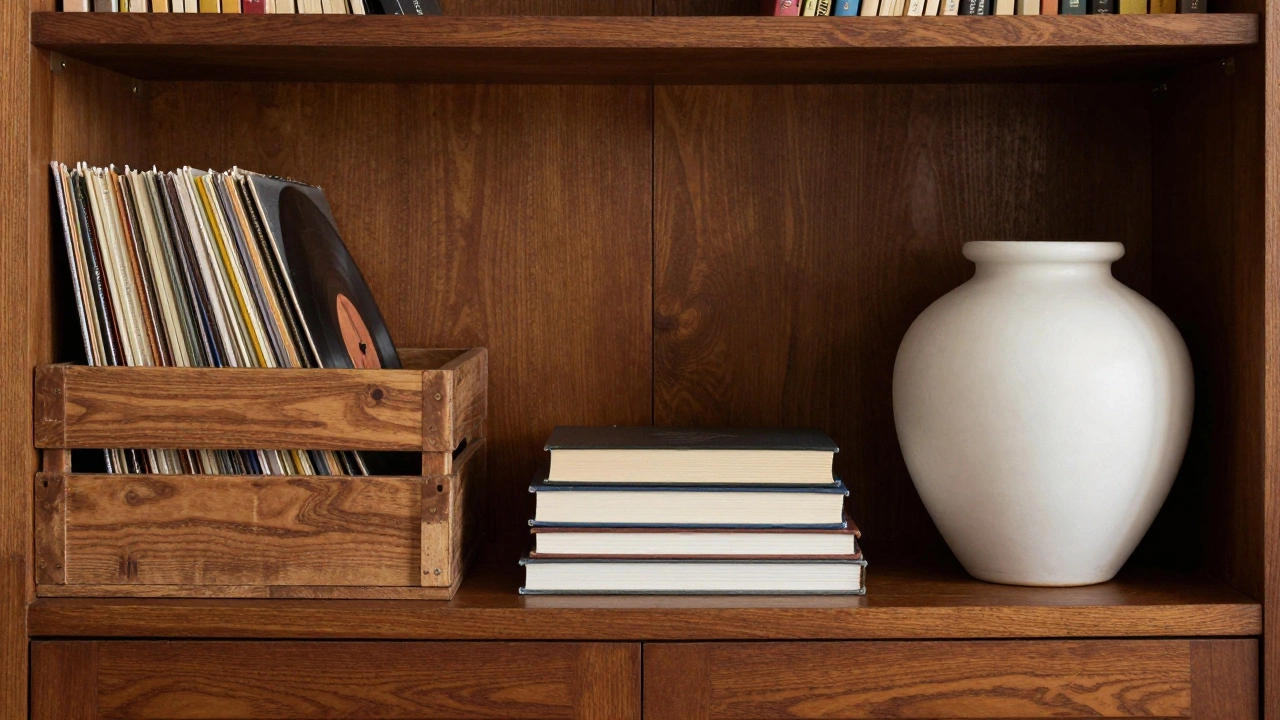
The bottom shelf is the only place where Textbooks and massive binders actually look right. Because these items are often visually dense and sometimes unattractive, tucking them away at the bottom keeps them accessible without dominating the room's aesthetic. If you have a collection of Vinyl Records, the bottom shelf is non-negotiable. Records are incredibly heavy-a full crate can easily weigh 30-50 pounds-and putting them higher up can actually cause the shelves to bow or warp over time.
If you're storing heavy books, don't just shove them in. Group them by size. Place the largest ones against the back of the shelf and the slightly smaller ones in front if the shelf is deep enough. This prevents that "wall of paper" look and makes the shelf feel like a curated part of the room. If you have a few books that are particularly ugly but useful, you can actually place them *behind* a neatly arranged row of more attractive spines. It's a classic interior design trick that lets you keep your resources handy while maintaining a polished look.
Adding a Touch of Decor
Just because it's the bottom shelf doesn't mean it has to be purely functional. You can absolutely add decorative elements, but you have to be careful. Small trinkets will get lost down there and likely gather dust bunnies. Instead, go for "statement' pieces. A large, heavy ceramic pot or a chunky piece of driftwood works well because it matches the scale of the bottom area.
Think about the Color Palette of your room. If your bottom shelf is filled with dark binders and black baskets, a single bright white ceramic bowl or a gold-toned box can break up the monotony. The goal is to create a visual "anchor" that doesn't feel like a dead zone. Avoid putting anything fragile or high-value on the bottom shelf. Why? Because that's exactly where the vacuum cleaner hits, where the dog's tail wags, and where toddlers decide to explore. Keep the heirloom porcelain at the top and the sturdy stuff at the bottom.
Avoiding Common Bottom-Shelf Mistakes
One of the biggest mistakes people make is leaving too much empty space. A gaping hole at the bottom of a bookcase makes the whole unit look unfinished, like a building without a foundation. On the flip side, overstuffing it until the books are crammed tight makes the room feel claustrophobic. You want a balance of "full" and "breathable."
Another pitfall is ignoring the Dust Accumulation. The bottom shelf is the primary landing strip for every piece of dust in the room. If you use open-top baskets, you're essentially inviting dust to settle on your belongings. This is why lids are a game-changer. A simple wooden or fabric lid on your bottom-shelf bins keeps your items clean and adds another layer of visual tidiness. If you're using books, make sure they are pushed back slightly from the edge to prevent the "dust ledge" effect where a thick line of grey soot forms along the front of the shelf.
The Practical Workflow for Organizing
- Clear it out: Remove everything from the bottom shelf and the shelves above it to see the full picture.
- Sort by weight: Pile your items into "Heavy," "Medium," and "Light." Everything in the "Heavy" pile is your primary candidate for the bottom.
- Measure twice: Measure the height and depth of the bottom shelf. Don't guess. There is nothing more frustrating than buying a beautiful basket that is 1cm too tall to fit.
- Place the anchors: Slide in your heaviest books or vinyl records first.
- Fill the gaps: Insert your baskets or bins for the miscellaneous clutter.
- Add the accent: Place one larger decorative item to give the shelf some personality.
Will putting heavy books on the bottom shelf damage my bookcase?
Actually, it's the opposite. Placing the heaviest items on the bottom shelf lowers the center of gravity of the unit, making it more stable and less likely to tip. It also prevents the middle shelves from bowing, which happens when heavy weight is concentrated in the center of a span. Just ensure the bottom shelf is actually resting on a solid base or the floor to avoid stressing the side panels.
What if my bottom shelf is too deep and I have extra space behind my books?
Deep shelves are a blessing in disguise. You can use that hidden space to store things you rarely need, like old tax documents or seasonal decorations, in flat folders. Then, place your books in front of them. Just be careful not to push the books too far back, or they'll look like they're disappearing into a cave. Keep the spines aligned with the front edge for a clean, professional look.
Can I put a laundry hamper on the bottom shelf?
If the bookcase is in a bedroom and the shelf is wide enough, a small, stylish laundry bin can work. However, from a design perspective, it's usually better to keep "dirty" items separate from "intellectual" items like books. If you do it, make sure the hamper is a high-quality material (like woven cotton or wicker) so it doesn't look like a plastic tub is crashing your library party.
How do I stop the bottom shelf from looking like a "junk pile"?
The secret is containment. When you have loose items sitting on a shelf, the eye perceives it as clutter. When those same items are inside a basket, the eye perceives it as a "container." By using bins with lids or matching sets of baskets, you turn a collection of random objects into a structured design element. Stick to a maximum of two different textures or colors for your bins to keep the look cohesive.
Should I put a plant on the bottom shelf?
Generally, no. Plants need light, and the bottom shelf is usually the darkest spot in the unit. A plant down there will likely stretch toward the light (etiolation) and look sickly. If you really want greenery, use a high-quality artificial plant or a low-light species like a snake plant, but ensure it's in a heavy pot so it doesn't tip over if someone bumps into the bookcase.
Write a comment