
Couch Placement Calculator
How far is your couch from the wall? Our calculator shows you if your current spacing is ideal, too small, or too large based on expert recommendations.
Ever walked into a room and felt something was off-even though everything looked neat? More often than not, the culprit is a couch pushed flush against the wall. It’s the default setup for most people. It’s easy. It’s what you see in magazines. But it’s not right. And here’s why.
It Kills the Flow of the Room
When your couch sits right up against the wall, it turns your living space into a hallway. You lose the sense of a cozy, inviting area. Instead of a conversation circle, you get a single line of seating facing a TV. That’s not a living room-that’s a viewing station. Real living rooms have movement. They have space to walk around, to sit in different spots, to feel like you’re inside a room, not just in front of a screen.
Try this: move your couch just 12 to 18 inches away from the wall. Suddenly, you’ve created a buffer zone. That space lets air move, light flow, and people circulate. It also gives you room to add a side table, a floor lamp, or even a small plant. These aren’t just decorations-they’re functional anchors that make the room feel lived-in.
You’re Wasting Backspace
That empty space behind your couch? It’s not wasted. It’s prime real estate. Most people don’t realize the back of a sofa can be part of the design, not just hidden. A sofa placed away from the wall opens up possibilities you didn’t know you had.
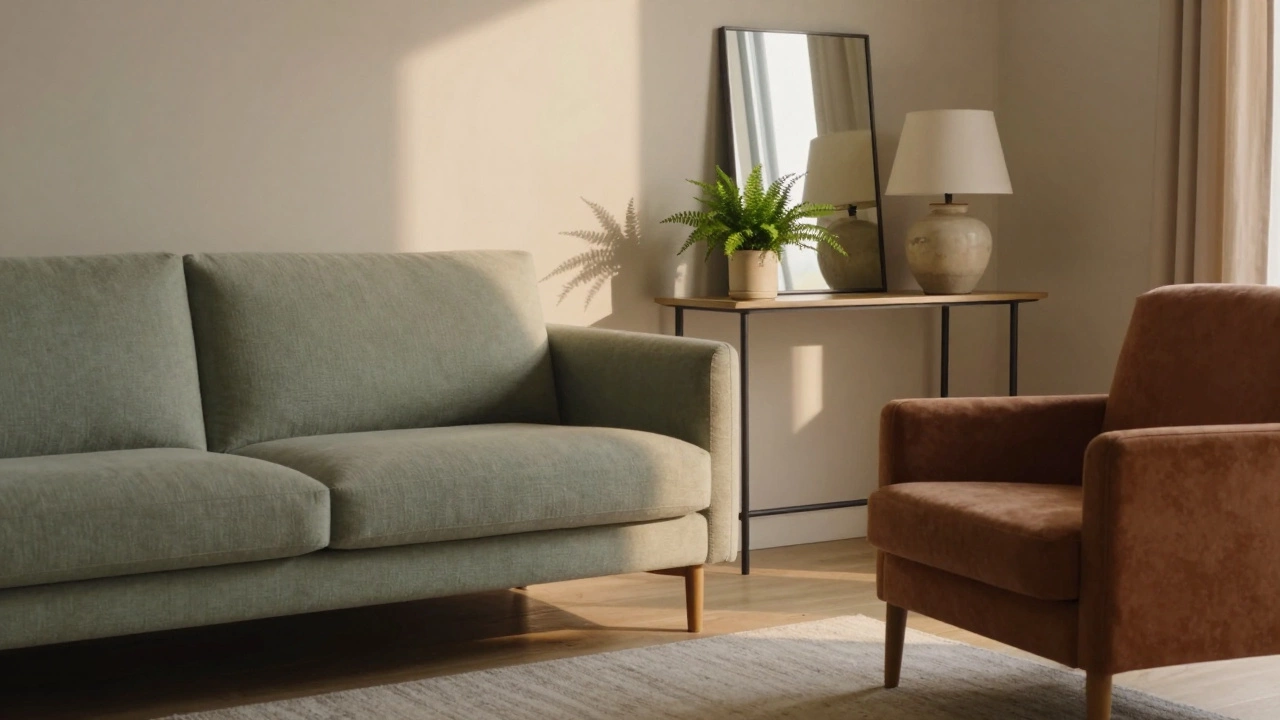
Place a narrow console table behind it. Add a mirror to reflect light and make the room feel bigger. Hang artwork or a gallery wall to create visual interest. Install open shelving for books or decorative storage. Even a tall indoor plant can turn unused wall space into a statement. All of this becomes impossible when your couch is glued to the wall.
And if you’re worried about people bumping into the back of the sofa? That’s why you leave a gap. You don’t need a foot of space-just enough to walk comfortably. Six to eight inches is usually enough. People won’t trip. They’ll just notice the room feels more balanced.
It Makes the Room Look Smaller
Pushing furniture against walls is a classic mistake that makes spaces feel cramped. It’s psychology. When everything is lined up like soldiers, your brain reads the room as tight, boxed-in, and uninviting. Moving your couch away from the wall creates the illusion of depth. It breaks the monotony of straight lines and adds dimension.
Think of it like this: if you’re standing in a narrow hallway, everything feels confined. But if you step into a room with furniture arranged in a gentle curve or L-shape, your eyes naturally follow the flow. That’s what you want. A sofa pulled away from the wall helps create that curve. It invites you to explore the space, not just sit in front of it.
Try this test: stand in the center of your living room. Look at the walls. If every piece of furniture is touching one, the room feels like a prison cell. Now imagine your couch floating in the middle, with space behind it and on the sides. Suddenly, the walls aren’t closing in-they’re framing the room.
You’re Missing Out on Zoning
Modern homes don’t have separate rooms for everything. Open-plan living means one space does double duty. Your living room might also be your reading nook, your entertainment zone, or even a casual workspace. But you can’t zone a room if everything is shoved against the walls.
By pulling your couch away from the wall, you create a natural boundary between areas. You can define a seating area without needing a rug (though a rug helps). You can separate the TV zone from the reading corner. You can even carve out a small workspace with a desk tucked beside the sofa, facing away from the main seating.
Without that separation, everything blends into one chaotic mess. You don’t need walls to create zones. You just need thoughtful placement. A sofa pulled away from the wall is the easiest, cheapest way to do it.
It’s Bad for Airflow and Dust
Let’s talk about something no one mentions: dust. When your couch sits against the wall, it traps air and dirt behind it. You can’t vacuum there. You can’t wipe the wall. Dust builds up over months, then gets stirred up every time someone walks past. That’s not just dirty-it’s bad for your lungs.
And airflow? Same problem. Heat and cool air get blocked. In winter, the wall behind your couch stays cold. In summer, it stays hot. That creates uneven temperatures in your room. Move the couch even a few inches, and suddenly air circulates better. The wall breathes. The room feels more comfortable.
Plus, you’ll notice less mold and mildew over time. Especially in humid places like Birmingham, where dampness clings to walls, that gap behind the sofa makes a real difference.
It Feels Unnatural
Think about how people actually live. Do you sit in a room where every piece of furniture is pinned to a wall? No. You sit in a corner with a view. You lean back against a cushion with a lamp beside you. You turn to talk to someone across the room. That’s not a straight line. That’s a circle. A triangle. A cluster.
Pushing your couch against the wall forces you into a rigid, unnatural posture. You’re facing one direction. One screen. One point of focus. Real life doesn’t work that way. People come and go. Conversations shift. Kids run through. A sofa floating in the room lets you adapt. You can turn toward the window. You can face the fireplace. You can have a conversation without shouting over your shoulder.
It’s not about design trends. It’s about how humans actually use space. Furniture should serve you-not trap you.
What to Do Instead
Here’s how to fix it, step by step:
- Clear the space behind your couch. Remove any clutter or decorative items.
- Use furniture sliders or a piece of cardboard to gently lift and push the couch forward. Even 12 inches makes a huge difference.
- Place a console table, shelf, or tall plant behind it. Keep it low enough so it doesn’t block light or views.
- Add a floor lamp or wall sconce to light up the back area. This creates depth and warmth.
- Walk around the room. Does it feel open? Does it feel like a place you want to be? If not, adjust. Move the couch a little more, or shift the side tables.
Don’t overthink it. You don’t need a designer. You just need to break the habit of default placement.
Common Myths Debunked
Myth: “It looks more professional.” Not true. Professional interiors use floating furniture to create balance. Think hotels, showrooms, or high-end apartments. They never push sofas against walls unless there’s no other option.
Myth: “It’s safer for kids or pets.” Actually, it’s the opposite. A couch against the wall gives kids nowhere to play around it. A floating sofa creates a safe, contained zone where they can sit, crawl, or climb without hitting walls or sharp corners.
Myth: “I don’t have enough space.” You probably have more than you think. Measure the distance from the wall to the edge of your couch. If it’s less than 10 inches, you’ve got room to move it. Even 6 inches can transform the feel of the room.
Final Thought
Your couch doesn’t belong on the wall. It belongs in the room. Not as a barrier, but as a centerpiece. Pulling it away isn’t a renovation. It’s a reset. It’s the easiest, cheapest, and most effective way to make your living space feel bigger, calmer, and more alive.
Try it for a week. Sleep on it. Sit in it. See how the room changes. You might just realize the problem wasn’t your decor. It was your placement.
Is it ever okay to put a couch against the wall?
Yes-but only if the room is very small, or the layout forces it. In narrow apartments or hallways with no other options, it’s a practical compromise. But even then, try to leave at least 6 inches of space. Use a thin shelf or wall art behind it to hide the gap and add visual interest. Never make it the default choice.
How far should a couch be from the wall?
Aim for 12 to 18 inches. That’s enough to walk behind it comfortably, add a side table or plant, and let air circulate. If you have a large room, go even farther-up to 24 inches. In smaller spaces, 6 to 10 inches is the minimum. Anything less feels cramped and defeats the purpose.
Will moving my couch make the room look bigger?
Absolutely. Floating furniture creates depth and breaks up flat lines. It tricks the eye into seeing more space. Even in a small room, pulling the couch away from the wall and adding a mirror or light behind it can make the room feel 20% larger. It’s not magic-it’s spatial psychology.
What can I put behind my couch if it’s not against the wall?
A console table is the classic choice-it’s practical and stylish. You can also use open shelving, a tall plant, a floor lamp, or even a narrow bookshelf. If you’re short on space, try a decorative screen or a piece of wall art. The goal is to fill the gap without blocking light or airflow.
Does this work with sectional sofas?
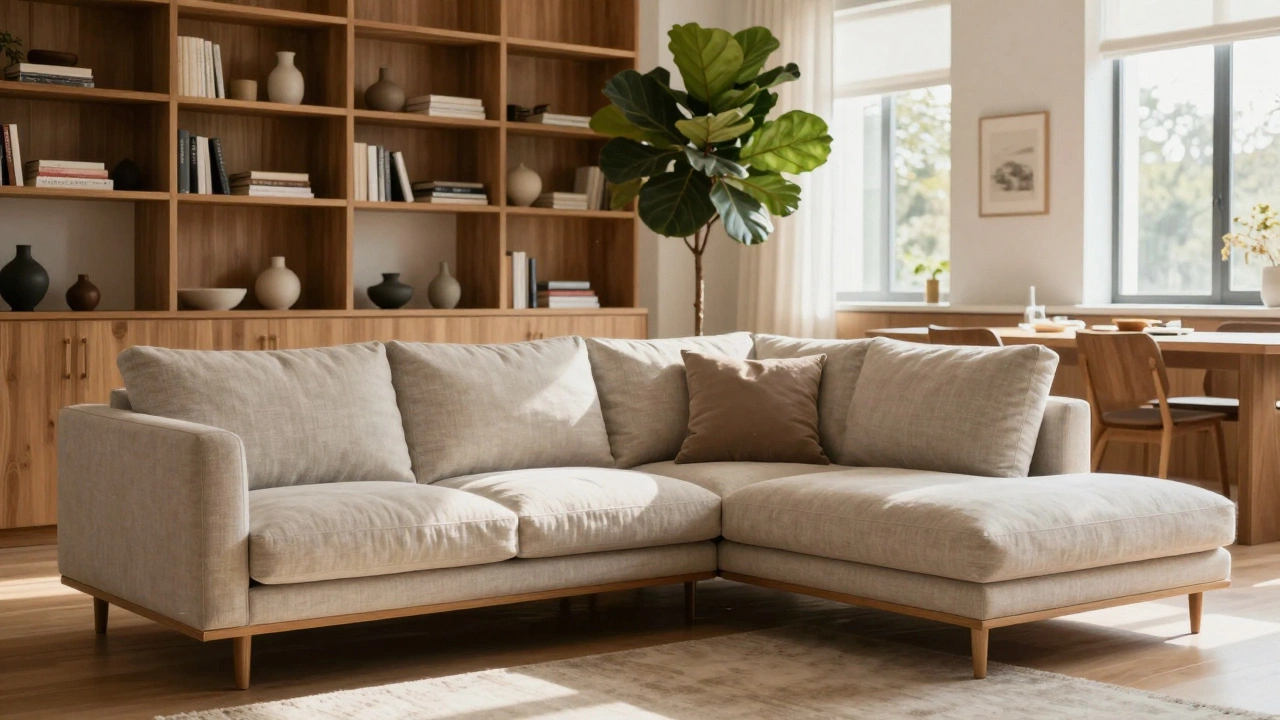
Yes, and it works even better. Sectionals are bulky, so placing them against the wall makes the room feel even more closed-in. Pull the main seating area away from the wall, and use the L-shape to define a seating zone. You can place a side table at the corner, or a small rug under the front section. It instantly transforms the space from boxy to balanced.
Next Steps
If you’re ready to try this, start tonight. Clear a path behind your couch. Slide it forward. Add one thing-a lamp, a plant, a shelf. Sit in the room for 10 minutes. Notice how the light falls. How the air moves. How you feel.
This isn’t about perfection. It’s about breaking a habit that’s been holding your space back. Once you do, you’ll wonder why you ever did it differently.
Write a comment