
Furniture Storage Suitability Calculator
Answer a few questions to determine if your furniture can be safely stored and what precautions to take.
Key Recommendations
Potential Risks
You’ve moved out, downsized, or are renovating your home-and now you’re staring at your sofa, dining table, or bed wondering: Can I put my furniture in storage? The short answer? Yes, but not all furniture handles storage the same way. Some pieces come out looking like new. Others? Warped, stained, or ruined. It’s not about whether you can store it-it’s about how you do it.
What Kind of Furniture Can Go in Storage?
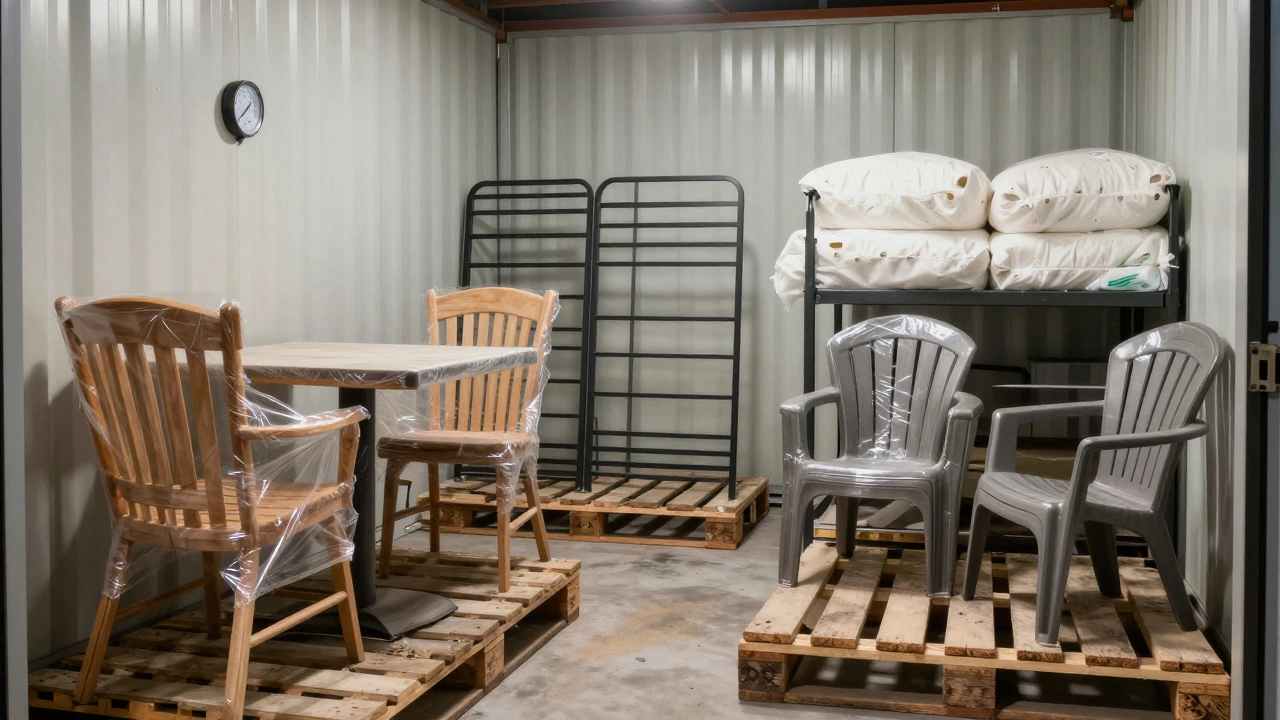
Not all furniture is built to sit in a climate-controlled unit for six months. Here’s what typically survives:- Wooden furniture (solid oak, maple, walnut) - if properly cleaned and wrapped
- Metal frames (beds, chairs, shelving) - rust-proof if dried thoroughly
- Plastic or resin pieces (outdoor patio sets, storage bins) - highly durable
- Disassembled items - bookshelves, tables, bed frames taken apart
Now, the risky ones:
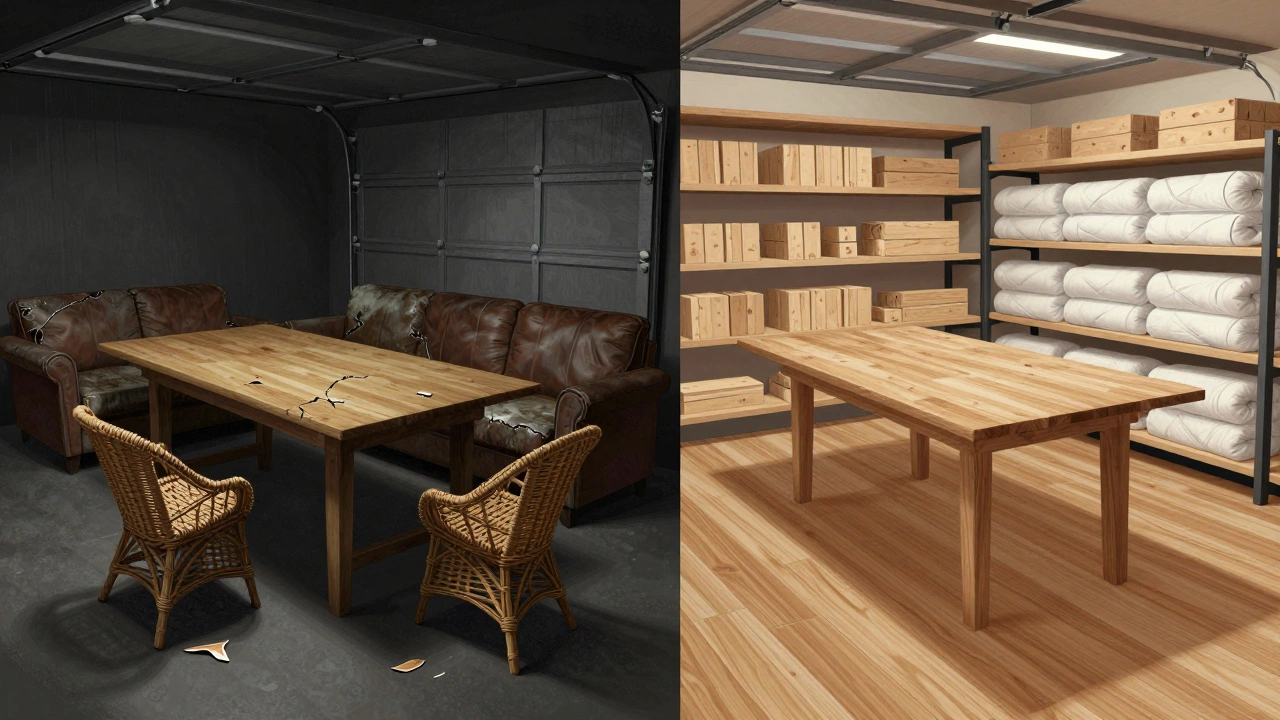
- Upholstered sofas and armchairs - mold and mildew thrive in damp air
- Leather furniture - cracks if humidity drops too low or rises too high
- Wicker and rattan - dries out, becomes brittle, snaps easily
- Electronics with wood finishes - TVs, sound systems - moisture ruins both the tech and the casing
If your furniture is older, antique, or made from particleboard, treat it like glass. One wrong move and it’s gone for good.
Storage Units: Climate Control Isn’t Optional
You wouldn’t leave wine in a garage in Arizona. Don’t leave your couch in a non-climate-controlled unit either.Temperature swings and humidity are the real killers. In summer, heat and moisture swell wood and trigger mold. In winter, freezing air cracks leather and warps veneer. A study by the Storage Industry Association found that 68% of damaged furniture in storage came from non-climate-controlled units.
Look for facilities with:
- Temperature between 55°F and 80°F
- Humidity levels under 55%
- Proper ventilation (no sealed, stagnant air)
- Indoor, ground-floor units (avoid basements or top floors)
Don’t be fooled by labels like "secure" or "dry." Ask for the exact specs. Most reputable facilities will tell you.
How to Prep Furniture for Storage
Prepping is 70% of the battle. Skip this, and even the best unit won’t save your stuff.- Deep clean everything. Dust, grease, and crumbs attract pests. Use a damp cloth with mild soap. Dry with a microfiber towel. No wet spots.
- Disassemble what you can. Take apart bed frames, remove table legs, detach shelves. This saves space and prevents stress on joints.
- Wrap it right. Use breathable cotton sheets or moving blankets. Avoid plastic wrap-it traps moisture. For leather, use a specialized conditioner first, then cover with a cotton cover.
- Elevate items off the floor. Use pallets, wooden boards, or plastic risers. Even a few inches stops moisture from creeping up.
- Label and photograph. Take a photo of each item before packing. Write what’s inside on the wrap. This saves hours when you retrieve it.
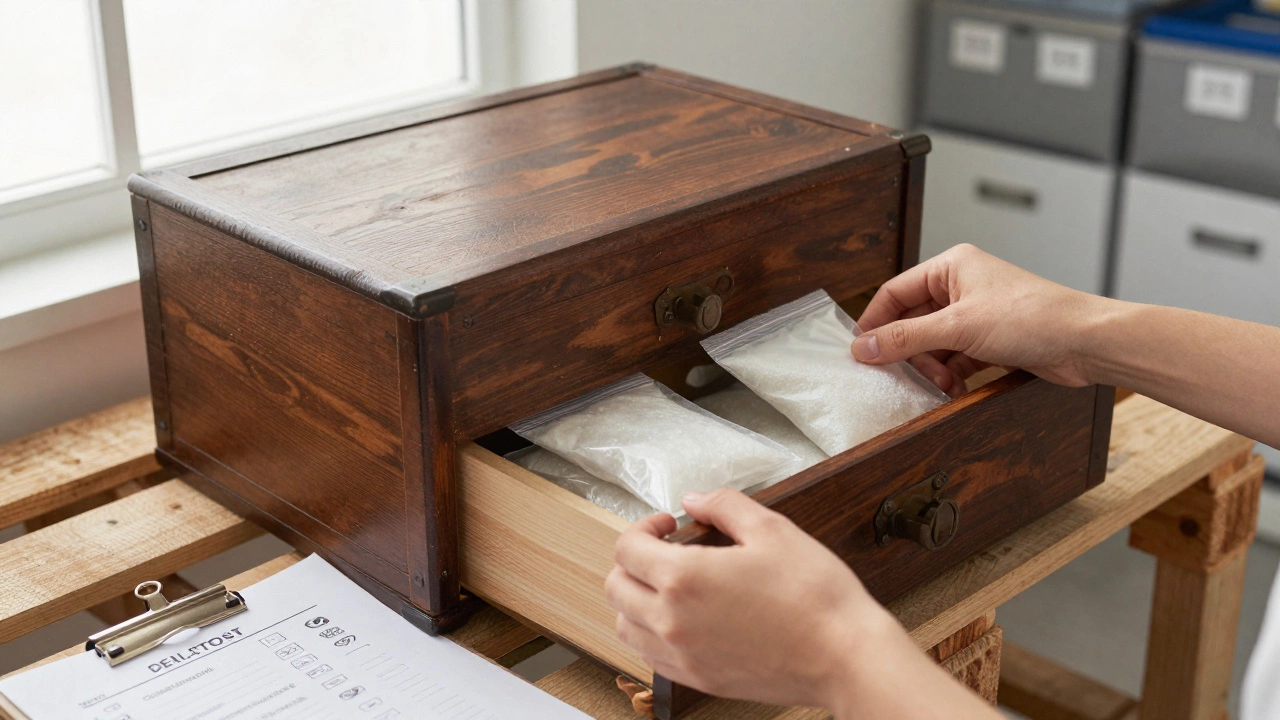
Pro tip: Place silica gel packs inside drawers and cabinets. They soak up excess moisture without you even noticing.
What to Avoid at All Costs
Some mistakes are expensive-and irreversible.- Don’t store furniture in cardboard boxes. Cardboard absorbs moisture, then collapses. Use plastic bins with tight lids if you must box things.
- Never store dirty or damp items. Even one drop of water left on a wood table can cause warping over time.
- Avoid stacking heavy items on upholstered furniture. The pressure crushes springs and padding. Store sofas upright, not on their side.
- Don’t use mothballs or chemical sprays. They leave fumes that stain fabric and damage finishes. Natural cedar blocks are safer.
One person we spoke to stored their grandmother’s oak dining set in a garage unit for eight months. When they pulled it out, the legs were warped, the finish was sticky, and the drawers wouldn’t open. They had to replace it. Cost: $3,200.
How Long Can Furniture Stay in Storage?
There’s no hard rule, but most experts agree:- 3-6 months: Safe for almost all furniture if prepped correctly
- 6-12 months: Possible, but monitor humidity levels. Check monthly if you can
- Over 12 months: Only for very durable pieces (solid wood, metal) in top-tier climate-controlled units
Leather and fabric start to degrade after 8-10 months, even in perfect conditions. If you’re storing for more than a year, consider renting a slightly larger unit so you can air things out every few months.
Storage vs. Professional Moving Services
Some companies offer full-service furniture storage: they pick it up, clean it, wrap it, store it, and deliver it back. It’s pricier-usually $150-$400 per month for a full living room set-but you eliminate all the work.Compare it to DIY:
| Factor | DIY Storage | Professional Service |
|---|---|---|
| Cost (monthly) | $50-$150 | $150-$400 |
| Effort Required | High (cleaning, packing, transporting) | Low (they handle everything) |
| Risk of Damage | Medium to High | Low (insured, trained staff) |
| Best For | Simple items, budget-conscious | Antiques, luxury pieces, busy people |
If you’re storing heirlooms, high-end pieces, or anything with sentimental value, professional service is worth the cost. For a basic sofa and dresser? DIY works fine-if you’re careful.
What to Do When You Retrieve Your Furniture
Don’t just drag it out and plop it down. Let it adjust.- Unwrap in a dry, well-ventilated room
- Let wood items sit for 24-48 hours before reassembling
- Check for mold, mildew, or pests-especially under cushions and inside drawers
- Recondition leather with a quality balm
- Polish wood surfaces with a natural oil (like tung or linseed)
One common mistake? People rush to reassemble everything the same day. Wood expands and contracts. If you force a joint back together too soon, you’ll crack it.
Final Verdict: Can You Store Furniture?
Yes, you absolutely can-but only if you treat it like a fragile heirloom, not just old furniture. Climate control, proper prep, and smart packing make all the difference. A well-stored sofa can last 10 years in storage and still look great. A poorly stored one? It becomes landfill material in six months.Ask yourself: Is this piece worth the effort? If the answer is yes, then go ahead. Just don’t cut corners. Your future self will thank you.
Can I store upholstered furniture in a non-climate-controlled unit?
No, it’s not recommended. Upholstered furniture-like sofas, loveseats, and armchairs-is highly prone to mold, mildew, and odor buildup in fluctuating temperatures. Even if the unit looks dry, humidity levels can rise overnight. If you must store it, use a climate-controlled facility and wrap it in breathable cotton, not plastic.
Is it cheaper to store furniture or sell it and buy new later?
It depends. For basic, mass-produced furniture (like IKEA or Walmart sets), selling and replacing is often cheaper. For higher-end, antique, or custom pieces, storage is almost always the better option. A mid-range sofa that costs $1,200 new might cost $80-$120 per month to store. If you need it back in under a year, storage wins. If you’re moving overseas for 2+ years, selling makes more sense.
Can I store furniture in my garage or attic?
Garages and attics are risky. They lack temperature control and are prone to pests, moisture, and dust. Wood can warp, metal can rust, and fabric can mildew. If you must use them, elevate items on pallets, use dehumidifiers, and check monthly. But for anything valuable, a professional storage unit is far safer.
How do I prevent pests from getting into stored furniture?
Clean everything thoroughly before storage. Use cedar blocks or lavender sachets-they repel insects naturally. Avoid mothballs; they leave residue and odor. Seal gaps in plastic bins. Inspect units monthly for signs of droppings, webs, or chew marks. If you see any, move your items immediately.
What’s the best way to wrap a mattress for storage?
Use a breathable, waterproof mattress cover designed for storage. Don’t use plastic wrap-it traps sweat and causes mold. Place the mattress flat on a pallet, not on the floor. Avoid stacking anything on top. If storing long-term, rotate it every few months to prevent uneven compression.
Write a comment