
Coffee Table Styling Advisor
Stuck between matching your coffee table to the TV stand or the couch? Answer three quick questions to find your ideal styling strategy.
Quick Checklist:
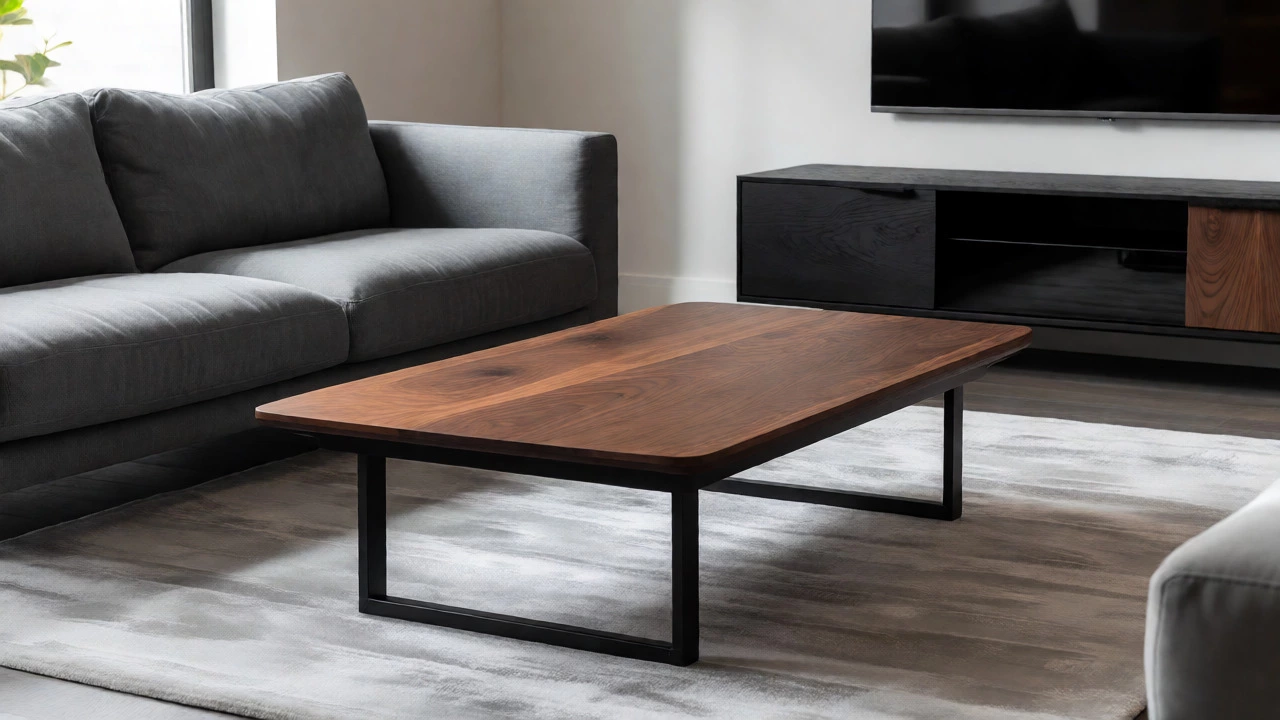
You walk into a showroom or scroll through online listings, staring at a sleek walnut coffee table. It looks perfect. Then you remember your couch is a cool-toned grey linen, and your TV unit is glossy black oak. Suddenly, that beautiful table feels wrong. You’re stuck in the classic living room dilemma: should the coffee table match the TV stand or the couch?
This isn’t just about aesthetics; it’s about visual balance. Get it wrong, and your room feels disjointed or overly matched like a hotel lobby from the 1990s. Get it right, and the space flows naturally. The truth? There is no single "correct" answer. It depends entirely on what you want to emphasize in your space. Let’s break down how to make this decision without second-guessing yourself every time you rearrange the cushions.
The Myth of Perfect Matching
First, let’s kill the idea that everything must be from the same collection. If your sofa, rug, lamp, and coffee table all come from one manufacturer’s set, your room often lacks personality. Designers call this the "catalog look." It’s safe, sure, but it’s rarely interesting.
Instead of matching, aim for coordination. This means choosing pieces that share a common thread-like wood tone, metal finish, or leg style-but aren’t identical twins. Think of it as dressing for an event. You wouldn’t wear a suit where every button matches the exact shade of your tie. You’d coordinate colors and textures so they complement each other without screaming for attention.
When you stop trying to find a perfect clone of your existing furniture, you open up options. You can mix vintage with modern, or warm woods with cool metals. The goal is harmony, not uniformity.
Option 1: Matching the Coffee Table to the TV Stand
Choosing to align your coffee table with your media console is a strategic move if you want to create a cohesive entertainment zone. This approach works best when your TV unit is a prominent, solid piece of furniture that anchors one wall of the room.
Why does this work? Visually, the eye travels horizontally across the room. When the low-profile table shares materials or finishes with the larger media unit, it creates a grounded base. It makes the technology feel integrated rather than floating awkwardly above the floor.
| Aspect | Benefit | Risk |
|---|---|---|
| Visual Weight | Creates a strong horizontal line that stabilizes the room. | Can feel heavy if both pieces are dark and bulky. |
| Style Cohesion | Ensures the tech area looks intentional and designed. | Might clash with a contrasting sofa style. |
| Buying Ease | Easier to shop if you stick to one material family (e.g., all oak). | Limits creative expression with mixed materials. |
If you choose this route, pay attention to the legs. If your TV stand has tapered wooden legs, look for a coffee table with similar tapering. You don’t need the exact same wood stain. A mid-tone walnut table next to a darker espresso TV stand can work beautifully if the grain and leg shape echo each other. This subtle repetition ties the two separate pieces together without forcing them to be clones.
Option 2: Matching the Coffee Table to the Couch
Alternatively, you might decide to link your coffee table to your sofa. This is the more common instinct because the sofa and table sit closest together. They form the primary seating cluster where people actually spend their time.
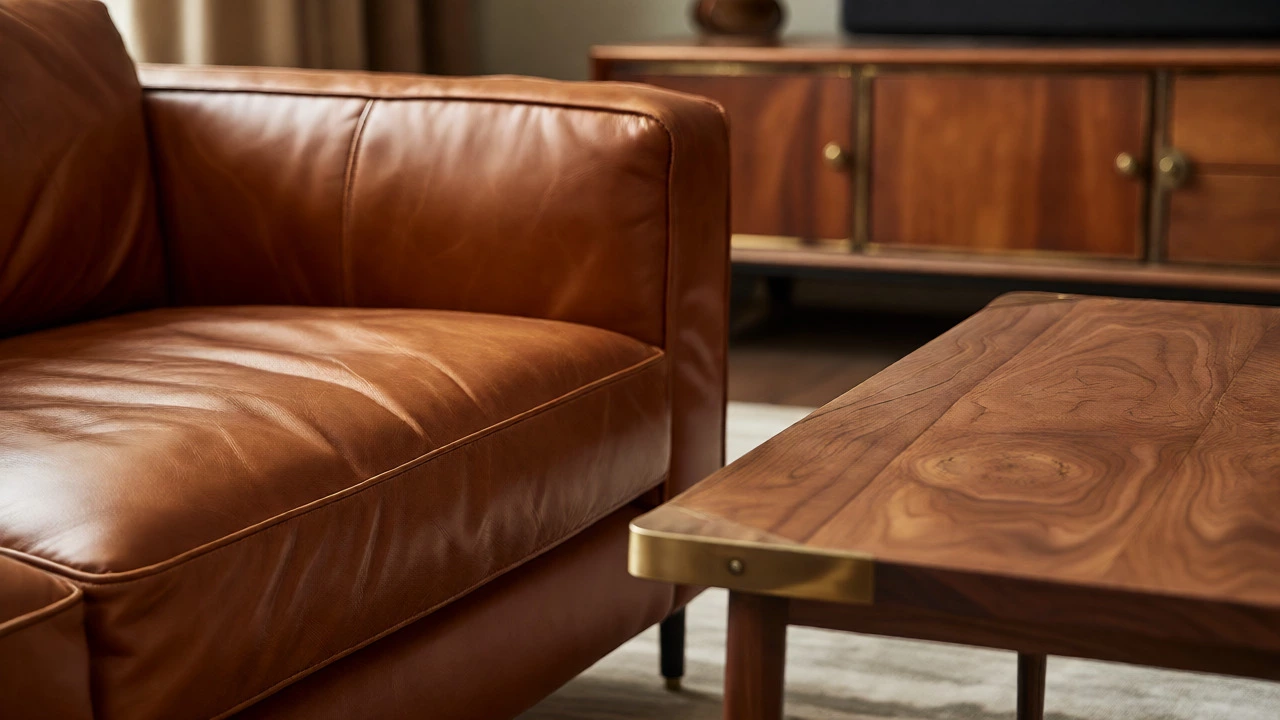
Matching here usually refers to soft goods and scale rather than hard materials. Since sofas are upholstered, you won’t match wood-to-wood. Instead, you match the vibe. If you have a plush, overstuffed sectional in a neutral beige, a glass or acrylic coffee table keeps the airiness. If you have a structured, tailored leather sofa in cognac brown, a rich mahogany or brass-accented table complements that warmth.
Here’s the trap many people fall into: they buy a table that matches the sofa’s color exactly. If your grey sofa gets a grey table, the room can look flat. There’s no contrast. No depth. To avoid this, use texture. Pair a matte fabric sofa with a glossy lacquered table, or a velvet couch with a rough-hewn stone table. The connection happens through the mood, not the hex code.
This approach prioritizes comfort and intimacy. The coffee table becomes an extension of the seating area, making it easier to reach drinks or books without feeling like you’re crossing into a different "zone" of the room.
The Third Way: The Bridge Piece
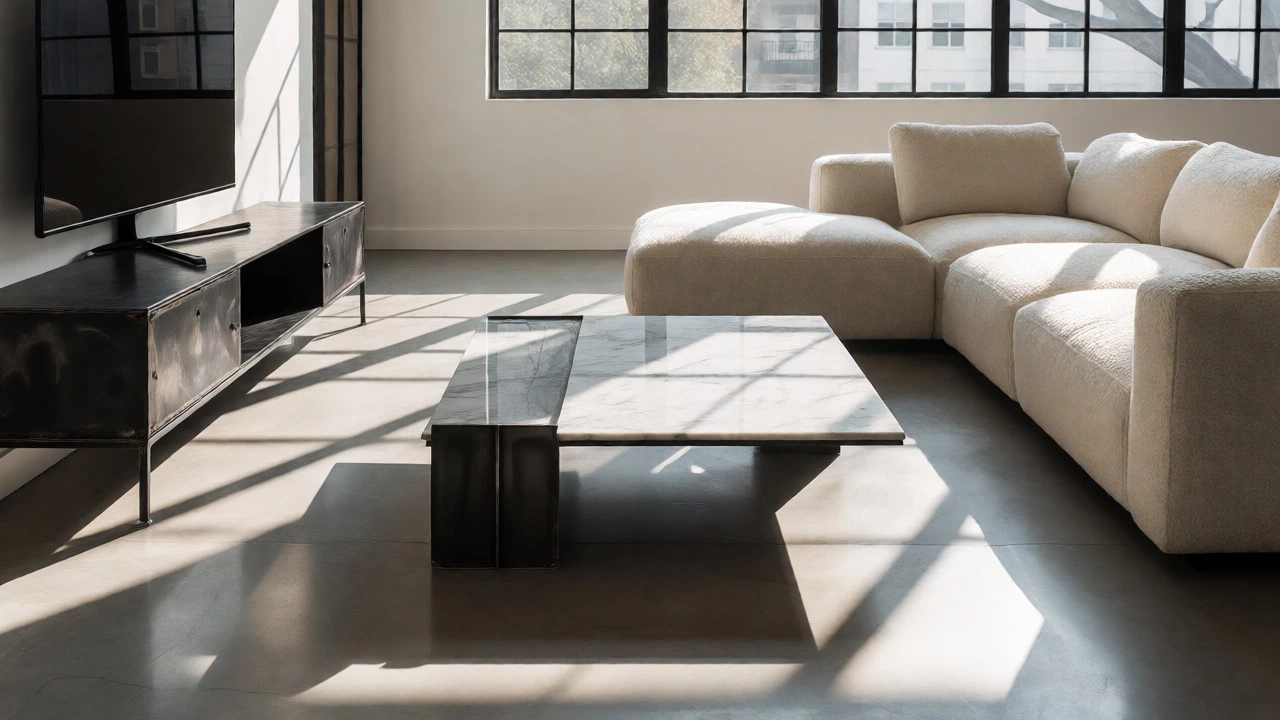
What if you hate picking sides? Or what if your TV stand is black metal and your sofa is cream boucle? Neither option feels quite right. Enter the bridge strategy. This involves choosing a coffee table that pulls elements from both the TV unit and the sofa, acting as a mediator between the two.
Imagine your TV stand is industrial black steel. Your sofa is a soft, light grey fabric. A purely black table might feel too cold near the sofa. A purely white table might look lost against the dark TV unit. The solution? A table with black metal legs (matching the TV stand) and a light oak or white marble top (echoing the sofa’s lightness). Now, the table speaks to both sides of the room.
This method requires a bit more shopping effort, but it yields the most sophisticated results. It shows you’ve thought about the whole room, not just isolated pairs of furniture. Look for tables with mixed materials. Glass tops with wooden bases. Marble slabs on iron frames. These hybrids naturally bridge gaps between disparate styles.
Practical Rules for Scale and Height
Color and material matter, but proportion matters more. A mismatched height ruins even the most perfectly coordinated palette. Here are the golden rules I follow when helping friends pick tables:
- Height Rule: The coffee table should be within 1-2 inches of the seat cushion height. Lower is okay if you want a casual, lounge-like feel. Higher is generally bad-it forces people to lift their arms awkwardly to place a mug.
- Distance Rule: Leave 14-18 inches between the sofa edge and the coffee table. Any closer, and you’ll bang your knees. Any further, and you lose the functional connection.
- Length Rule: The table should be roughly 2/3 the length of your sofa. If you have a massive L-shaped sectional, consider using two smaller square tables instead of one giant rectangle. It’s more flexible and visually lighter.
Don’t ignore the TV stand’s footprint either. If your media unit is long and low, a tall, narrow coffee table might look spindly and unstable next to it. Conversely, if your TV unit is small and tucked away, a massive trunk-style coffee table will dominate the room and overshadow the screen.
Common Mistakes to Avoid
I see these errors constantly in living rooms across Birmingham and beyond. Avoid them, and your room will instantly look more professional.
- Ignoring Rug Size: Your coffee table lives on the rug. If the rug is too small, the table looks like it’s floating off the edge. Ideally, the front legs of the sofa and the entire coffee table should sit on the rug. This unifies the group regardless of whether the table matches the TV or the couch.
- Over-Matching Metals: If your TV stand has brushed nickel handles, don’t feel pressured to put a brushed nickel table in front of it. Mixing metals is fine, even encouraged. Just ensure there’s a dominant metal used elsewhere (like lamps or frames) to keep it from looking chaotic.
- Forgetting Function: A beautiful glass table that shatters if you drop a remote is a bad choice if you have kids. A heavy oak table that’s impossible to move for cleaning is annoying if you vacuum weekly. Practicality often trumps perfect aesthetic matching.
How to Decide Based on Your Room Layout
Your layout dictates which anchor is stronger. In open-plan spaces, the TV stand often defines the boundary between the living area and the kitchen or dining zone. In this case, matching the table to the TV stand helps reinforce that boundary. It says, "This is the relaxation zone," clearly separating it from the rest of the house.
In enclosed, smaller living rooms, the sofa is the focal point. People enter the room and immediately gravitate toward the seating. Here, matching the table to the sofa creates a tight, cozy conversational pit. The TV becomes secondary, almost background noise. Prioritize the comfort of the seating group over the alignment with the electronics.
Consider sightlines. Sit on your sofa. What do you see first? The TV or the view out the window? If the TV dominates your view, lean into the TV-match strategy. If the room is social and the TV is hidden in a cabinet or mounted high up, prioritize the sofa connection.
Final Checklist Before Buying
Before you click "add to cart," run through this quick audit:
- Does the table height allow me to reach my drink easily while sitting comfortably?
- Is there enough clearance (at least 16 inches) between the sofa and the table?
- Does the material complement the rug underneath it?
- Am I repeating at least one element (leg style, metal finish, or wood tone) from another piece in the room?
- Does the table feel stable and substantial enough for its size?
There is no shame in changing your mind later. Furniture is an investment, but it’s also part of your daily life. Start with the rule that makes you feel most comfortable. Usually, that’s the one that makes the seating area feel inviting. After all, we spend far more hours on our couches than we do staring directly at the media console.
Should my coffee table match my TV stand or my sofa?
Neither is strictly required. The best approach is coordination, not exact matching. Match the coffee table to the TV stand if you want to ground the media area and create a horizontal visual line. Match it to the sofa if you want to emphasize the seating cluster and comfort. For a balanced look, try a "bridge" table that mixes materials from both pieces.
What is the correct height for a coffee table relative to the sofa?
The ideal height is within 1 to 2 inches of the sofa’s seat cushion height. If the table is slightly lower, it creates a relaxed vibe. If it is significantly higher, it becomes difficult to use and looks disproportionate. Measure your sofa seat before buying.
Can I mix wood tones in my living room?
Yes, mixing wood tones adds character and prevents the room from looking like a catalog set. Ensure the woods share a similar undertone (warm vs. cool) or connect them with a third element, like a rug or artwork, that incorporates both shades. Contrast in grain and finish can also help distinguish the pieces intentionally.
How much space should be between the sofa and coffee table?
Leave approximately 14 to 18 inches of clearance between the front edge of the sofa and the coffee table. This allows people to walk between them comfortably while still being close enough to reach drinks or remotes without stretching awkwardly.
Is it better to have a glass or wood coffee table?
Glass tables visually disappear, making small rooms feel larger and allowing patterned rugs to show through. Wood tables add warmth, texture, and visual weight. Choose glass if your room feels cluttered or dark; choose wood if the space feels sterile or lacks grounding elements.
Write a comment