
Coffee Table Placement Finder
Key Benefits:
Pro Tip:
Walk into most living rooms, and you’ll see the same setup: a sofa facing a TV, with a coffee table is a low table typically placed in front of a sofa or seating area to hold drinks, books, and decorative items. sitting dead center. It’s the default move because it’s easy. But does it actually have to be there? The short answer is no. In fact, forcing that piece of furniture into the middle of your room can sometimes make your space feel cramped, awkward, or just plain boring.
We’ve been trained to think of the coffee table as an anchor for the seating arrangement. But if you look at how people actually live-especially in smaller homes or open-plan layouts-the traditional 'island' style placement isn’t always the best solution. Moving your table around can change how you use the room, improve traffic flow, and even make your space look bigger. Let’s look at why breaking this rule might be the best thing you do for your living room.
The Traditional Center Layout: When It Works
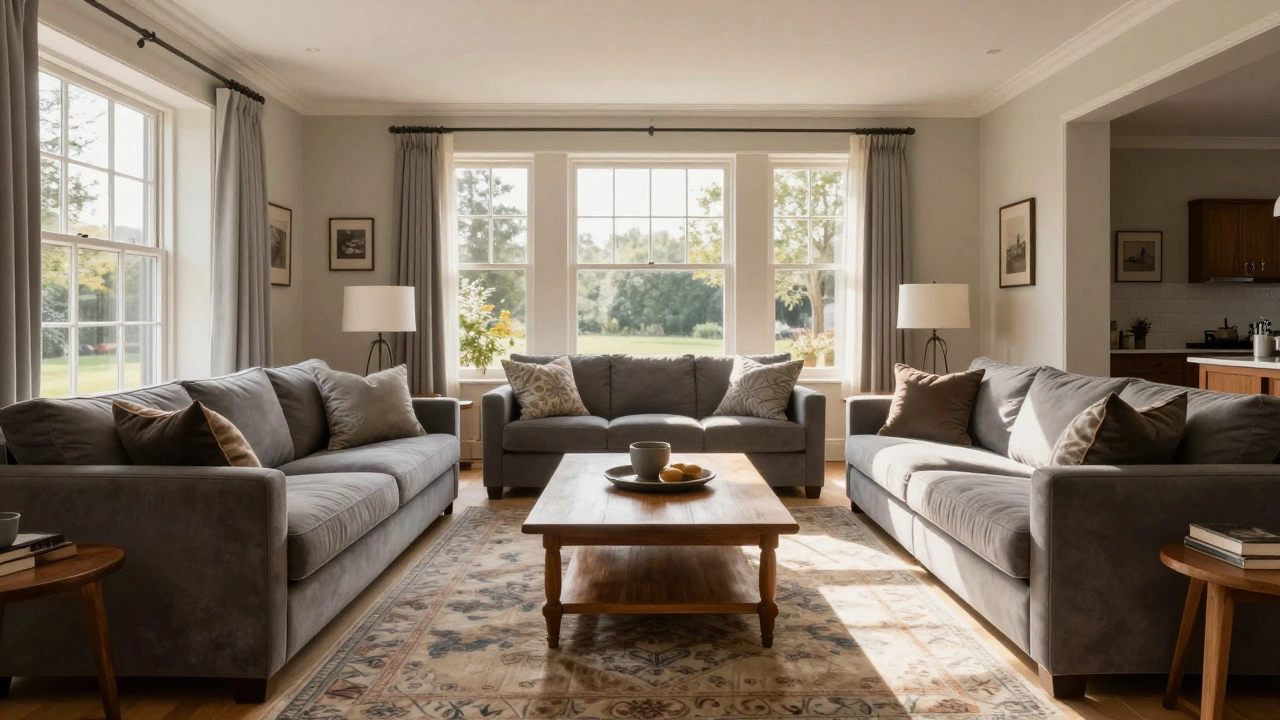
Before we kick the table out of the middle, let’s admit when it actually makes sense. The central placement works well if you have a large, dedicated living room with a symmetrical seating arrangement. Think of a classic U-shape or L-shape sofa setup where everyone faces each other. In this scenario, the table acts as a shared surface for everyone. It’s convenient for passing snacks, displaying decor, or having a board game night.
This layout also helps define the 'zone.' If your living room is part of a larger open-plan space, placing the table in the center of the rug and seating group creates a clear visual boundary between the living area and the dining or kitchen area. It tells your brain, "This is where we relax." However, this only works if you have enough floor space. If you’re tripping over corners or squeezing through narrow gaps, the center spot is doing more harm than good.
The Side Table Strategy: Perfect for Small Spaces
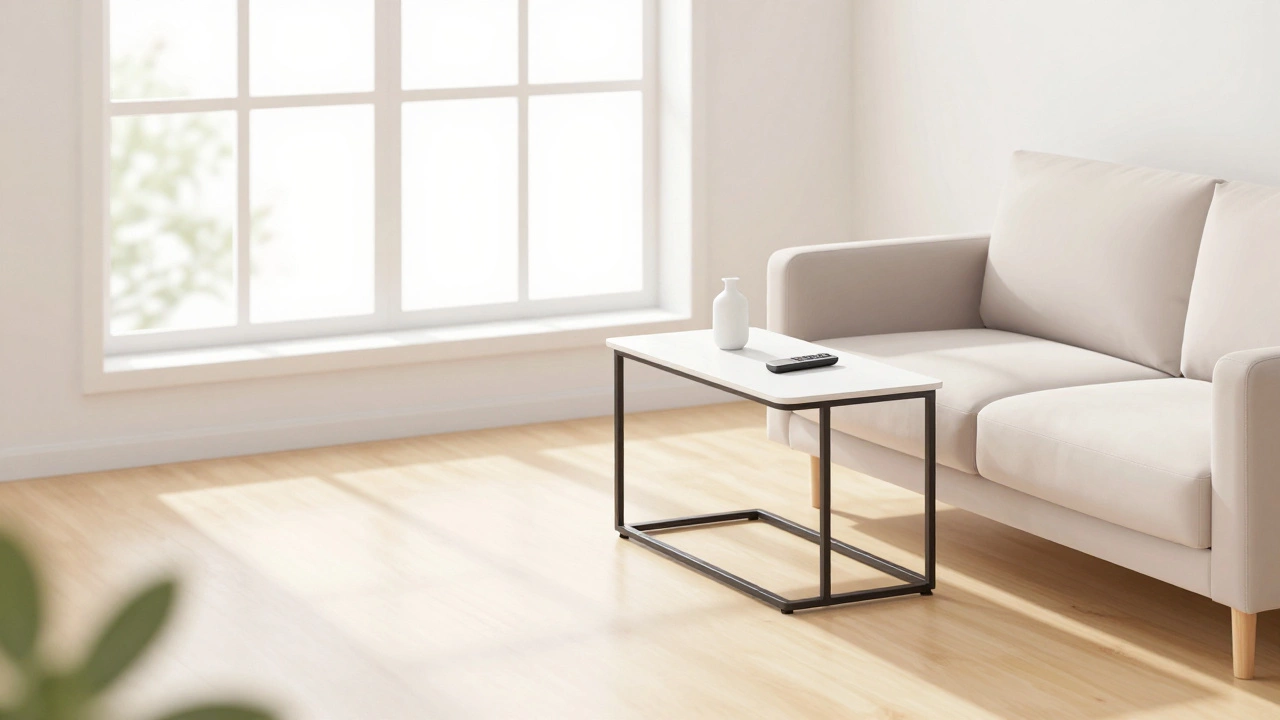
If your living room feels tight, consider pushing the coffee table against one side of the sofa. This is often called the 'side table' approach. Instead of blocking the path from the door to the window, you create a clear walkway down the middle. This is a game-changer for apartments or narrow rooms where every square foot counts.
By moving the table to the side, you turn it into a functional extension of the sofa armrest. It’s perfect for holding your remote control, a cup of tea, or a book while you watch TV. You lose the 'shared surface' aspect, but you gain mobility and openness. If you need extra surface area on the other side, you can add a smaller nesting table or a simple stool. This asymmetry looks intentional and modern, rather than cluttered.
- Benefit: Improves traffic flow by keeping the main path clear.
- Best For: Narrow rooms, studio apartments, or single-person households.
- Tip: Use a narrower console-style table to maximize the effect.
The Console Behind the Sofa: A Dual-Purpose Solution
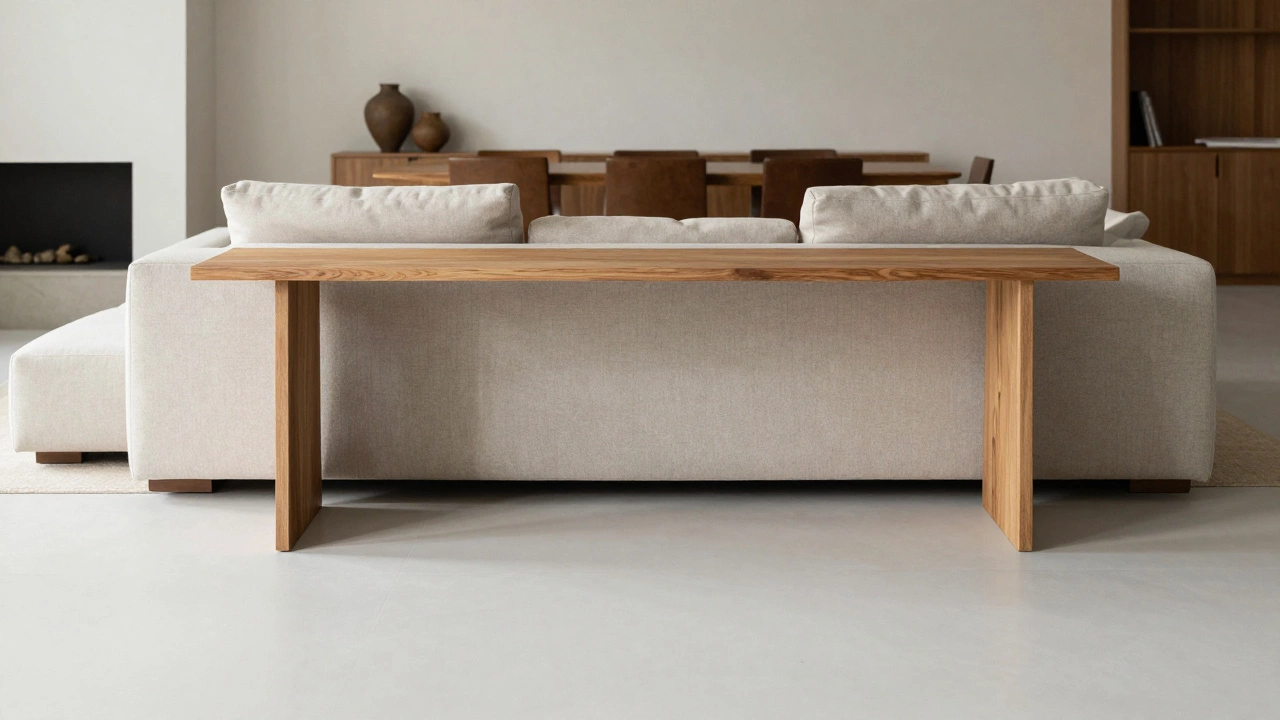
Another popular alternative is placing a long, narrow console table behind the sofa instead of a traditional coffee table in front. This is especially useful in open-plan living/dining areas where the sofa backs onto another zone. By putting a console behind the sofa, you create a divider without building a wall. It keeps the view open but gives you a place to put lamps, art, or keys.
In this setup, you might skip the coffee table entirely, or use a small, movable ottoman or tray table that you can bring in only when needed. This keeps the floor space completely free during the day, making the room feel airy and uncluttered. At night, you pull up a chair or sit on the floor with a tray for your drink. It’s flexible and adapts to your lifestyle rather than forcing you to adapt to the furniture.
The Floating Rug Technique: Defining Space Without Blocking It
Sometimes, the issue isn’t the table itself, but how it sits on the floor. If you don’t have a rug, or if your rug is too small, the coffee table can feel lost or disconnected. The 'floating rug' technique involves choosing a rug that is large enough to fit under the front legs of the sofa and all four legs of the coffee table. This anchors the entire seating group together.
When done right, the table doesn’t feel like an obstacle; it feels like part of the furniture ecosystem. If your room is small, try a lighter-colored rug with a low-pile texture. It reflects light and makes the floor appear larger. Avoid heavy, dark patterns that can shrink the visual space. The goal is to create a cohesive look where the table supports the seating, not dominates it.
| Placement Style | Best Room Type | Main Advantage | Potential Drawback |
|---|---|---|---|
| Center (Traditional) | Large, dedicated living rooms | Shared surface for all seats | Can block traffic flow |
| Side (Asymmetrical) | Narrow rooms, apartments | Clears main walking path | Less accessible for opposite seats |
| Console Behind Sofa | Open-plan spaces | Creates zoning without walls | Loses central storage/surface |
| Ottoman/Tray (Mobile) | Multi-use rooms | Maximum flexibility | No permanent surface |
Choosing the Right Table for Your Layout
Your choice of table should match its position. If you’re keeping it in the center, go for something with clean lines and visible legs. A bulky, solid-block table will make a small room feel heavier. Look for glass tops or wooden frames with open undersides. These materials allow light to pass through, maintaining the sense of space.
If you’re moving the table to the side or using it as a console, shape matters less than length. A long, slender table works better behind a sofa than a round one. Round tables are great for centers because they soften sharp angles and prevent bumps in high-traffic areas, but they don’t provide much linear surface area for consoles.
Consider height too. Standard coffee tables are about 16-18 inches high. If your sofa is low-slung, a taller table will look awkward. If your sofa is deep and plush, a lower table might force you to lean forward uncomfortably. Measure your sofa seat height and aim for the table to be within 1-2 inches of that level. This ensures comfort regardless of where you place it.
Living Room Traffic Flow: The Golden Rule
Regardless of where you put the table, never sacrifice traffic flow. You should always be able to walk comfortably between the table and the sofa (at least 14-18 inches) and between the table and any opposing chairs. If you find yourself sidestepping or ducking, the table is in the wrong place. Good design is invisible-it shouldn’t get in your way.
Think about how you enter the room. Do you walk straight from the hallway to the TV? If so, a central table might block that natural path. In that case, shift the table slightly to the side or choose a smaller, more mobile option. Your furniture should support your movement, not hinder it.
Decor and Functionality: Making It Work
A coffee table isn’t just for function; it’s a display platform. If you move it off-center, you lose the 'focal point' status. To compensate, use decor strategically. Place a tall vase, a stack of books, or a sculptural object on the side-placed table to draw the eye. This balances the visual weight of the room.
If you remove the central table entirely, don’t leave the space empty. Use a large area rug to define the zone, or add a few throw pillows and blankets to the sofa to create coziness. The goal is to maintain a sense of balance and intentionality. An empty floor can feel unfinished, while a well-placed table-even off-center-adds structure and purpose.
Should I always put my coffee table in the middle of the sofa?
No. While the center placement is traditional and works well in large, symmetrical rooms, it can block traffic flow in smaller or open-plan spaces. Consider placing it to the side, behind the sofa, or using a mobile alternative if it improves movement and usability in your home.
How much space should I leave between the coffee table and the sofa?
Aim for at least 14-18 inches between the edge of the sofa and the coffee table. This allows enough room to sit comfortably without hitting your knees, while still keeping the table within easy reach for drinks and remotes.
What is the best type of coffee table for a small living room?
For small rooms, opt for a narrow console table placed against the sofa, a round glass-top table to save visual space, or a set of nesting tables that can be separated when needed. Avoid bulky, solid-base tables that dominate the floor area.
Can I use a console table instead of a coffee table?
Yes, especially in open-plan layouts. Placing a console table behind the sofa creates a divider between zones and provides surface area without blocking the main living space. Pair it with a small ottoman or tray for flexible seating options.
Does the coffee table need to match the sofa?
Not necessarily. Mixing materials and styles can add visual interest. For example, pair a leather sofa with a metal or glass table for contrast. Ensure the scale and height are proportional, but feel free to experiment with different textures and colors.
Write a comment