
Flexsteel Warranty & Status Checker
Enter Your Details
Status: Active
Handled by La-Z-BoyYour warranty has been transferred to the new parent company.
Recommended Action:
- Contact La-Z-Boy Customer Care.
Enter your furniture details to check warranty validity and ownership status post-merger.
For decades, the name Flexsteel was a symbol of durable, American-made residential furniture, particularly known for its robust reclining mechanisms and solid wood frames. If you own a Flexsteel recliner or sofa, you might have heard rumors swirling online that the company has vanished. The short answer is: yes, but with a major caveat. The original independent entity known as Flexsteel Industries ceased to exist in its traditional form following a massive corporate restructuring in 2018.
This isn't just a story about one brand disappearing; it's a case study in how the American furniture industry has shifted from local manufacturing to global conglomerates. For consumers, this change raises urgent questions about warranty validity, spare parts availability, and whether your investment is still protected. Let’s clear up the confusion between the brand name, the parent company, and what actually happened to the factories on the ground.
The Great Furniture Merger of 2018
To understand why Flexsteel "went out of business," we have to look at the landscape of furniture manufacturing before 2018. At that time, Flexsteel Industries was one of the largest public companies in the U.S. furniture sector, owning several distinct brands including Flexsteel, Lane Furniture, and Woodard. They operated numerous plants across the Midwest, employing thousands of workers in states like Ohio, Indiana, and Wisconsin.
In January 2018, a private equity firm named Ardian was a French-based alternative investment manager that acquired Flexsteel Industries for approximately $1.3 billion. This wasn't a hostile takeover in the dramatic sense, but it was a decisive move to consolidate assets. Ardian didn't want to run Flexsteel as an independent public company. Instead, they merged it with another giant they owned: La-Z-Boy Incorporated is the world's leading manufacturer of upholstered reclining chairs and sofas, headquartered in Monroe, Michigan.
The result was a new entity called LZB Holdings was a newly formed holding company created by merging La-Z-Boy and Flexsteel Industries under Ardian's ownership. In this merger, the Flexsteel corporate identity was effectively dissolved into the larger La-Z-Boy ecosystem. The stock ticker "FLEX" was delisted, and the independent board of directors was removed. For all intents and purposes, the independent business entity known as Flexsteel Industries ceased to operate.
| Feature | Pre-2018 (Independent) | Post-2018 (Merged) |
|---|---|---|
| Corporate Entity | Flexsteel Industries (Public) | LZB Holdings (Private, part of La-Z-Boy Group) |
| Brand Availability | Sold separately alongside Lane/Woodard | Integrated into La-Z-Boy retail channels |
| Manufacturing Locations | Dedicated Flexsteel plants (Ohio, Indiana) | Consolidated into La-Z-Boy network; some closures |
| Warranty Service | Handled by Flexsteel Customer Care | Handled by La-Z-Boy Customer Care |
What Happened to the Factories?
When a merger of this size occurs, efficiency becomes the primary goal. This often means closing redundant facilities. Following the formation of LZB Holdings, several manufacturing plants that previously carried the Flexsteel name were either closed or repurposed. For example, the large Flexsteel plant in Findlay, Ohio was a major production hub for upholstery and frame assembly that faced significant workforce reductions during the integration phase.
However, not everything disappeared. The brand name "Flexsteel" continued to appear on certain product lines, particularly those sold through specific retail partners like Rooms To Go (which itself later became part of the same broader retail consolidation wave). But the *manufacturing* footprint shrank. Many of the designs once labeled Flexsteel were retooled to be produced in existing La-Z-Boy facilities. This shift meant that while you could still buy a "Flexsteel" chair, it was increasingly likely to be built using La-Z-Boy’s supply chain and labor force.
By 2020, the distinction had blurred significantly. Most consumer-facing marketing focused heavily on the La-Z-Boy brand, leveraging its stronger recognition. The Flexsteel name persisted mainly in legacy inventory and specific regional dealer agreements, but as a standalone manufacturing powerhouse, it was gone. This explains why many people feel the brand has "vanished"-it no longer operates independently, and its visibility in mainstream advertising dropped sharply.
Does Your Warranty Still Count?
This is the question that keeps owners awake at night. If the company is gone, who fixes your broken recliner mechanism? Here is the good news: **your warranty is still valid.** Because the acquisition was a legal merger, all contractual obligations transferred to the successor entity. In this case, that is La-Z-Boy Inc. assumes responsibility for honoring warranties originally issued by Flexsteel Industries.
If you need service, you should contact La-Z-Boy’s customer care department directly. You will need your original proof of purchase and the model number from the tag inside your furniture. Be prepared for a slight learning curve, as La-Z-Boy’s support system may not have immediate access to older Flexsteel-specific schematics. However, because many mechanical components (like the Power Recline motors) are now standardized across the combined portfolio, replacements are often available.
Keep in mind that standard warranties typically cover defects in materials and workmanship for five years, while frame warranties can last for life. Labor costs for repair are usually not covered unless specified. If your piece is very old (pre-2015), you might fall outside the standard warranty period, but La-Z-Boy often offers paid repair services even for out-of-warranty items, provided parts are still manufactured.
Why Did This Happen? The Industry Shift
The demise of independent giants like Flexsteel wasn't due to poor quality. In fact, Flexsteel was renowned for its durability. The issue was economic scale. The furniture industry in the 2010s faced intense pressure from two sides:
- Global Competition: Low-cost imports from Asia flooded the market, forcing domestic manufacturers to cut costs to remain competitive.
- Retail Consolidation: Large big-box retailers and online platforms demanded lower prices and faster delivery times, squeezing margins for mid-sized manufacturers.
Smaller or mid-sized companies struggled to achieve the economies of scale needed to compete with both cheap imports and massive conglomerates. Merging with La-Z-Boy allowed Flexsteel’s assets to survive within a larger, more resilient structure. It was a survival strategy, not a failure of product design. The trend continues today, with fewer independent American furniture makers remaining. Most major brands are now subsidiaries of large private equity-backed groups.
Alternatives to Consider Today
If you’re looking to replace a worn-out Flexsteel or simply want a similar quality level from a stable manufacturer, here are three reliable options currently dominating the market:
- La-Z-Boy: As the parent company, they offer nearly identical mechanics and build quality. Their "Power Motion" technology is the direct successor to many Flexsteel motor systems.
- Honable Home: A newer player focusing on transparent pricing and direct-to-consumer models, offering high-quality leather and fabric options without the middleman markup.
- Hooker Furniture: Another surviving American manufacturer that maintains strong domestic production capabilities and offers a wide range of reclining styles.
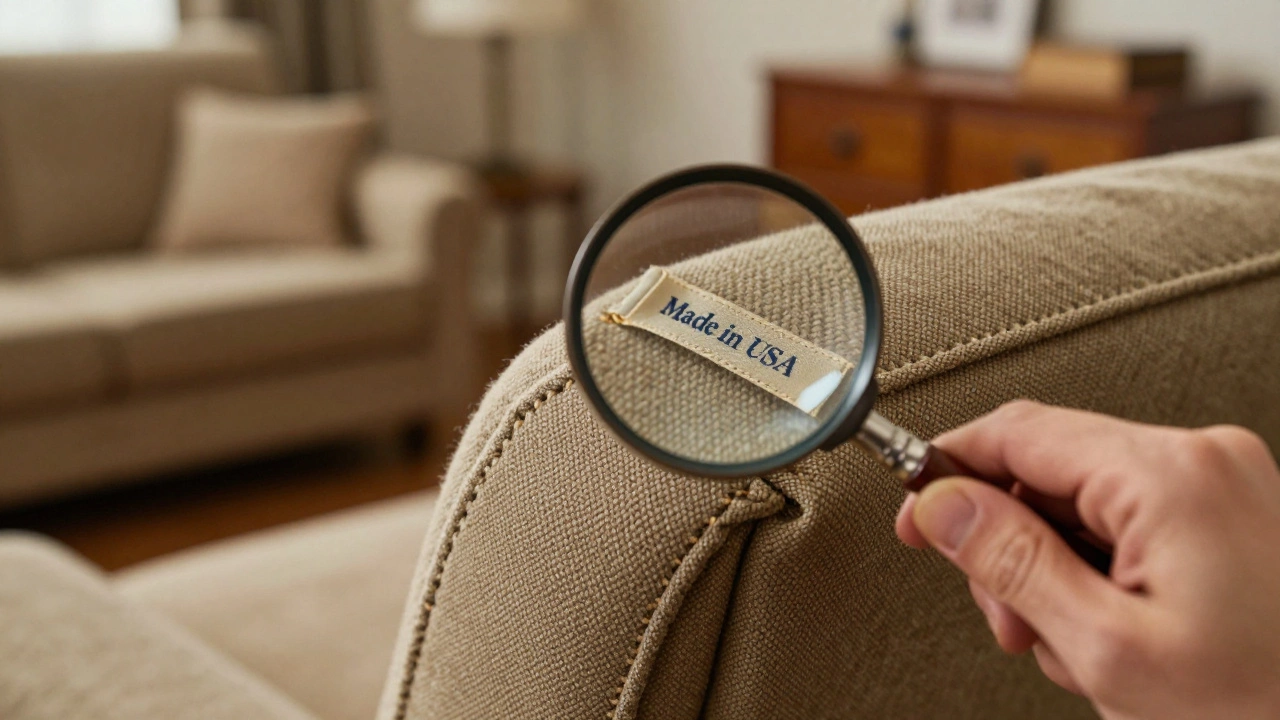
When shopping, always check where the item is made. Look for tags stating "Made in USA" if domestic manufacturing is important to you. Also, verify the warranty terms clearly-some budget brands offer shorter coverage periods that don’t match the longevity you’d expect from a former Flexsteel product.
How to Identify Original Flexsteel Pieces
If you’re buying second-hand, distinguishing between genuine vintage Flexsteel and post-merger pieces can be tricky. Here’s what to look for:
- Tags: Pre-2018 items will have tags explicitly stating "Flexsteel Industries" and often list specific factory locations like "Findlay, OH" or "Cincinnati, OH." Post-2018 items may say "La-Z-Boy" or "LZB Holdings."
- Mechanism Branding: Older Flexsteels often used proprietary linkage systems branded internally. Newer ones may use generic or La-Z-Boy branded motors.
- Wood Frame Quality: Authentic Flexsteels are known for kiln-dried hardwood frames. Tap the frame-if it sounds hollow or feels lightweight, it may be a lower-tier import masquerading under the name.
Is Flexsteel still making furniture in 2026?
No, Flexsteel does not manufacture furniture as an independent company. Since the 2018 merger, production has been integrated into La-Z-Boy’s facilities. While some products may still carry the Flexsteel label in limited retail channels, they are produced under the La-Z-Boy umbrella.
Who owns Flexsteel furniture now?
Flexsteel is owned by La-Z-Boy Incorporated, which is itself controlled by the private equity firm Ardian through the holding company LZB Holdings. All operational control resides with La-Z-Boy management.
Can I get parts for my old Flexsteel recliner?
Yes. Contact La-Z-Boy Customer Care with your model number. They maintain a parts database that includes legacy Flexsteel components. If a specific part is discontinued, they may offer a compatible substitute from their current lineup.
Did Flexsteel go bankrupt?
No, Flexsteel did not file for bankruptcy. It was acquired in a leveraged buyout by Ardian and subsequently merged with La-Z-Boy. The company remained solvent throughout the transaction, but lost its independent corporate status.
Where were Flexsteel chairs originally made?
Originally, Flexsteel manufactured most of its furniture in the United States, primarily in Ohio, Indiana, and Wisconsin. Key facilities included plants in Findlay, OH, and Cincinnati, OH. After the merger, many of these operations were consolidated into La-Z-Boy’s existing network.
Write a comment