
Bookcase Stability & Anchor Safety Checker
Enter your bookcase details below to calculate its stability score and receive personalized anchoring recommendations.
Calculating...
Please enter valid dimensions to see the recommendation.
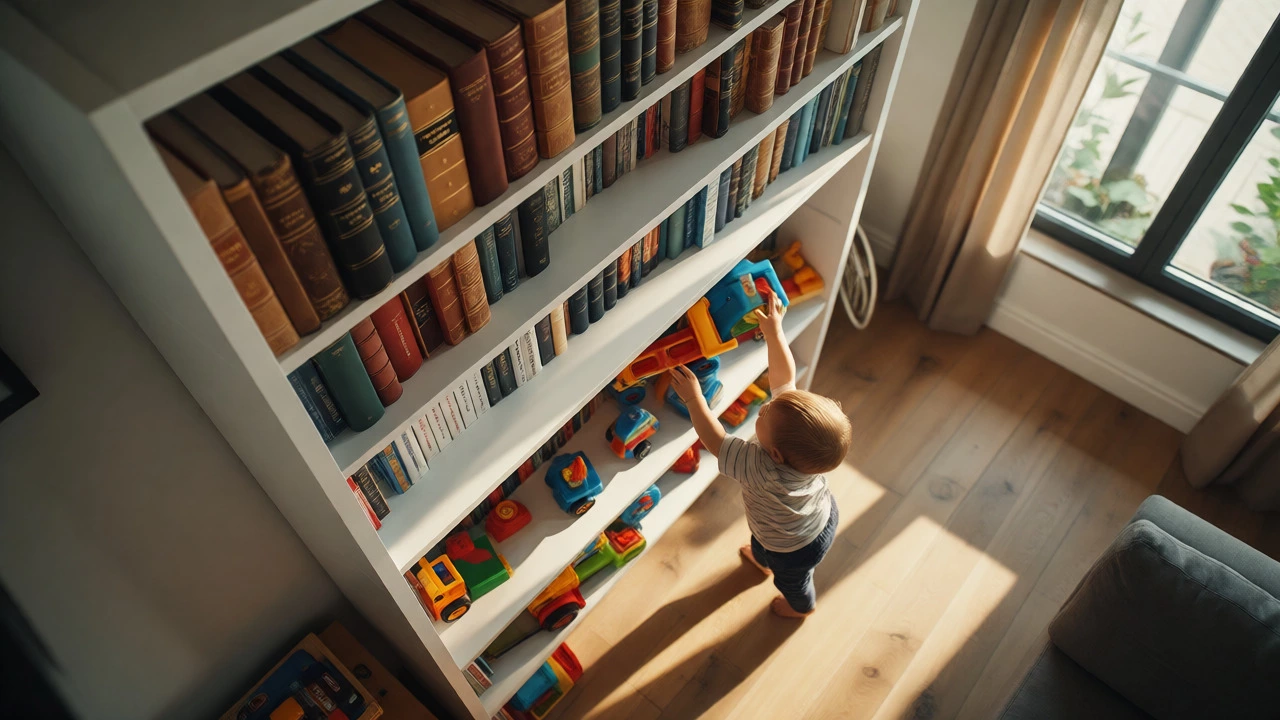
You walk past a tall, loaded bookcase a piece of furniture with horizontal shelves used for storing books or other items, maybe holding your prized first editions or just a mountain of kids' toys. It looks sturdy. It feels solid. But is it safe? If you have small children, pets, or live in an area prone to tremors, the answer isn't just "maybe." It's a hard yes.
Here’s the uncomfortable truth: unanchored furniture causes thousands of injuries every year. In fact, according to the U.S. Consumer Product Safety Commission, a child dies from furniture tip-overs roughly every two weeks in the United States alone. That’s not a scare tactic; that’s statistics. So, do bookcases need to be anchored? If you want to sleep easy at night, absolutely.
The Physics of Why They Fall
It’s not magic when a bookcase tips over; it’s physics. Most modern bookcases are designed to look sleek and light, which often means they have a shallow depth relative to their height. Think about a standard IKEA Billy bookcase. It’s nearly two meters tall but only about 28 centimeters deep. That high center of gravity makes it unstable.
When you load the top shelves with heavy items-say, a stack of encyclopedias or a decorative vase-you shift the weight upward. This raises the center of mass. Now, imagine a toddler climbing up the lower shelves like a ladder. Their weight acts as a lever arm. The force applied at the front edge creates torque that easily overcomes the friction between the feet and the floor. Without a physical connection to the wall, there is nothing stopping that rotational force. Gravity does the rest. The result? A sudden crash that can crush limbs or worse.
Who Needs to Anchor? (Hint: Everyone)
You might think this only applies if you have babies. But consider the variables. Do you have cats? Cats love jumping onto high shelves, and their sudden impact can destabilize a lightweight unit. Do you have elderly relatives visiting? A slight bump while walking by can knock over a poorly balanced shelf. And let’s not forget natural disasters. Even minor earthquakes, which happen more frequently than we realize, can shake loose furniture.
In Birmingham, where I live, we don’t get massive quakes, but we do have vibrations from traffic and occasional structural settling. More importantly, homes here often feature older flooring or uneven surfaces that reduce stability. If you rent, you might worry about damaging walls. But is a filled hole in plaster worth the risk of a broken collarbone? Probably not.
| Factor | Risk Level | Why It Matters |
|---|---|---|
| Children under 5 | High | Climbing behavior adds significant dynamic load. |
| Pets (Cats/Dogs) | Medium | Sudden jumps create unexpected lateral forces. |
| Earthquake Zones | High | Lateral shaking multiplies tipping force exponentially. |
| Top-Heavy Loading | Medium | Raises center of gravity, reducing stability margin. |
Building Codes vs. Common Sense
Does the law require it? In many places, building codes mandate anchoring for new constructions, especially in seismic zones like California. However, existing homes often escape strict enforcement unless renovations occur. Just because your landlord didn’t anchor them doesn’t mean they were installed correctly. Many manufacturers, including major retailers, explicitly state in their manuals that assembly requires wall attachment. Ignoring the manual isn’t just lazy; it’s voiding the safety warranty.
If you’re renting, check your lease. Some landlords prohibit drilling into walls, but most will allow it if you patch the holes upon moving out. If you own your home, you have no excuse. The cost of an anchor kit is negligible compared to medical bills.
How to Anchor a Bookcase Properly
Anchoring isn’t rocket science, but doing it wrong renders it useless. You cannot just screw into drywall without support. Drywall crumbles under tension. You need to hit a stud or use specialized anchors rated for shear strength.
- Locate the Studs: Use a stud finder. Mark the center of the studs behind the wall where the bookcase will sit. Standard studs are spaced 16 or 24 inches apart.
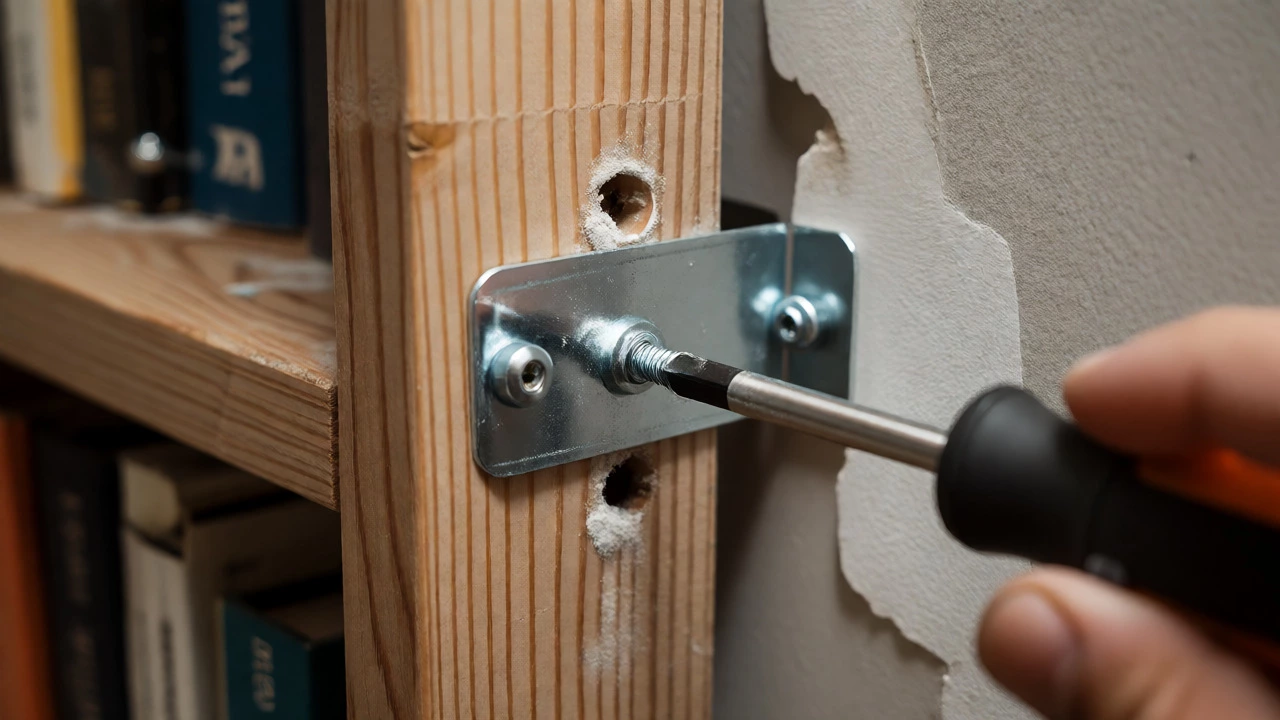
- Prepare the Bracket: Most kits come with metal L-brackets or anti-tip straps. Attach one end to the top back panel of the bookcase using the provided screws. Ensure the bracket sits flush against the wood.
- Position the Unit: Place the bookcase against the wall. Check for levelness. Shim the bottom if necessary so the unit doesn’t rock.
- Secure to Wall: Align the bracket holes with your stud marks. Drill pilot holes to prevent splitting the stud. Drive long screws (at least 70mm) through the bracket into the stud. Tighten firmly.
- Test It: Give the top of the bookcase a firm push forward. It shouldn’t move significantly. If it wobbles, tighten the screws or add another anchor point.
For renters who can’t drill, adhesive strips exist, but they are less reliable for heavy loads. Anti-slip pads help with sliding but do not stop tipping. If you must use adhesive, ensure the surface is clean and dry, and choose products rated for at least twice the weight of your loaded furniture.

Common Mistakes to Avoid
I’ve seen people anchor only one side of a wide bookcase. Bad idea. Wide units twist. Always anchor both sides if possible, or use a strap system that spans the width. Another mistake is using short screws. A 20mm screw might hold in particleboard, but it won’t grip a wooden stud effectively. Go long.
Also, don’t ignore the base. If your bookcase has adjustable feet, make sure they are locked. Loose feet create instability before you even apply external force. Finally, keep heavy items on the bottom shelves. This lowers the center of gravity, making the unit naturally more stable, even before anchoring.
Special Cases: Glass and Modular Units
Glass-fronted cabinets present unique risks. Shattering glass causes cuts, but the frame itself can still tip. Ensure the hardware connecting the glass panels to the frame is tight. For modular systems like PAX wardrobes or KALLAX shelves, individual cubes can detach if not secured together. Use interlocking brackets provided by the manufacturer to bind modules into a single cohesive unit before anchoring to the wall.
What about floating shelves? While technically not freestanding bookcases, they rely entirely on wall integrity. Overloading a floating shelf can pull the mount out of the drywall. Always use toggle bolts for hollow walls, not plastic plugs. Plastic plugs slip out under heavy shear loads.
Can I anchor a bookcase to brick or masonry?
Yes, but you need different tools. Use a hammer drill with a masonry bit. Insert lead anchors or sleeve anchors specifically designed for brick. Regular wood screws will strip out of mortar joints quickly. Ensure the bracket is stainless steel to prevent rust staining on porous brick.
Will anchoring damage my rented apartment?
Minor damage, yes. Two small holes per bookcase. Most landlords accept this if you fill them with spackle and paint them to match upon move-out. The alternative-a security deposit deduction for damaged flooring or walls from a tip-over-is usually far more expensive.
Do low bookcases need anchoring too?
Shorter units are less likely to tip completely, but they can still slide or topple if climbed on. Children treat low chests of drawers like stairs. If a child pulls open a drawer and stands on it, the unit can flip forward. Anchoring is recommended for any furniture accessible to toddlers, regardless of height.
What if I can't find a stud?
If you absolutely cannot hit a stud, use heavy-duty toggle bolts (butterfly anchors) rated for high shear strength. These spread the load across a larger area behind the drywall. However, studs provide superior holding power. Consider rearranging the room layout slightly to align the bookcase with a stud location.
Is anti-tip software available for smart furniture?
No, furniture doesn't run software. However, some modern smart locks and sensors can detect vibration or movement. These are niche products. For standard bookcases, mechanical anchoring remains the gold standard for safety. Technology hasn't replaced the need for physical restraint.
Write a comment