
Wood Furniture Storage Environment Calculator
Storage Environment Assessment
Enter your storage conditions to see if they're safe for wood furniture.
Enter your storage conditions to see if they're safe for wood furniture.
Wood Stability Guide
Different wood types react differently to storage conditions:
| Wood Type | Stability in Humidity Swings | Best For Storage? |
|---|---|---|
| Quarter-sawn oak | Very stable. Tight grain resists warping | Yes |
| Maple | Stable. Hard surface holds up well | Yes |
| Teak | High natural oil content. Resists moisture | Yes |
| Pine | Soft, prone to dents and swelling | Maybe—with care |
| Plywood (low-grade) | Glue fails easily in humidity | No |
| MDF | Swells like a sponge. Never store long-term | Never |
You packed up your favorite oak dining table, wrapped it in blankets, and tucked it into a storage unit for six months. When you pulled it out, the legs were warped, the finish was sticky, and the joints creaked like an old floorboard. Was it bad luck-or did you just skip the basics?
Wood furniture doesn’t just ‘get ruined’ in storage. It reacts. And if you don’t understand how it reacts, you’re not storing it-you’re setting it up for failure. The truth? Most wood furniture survives storage just fine. But only if you treat it right.
Wood isn’t plastic. It breathes.
Wood is alive. Not in the way a plant is alive, but in the way it absorbs and releases moisture like a sponge. That’s why a wooden door sticks in summer and gaps open in winter. In storage, that same behavior becomes a problem if the environment doesn’t match what the wood was used to.
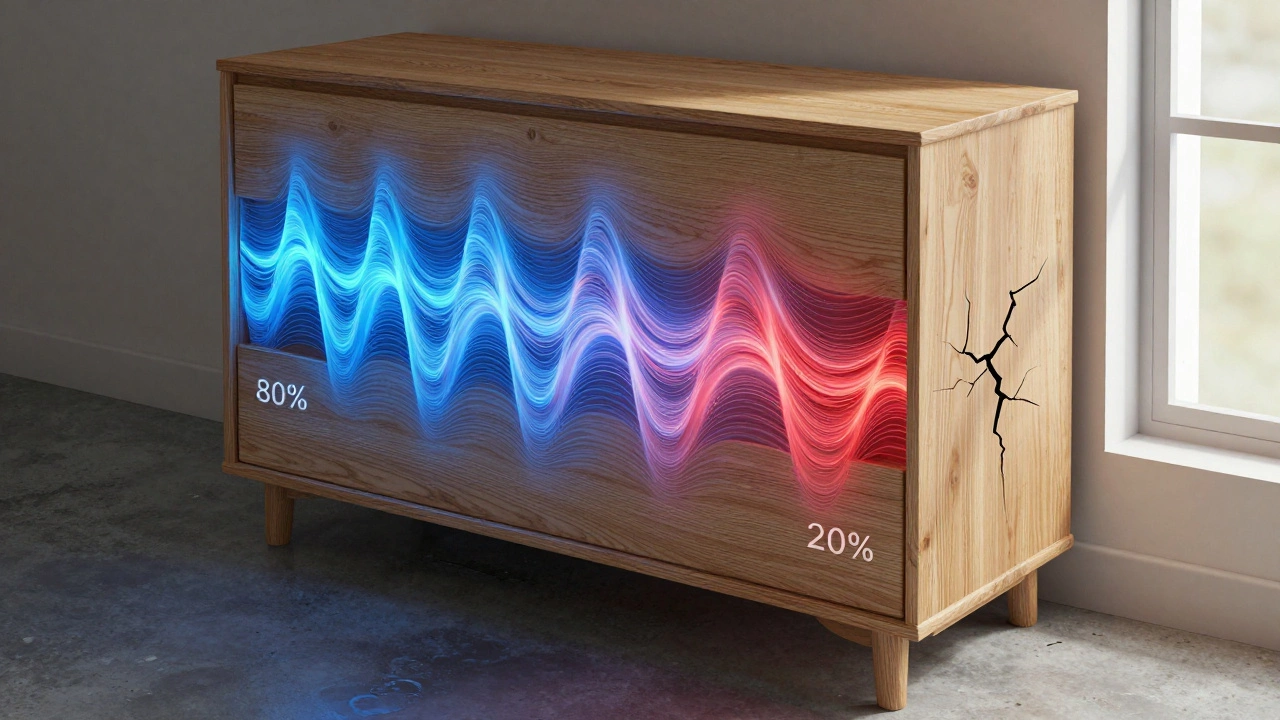
Take a solid oak dresser from your living room in Birmingham. It’s been sitting in a home with 40-60% humidity for years. Now you put it in a storage unit in the Midlands that hits 80% humidity in spring and drops to 20% in winter. The wood swells, then cracks. It’s not the storage unit’s fault. It’s the sudden change.
Real damage happens when wood is exposed to rapid swings in moisture and temperature. That’s why basements, garages, and non-climate-controlled units are risky. Even a unit with concrete floors and metal walls can turn into a humidity trap if it’s not ventilated.
What actually damages wood furniture in storage?
Let’s cut through the myths. Mold? Yes. Sunlight? Absolutely. But the biggest killer isn’t dust or bugs-it’s humidity.
- High humidity (above 70%) causes wood to swell. Glue joints loosen. Veneer lifts. Finish bubbles or turns cloudy.
- Low humidity (below 30%) makes wood dry out too fast. Cracks form along grain lines. Legs shrink and wobble. Inlays pop out.
- Temperature swings speed up both processes. A unit that hits 10°C one day and 28°C the next? That’s a recipe for stress fractures.
Then there’s moisture from the ground. Concrete floors sweat, especially in winter. If your furniture sits directly on the floor, that dampness creeps up. You won’t see it at first. But after a few months, the bottom rails start to darken. That’s not dirt. That’s rot starting.
And yes-pests matter. Wood-boring beetles don’t care if your furniture’s in storage. They’ll find it. Old, dry wood is their favorite snack. If you stored a 1950s teak sideboard from a barn without checking for signs of infestation? You just invited them to a party.
How to store wood furniture without ruining it
There’s no magic trick. But there are five simple steps that make all the difference.
- Clean it first. Dust, grease, and spills attract moisture and bugs. Wipe down every surface with a dry, lint-free cloth. For sticky spots, use a tiny bit of mild soap and water-then dry it immediately. Never leave it damp.
- Disassemble if you can. Take off legs, shelves, doors. Store them separately. This reduces stress on joints and makes packing easier. Keep screws and hardware in labeled ziplock bags taped to the underside of the main piece.
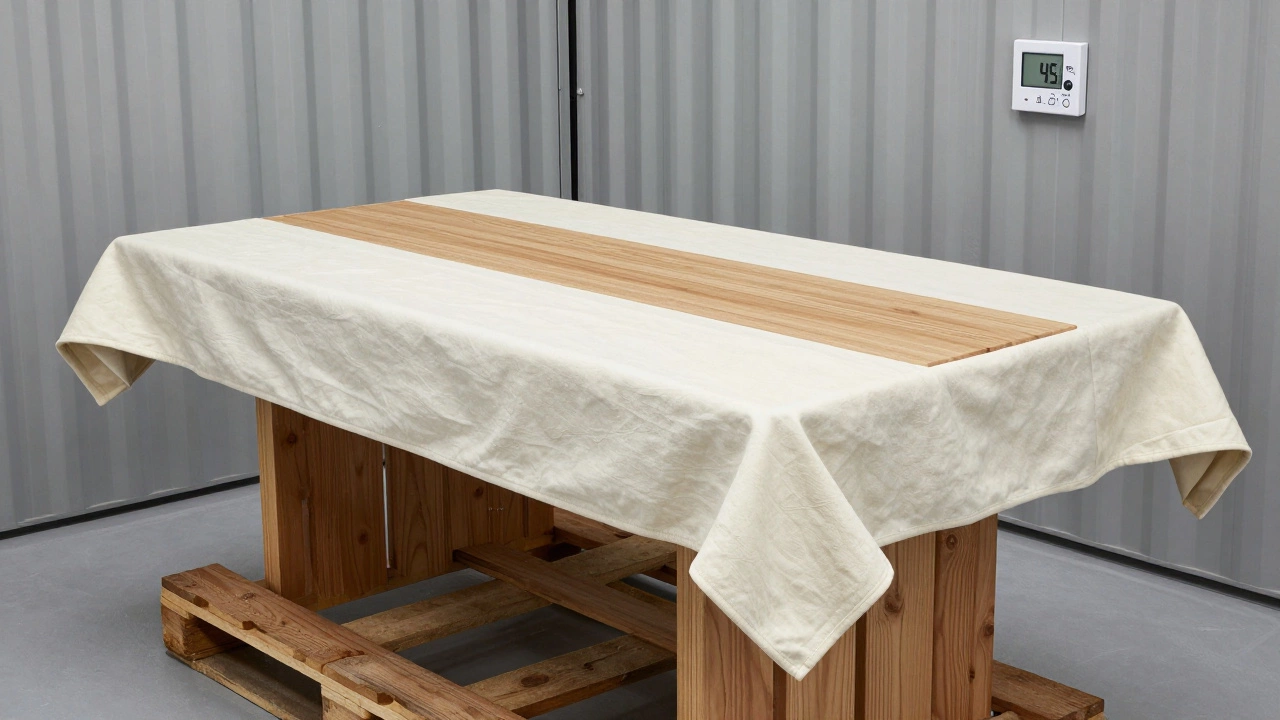
- Use breathable covers. Never wrap wood in plastic. It traps moisture like a sauna. Use cotton sheets or moving blankets. If you need extra protection, add a plastic tarp over the top-only if the unit is dry and the cover doesn’t touch the furniture.
- Elevate it. Put pallets, cinder blocks, or wooden skids under the furniture. Even 2 inches off the floor stops ground moisture from rising. Don’t let legs sit on concrete.
- Control the environment. Pick a climate-controlled unit. Look for one with humidity between 40-50% and steady temps around 18-22°C. If you’re storing for more than three months, a dehumidifier in the unit (if allowed) helps. Some storage places offer humidity monitors-ask for one.
And here’s a pro tip: leave space around the furniture. Don’t stack things on top. Don’t crowd it against walls. Air needs to move. A 10cm gap on all sides makes a bigger difference than you think.
What wood types handle storage best?
Not all wood is the same. Some are tougher than others.
| Wood Type | Stability in Humidity Swings | Best For Storage? |
|---|---|---|
| Quarter-sawn oak | Very stable. Tight grain resists warping | Yes |
| Maple | Stable. Hard surface holds up well | Yes |
| Teak | High natural oil content. Resists moisture | Yes |
| Pine | Soft, prone to dents and swelling | Maybe-with care |
| Plywood (low-grade) | Glue fails easily in humidity | No |
| MDF | Swells like a sponge. Never store long-term | Never |
High-quality solid wood? You’re fine. Cheap particleboard or MDF? Don’t even try. If your furniture’s labeled ‘engineered wood’ or ‘composite’, it’s not meant for long storage. Save your space for real timber.
What to check when you pull it out
You’ve stored it right. You’re excited to see it again. But don’t rush.
Bring it into a room with similar humidity to where it was stored. Don’t drop it into a steamy kitchen or a dry, heated living room. Let it acclimate for 48 hours.
Then check:
- Are the joints tight? Wiggle legs and drawers. If they move too much, glue may have failed.
- Is the finish cloudy or sticky? That’s moisture trapped under the varnish. A professional refinisher can fix it-but it costs money.
- Are there dark spots or fuzzy patches? Mold. Don’t touch it. Call a specialist. Bleach won’t help-it’ll eat the wood.
- Does it smell musty? That’s not just bad air. It’s microbial growth inside the wood.
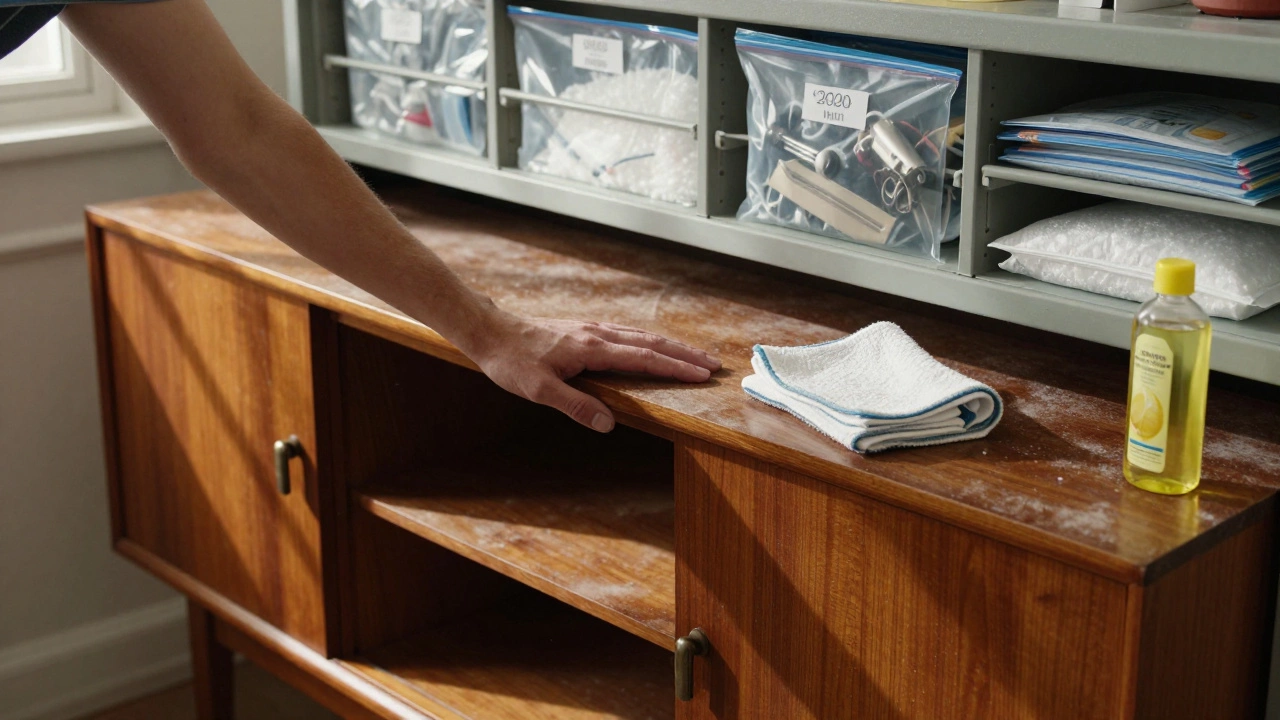
If everything looks good? Wipe it down with a microfiber cloth and a drop of lemon oil. Let it breathe for a day. Then enjoy it.
When to walk away
Some damage can’t be fixed. If the wood is cracked through, the veneer is peeling off in sheets, or the structure feels loose like a broken toy, it’s not worth repairing. That’s not ‘restoration’-that’s a money pit.
And if you found bugs? Don’t bring it home. Even if you can’t see them now, their eggs are hiding. Call a pest control expert. Don’t risk your whole home.
Wood furniture lasts generations. But only if you respect its nature. It’s not a statue. It’s a living material that responds to its surroundings. Treat it like a plant, not a rock.
Can you store wood furniture in a garage?
Only if it’s insulated, dry, and climate-controlled. Most garages aren’t. If it’s hot in summer and freezing in winter, with concrete floors and no insulation? No. Don’t do it.
Some people think, ‘It’s just wood. It’s been outside before.’ But a barn is different from a garage. Barns breathe. Garages trap. And modern finishes don’t handle that.
How long can wood furniture stay in storage?
With proper prep, wood furniture can sit for years. I’ve seen 1920s sideboards pulled from 15-year storage units looking better than when they went in.
But if you’re storing for more than a year, check it once every six months. Open the unit. Look for condensation. Smell for mold. Feel the surface. A quick 10-minute inspection saves you from a $2,000 disaster.
What about antique wood furniture?
Antiques are more sensitive. Older finishes (like shellac or lacquer) crack easily in dry air. Older wood may already have hidden cracks or weak glue.
For antiques, go one step further: use silica gel packs inside drawers and cabinets. They absorb excess moisture without touching the wood. And always store them upright-not on their side. Gravity can warp old frames.
If you’re unsure, hire a conservator. They’ll tell you exactly what your piece needs. It’s cheaper than replacing a 200-year-old heirloom.
Can wood furniture be stored in a basement?
Only if the basement is dry, insulated, and climate-controlled. Most basements are damp, especially in the UK. Moisture rises from the ground and condenses on cold walls. Wood stored there will swell, warp, or rot. If you must store in a basement, raise the furniture on pallets, use a dehumidifier, and monitor humidity with a digital meter.
Is it safe to wrap wood furniture in plastic?
No. Plastic traps moisture against the wood, creating a steamy environment that causes mold, finish damage, and warping. Use cotton moving blankets or breathable furniture covers instead. If you need extra protection, drape a plastic tarp over the top-never wrap the piece itself.
How do I know if my storage unit is climate-controlled?
Ask for the humidity and temperature specs. A true climate-controlled unit maintains 40-50% humidity and 18-22°C year-round. Look for units with HVAC systems, not just fans. If the unit feels hot in summer or cold in winter, it’s not climate-controlled. Some facilities even let you check a monitor inside-ask to see it.
Will sunlight damage wood furniture in storage?
Yes-even indirect sunlight. UV rays fade finishes and dry out wood over time. Avoid storing furniture near windows, skylights, or glass doors. If the storage unit has natural light, cover the furniture with a dark, breathable fabric. Fading is permanent and can’t be reversed.
Can I store wood furniture outside?
Never. Even under a tarp, outdoor storage exposes wood to rain, snow, temperature swings, and pests. Wood expands and contracts with every weather change. What looks dry today can rot in weeks. Always store wood furniture indoors, in a controlled environment.
Write a comment