
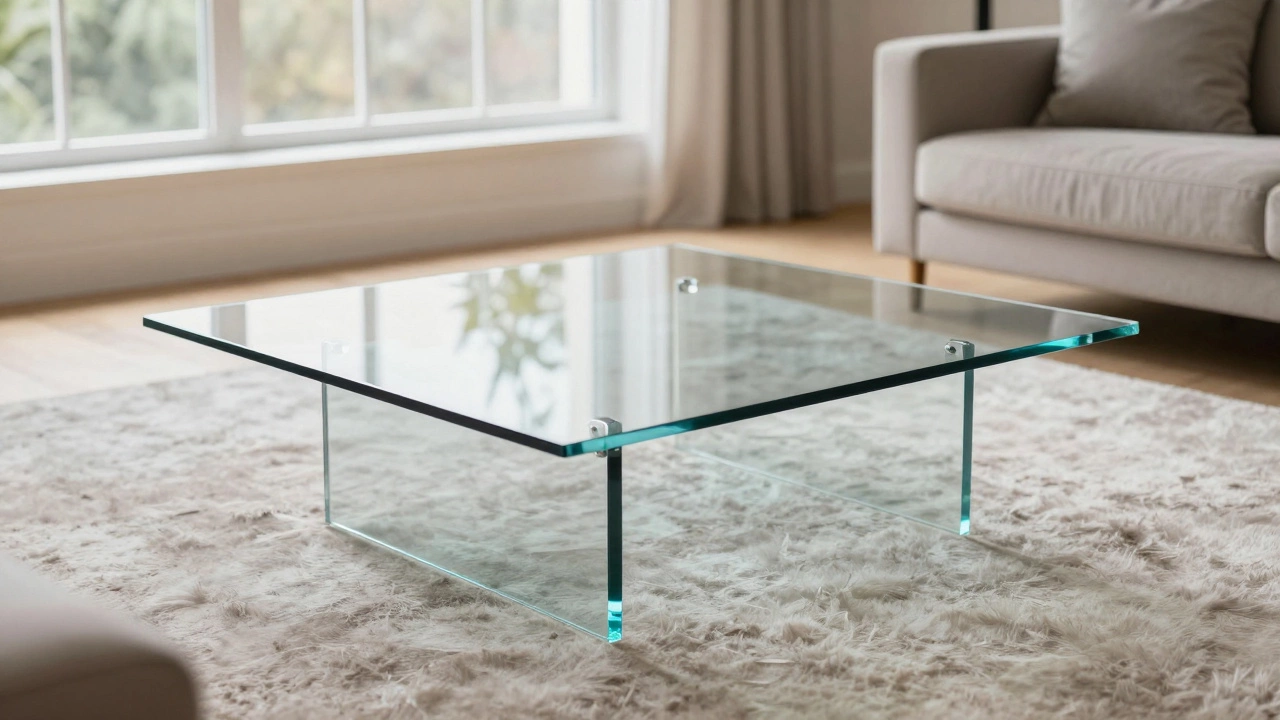
Coffee Table Material Decision Tool
Answer these questions about your lifestyle to discover which coffee table material is perfect for you.
Picture this: you’re hosting a dinner party. Someone laughs too hard, their wine glass tips, and red liquid splashes across your coffee table. Your heart sinks. Is that a permanent stain? Will it scratch the surface? Or does it wipe away effortlessly?
This is the exact moment where the choice between a glass and an acrylic coffee table stops being about aesthetics and starts being about survival. Both materials look sleek, modern, and expensive. But they behave very differently under pressure, heat, and daily wear.
If you are standing in a showroom or scrolling through online catalogs right now, you need to know which one fits your actual life-not just your Pinterest board. Let’s break down the real-world performance of these two giants of modern furniture.
The Weight Factor: Moving Furniture Without Help
The first thing you notice when you pick up a piece of furniture is how heavy it is. Glass is dense. A standard tempered glass coffee table top can weigh anywhere from 40 to 80 pounds depending on thickness and size. It feels substantial. It feels permanent. You don’t move it unless you have to.
Acrylic, also known as polymethyl methacrylate (PMMA) or by brand names like Plexiglas or Lucite, is significantly lighter. An acrylic table of the same dimensions might weigh only 15 to 25 pounds. This isn’t just a minor difference; it changes how you live with the furniture.
If you have small children, pets, or simply like to rearrange your living room every few months, acrylic wins on convenience. You can lift it to vacuum underneath without straining your back. If you prefer a piece of furniture that stays put and adds a sense of grounded stability to the room, glass offers that immovable presence.
| Feature | Tempered Glass | Acrylic (PMMA) |
|---|---|---|
| Average Weight (36" Top) | 40-60 lbs | 15-25 lbs |
| Density | High | Low |
| Moving Difficulty | Requires two people | One person manageable |
Scratch Resistance and Daily Wear
Let’s talk about scratches. This is usually the biggest fear for anyone buying a clear-surface table. You want transparency, but you don’t want to see every tiny mark.
Glass is hard. On the Mohs scale of mineral hardness, glass scores around 5.5 to 6. This means everyday objects like keys, rings, or ceramic mugs won’t scratch it easily. However, sand is the enemy. If you walk barefoot and track in beach sand, then drag a coaster across the table, you will etch the glass. These micro-scratches aren’t deep gouges, but they create a cloudy haze over time that is difficult to remove.
Acrylic is softer. It sits much lower on the hardness scale. You can scratch acrylic with a fingernail if you press hard enough. Keys, rough coasters, or even cleaning cloths with trapped dust particles can leave visible marks. The good news? Acrylic scratches are often superficial. You can buff them out using specialized polishing compounds or toothpaste in a pinch. Glass scratches cannot be buffed out; once the surface is etched, it’s done forever.
So, who wins here? If you are careful with coasters and keep your environment clean, glass stays pristine longer. If you are clumsy or have high traffic, acrylic is more forgiving because you can repair it.
Heat Tolerance: Hot Mugs and Candles
I live in Birmingham, England, where we drink a lot of tea and coffee. Placing a hot mug directly on a coffee table is a common habit. Here is where the materials diverge sharply.
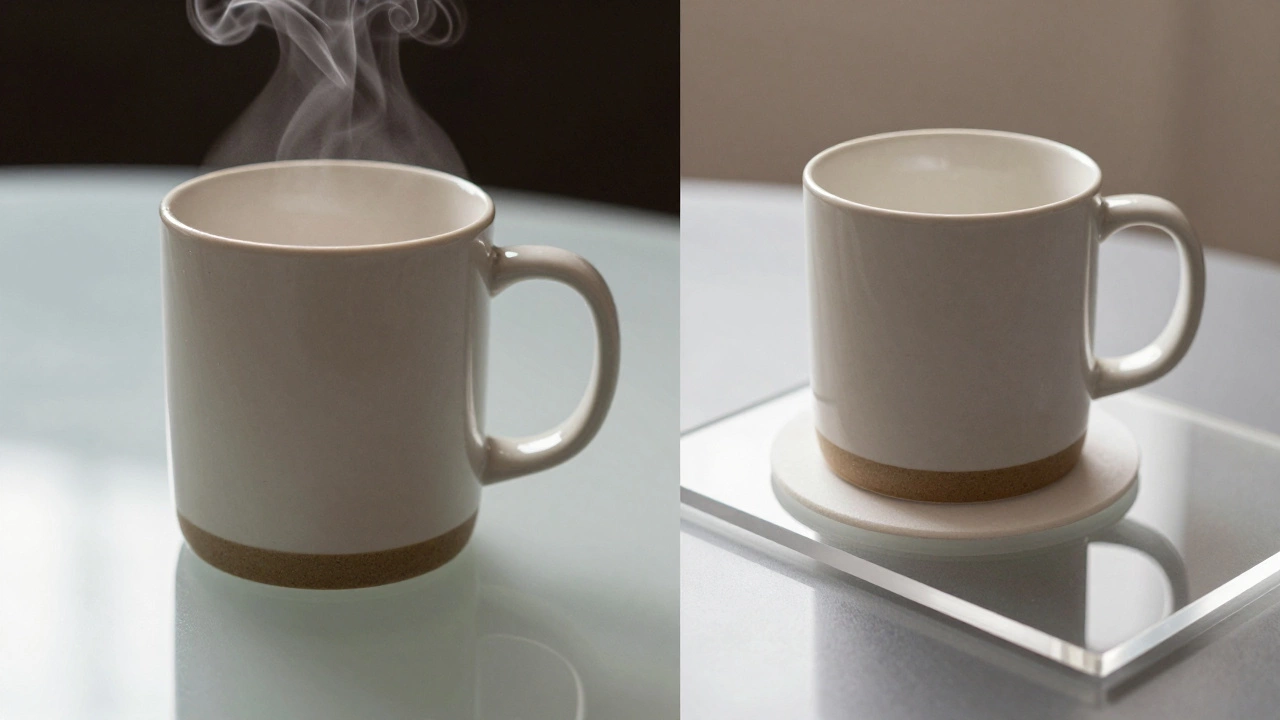
Tempered glass is heat resistant. It can withstand temperatures up to several hundred degrees Celsius before cracking. While I still recommend using a coaster to protect the finish and prevent thermal shock (sudden temperature changes), placing a hot mug on glass rarely causes damage. The glass might get hot, but it won’t melt or warp.
Acrylic has a low melting point. It begins to soften at around 160°F (71°C). Place a steaming hot mug directly on an acrylic table, and you risk leaving a permanent white ring or even warping the surface. In extreme cases, the plastic can deform. If you choose acrylic, you must use coasters. No exceptions. It’s not a suggestion; it’s a requirement for longevity.
Safety and Impact Resistance
What happens if something falls on the table? Or worse, what happens if the table breaks?
Standard glass shatters into sharp, dangerous shards. That’s why all quality coffee tables use tempered glass. Tempering strengthens the glass by heating and cooling it rapidly. If tempered glass breaks, it crumbles into small, blunt cubes rather than jagged knives. It’s safer, but it still makes a loud noise and creates a mess of debris.
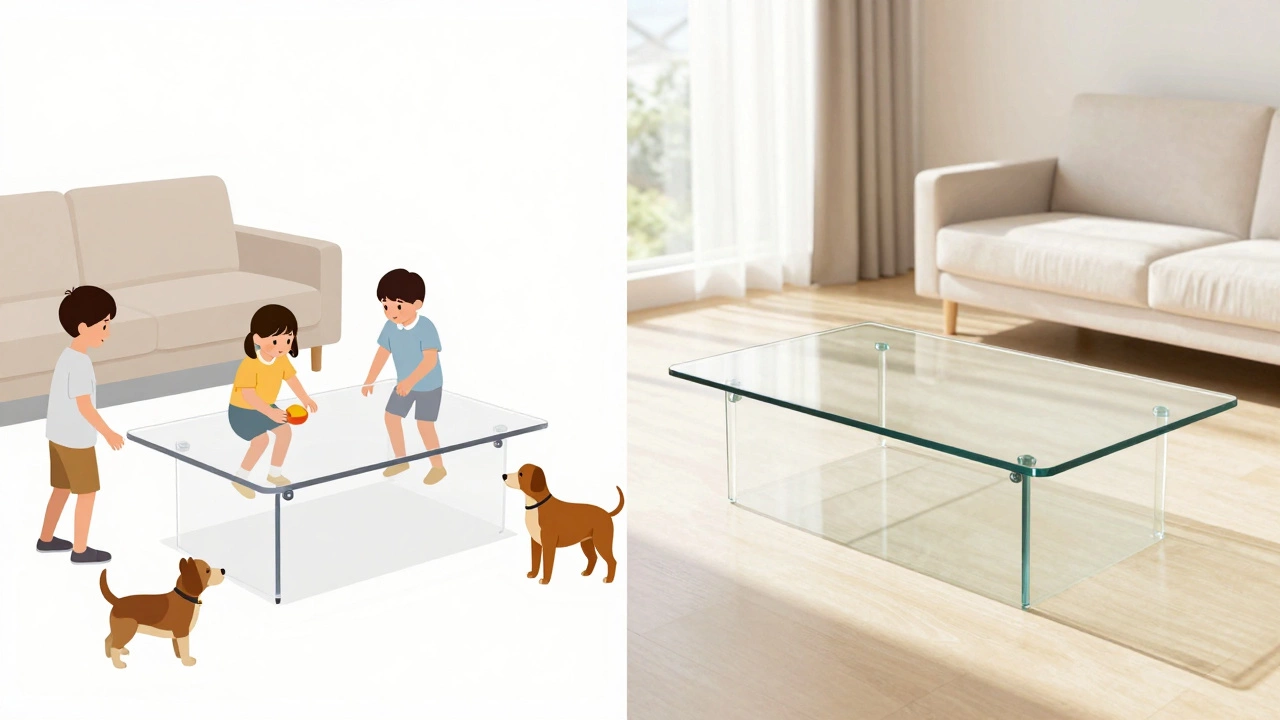
Acrylic is impact-resistant. It is less likely to break upon impact than glass. If you drop a heavy book on an acrylic table, it might dent or crack, but it won’t shatter explosively. This makes acrylic a slightly better option for households with young children or active pets, where accidental bumps are frequent. However, acrylic can crack over time due to stress fractures, especially if the legs are unevenly supported.
Cleaning and Maintenance
Maintenance is where many people make mistakes. Using the wrong cleaner can ruin both materials, but in different ways.
For glass, ammonia-based cleaners like Windex work well. They cut through grease and fingerprints without leaving streaks. Avoid abrasive scouring pads, as they will scratch the surface. Regular wiping with a microfiber cloth keeps glass looking new.
For acrylic, avoid ammonia and alcohol-based cleaners entirely. Ammonia causes crazing-tiny cracks that appear under the surface over time. Alcohol can dry out the plastic and cause cloudiness. Use only mild soap and water, or cleaners specifically designed for plastics. Dry immediately with a soft cloth to prevent water spots.
Aesthetics: Clarity and Light
Both materials offer transparency, but the quality of light transmission differs.
Glass has higher optical clarity. It looks colorless and crisp. Light passes through it without distortion, making objects underneath look sharp. This is why museums use glass for display cases. If you want a "disappearing" effect where the table blends seamlessly into the floor, glass is superior.
Acrylic can have a slight blue tint, especially in thicker pieces. Over time, exposure to UV light (sunlight) can cause acrylic to yellow. This is a slow process, taking years, but it is inevitable if the table sits in direct sunlight. Glass does not yellow. If your living room has large south-facing windows, glass is the safer bet for long-term clarity.
Cost and Value
Generally, tempered glass coffee tables are more expensive than acrylic ones. The manufacturing process for tempering glass requires specialized equipment and energy. Acrylic is molded from liquid plastic, which is cheaper and faster to produce.
However, high-end designer acrylic tables can cost more than basic glass ones due to branding and intricate designs. For budget-conscious shoppers, acrylic offers a luxury look for a fraction of the price. For those investing in heirloom-quality furniture, glass often holds its value better due to its durability and timeless appeal.
Which One Should You Choose?
Choose glass if:
- You prioritize optical clarity and a premium feel.
- You want a surface that resists scratches from everyday objects.
- You frequently place hot items on the table (though coasters are still recommended).
- You prefer a heavy, stable piece of furniture.
- You have direct sunlight in the room and worry about yellowing.
Choose acrylic if:
- You need a lightweight table that’s easy to move.
- You have kids or pets and are worried about shattering hazards.
- You are on a tighter budget but want a modern aesthetic.
- You are willing to polish out occasional scratches.
- You always use coasters for hot drinks.
There is no single "best" material. There is only the best material for your specific lifestyle. Evaluate your habits, your household, and your space. Then, pick the partner that works with you, not against you.
Is acrylic coffee table safe for homes with children?
Yes, acrylic is generally safer than glass for homes with children. It is less likely to shatter into sharp pieces if dropped or impacted. However, edges should be rounded to prevent cuts, and supervision is still necessary.
Can I put a hot mug directly on an acrylic coffee table?
No, you should never place a hot mug directly on acrylic. It can soften, warp, or leave permanent white rings. Always use a coaster or trivet to protect the surface from heat.
Does acrylic yellow over time?
Yes, acrylic can yellow over time, especially if exposed to direct sunlight (UV rays). This process is slow but irreversible. Glass does not yellow and is more suitable for sunny rooms.
How do I clean an acrylic coffee table without scratching it?
Use mild soap and water with a soft, lint-free cloth. Avoid ammonia-based cleaners, alcohol, or abrasive pads, as these can cause crazing or scratches. Dry the surface immediately to prevent water spots.
Is tempered glass stronger than regular glass?
Yes, tempered glass is four to five times stronger than regular annealed glass. It is heat-treated to increase strength and safety. If it breaks, it crumbles into small, blunt pieces instead of sharp shards.
Write a comment