
Sofa Quality Inspector
Use this tool while shopping for a new couch. Check off the features you find in the showroom. The more boxes you check, the higher the likelihood that your sofa is built to last.
1. Frame Construction
2. Suspension System
3. Cushions & Fillings
4. Fabric & Upholstery
5. Legs, Base & Warranty
Quality Score
Checkboxes Completed: 0 / 16
You’ve just spent £1,500 on a beautiful sofa that looks perfect in the showroom. Three months later, the cushions are sagging, the legs wobble, and the fabric has pilled like an old jumper. It’s frustrating, right? But it doesn’t have to be this way. Knowing how to spot a high-quality couch before you hand over your cash saves you money, stress, and the embarrassment of replacing furniture that wasn’t built to last.
The difference between a bargain bin find and a heirloom piece often comes down to what you can’t see immediately. It’s about the bones-the frame, the suspension, and the density of the foam. If you’re shopping for a new couch, you need to move beyond aesthetics. You need to become a detective. Here is exactly how to test, touch, and ask your way to a sofa that will survive family life, pets, and time.
Check the Frame Construction First
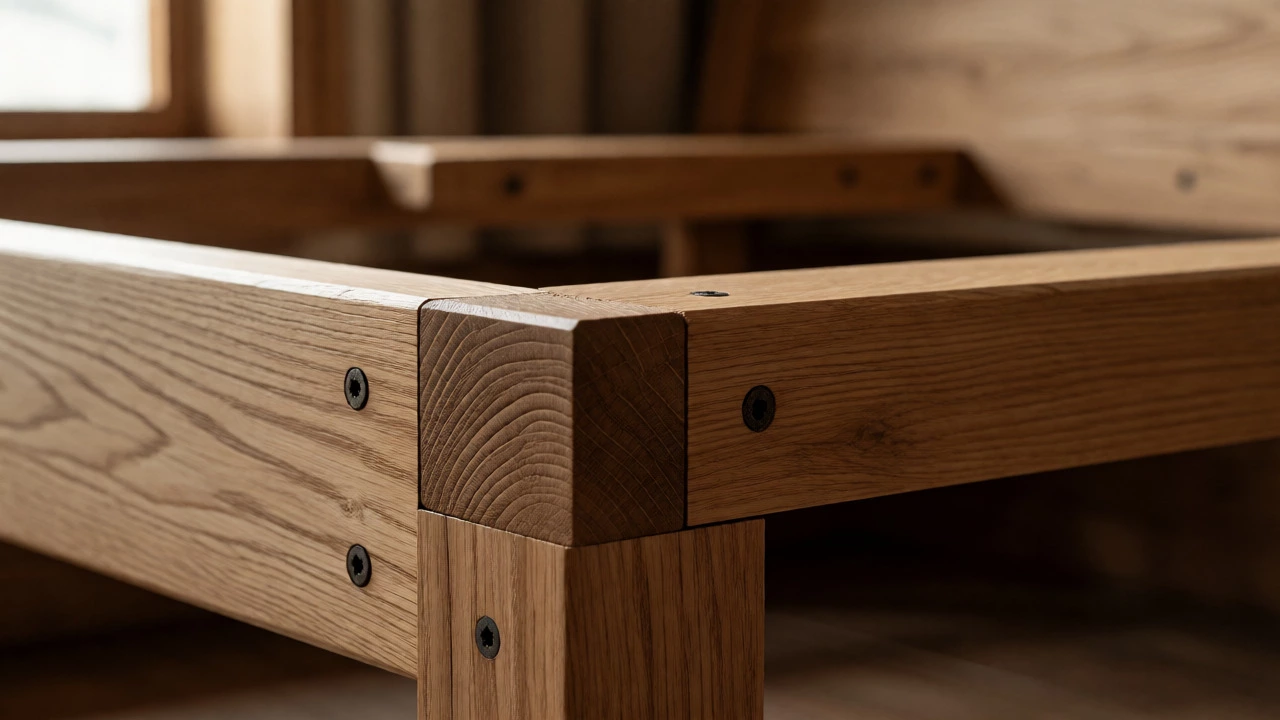
If the frame fails, everything else falls apart. This is the skeleton of your furniture. Cheap sofas use particleboard or plastic. Good sofas use hardwoods like oak, ash, or maple. Why does this matter? Hardwoods resist warping and cracking under weight. Softwoods like pine are lighter but can bend over time. Plywood is acceptable if it’s thick (at least 3/4 inch) and kiln-dried, but solid hardwood is the gold standard.
Here is a simple physical test: grab the armrests and lift one side of the sofa off the ground. If the entire structure twists or feels flimsy, put it back. A sturdy frame should feel rigid and heavy. If you hear creaking when you shift your weight, the joinery is likely poor. Look for corner blocks that are glued and screwed into place. Staples alone are a red flag. In my experience helping friends furnish homes in Birmingham, I’ve seen too many "solid wood" claims that turn out to be veneer over cheap chipboard. Always check the underside. If you can see raw wood grain, that’s a good sign. If it’s all smooth laminate, be skeptical.
Evaluate the Suspension System
Suspension is what keeps you from sitting on the floor. There are three main types, and they vary wildly in comfort and longevity.
- Sinuous Springs: These are S-shaped metal wires running across the frame. They offer consistent support and are common in mid-to-high-end sofas. They don’t squeak as much as coil springs if properly attached with clips.
- Eight-Way Hand-Tied Coils: The luxury option. Each spring is tied to its neighbors with eight strands of twine. This creates a uniform surface that resists sagging. It’s expensive labor, so expect to pay more, but it lasts decades.
- Webbing: Elastic bands stretched across the frame. Common in budget furniture. Over time, elastic loses tension. If you press down hard and the webbing stretches significantly, it won’t hold up well against daily use.
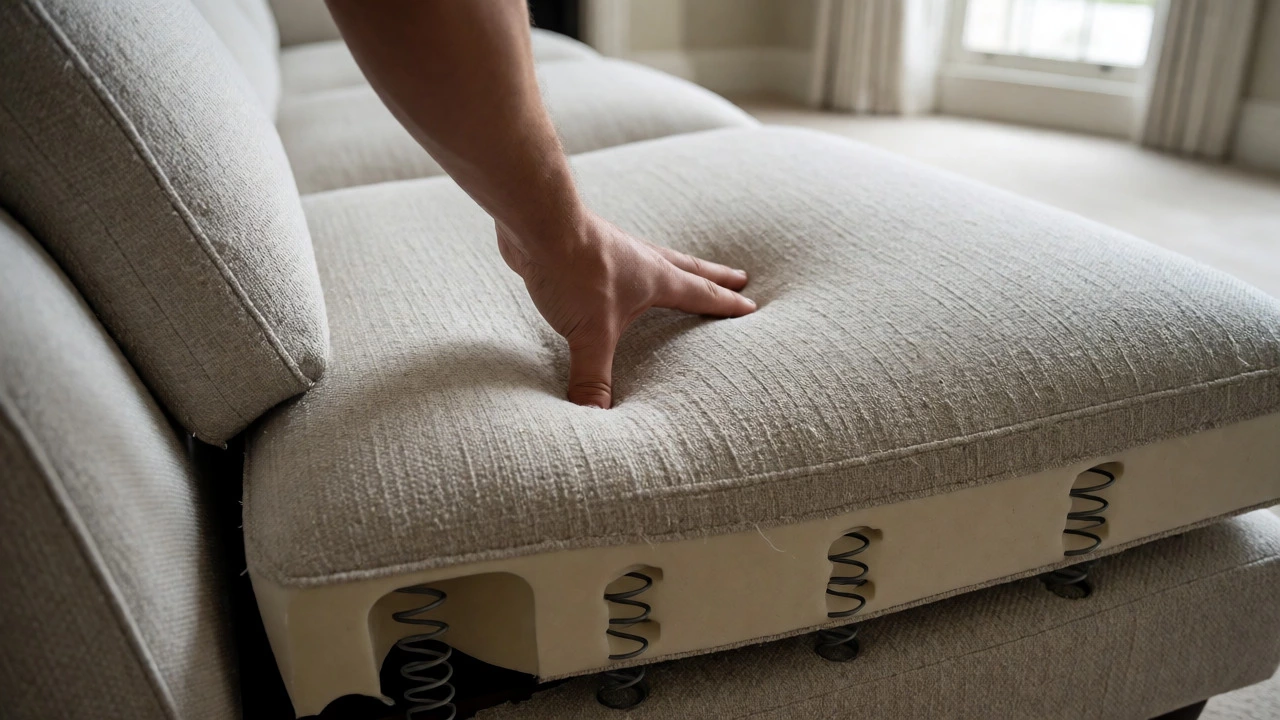
To test this, sit on the sofa and bounce slightly. Do you feel individual springs poking through? That’s bad. Does the seat feel firm but responsive? That’s good. If it feels like a trampoline, the webbing is too loose. If it feels like a rock, the padding is insufficient. You want that sweet spot where the suspension supports without bottoming out.
Inspect the Cushion Fillings
This is where most people get tricked by marketing terms like "memory foam" or "cloud-like." Density matters more than type. Low-density foam collapses within a year. High-density foam bounces back.
| Filling Type | Durability Rating | Comfort Profile | Maintenance Need |
|---|---|---|---|
| High-Density Polyfoam | High | Firm to Medium | Low |
| Feather & Down Blend | Medium | Soft, Luxurious | High (Plumping) |
| Polyester Fiberfill | Low | Soft initially | Medium (Clumps) |
| Memory Foam | Medium-High | Contouring | Low |
A great compromise is a "wrap" construction: a core of high-density foam wrapped in a layer of feather or fiber. This gives you the structural integrity of foam with the softness of natural materials. When testing, press your thumb firmly into the cushion. It should rebound quickly. If it leaves a dent that slowly fills in, the density is too low. For back cushions, avoid 100% feather if you hate maintenance. They require constant plumping to look good. Blends are easier to live with.
Analyze the Upholstery Fabric
Fabric isn’t just about color; it’s about abrasion resistance. The industry uses the Martindale rub test to measure durability. Ask the salesperson for the Martindale count. Anything below 15,000 is decorative only-fine for a guest room, terrible for a family home. Aim for 20,000 to 30,000 cycles for everyday use. Commercial-grade fabrics hit 40,000+.
Material choice also dictates longevity. Leather is durable and ages well, developing a patina rather than looking worn-out. Top-grain leather is better than bonded leather, which peels. Synthetic microfibers are surprisingly tough and stain-resistant, making them ideal for households with kids or pets. Linen looks chic but wrinkles easily and stains harder to remove. Velvet is durable if it’s cotton-based, but synthetic velvet can flatten over time.
Do a scratch test. Run your fingernail across the fabric. Does it snag? Check the seams. Are they straight? Is there excess thread? Double-stitched seams indicate better craftsmanship. Also, check the pattern alignment. On striped or checked fabrics, the pattern should match perfectly at the seams. Misalignment signals rushed manufacturing.
Test the Legs and Base
Legs aren’t just decorative; they bear weight. Solid wood legs are sturdy. Metal legs are strong but can scratch floors. Plastic legs are a major warning sign-they crack under pressure. Lift the sofa again. Are the legs securely attached? Wobbly legs mean poor assembly or weak joints. If the legs are removable, check the screw holes. Stripped threads mean the sofa was assembled poorly or handled roughly during shipping.
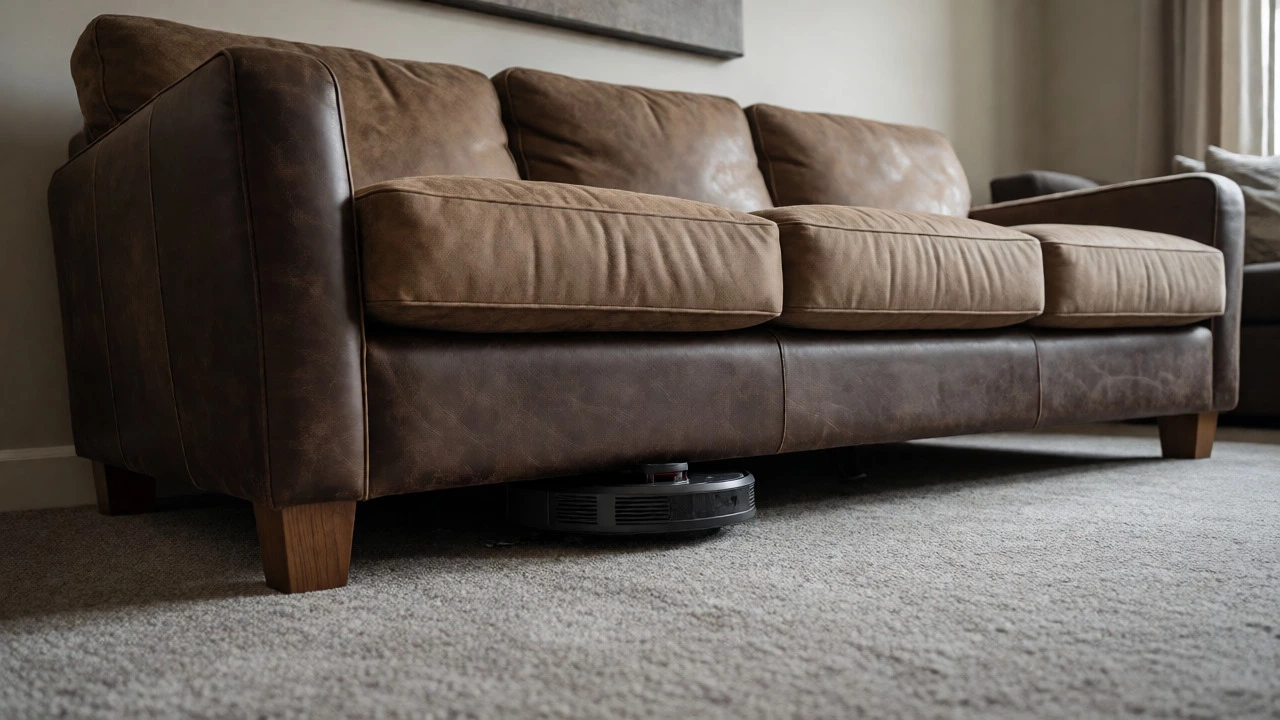
Also, consider the height. Standard leg height is 6-8 inches. This allows robot vacuums to clean underneath-a practical feature many buyers forget until they’re stuck cleaning dust bunnies by hand. In smaller UK homes, higher legs make the space feel larger and airier. Lower profiles are trendy but trap dust.
Ask the Right Questions
Salespeople know the specs. Use them. Don’t just ask "Is this good quality?" Ask specific questions that reveal the truth:
- "What is the frame material?" (Look for kiln-dried hardwood.)
- "What is the foam density rating?" (Anything under 1.8 lbs per cubic foot is low quality.)
- "What is the Martindale rub count for this fabric?"
- "Are the springs sinuous or coil?"
- "What is the warranty coverage?" (A 1-year warranty is suspicious. Look for 5-10 years on frames.)
If they hesitate or give vague answers, walk away. Transparency is a hallmark of quality manufacturers. Brands like Natuzzi, La-Z-Boy, and local British makers like G Plan often provide detailed spec sheets. Online retailers might hide these details, so read reviews specifically mentioning long-term durability.
The Final Inspection Checklist
Before you buy, run through this quick mental checklist. If any box remains unchecked, reconsider.
- Frame: Kiln-dried hardwood, corner blocks glued/screwed.
- Suspension: Sinuous springs or hand-tied coils.
- Cushions: High-density foam core, fast rebound.
- Fabric: >20,000 Martindale cycles, double-stitched seams.
- Stability: No wobbling, no creaking, heavy feel.
- Warranty: Minimum 5 years on structure.
Buying a couch is an investment. It’s not just furniture; it’s where you relax, entertain, and recover. Taking ten minutes to inspect these elements ensures you’re paying for quality, not just branding. Trust your hands and your eyes. If it feels cheap in the store, it will feel cheaper in your living room after six months.
Is a heavier couch always better quality?
Generally, yes, but not exclusively. Heavier sofas usually indicate solid wood frames and dense foam. However, some modern designs use lightweight engineered woods and high-density foams that are still durable. Weight is a good initial indicator, but combine it with checking the frame material and construction methods.
How long should a high-quality sofa last?
A well-made sofa with a hardwood frame and high-density foam should last 7-15 years with regular use. Budget sofas often fail within 2-3 years due to frame breakage or foam collapse. Regular maintenance, like rotating cushions and vacuuming, extends lifespan.
Are leather sofas worth the extra cost?
Yes, if maintained properly. Genuine leather is extremely durable, resistant to tears, and easy to clean. It develops a patina over time rather than looking worn. However, it requires conditioning to prevent drying and cracking. Bonded leather is cheaper but peels and cracks quickly, offering poor value.
What is the best fabric for families with pets?
Microfiber or performance polyester blends are excellent choices. They are tightly woven, resisting pet hair penetration and claw snags. They are also stain-resistant and easy to wipe down. Avoid loose-weave fabrics like linen or velvet, which catch hair and show scratches easily.
Does a higher price guarantee better quality?
Not necessarily. You pay for brand names, design complexity, and retail markup. A mid-priced sofa from a reputable manufacturer using solid wood and high-density foam can outlast a designer sofa made with particleboard. Always inspect construction regardless of price tag.
Write a comment