

Sofa Value & Cost Calculator
Configure Your Scenario
| Category | Upfront Price | Total 10yr Est. | Cost Per Year |
|---|
COST PER YEAR COMPARISON
Walking into a high-end showroom in Birmingham and seeing the price tag on a massive sofa set, you might pause. Five thousand dollars (roughly £3,900) is no small amount. It’s the cost of a decent used car or a year’s worth of groceries for a small family. So, when you’re looking at that plush, deep-buttoned Chesterfield or that sleek, Italian leather sectional, the question hits hard: Is this actually too much?
The short answer is no. But the real answer depends entirely on what you are buying, how long you plan to keep it, and whether you understand the hidden costs of cheap furniture. If you treat a sofa as a disposable item, then yes, $5,000 is an absurd amount of money. But if you view it as the central hub of your home-a piece you will live with, sleep on, and host friends around for the next fifteen years-the math changes completely.
The True Cost of Ownership: Cheap vs. Premium
Most people judge furniture by its sticker price. This is a mistake. You need to look at the cost per year. Let’s break it down with two realistic scenarios based on current market trends in 2026.
Scenario A: The Budget Sofa
You buy a trendy fabric sofa from a fast-furniture retailer for $800. It looks great for six months. Then the cushions flatten because they use low-density foam. The frame, made of particleboard and staples, starts to creak. After three years, the fabric pills, and the mechanism breaks. You replace it with another $800 sofa. Over ten years, you spend $2,400 on three different sofas, plus the hassle of disposal and delivery fees.
Scenario B: The Investment Piece
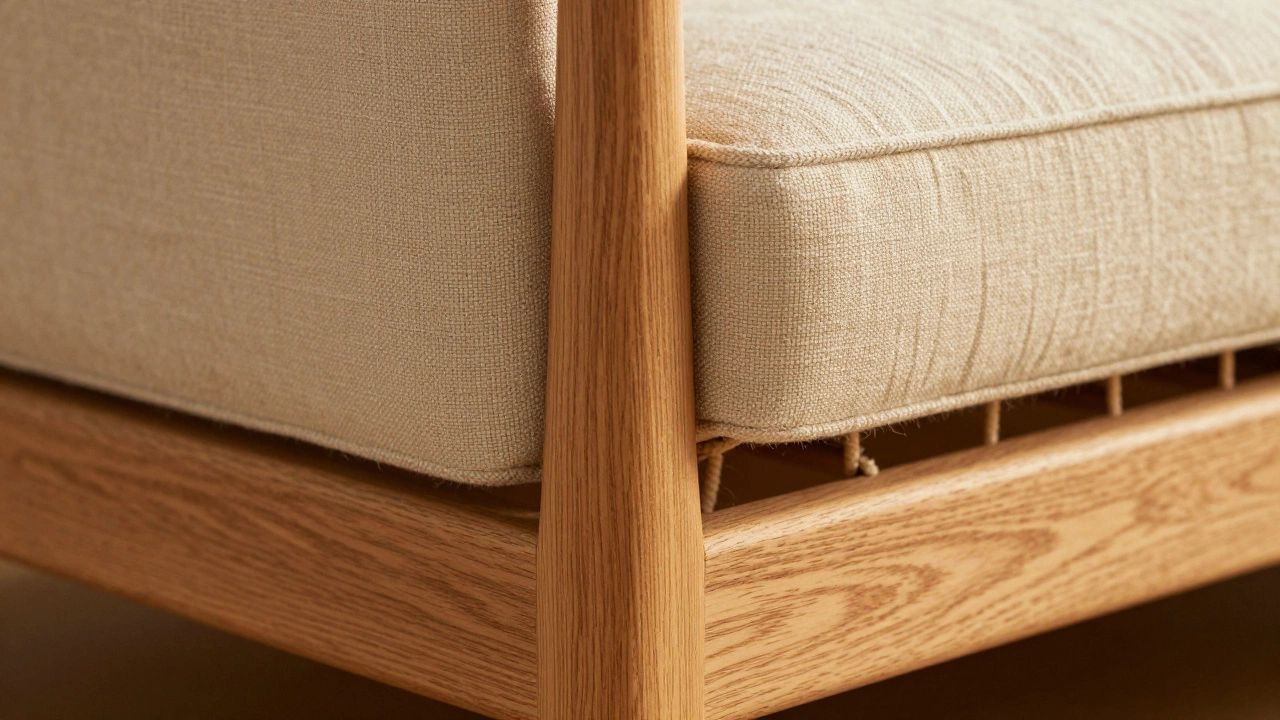
You buy a high-quality solid hardwood sofa for $5,000. It features kiln-dried oak or ash framing, hand-tied springs, and high-resilience foam wrapped in down. Ten years later, it still sits level. The fabric shows character but holds up. You might reupholster one cushion for $200, but the core structure remains intact. Your total cost over ten years is $5,200.
While Scenario B has a higher upfront cost, it offers stability, comfort, and often better resale value. More importantly, it doesn’t contribute to landfill waste every three years. In a world increasingly focused on sustainability, durability is a form of ethics.
What Justifies the $5,000 Price Tag?
If you decide to spend this amount, you aren’t just paying for brand name markup. You are paying for specific materials and construction methods that mass-market furniture simply cannot replicate. Here is what you should be looking for to ensure your money is well spent.
- Solid Wood Frames: Avoid particleboard, MDF, or plywood. Look for kiln-dried hardwoods like oak, maple, or ash. These woods resist warping and splitting. The joints should be dovetailed or mortise-and-tenon, not just nailed or glued.
- High-Density Foam: Cheap sofas use polyurethane foam that collapses quickly. Premium sofas use high-resilience (HR) foam with a density of at least 1.8 lb/ft³. Some luxury brands wrap this foam in horsehair or down for a softer feel without sacrificing support.
- Natural Fibers: Synthetic fabrics pill and fade. Natural fibers like linen, cotton, wool, and leather age beautifully. Full-grain leather develops a patina over time, becoming more attractive rather than less.
- Hand-Tied Springs: While sinuous wire springs are common in mid-range sofas, hand-tied eight-way springs provide superior support and longevity. Each spring is individually tied to the frame, allowing the seat to flex naturally under weight.
These components don’t just last longer; they feel different. There is a distinct difference in how a solid wood frame absorbs shock compared to a particleboard box. It’s subtle until you’ve experienced both.

When ,000 Is Too Much
Not everyone needs a $5,000 sofa. In fact, for many households, this price point is unnecessary. You might be overspending if:
- You Have Young Children or Pets: If your home is a playground for toddlers or dogs, a pristine white linen sofa is a recipe for stress. Consider spending $1,500-$2,500 on a durable, stain-resistant performance fabric instead. Brands like Sunbrella or Crypton offer incredible durability at a lower price point.
- You Move Frequently: Heavy, solid wood sofas are difficult to transport. If you change homes every few years, a lighter, modular sofa set might be more practical.
- You Prioritize Trends Over Timelessness: High-end furniture should be timeless. If you love a bold color or unusual shape that might go out of style in five years, wait. Buy a neutral, classic base and use throw pillows and blankets to update the look.
- The Brand Markup Is Excessive: Some designer brands charge purely for the logo. You can find similar quality from artisan workshops or lesser-known manufacturers who focus on craftsmanship rather than marketing. Always compare specs, not just names.
Comparing Sofa Types: Where Does Your Money Go?
| Sofa Type | Average Price Range (USD) | Lifespan Expectancy | Best For |
|---|---|---|---|
| Budget / Fast Furniture | $500 - $1,200 | 2-4 Years | Renters, temporary spaces, tight budgets |
| Mid-Range Quality | $1,500 - $3,000 | 7-10 Years | Families, everyday use, good balance of price/performance |
| Premium / Luxury | $3,500 - $6,000+ | 15-25+ Years | Long-term homeowners, design enthusiasts, investment pieces |
| Bespoke / Custom | $6,000 - $15,000+ | 25+ Years (Heirloom) | Unique spaces, specific dimensions, ultimate customization |
Notice the jump between Mid-Range and Premium. This is where the materials shift from synthetic to natural, and from factory assembly to skilled labor. If you are considering a $5,000 sofa, you are entering the Premium tier. Ensure the product justifies this placement through material transparency.
Tips for Buying a High-End Sofa Set
If you decide to invest, here is how to protect your purchase.
- Sit Before You Buy: Online photos lie. Comfort is subjective. Spend at least 15 minutes sitting on the sofa in the store. Lie down. Read a book. See how the armrests feel. Does the seat depth work for your height?
- Ask for Material Samples: Reputable sellers will let you take home fabric swatches. Check them against your wall color and lighting. Light changes throughout the day, and a fabric that looks grey in the morning might look blue at night.
- Check the Warranty: A $5,000 sofa should come with a substantial warranty. Look for coverage on the frame (lifetime is ideal) and mechanisms (5-10 years). Fabric warranties are usually shorter due to wear and tear.
- Consider Delivery and Setup: Premium sofas are heavy. Professional white-glove delivery ensures they are placed correctly and assembled properly. Don’t try to move a $5,000 sofa yourself.
- Negotiate: Unlike big-box stores, boutique showrooms often have room for negotiation, especially if you are buying a full sofa set including chairs and ottomans. Ask about package deals.
Maintaining Your Investment
Once you bring that expensive sofa home, the job isn’t done. Maintenance extends life significantly. Vacuum weekly to remove grit that cuts fibers. Rotate cushions monthly to ensure even wear. For leather, condition every six months with a pH-balanced cleaner. For fabrics, professional cleaning every 12-18 months prevents deep-set stains. Treat your sofa like a fine car, not a rental.
Is a $5,000 sofa worth it for a family with kids?
It depends on the fabric. If you choose a delicate silk or light-colored linen, probably not. However, if you select a durable, stain-resistant performance fabric or dark leather, a $5,000 sofa can withstand family life for decades. The key is choosing the right material for your lifestyle, not just the most luxurious one.
How long should a $5,000 sofa last?
A well-made $5,000 sofa should last 15 to 25 years or more. With proper care, the frame and springs can last indefinitely. The upholstery may need refreshing after 10-15 years, but reupholstering is often cheaper than buying a new high-end piece.
What is the difference between a $2,000 and a $5,000 sofa?
The main differences are in materials and construction. A $2,000 sofa likely uses engineered wood, lower-density foam, and synthetic fabrics. A $5,000 sofa typically features solid hardwood frames, high-resilience foam, natural fibers like leather or linen, and hand-tied springs. The comfort and longevity are noticeably superior in the higher-priced option.
Can I negotiate the price of a luxury sofa?
Yes, especially in independent boutiques or showrooms. Large retail chains rarely negotiate, but smaller businesses often have flexibility, particularly if you are purchasing multiple pieces or paying in cash. It never hurts to ask politely.
Are online luxury sofas a good idea?
Buying online carries risks for high-ticket items. You cannot test the comfort or see the true color. If you must buy online, choose retailers with generous return policies and free return shipping. Ideally, visit a showroom first to narrow down your choices before ordering.
Write a comment