

Neurodivergent Workspace Profile Tool
This tool helps you identify whether your brain leans more towards ADHD traits, Autistic traits, or a combination (AuDHD), and recommends specific office furniture features based on those needs.
Recommended Chair Features:
Workspace Environment Tips:
You might have heard people say that ADHD is just a mild form of Autism. Or maybe you've been told they are completely separate worlds. The truth is messier and more interesting than either of those simple answers. They are not the same thing, but they share a massive amount of genetic and neurological DNA. Think of them less as siblings and more like cousins who grew up in the same house, ate the same food, and inherited similar quirks.
Why does this matter if you're shopping for an office chair? Because understanding how your brain processes stimuli helps you pick furniture that actually works for you. If you struggle with sitting still or feel overwhelmed by certain textures, knowing whether you lean towards ADHD traits, Autistic traits, or both changes what you need from your workspace. Let's break down the science without the jargon, so you can make smarter choices for your body and your brain.
The Diagnostic Reality: Separate but Overlapping
In clinical terms, Attention Deficit Hyperactivity Disorder (ADHD) and Autism Spectrum Disorder (ASD) are distinct diagnoses. The DSM-5, which is basically the rulebook doctors use to diagnose mental health conditions, lists them separately. You can have one without the other. Plenty of people have ADHD and no signs of autism. Plenty of autistic people don't have ADHD. But here is where it gets tricky: having both is incredibly common.
Research suggests that between 30% and 80% of people diagnosed with ASD also meet the criteria for ADHD. Conversely, about 20-50% of people with ADHD show significant autistic traits. This high rate of co-occurrence isn't a coincidence. It points to shared biological roots. When researchers look at the genetics, they find overlapping risk genes. These genes influence how neurons communicate and how the brain develops early in life. So, while the symptoms look different on the surface, the underlying wiring often shares the same blueprint.
This overlap creates a unique profile sometimes called "AuDHD" in online communities. While not an official medical diagnosis yet, it captures the lived experience of many adults who feel caught between the hyperfocus of autism and the distractibility of ADHD. Recognizing this dual nature helps explain why standard advice often fails. A tip meant for pure ADHD might confuse someone with autistic rigidity, and vice versa.
Where the Symptoms Cross Over
If you look closely, ADHD and autism share several core challenges. These aren't just minor similarities; they affect daily functioning in ways that require specific support strategies.
- Sensory Processing Issues: Both groups often struggle with sensory input. Bright lights, loud noises, or scratchy clothing tags can be physically painful or distracting. For an autistic person, this might lead to meltdowns or shutdowns. For someone with ADHD, it might result in irritability or an inability to focus.
- Executive Dysfunction: Planning, starting tasks, and managing time are hard for both. An autistic person might struggle to switch tasks due to rigid thinking. Someone with ADHD might struggle because their attention drifts. The outcome looks the same: procrastination and stress.
- Social Communication Differences: People with ADHD might interrupt others because they fear forgetting their thought. Autistic individuals might miss social cues or prefer direct communication. In a meeting, both behaviors can be misinterpreted as rudeness or disinterest.
The key difference lies in the motivation behind the behavior. An autistic person might avoid eye contact because it feels intense or overwhelming. A person with ADHD might lose eye contact because their mind wandered to something else. Same action, different internal cause. Distinguishing this requires self-reflection or professional assessment.
Key Differences That Matter
Despite the overlaps, the differences are stark. Misunderstanding these can lead to wrong coping mechanisms. Here is how they typically diverge.
| Feature | ADHD Profile | Autism Profile |
|---|---|---|
| Focus | Inconsistent. Can hyperfocus on new interests but struggles with boring tasks. | Deep, sustained focus on special interests. Difficulty shifting focus away. |
| Routine | Often dislikes routine. Seeks novelty and stimulation. | Thrives on routine. Changes cause anxiety or distress. |
| Social Interaction | May talk too much, interrupt, or miss details due to distraction. | May struggle with reciprocity, tone, or non-verbal cues. |
| Movement | Fidgeting is driven by a need for dopamine/stimulation. | Stimming (self-stimulatory behavior) is used for regulation or joy. |
Notice the contrast in routine. This is huge for workplace design. An employee with pure ADHD might hate a fixed desk setup after two weeks. They want to change things up. An autistic employee might panic if their monitor moves three inches to the left. Understanding this distinction prevents unnecessary friction in the office.
How Neurodivergence Impacts Your Choice of Office Chair
Now we get to the practical part. How does knowing your neurotype help you buy better furniture? Standard ergonomic advice assumes a "neurotypical" user-someone who sits relatively still and doesn't get distracted by texture or noise. Neurodivergent brains work differently, and your chair needs to accommodate that.
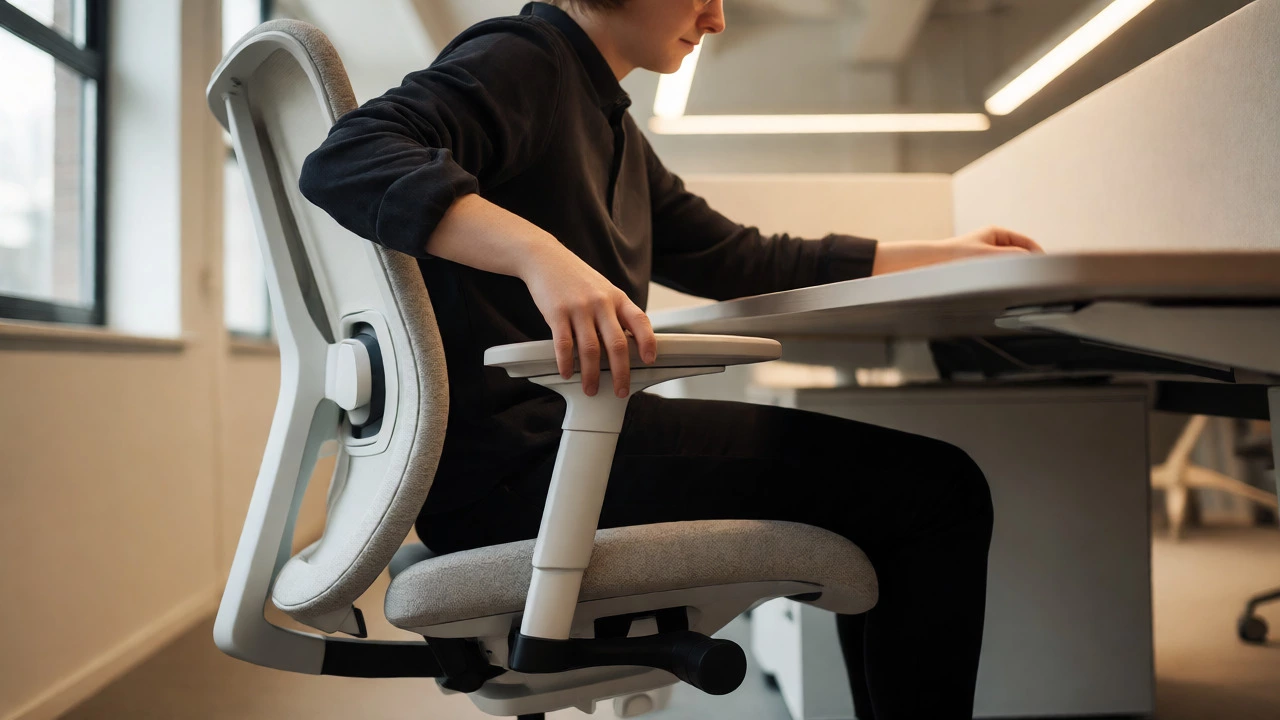
For those with ADHD, movement is fuel. Sitting perfectly still drains energy. You need a chair that allows dynamic movement. Look for features like tilt tension controls that let you rock gently. A chair that locks rigidly might make you feel trapped, leading to constant repositioning. Some people find ball chairs or kneeling chairs helpful because they engage core muscles and provide subtle motion. The goal is to satisfy the need for kinetic feedback without breaking concentration.
For those on the autism spectrum, predictability and comfort are paramount. Sensory sensitivities mean that fabric choice matters immensely. Mesh backs might feel too airy or cold for some, while leather might stick to skin or smell strong. Soft, breathable fabrics like cotton blends or memory foam cushions can reduce tactile irritation. Additionally, adjustability should be precise. Once you find the perfect height and armrest position, you want it to stay there. Complex adjustment mechanisms that slip easily can cause frustration. Stability reduces cognitive load, allowing you to save mental energy for work.
If you have AuDHD, you face a conflict. You need movement (ADHD) but also stability (Autism). The solution is often a high-quality ergonomic chair with a wide range of adjustments that can be set once and then used dynamically. Look for chairs with active seat depth control and lumbar support that moves with you. Avoid gimmicky designs that look cool but offer poor long-term support.
Building a Neuro-Inclusive Workspace
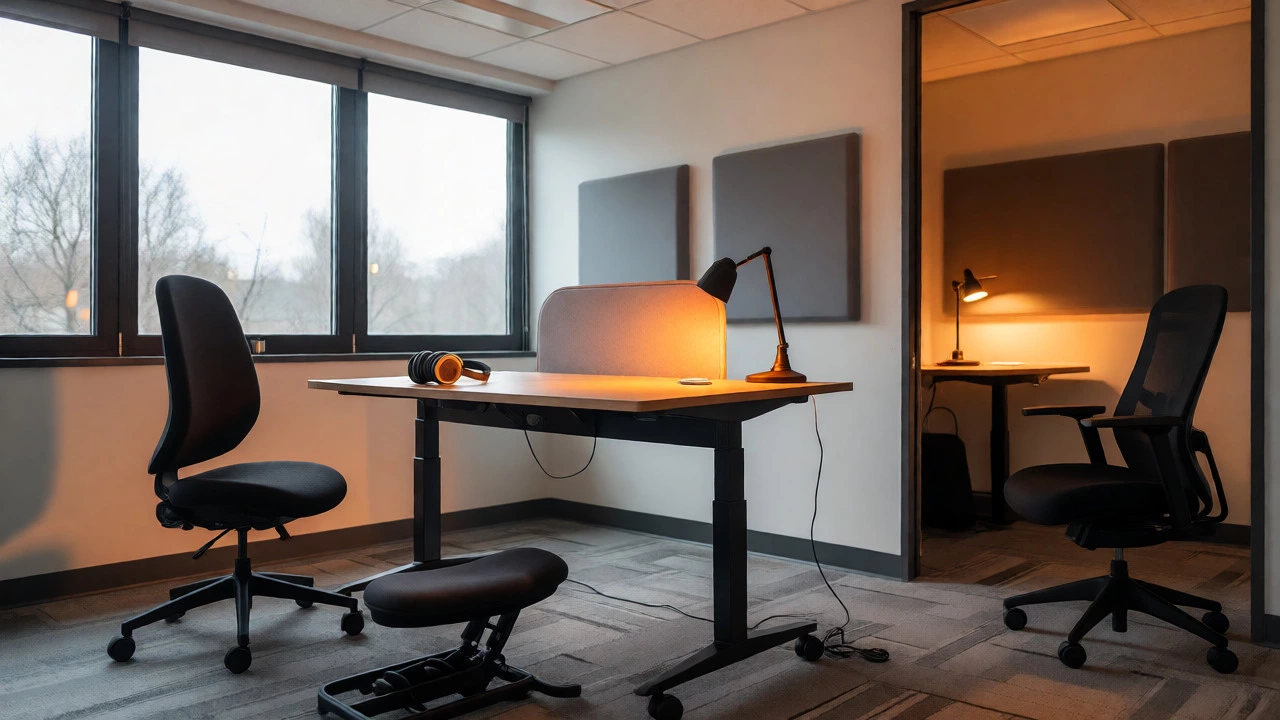
Your chair is just one piece of the puzzle. Creating an environment that supports neurodivergent brains involves looking at the whole picture. Lighting, noise, and layout all play roles.
Lighting affects everyone, but neurodivergent individuals are often more sensitive. Fluorescent lights flicker at a frequency invisible to many but noticeable to those with sensory processing issues. This can cause headaches or fatigue. Switching to warm LED lighting or using natural light where possible can make a dramatic difference. If you can't change the building's lights, consider a desk lamp with adjustable color temperature.
Noise management is another critical factor. Open-plan offices are nightmares for both ADHDers (distraction) and Autistic people (sensory overload). Noise-canceling headphones are a staple tool. However, physical barriers also help. Positioning your desk against a wall rather than in the middle of a walkway can reduce visual distractions. For ADHD, visual clutter competes for attention. Keeping your desk minimal helps maintain focus. For autism, unexpected visual changes can be unsettling, so consistent organization provides comfort.
Finally, allow for flexibility. The best workspace lets you move. Standing desks paired with anti-fatigue mats can help regulate energy levels. Having a quiet corner or a breakout room available gives you a place to decompress when sensory input becomes too much. This isn't about being difficult; it's about optimizing performance.
Diagnosis and Self-Discovery
If you suspect you fall into this category, getting a formal diagnosis can be validating. However, access to healthcare varies wildly. In the UK, waiting times for adult ADHD assessments can stretch over a year. During that wait, self-education is powerful. Reading personal accounts from people with AuDHD can help you identify patterns in your own behavior.
Keep a journal of your triggers. When do you feel most focused? What sensations bother you? Do you crave novelty or routine? These observations are valuable data for a clinician. They also help you tailor your home and work environment immediately. You don't need a doctor's note to know that a soft cushion makes you happier than a hard wooden bench.
Remember, labels are tools, not cages. Whether you identify as ADHD, Autistic, or both, the goal is to understand your operating system. Once you know how you process the world, you can stop fighting your nature and start working with it. And yes, that includes picking the right chair.
Can you have both ADHD and Autism?
Yes, absolutely. Comorbidity is very common. Studies suggest that a significant percentage of people with one condition also meet the criteria for the other. This combination is often referred to colloquially as AuDHD.
What is the main difference between ADHD fidgeting and Autistic stimming?
While they can look similar, the intent differs. ADHD fidgeting is often driven by a need for stimulation to maintain focus or manage restlessness. Autistic stimming is frequently used for emotional regulation, self-soothing, or expressing joy. Stimming is also often more rhythmic and repetitive.
Does ADHD count as a disability?
In many jurisdictions, including under the Equality Act 2010 in the UK, ADHD can be considered a disability if it has a substantial and long-term adverse effect on your ability to carry out normal day-to-day activities. This classification can help secure reasonable adjustments in the workplace, such as specialized office equipment.
Why do I find mesh office chairs uncomfortable?
Many neurodivergent individuals have sensory processing sensitivities. The texture of mesh can feel irritating or unpredictable against the skin. Additionally, the lack of solid support might feel insecure to some. Trying chairs with upholstered seats and backs made of soft, breathable fabric might provide better comfort.
Is it true that autistic people dislike change?
It is a common trait, but not universal. Many autistic people rely on routines and predictability to reduce anxiety. Unexpected changes can be stressful. However, individual experiences vary widely. Some autistic people enjoy novelty within controlled parameters.
Write a comment