
Stool Usage Calculator
This tool helps you determine safe stool sitting durations based on your activity habits. For best results, follow the recommendations and incorporate regular movement.
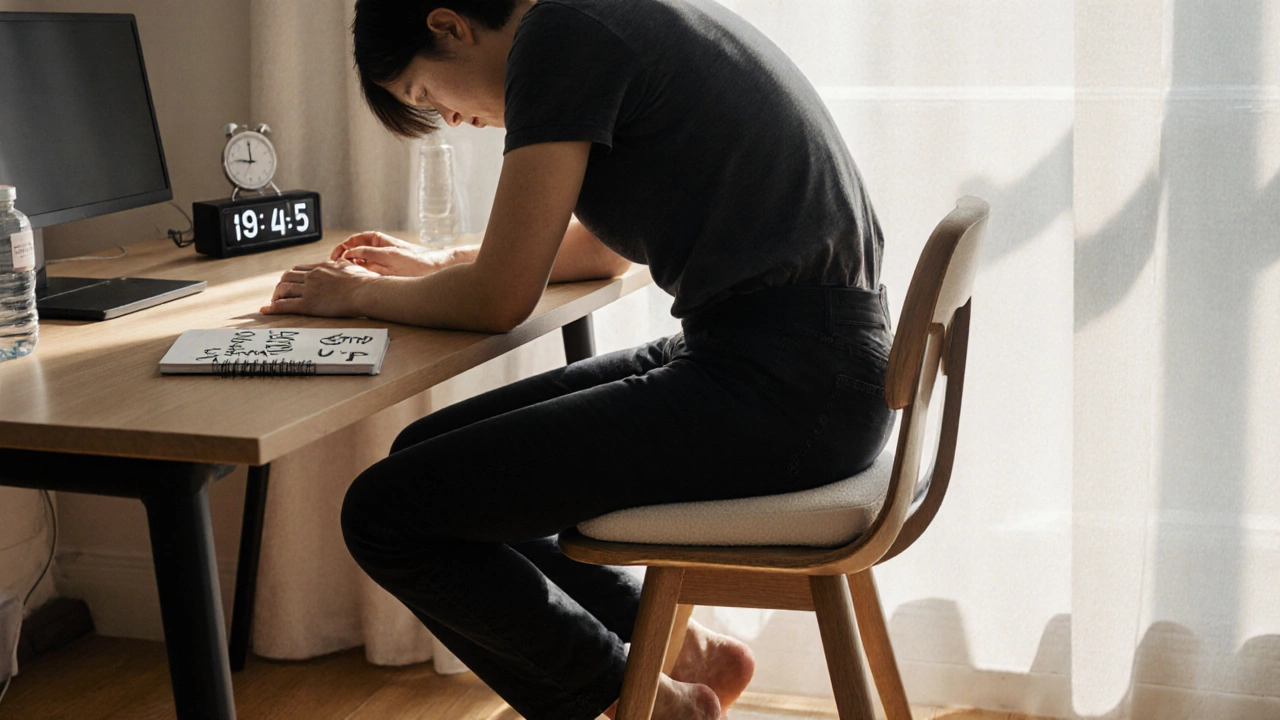
You see them everywhere-coffee shops, design studios, home offices. Sleek, minimalist, no backrest. Stools. They look cool. They feel freeing. But if you’re sitting on one for eight hours straight, your body might be screaming without you even noticing.
Why Stools Are Popular (and Why That’s Not Always Good)
Stools became trendy because they promise freedom. No backrest means you can twist, reach, stand up quickly. They’re great for short tasks: grabbing a file, sketching an idea, chatting with a coworker. In creative fields, they’re seen as a sign of being ‘unconventional’ or ‘active.’ But when you use a stool as your main seat all day, you’re not being active-you’re just not sitting in a chair.
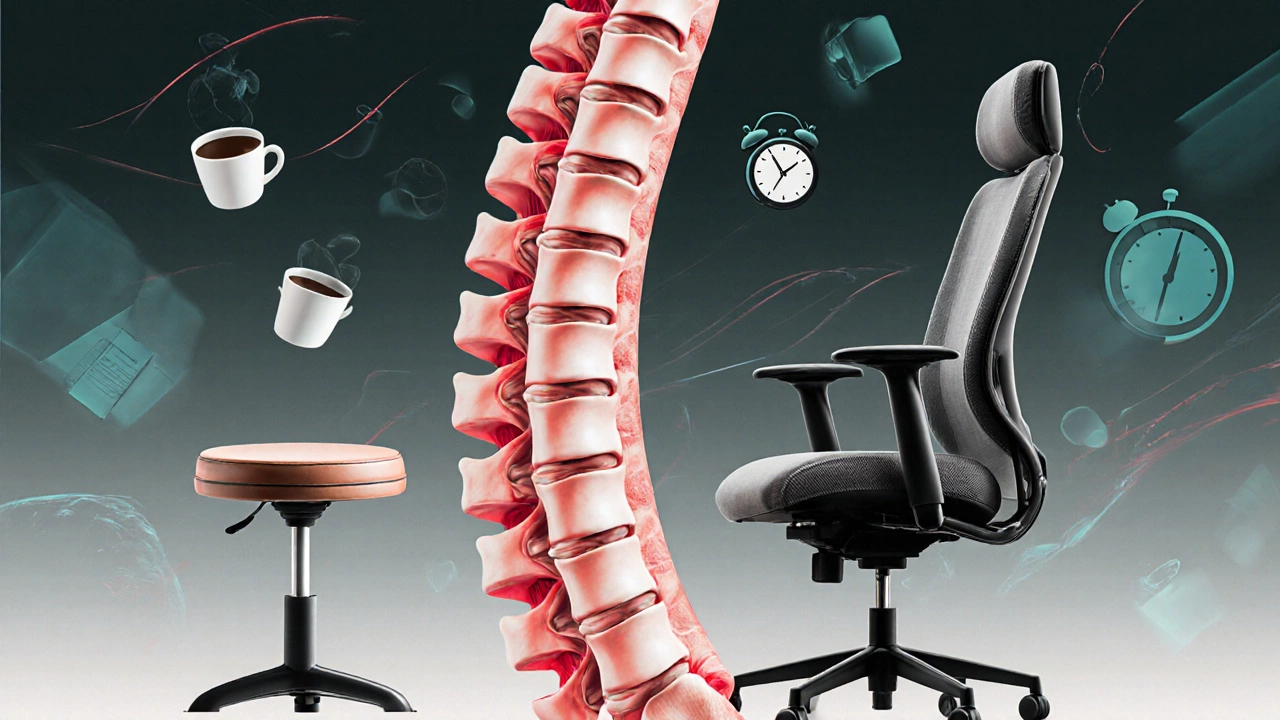
Here’s the reality: your spine isn’t designed to hold itself upright without support. The natural curve in your lower back (lumbar curve) needs something to rest against. Without it, your lower back muscles work overtime just to keep you from slumping. Over time, that leads to fatigue, tightness, and eventually pain.
What Happens to Your Body After Hours on a Stool
After 30 minutes, most people start shifting their weight. They lean forward. They twist. They cross their legs. That’s your body trying to find comfort. After two hours, your glutes and hamstrings go numb from pressure. Your hips tighten. Your pelvis tilts backward, flattening your lower spine. That’s not just uncomfortable-it’s biomechanically wrong.
A 2023 study from the University of Birmingham’s Ergonomics Lab tracked 120 office workers using stools for more than six hours a day. After six weeks, 73% reported lower back discomfort. 41% developed chronic stiffness. Only 12% said they felt no change. The ones who felt fine? They stood up every 20 minutes. They didn’t sit still.
Stools don’t cause back pain. But they remove the one thing that helps prevent it: passive support. Your muscles become the only thing holding you up. And muscles aren’t meant to be your spine’s backup system.
Stool vs Office Chair: The Real Differences
Let’s compare what a good office chair does that a stool doesn’t:
- Back support: A quality chair has adjustable lumbar support that matches your spine’s natural curve. A stool? Nothing.
- Seat depth: Chairs let you adjust how far back your thighs sit. Stools are one-size-fits-all-often too shallow or too deep.
- Armrests: They take pressure off your shoulders and neck. Stools? No arms. You’re holding your arms up all day.
- Height adjustment: Most stools adjust, yes-but without a backrest, height alone doesn’t fix posture.
Think of it this way: a stool is like standing on one foot for hours. You can do it for a minute. Maybe five. But try it for eight? You’ll be limping.
Who Might Actually Benefit from a Stool
Not everyone should avoid stools. There are exceptions:
- People who move often: If you stand up every 15-20 minutes, stretch, walk to the printer, switch tasks, a stool can work. Movement is the real key-not the seat.
- Artists, chefs, or makers: If you’re working at a high counter, sketching, or assembling something, a stool lets you get close and stay flexible.
- Those using a sit-stand desk: A stool can be a great ‘resting’ option between standing. Sit for 10 minutes, stand for 20. Repeat.
But if you’re glued to that stool for your entire workday? You’re not using it right.
How to Use a Stool Without Hurting Yourself
If you love your stool and won’t give it up, here’s how to make it safer:
- Use a cushion: A 2-inch memory foam pad reduces pressure on your tailbone and hips. Don’t skip this.
- Keep your feet flat: If your feet dangle, your lower back bears more load. Use a footrest-even a stack of books works.
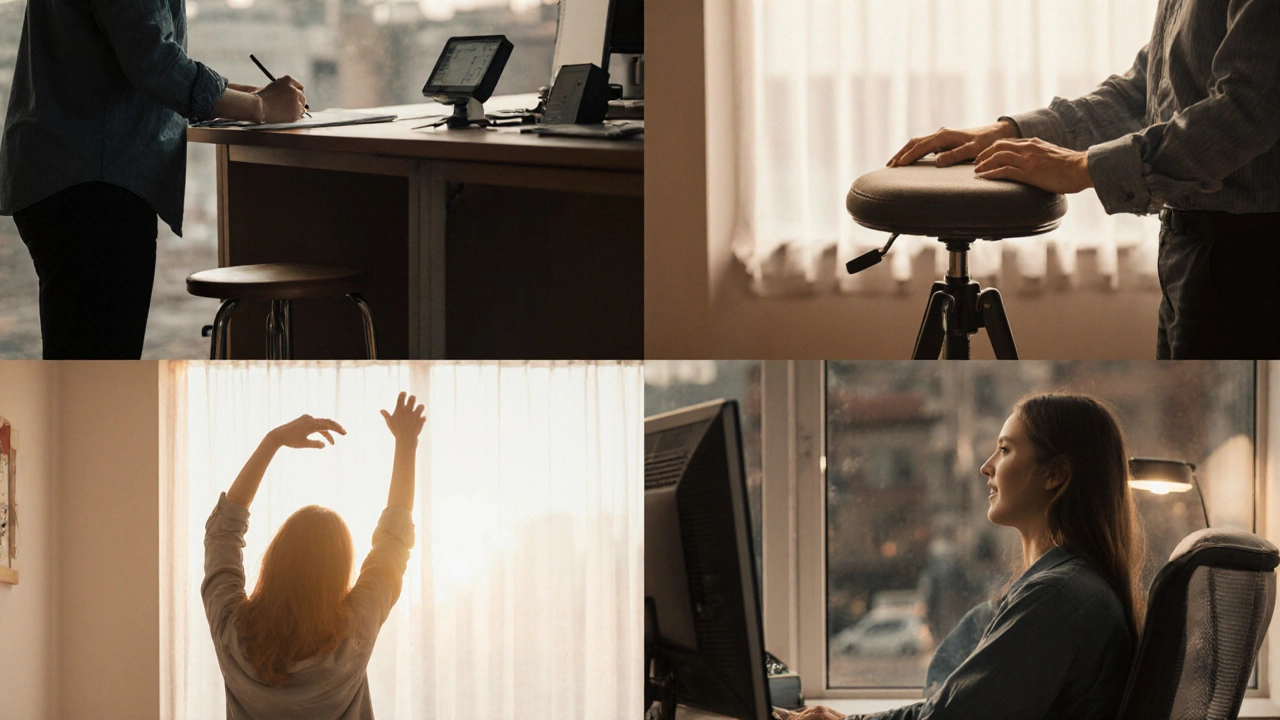
- Set a timer: Every 20 minutes, stand up. Walk to the window. Do two shoulder rolls. Stretch your arms overhead. Your spine will thank you.
- Strengthen your core: Planks, bird-dogs, and dead bugs help your body handle unsupported sitting better. Do 10 minutes a day.
- Alternate with a chair: Use the stool for 30-60 minutes, then switch to a proper chair for the next hour. Your body needs variety.
What to Do If You’re Already in Pain
Back pain from stool sitting doesn’t show up overnight. It creeps in. You feel a dull ache after lunch. Then it’s there every morning. Then you can’t sit through a meeting.
Here’s what to do:
- Stop sitting on the stool for long stretches. Even if you’ve used it for years, your body has changed.
- Get a lumbar roll or small pillow. Place it behind your lower back when you sit. It’s not perfect, but it’s better than nothing.
- See a physiotherapist. A 30-minute assessment can show you exactly where your posture is breaking down. They’ll give you simple exercises you can do at your desk.
- Try a kneeling stool or saddle stool. These encourage a more neutral spine angle than traditional stools. They’re not magic, but they’re closer to proper alignment.
The Bottom Line: Stools Are Tools, Not Solutions
A stool isn’t evil. It’s not a health hazard by itself. But treating it like your main office chair? That’s a problem.
Human bodies evolved to move. We weren’t built to sit still for hours, whether on a chair, a stool, or a beanbag. The goal isn’t to find the perfect seat-it’s to find the best way to keep moving.
If you want to sit on a stool, do it like a chef at a counter: for short bursts, with movement in between. If you need to sit for hours? Use a chair that supports your back. Your spine doesn’t care how stylish your seat looks. It only cares if it’s getting the help it needs.
Is it bad to sit on a stool all day?
Yes, sitting on a stool all day can lead to lower back pain, muscle fatigue, and poor posture. Without back support, your spine has to work harder to stay upright, which strains your muscles and discs over time. Stools are fine for short use, but not as a full-day replacement for an ergonomic chair.
Can a stool be good for posture?
Only if used correctly. Some specialized stools-like kneeling stools or saddle stools-can encourage a more upright, neutral spine position. But standard bar or counter stools do not improve posture. They remove support, which usually makes posture worse over time.
What’s better: a stool or an office chair?
An office chair with adjustable lumbar support, armrests, and seat depth is better for all-day sitting. Stools lack support and can lead to muscle strain. A stool might be useful for short tasks or as a standing desk companion, but not as your primary seat.
How can I make sitting on a stool less painful?
Use a cushion to reduce pressure on your tailbone, keep your feet flat with a footrest, set a timer to stand up every 20 minutes, strengthen your core muscles, and alternate with a proper chair. Movement is the most important factor-not the seat itself.
Do I need to throw away my stool if I’m getting back pain?
No. You just need to change how you use it. Stop using it for long, continuous periods. Use it for quick tasks, standing desk breaks, or short meetings. If you’re in pain, switch to a supportive chair for your main work hours. Your stool can still have a role-it just shouldn’t be the only one.
If you’re still unsure, try this: for one week, use your stool only for meetings, coffee breaks, or standing desk rests. Use a real office chair for your deep work. Notice how your body feels by Friday. Most people are surprised by the difference.
Write a comment