
Container Storage Risk & Cost Calculator
Enter your details and click analyze to see your risk score.
You’ve got some heavy oak dining tables, a solid walnut wardrobe, and maybe a few delicate chairs that you can’t part with. Moving house or renovating means they need a place to sit for a while. Renting a self-storage unit feels expensive, so the idea of renting a cheap shipping container is a steel box designed for global transport that offers secure, off-site storage becomes tempting. But here’s the real question: will your furniture come out looking good, or will it be warped, mouldy, or eaten by bugs?
The short answer is yes, it is safe-but only if you treat the container like a climate-controlled vault rather than a dump site. If you just toss everything in and lock the door, you’re inviting disaster. Containers are metal boxes that sweat, heat up, and cool down rapidly. Without preparation, your investment turns into a science experiment gone wrong.
Before we get into the nitty-gritty of packing, let’s clear the air. I was recently looking at various online directories for different services across Europe and Asia, including this resource, which reminded me how important verification and trust are when dealing with unknown environments. The same logic applies here: you need to verify the condition of your storage environment before committing your valuables to it.
Understanding the Container Environment
To protect your furniture, you first need to understand what a shipping container actually does. These boxes are built to withstand ocean storms, not to preserve mahogany. They are sealed tight, which is great for security but terrible for airflow. When the sun beats down on the corrugated steel roof during the day, the internal temperature can skyrocket to over 50°C (122°F). At night, especially in places like Birmingham where dampness is common, the temperature drops sharply. This cycle creates condensation-water droplets forming on the walls, floor, and, unfortunately, your furniture.
This phenomenon is known as "container rain." Even if the outside is dry, the inside can feel like a sauna. Wood expands when wet and contracts when dry. Do this repeatedly over months, and joints loosen, veneers peel, and fabrics develop mildew. Understanding this thermal dynamics is the first step toward mitigation.
Choosing the Right Container
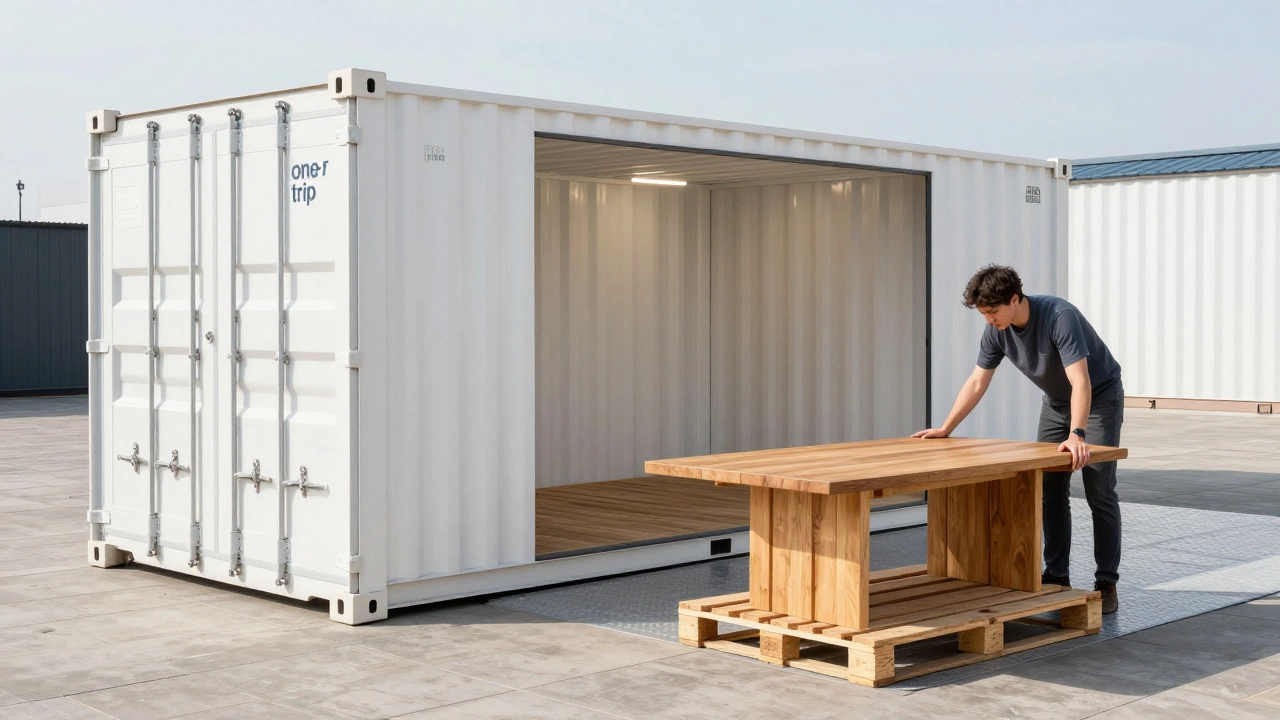
Not all containers are created equal. You want a "one-trip" or "cargo-worthy" container. Avoid anything that looks dented, rusted, or has patched holes. Rust indicates water intrusion history, and patches often fail under temperature stress. Check the door seals carefully; rubber gaskets degrade over time. If light shines through the edges when the doors are closed, moisture will follow.
- Size matters: A 20-foot container holds about 33 cubic meters, enough for a small living room set. A 40-foot container doubles that space. Don't overcrowd; air needs to circulate.
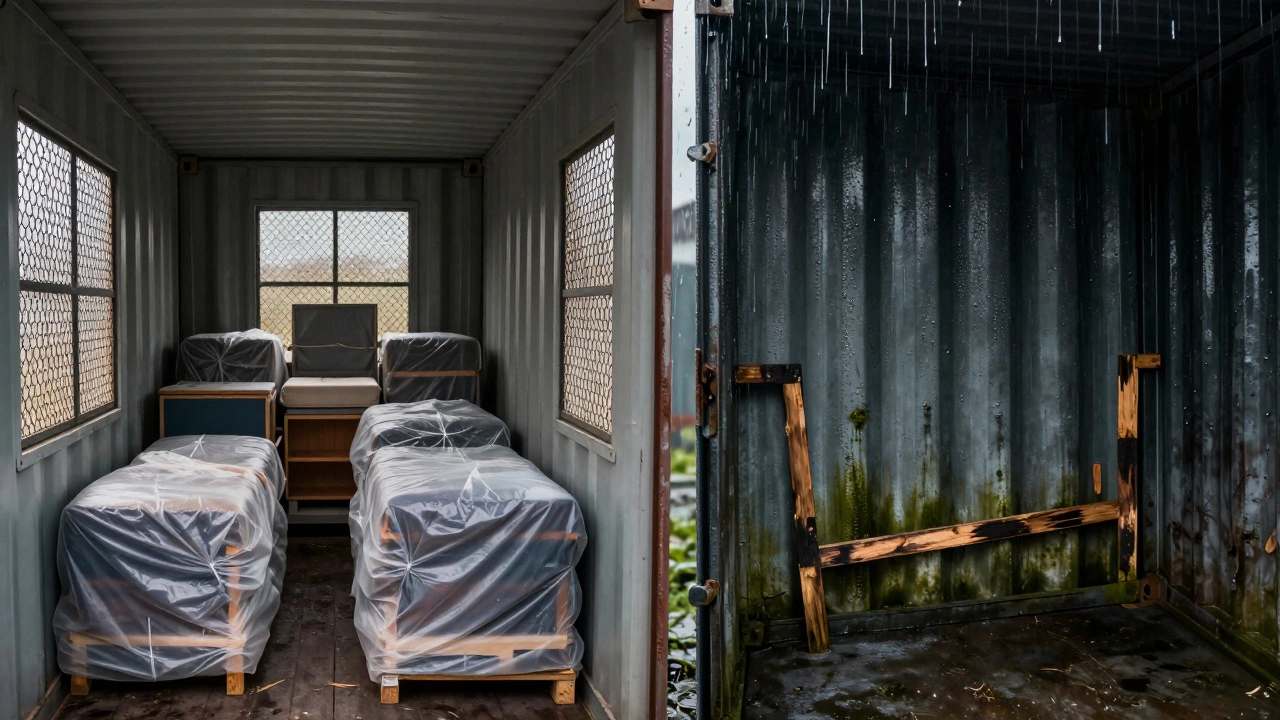
- Ventilation options: Some providers offer ventilated containers with mesh panels. These allow passive airflow, reducing condensation risk significantly compared to standard sealed units.
- Flooring: Ensure the wooden floor slats are intact. Broken slats expose the steel base, which gets cold and promotes moisture transfer directly to items placed on them.
Preparation: Cleaning and Conditioning
Never put dirty furniture into storage. Dust, food crumbs, and body oils attract pests and accelerate decay. Clean every surface thoroughly. For wood, use a gentle cleaner followed by a coat of furniture polish or wax. This adds a protective barrier against humidity. For upholstered items, consider professional cleaning to remove hidden stains and odors that could trap moisture.
If you have leather goods, condition them with a specialized leather protector. Leather cracks and stiffens in low-humidity environments caused by extreme heat cycles inside the container. Think of this prep work as putting sunscreen on your furniture before leaving it in the sun.
Packing Strategies for Protection
How you pack determines how well your furniture survives. Direct contact with the metal walls or floor is a major no-no. Here’s how to do it right:
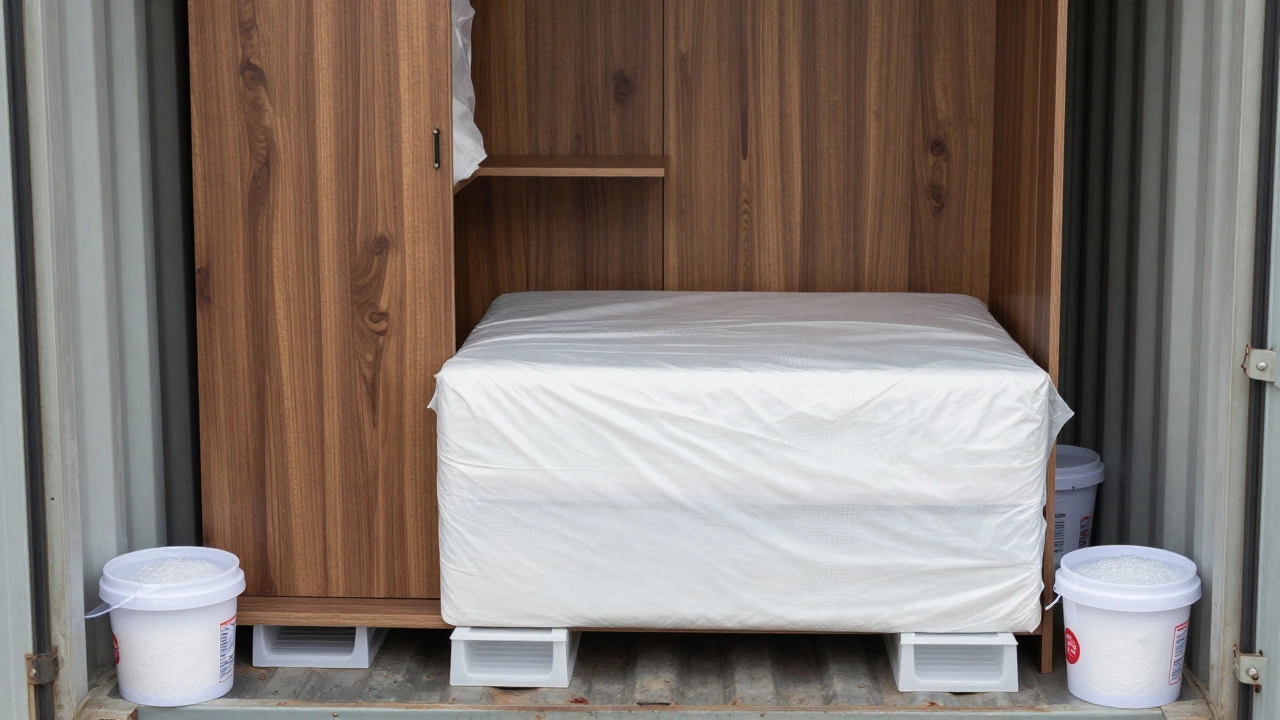
- Elevate everything: Use pallets, plastic shelving units, or even upside-down plastic bins to keep furniture off the floor. This allows air to flow underneath and prevents capillary action from drawing moisture up from the ground.
- Create gaps: Leave at least 6-10 centimeters between large items and the container walls. This buffer zone helps mitigate temperature shocks and allows for air circulation.
- Wrap wisely: Use breathable cotton covers instead of plastic sheeting. Plastic traps moisture against the fabric, creating a breeding ground for mould. If you must use plastic for dust protection, leave it loose and add silica gel packs inside.
- Disassemble when possible: Take apart bed frames, table legs, and shelf units. Flat-packing reduces stress points and makes stacking more stable. Label parts clearly with masking tape and a marker.
Controlling Moisture and Pests
Moisture is the enemy number one. Silica gel desiccants are your best friend here. Place large buckets of silica gel throughout the container, especially near the center where air movement is lowest. Replace or recharge them every few months if you plan long-term storage. Alternatively, commercial dehumidifier bags designed for closets can be hung from ceiling rails.
Pests love dark, undisturbed spaces. Mice, rats, and insects can chew through wood and fabric. To deter them:
- Seal any entry points in the container yourself with steel wool or caulk if you notice gaps.
- Place mothballs or cedar blocks in wardrobes and drawers. Cedar naturally repels moths without toxic chemicals.
- Avoid storing food items, pet supplies, or paper products alongside furniture, as these attract rodents.
Monitoring and Maintenance
Don’t just lock it and forget it. Visit the container monthly if possible. Check for signs of condensation, mould spots, or pest activity. Open the doors briefly to air out the space on a dry, sunny day. This simple act can reset the internal humidity balance. Keep a logbook noting weather conditions and any observations. Early detection saves your furniture; neglect destroys it.
Comparison: Container vs. Self-Storage Unit
| Feature | Shipping Container | Self-Storage Unit |
|---|---|---|
| Cost | Lower monthly fee | Higher monthly fee |
| Climate Control | None (requires manual management) | Often available (extra cost) |
| Security | High (steel construction, single point access) | Medium (shared facility, individual locks) |
| Accessibility | Requires truck/loader for loading/unloading | Roadside access, easy walk-in |
| Maintenance Effort | High (user manages moisture/pests) | Low (facility handles basics) |
When to Avoid Container Storage
Some items simply shouldn’t go into a standard container. Antiques with fragile finishes, musical instruments sensitive to humidity changes, and electronics should ideally stay in climate-controlled environments. If your budget allows, pay for a climate-controlled self-storage unit for these high-risk items. For robust, everyday furniture like sofas, beds, and bookshelves, a prepared container is a viable, cost-effective solution.
Can I store my sofa in a shipping container?
Yes, but wrap it in a breathable cotton cover and elevate it on pallets. Avoid plastic wraps that trap moisture. Check it monthly for mould or pest signs.
How do I prevent mould in a storage container?
Use silica gel desiccants, ensure proper ventilation if possible, keep items off the floor, and clean furniture thoroughly before storage. Regularly inspect and air out the container.
Are shipping containers secure for valuable furniture?
Yes, they are highly secure due to their steel construction and limited access points. Use a high-quality padlock and consider placing the container in a gated yard for added safety.
What temperature can a shipping container reach?
Internal temperatures can exceed 50°C (122°F) in direct sunlight. This extreme heat can damage wood and upholstery, making moisture control and shading crucial.
Should I use plastic wrap for furniture in a container?
Avoid tight plastic wrapping as it traps humidity and encourages mould growth. Use breathable fabric covers instead, or loosely draped plastic with silica gel packs inside.
Write a comment