

Medicare Recliner Cost Estimator
Estimated Cost Breakdown
You just got the call from your doctor. You need a recliner chair with a power lift mechanism to help you stand up safely after knee replacement surgery. It sounds straightforward, right? You have Medicare. You go to the store, point at the chair, and expect the insurance to handle it. But then you hit a wall. The billing department says "no." Or worse, they say "maybe," but only if you jump through three hoops and pay out of pocket for half of it.
This confusion happens every single day. Millions of seniors assume that because a piece of furniture helps them move around their house, Medicare will pay for it. The harsh reality is that Medicare treats most recliners as standard household furniture, which it explicitly does not cover. However, there is a narrow exception for specific medical devices that look exactly like those living room chairs.
Understanding what Medicare covers-and more importantly, what it doesn’t-can save you thousands of dollars and prevent frustrating denials. Let’s break down the eight major categories of expenses Medicare leaves on your table, specifically focusing on how this impacts your decision to buy a recliner or mobility aid.
1. Standard Furniture and Home Decor
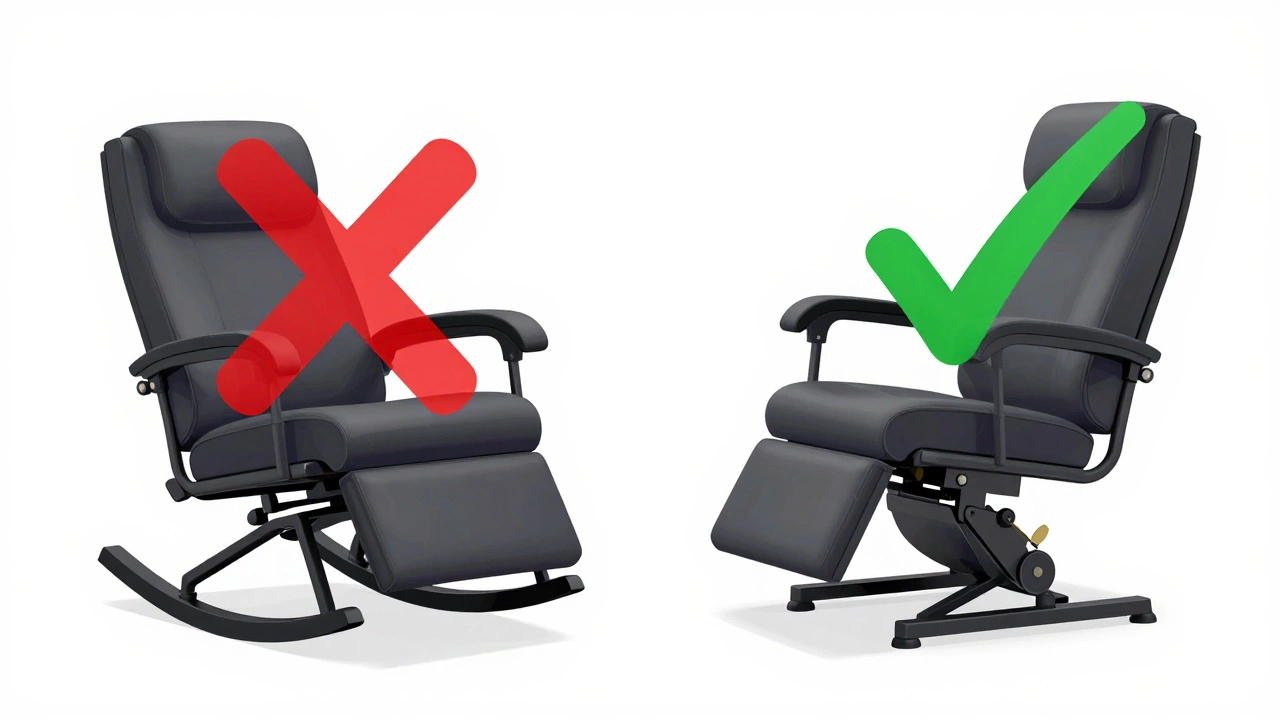
The first and biggest thing Medicare does not cover is regular furniture. If you walk into a showroom and pick out a plush leather recliner because it’s comfortable, looks great in your living room, and has a cup holder, Medicare pays $0. This includes manual recliners, rocker recliners, and any chair where the primary purpose is comfort or aesthetics rather than medical necessity.
Even if you tell the salesperson, "I really need this because my back hurts," it won’t change the classification. To Medicare, a standard recliner is a convenience item, similar to a nice mattress or a supportive pillow. While these items might make life easier, they are not considered Durable Medical Equipment (DME). DME must be primarily used for a medical purpose and be capable of withstanding repeated use. A fancy recliner fails this test unless it has specific mechanical features prescribed by a doctor.
2. Non-Medical Home Modifications
Many people think that if a product helps them stay independent at home, Medicare should cover it. This leads to disappointment when trying to get reimbursement for home modifications. Medicare does not cover ramps, grab bars, stairlifts, or wide doorways installed for safety. Similarly, it does not cover the installation costs associated with setting up a heavy power lift chair if the modification isn't strictly part of the medical device's function.
If you need to widen a doorway to fit a new wheelchair-accessible recliner, that construction cost is yours. Medicare’s role is limited to the medical equipment itself, provided it meets strict criteria. They do not act as a general home improvement fund for aging-in-place upgrades.
3. Routine Maintenance and Repairs
Let’s say you did qualify for a power lift chair under Medicare Part B. You paid your 20% coinsurance, and now you’re enjoying your new independence. Six months later, the motor burns out. Can you claim the repair cost against Medicare? No.
Medicare does not cover routine maintenance, repairs, or replacements due to normal wear and tear. Once the initial coverage period ends, you are responsible for keeping the device running. This is a critical distinction. Unlike car insurance, which might cover accidental damage, Medicare views DME as a one-time benefit. If the chair breaks because you used it heavily, or even if it just ages out, you pay for the fix or buy a new one.
4. Over-the-Counter Supplies and Accessories
Medicare rarely covers consumable supplies unless they are directly tied to a covered service. For example, while Medicare might cover certain diabetic testing strips, it generally does not cover generic cushions, armrest pads, or cleaning kits for your recliner. Even specialized orthopedic pillows that you place on the chair for extra support are usually considered personal comfort items, not medical necessities.
If you find yourself needing extra padding because the chair is hard on your joints, that cost comes from your wallet. This applies to batteries as well. While the chair itself might be covered, the ongoing cost of replacing rechargeable batteries or buying backup power sources is typically excluded.
5. Prescription Drugs Taken at Home
It might seem unrelated to furniture, but understanding what Medicare doesn’t cover helps frame the bigger picture of healthcare costs. Original Medicare (Parts A and B) does not cover most prescription drugs you take at home. This is why many people enroll in Medicare Part D. If you are buying a recliner to manage pain better so you can reduce medication, remember that the medication costs themselves are separate. You cannot bundle drug costs into a DME purchase.
This separation means you have to budget for both the mobility aid and the pharmaceutical management separately. There is no cross-subsidization between these categories in Medicare’s structure.
6. Experimental or Investigational Treatments
Medicare is conservative. It generally does not cover treatments, procedures, or devices that are considered experimental. If a new type of exoskeleton-recliner hybrid is on the market that claims to rehabilitate legs automatically through AI-driven movement, Medicare likely won’t touch it until years of clinical trials prove its efficacy. Stick to proven, FDA-cleared devices if you want any chance of coverage. Novelty tech stays off the insurer’s tab.
7. Custodial Care and Personal Assistance
A recliner helps you sit and stand, but it doesn’t help you eat, bathe, or dress. Medicare does not cover long-term custodial care. If you need a caregiver to help you transfer from bed to your recliner, or to assist you while you’re seated, those labor costs are not covered by Medicare. This is a common misconception. People confuse medical rehabilitation (physical therapy) with daily living assistance. Medicare pays for the therapist who teaches you how to use the chair; it does not pay for someone to push the chair for you all day.

8. Cosmetic Procedures and Enhancements
Finally, Medicare excludes anything deemed cosmetic. If you want a recliner upholstered in a specific designer fabric to match your interior decor, that premium price tag is entirely on you. Even if the chair has medical lift capabilities, Medicare will only reimburse based on the standard medical model. Any aesthetic upgrades are considered non-medical enhancements.
| Item/Service | Coverage Status | Reason |
|---|---|---|
| Standard Manual Recliner | Not Covered | Considered furniture/convenience |
| Power Lift Chair (Medical Grade) | Potentially Covered | Classified as DME if medically necessary |
| Home Installation/Ramps | Not Covered | Home modification, not medical equipment |
| Repair/Maintenance | Not Covered | Routine upkeep is patient responsibility |
| Orthopedic Cushions | Not Covered | Accessory/personal comfort item |
| Physical Therapy Sessions | Covered | Skilled medical service |
The Exception: When Does Medicare Pay for a "Recliner"?
So, is there any hope? Yes, but you have to look at the device differently. Medicare does not cover "recliners." It covers Powered Mobility Devices that include a lift mechanism. Specifically, under Part B, you may qualify for coverage if you meet three strict conditions:
- Medical Necessity: Your doctor must certify that you have a severe limitation in standing or walking due to a condition like arthritis, stroke recovery, or muscular dystrophy.
- Inability to Stand Without Assistive Devices: You must demonstrate that you cannot rise from a seated position without using crutches, a walker, or significant assistance from another person.
- Presence in the Home: The device must be used in your home environment.
Even if you qualify, Medicare will only pay for the basic lift mechanism. You will still pay 20% of the Medicare-approved amount after meeting your Part B deductible. If the chair costs $1,500 but Medicare’s allowed amount is $1,000, you pay 20% of $1,000 ($200) plus the full difference ($500), totaling $700 out-of-pocket. Plus, you must buy from a supplier who accepts Medicare assignment.
How to Navigate the Process
If you believe you qualify, don’t just buy a chair online. Follow these steps to maximize your chances of partial coverage:
- Get a Doctor’s Order: Schedule an appointment specifically to discuss mobility issues. Ask for a detailed letter of medical necessity describing why a standard chair is insufficient.
- Find a Medicare-Approved Supplier: Look for DME providers in your area who accept Medicare assignment. Check their ratings and reviews.
- Ask About Medicaid or State Programs: In some states, Medicaid or Veterans Affairs (VA) benefits may cover the gap that Medicare leaves behind. If you are dual-eligible, this can significantly reduce your costs.
- Check Private Insurance: Some supplemental Medigap plans or private employer retiree health plans offer additional coverage for DME that Original Medicare ignores.
Alternatives to Consider
If you don’t qualify for Medicare coverage, or if the out-of-pocket cost is too high, consider these alternatives:
- Leasing: Some DME suppliers offer lease-to-own programs for power lift chairs, spreading the cost over time.
- Second-Hand Markets: Websites like Facebook Marketplace or local senior centers often have gently used power lift chairs. Ensure the motor works before buying.
- Tax Deductions: If you itemize deductions on your taxes, unreimbursed medical expenses, including qualified DME, may be deductible if they exceed 7.5% of your adjusted gross income. Consult a tax professional.
Does Medicare cover power lift chairs?
Medicare Part B may cover a portion of the cost of a power lift chair if it is deemed medically necessary as Durable Medical Equipment (DME). You must have a doctor’s prescription certifying that you cannot stand without assistance, and you must buy from a Medicare-approved supplier. You will still pay 20% of the approved amount plus any difference between the retail price and Medicare’s allowed amount.
Why doesn't Medicare cover regular recliners?
Medicare classifies standard recliners as household furniture or convenience items. To qualify for coverage, a device must be primarily used for a medical purpose and be durable. Regular recliners are seen as enhancing comfort rather than treating a medical condition.
Can I get a refund if Medicare denies my claim?
If Medicare denies your claim, you have the right to appeal. You can request a redetermination within 120 days of the denial. Provide additional medical evidence from your doctor supporting the necessity of the device. However, if the denial stands, you are responsible for the full cost.
Do I need a special doctor for a power lift chair prescription?
No, your primary care physician, orthopedist, or physical therapist can write the prescription. The key is that the provider must document your functional limitations clearly, stating that you require a lift mechanism to stand safely.
Does Medicaid cover recliners?
Coverage varies by state. Some Medicaid programs cover power lift chairs as DME if you meet strict income and disability criteria. Others may offer waivers or home-and-community-based services that include funding for such equipment. Contact your state’s Medicaid office for specific details.
Write a comment