
Coffee Table Size Finder & Advisor
Your Ideal Dimensions
Enter your sofa measurements to see the perfect coffee table fit!
Quick Takeaways
- The most common size for a standard rectangular table is roughly 48 x 24 inches.
- Your table height should generally match or be slightly lower than your sofa cushions.
- Leave 14 to 18 inches of space between the table and the sofa for legroom.
- Round tables are the best bet for tight spaces or high-traffic areas.
The Gold Standard: Most Popular Coffee Table Size
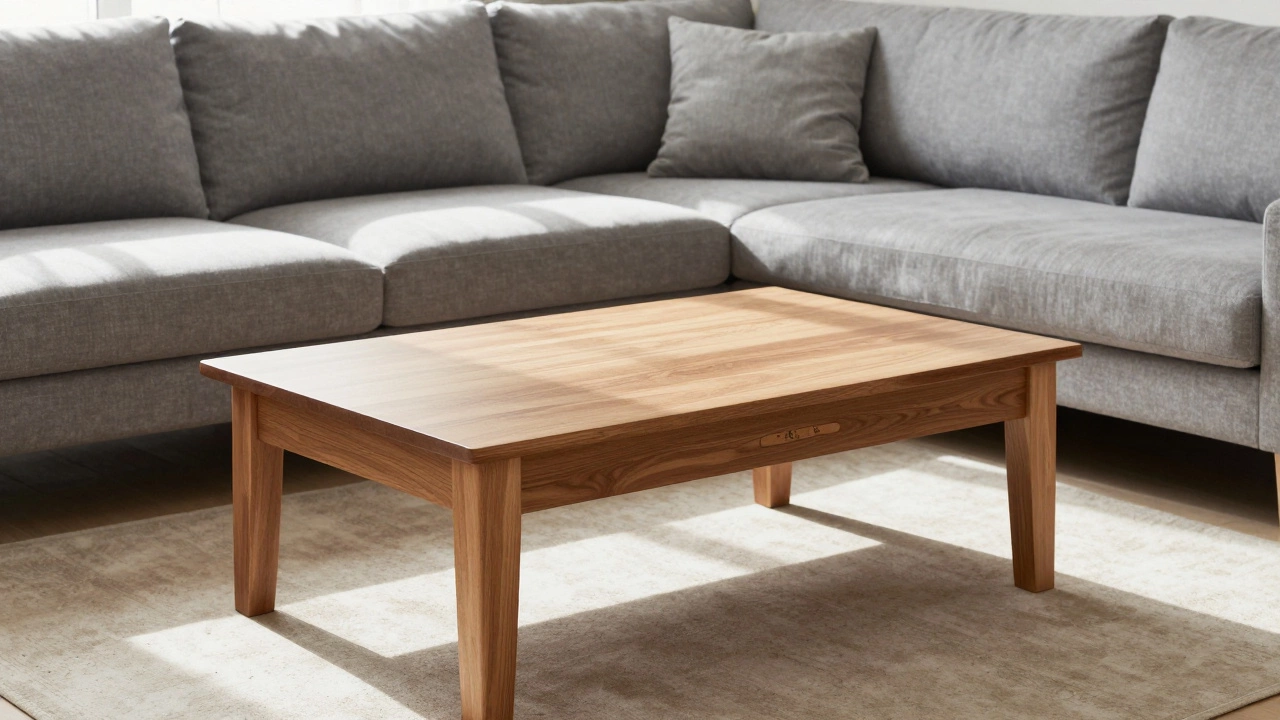
If you look at the best-selling models across major furniture brands, the most popular coffee table size is a rectangular shape measuring approximately 48 inches long, 24 inches wide, and 18 inches high. This specific set of dimensions is favored because it balances utility with space efficiency. It's long enough to serve a standard three-seater sofa but narrow enough that it doesn't eat up the center of the room.
But why is this the magic number? Most Sofas are designed with a standard depth and length. A 48-inch table typically covers about two-thirds of the length of a medium-sized couch, which is the golden ratio for interior design. It ensures that anyone sitting on the sofa can reach their drink or remote without having to stand up or stretch awkwardly.
Matching Table Height to Your Seating
Height is where most people mess up. If your table is too tall, it feels like a dining table shoved into a lounge; too short, and you're leaning over so far you'll pull a muscle. The general rule of thumb is that your table should be within 2 inches of the height of your sofa's seat cushions.
For most modern living rooms, this means a height of 16 to 18 inches. If you have a low-profile, mid-century modern piece, you might want to drop down to 14 inches. On the flip side, if you have a traditional, high-seated Sofa Set, a 20-inch table might be more comfortable. The goal is a seamless transition from your hand to the table surface.
| Table Shape | Common Length | Common Width | Ideal Height |
|---|---|---|---|
| Rectangular | 36" - 48" | 20" - 24" | 16" - 18" |
| Square | 30" - 36" | 30" - 36" | 16" - 18" |
| Round/Oval | 30" - 42" (Dia) | N/A | 16" - 18" |
Sizing Based on Your Sofa Layout
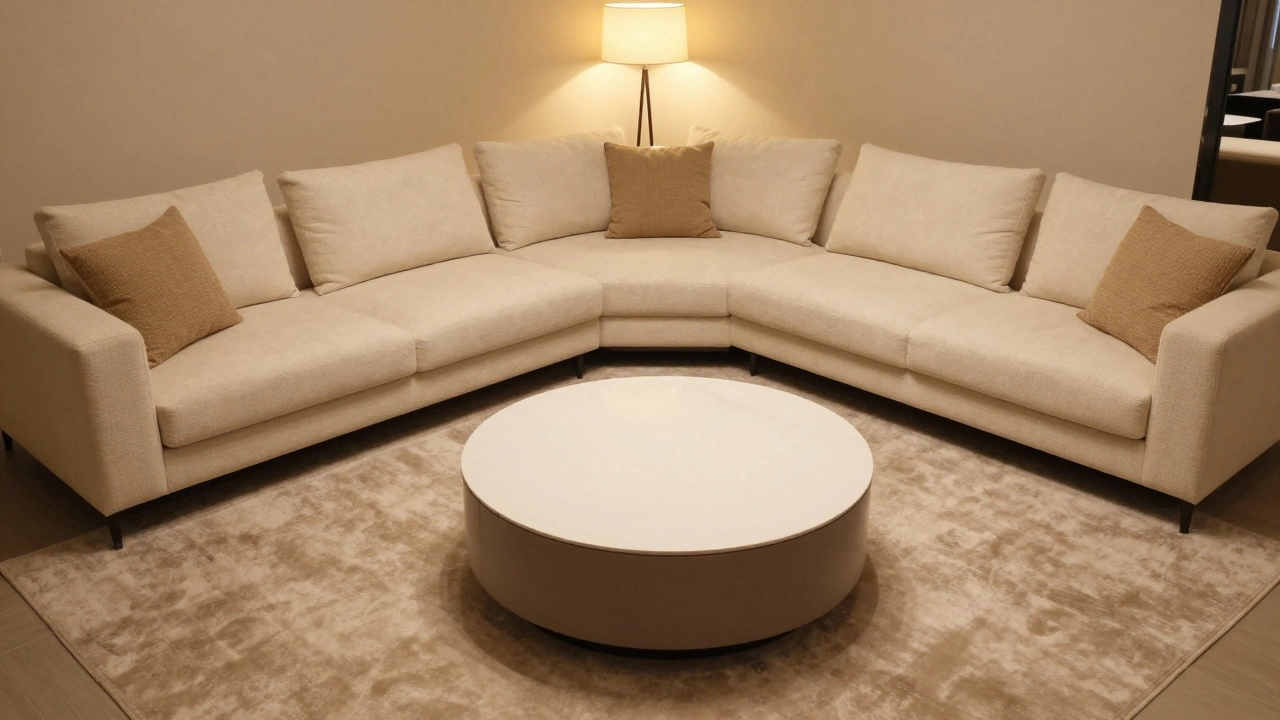
Your furniture arrangement dictates the size more than any trend does. If you have a massive Sectional Sofa, a tiny rectangular table will look lost. In these cases, a square or a large circular table often works better because it fills the "L" shape of the couch, making the corner seats accessible.
For a traditional setup with a sofa and two accent chairs, look for a table that is roughly half the length of your sofa. If your sofa is 84 inches long, a 42-inch table is your sweet spot. This leaves enough room on the ends for side tables or simply breathing room so the room doesn't feel cramped.
What about smaller apartments? In a tight space, the most popular choice is a Round Coffee Table. Not only does the lack of sharp corners make the room feel more open, but it also improves traffic flow. You won't be bruising your shins on a corner every time you walk toward the kitchen.
The Clearance Rules: Avoiding the Obstacle Course
A table might fit perfectly against the couch, but if it blocks the path to the balcony, it's the wrong size. You need to consider "clearance"-the empty space around the furniture.
- Sofa to Table: Aim for 14 to 18 inches. This is the "leg room" zone. Any closer and you'll feel trapped; any further and you'll be reaching for your coffee like you're trying to touch a distant shore.
- Table to Other Furniture: Leave at least 24 to 30 inches between the table and your TV stand or armchairs. This allows people to walk through the room without having to shuffle sideways.
If you find that your room is too small for these gaps, consider a nesting table set. These allow you to keep a small footprint most of the time but expand the surface area when you have guests over for appetizers and drinks.
Materials and Their Impact on Perceived Size
Believe it or not, the material of your table can change how big it feels in a room. A heavy, dark wood Coffee Table in a small room can feel like a giant boulder, making the space seem even smaller. If you're worried about a popular size feeling too bulky, look for "visual lightness."
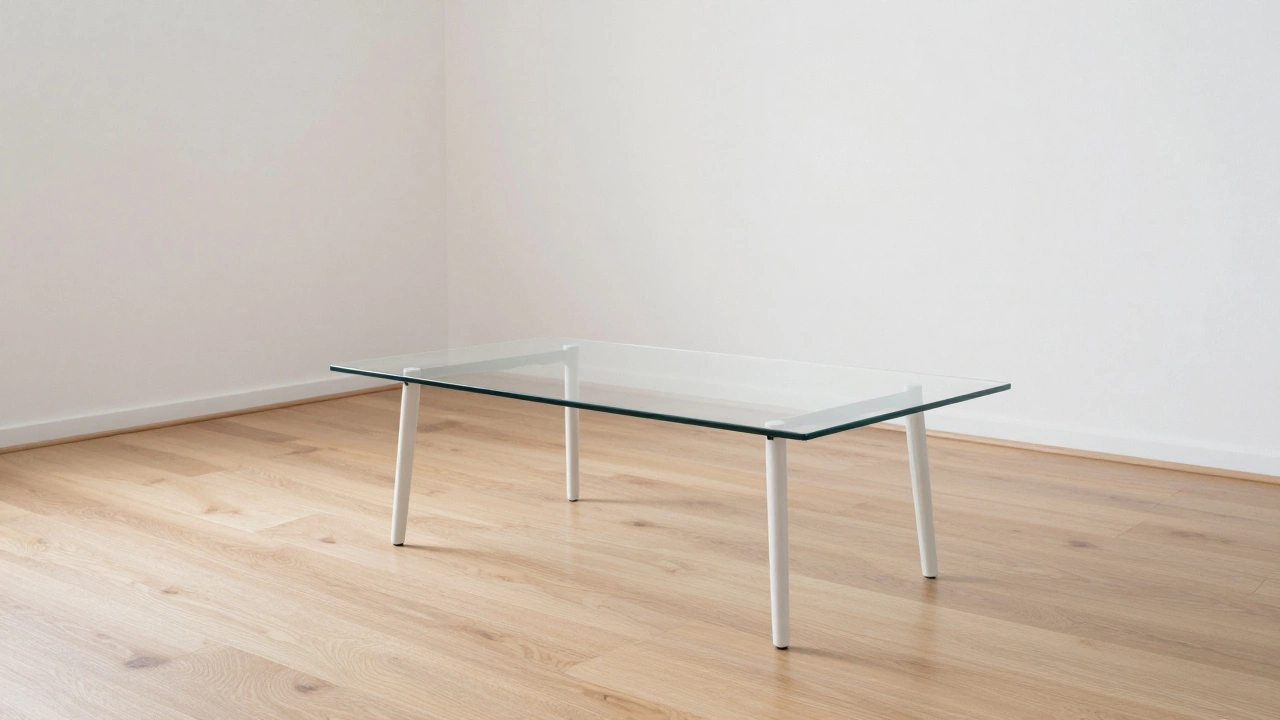
Glass tops or acrylic materials allow the eye to see through the table to the floor, which tricks the brain into thinking there is more open space. Similarly, tables with thin, tapered legs (think Scandinavian design) feel less intrusive than those with chunky block bases or skirts that go all the way to the floor.
Common Pitfalls to Avoid
One of the biggest mistakes is buying a table that is too long. If the table extends past the armrests of your sofa, it creates a visual imbalance and physically narrows the walking path in your living room. Your table should always be shorter than the sofa it accompanies.
Another error is ignoring the "reach test." Before buying, sit on your couch and imagine reaching for a glass of water. If the table is too wide (too deep), you'll find yourself leaning forward uncomfortably. For most people, a width of 20 to 24 inches is the limit before the table becomes a hurdle rather than a helper.
What is the best coffee table size for a small living room?
For small spaces, a round table with a diameter of 30 to 36 inches is usually best. Round edges facilitate easier movement in tight quarters, and the smaller footprint prevents the room from feeling cluttered. Alternatively, an oval table provides a longer surface while maintaining a narrower profile.
How high should a coffee table be?
The ideal height is typically 16 to 18 inches. The golden rule is to match the height of your sofa's seat cushions. If your cushions are very low, go with a 14-16 inch table; if they are higher, 18-20 inches is the way to go.
Can I use a square coffee table with a rectangular sofa?
Yes, but it's tricky. A square table works best if you have a large seating area, such as a sofa paired with two chairs facing it. In a simple sofa-only setup, a square table may leave too much empty space on the ends of the couch and potentially block the walkway in front of the sofa.
What is the ideal distance between a coffee table and a sofa?
You should leave between 14 and 18 inches of space. This ensures you have enough room to sit and stand up comfortably without hitting the table, while still keeping items within easy arm's reach.
What if my coffee table is too big for the room?
If you've already bought a table that's too large, try rearranging your seating to create more "white space" around the edges of the room. If the flow is still blocked, you might consider swapping it for a set of smaller nesting tables or a narrower oval-shaped table to reclaim some floor space.
Next Steps for Your Living Room
If you're still unsure, grab some painter's tape and mark the dimensions of the table you're considering directly on your floor. Walk around it for a day. See if you trip over the lines or if the "tape table" feels like it's taking up too much room. It's a free way to avoid a very expensive mistake.
Once you've nailed the size, think about your lifestyle. Do you have toddlers? Skip the rectangular tables with sharp corners and go for a round one. Do you host a lot of board game nights? Prioritize a larger surface area and a sturdy top over a minimalist, thin design.
Write a comment