
Couch Storage Safety Checker
Check Your Storage Safety
Storage Safety Assessment
Recommended Action
You’ve got a couch you need to store-maybe you’re moving, renovating, or just downsizing. You grab a roll of plastic wrap, thinking it’s the easiest way to keep dust, dirt, and moisture off your furniture. But then you pause. Is this really safe? Or are you setting your couch up for mold, mildew, or worse?
Wrapping a couch in plastic for storage sounds like a smart move. It’s cheap, it’s easy, and it looks like it should work. But here’s the truth: plastic wrap is one of the worst things you can put on a sofa for long-term storage. It doesn’t protect your couch-it traps damage inside.
Why Plastic Is a Bad Idea for Couch Storage
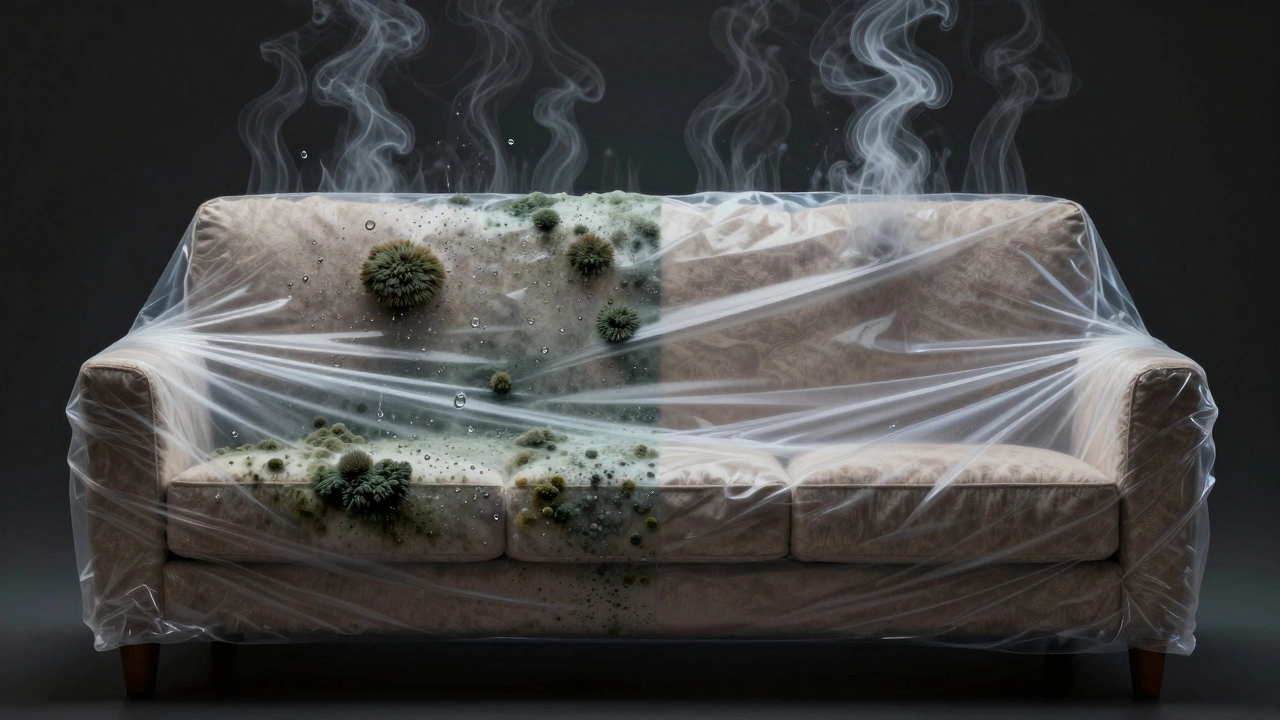
Most couches are made with fabric, foam, and wood. Even leather sofas have padding underneath. These materials need to breathe. Plastic wrap creates a sealed environment. That sounds good until you realize moisture doesn’t disappear-it just gets trapped.
Think about what happens when you put a wet towel in a plastic bag. It doesn’t dry. It smells. It grows mold. Your couch does the same thing. Even if it looks clean and dry when you wrap it, tiny amounts of humidity from the air, your skin, or the floor will get trapped inside. Over weeks or months, that moisture builds up. Fabric fibers swell. Foam breaks down. Wood frames swell and warp. And you won’t notice until you unwrap it-and find stains, odors, or crumbling padding.
Studies from the UK’s Furniture Industry Research Association show that 68% of stored sofas with plastic covers developed hidden mold or mildew within 3 months in typical UK storage conditions. That’s not a fluke. It’s physics.
What Happens When Moisture Gets Trapped
Let’s say you live in Birmingham, like I do. Winters are damp. Basements and garages stay chilly and humid. Even a dry-looking couch picked up from a warm living room carries residual moisture from daily use-body oils, sweat, spilled tea, pet hair. Wrap it in plastic, and you’ve just created a mini greenhouse.
Here’s what you might find after a few months:
- Yellowish stains on light-colored fabric
- A musty smell that won’t wash out
- Foam that’s turned brittle or sticky
- Wood frame joints that have swollen and cracked
- Black or green spots growing under the plastic
These aren’t surface issues. They’re structural. And once foam degrades or fabric fibers break down, you can’t fix it. Cleaning won’t help. Reupholstering might cost more than replacing the couch.
What to Use Instead of Plastic
You still need to protect your couch. But you need breathable protection. Here’s what actually works:
- Cotton canvas storage covers-These are the gold standard. Made from tightly woven cotton, they block dust and pests while letting air circulate. Brands like The Container Store and IKEA sell them for under £40.
- Non-woven polypropylene covers-These are lightweight, water-resistant, and breathable. They’re often used by professional movers. Look for ones labeled “breathable” or “vapor-permeable.”
- Old bedsheets-Yes, really. Clean, dry cotton sheets wrapped loosely over the couch, then secured with twine or clips, work better than plastic. They’re free, breathable, and easy to wash.
Never use shrink wrap, bubble wrap, or garbage bags. They’re plastic in disguise. Even “furniture-grade” plastic tarps from hardware stores aren’t safe unless they’re specifically labeled as breathable.
How to Store Your Couch Right
Good storage isn’t just about the cover. It’s about the whole setup.
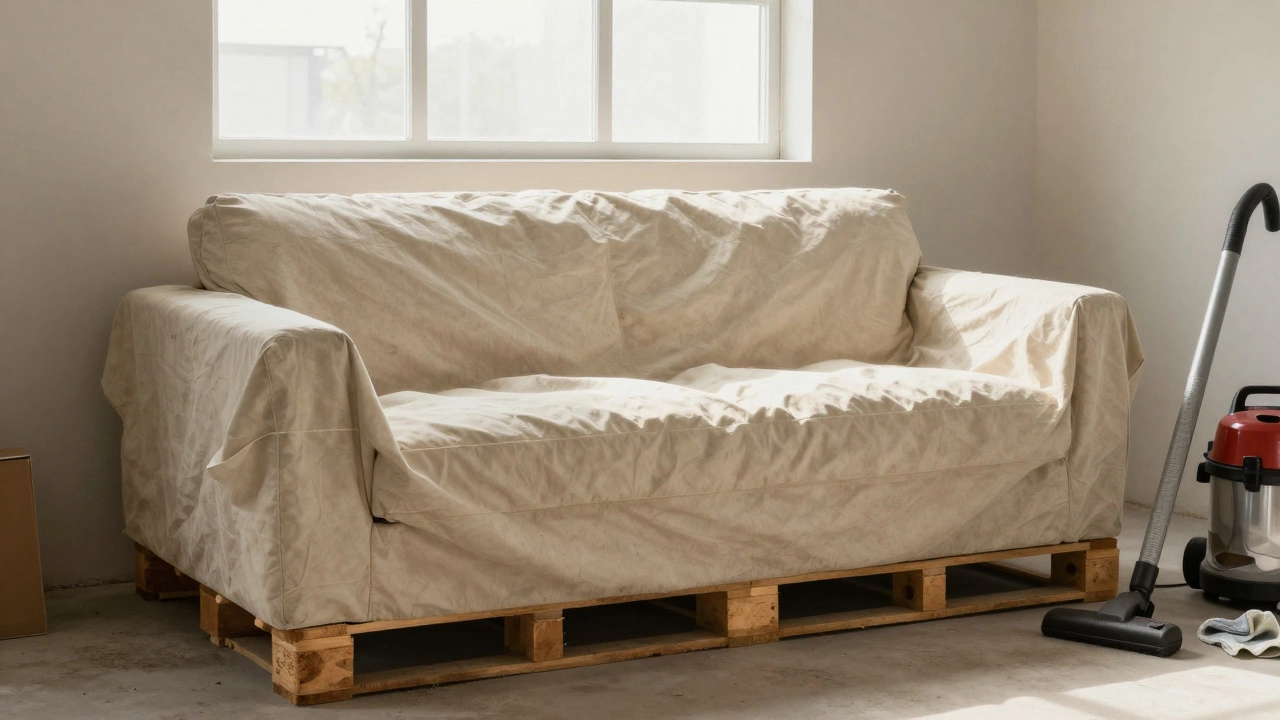
- Clean first-Vacuum every crevice. Wipe down wood frames with a dry cloth. Let the couch air out for 24 hours before covering. Any lingering moisture will turn into problems later.
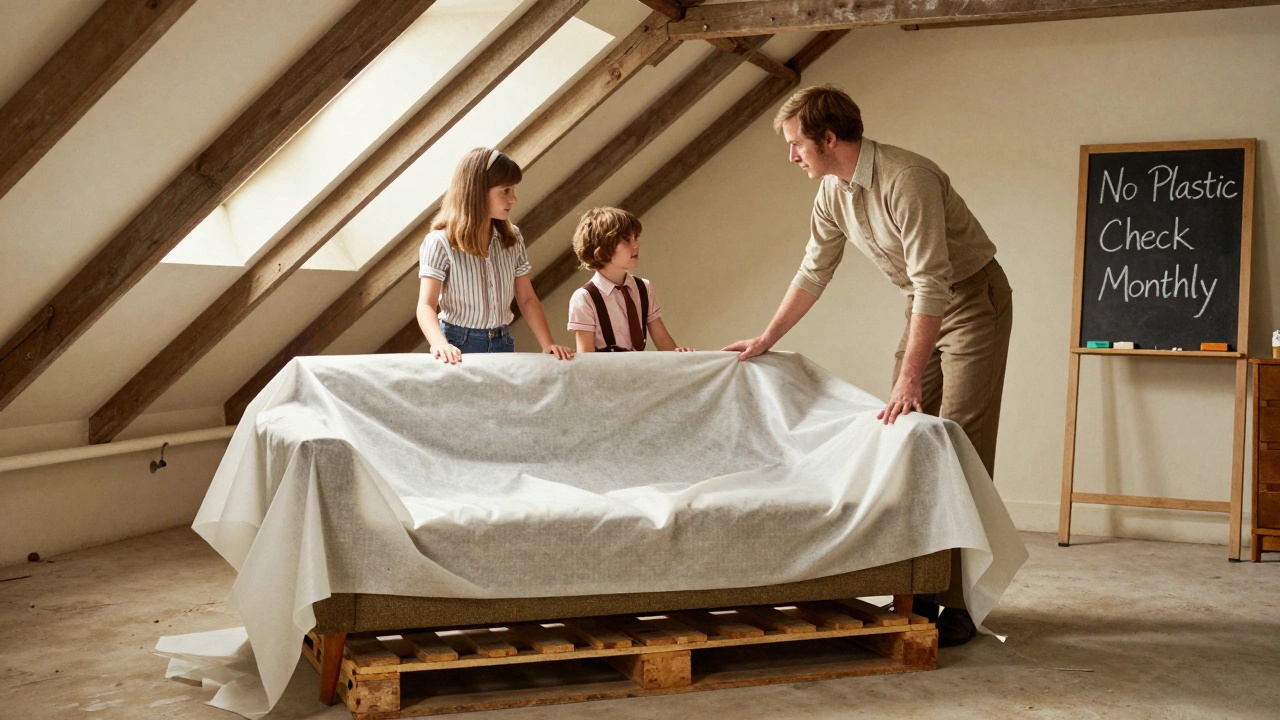
- Store off the floor-Place your couch on wooden pallets or thick cardboard. Never let it sit directly on concrete or damp ground. Moisture rises. Your couch will absorb it.
- Choose the right space-Avoid basements, garages, and sheds unless they’re climate-controlled. An attic might seem dry, but summer heat can bake foam and glue. A dry, cool, well-ventilated room is best.
- Check every 6-8 weeks-Even with the right cover, moisture can sneak in. Unwrap one corner, sniff, and feel for dampness. If it smells odd, air it out immediately.
- Don’t stack things on top-Weight crushes foam. Keep the couch alone, or if you must stack, use a flat, rigid board between items to distribute pressure.
What About Leather Couches?
Leather might seem tougher, but it’s just as vulnerable. Plastic wrap traps moisture against the surface, which can cause the finish to crack or peel. Leather needs to stay supple. Over time, trapped moisture breaks down the natural oils. The result? Cracking, stiffening, and irreversible damage.
For leather, use a breathable cotton cover or a specialized leather storage bag. You can also apply a light coat of leather conditioner before storing-it helps retain moisture without needing plastic.
When Plastic Might Be Okay (Rare Cases)
There’s one scenario where plastic might be acceptable: short-term transport. If you’re moving your couch across town in a truck and it’s raining, a plastic tarp over the top (not wrapped tightly) can keep rain off. But once you get to your destination, remove it immediately. Let the couch breathe before storing.
Never use plastic for storage longer than 2-3 days. Even then, it’s risky.
Real-Life Example: What Went Wrong
A client in Solihull wrapped her velvet sofa in plastic before moving into a new house. She stored it in her garage for 5 months while waiting for renovations. When she finally brought it inside, the fabric was stiff, the cushions smelled like wet dog, and the backrest had green mold patches under the plastic. She tried steam cleaning. It made it worse. She ended up buying a new couch for £1,800.
She could’ve saved £1,500 with a £35 cotton cover and a few pallets.
Bottom Line: Don’t Wrap It in Plastic
Wrapping your couch in plastic feels like protection. It’s not. It’s a slow-motion disaster. The right cover, the right storage spot, and a little patience will keep your couch looking new for years. Plastic doesn’t save money-it costs more in the long run.
Invest in a breathable cover. Elevate your couch. Check it every couple of months. Your future self will thank you.
Can I use a plastic drop cloth to cover my couch for storage?
No. Most plastic drop cloths are not breathable and will trap moisture, leading to mold, mildew, and fabric damage. Even if it looks thick or heavy, it’s still plastic. Use a cotton canvas or breathable non-woven cover instead.
How long can I store a couch in plastic before it gets damaged?
Even a few days can be risky, especially in humid climates like the UK. Mold can start forming in as little as 72 hours if moisture is trapped. For storage longer than 3 days, avoid plastic entirely.
Is it better to store a couch upright or on its side?
Store it upright if possible. Laying a couch on its side puts pressure on the frame and cushions, which can cause permanent sagging or internal damage. If you must lay it down, use a flat, rigid board underneath to distribute weight evenly.
Should I vacuum seal my couch for storage?
Never. Vacuum sealing removes all air, which compresses foam and springs beyond their design limits. It also traps moisture completely. This can permanently deform the cushion structure and damage internal springs or webbing.
What’s the best material for a couch storage cover?
Cotton canvas is the best. It’s durable, breathable, and blocks dust and pests. Non-woven polypropylene labeled as breathable is a good second choice. Avoid anything labeled as waterproof or plastic-those are traps for moisture.
If you’re planning to store your couch this year, skip the plastic. Get a proper cover, lift it off the ground, and check on it once in a while. It’s the only way to make sure your couch still looks good when you bring it back out.
Write a comment