

Bedroom Seating Compatibility Checker
Analysis Results
Top Recommendation
Alternative Option
Picture this: you walk into your bedroom after a long day. Instead of just a bed and a wardrobe, there’s a cozy spot to sit, read, or scroll through your phone without lying down. It feels luxurious, right? But then you look at the floor space. Suddenly, that dreamy seating area feels like an obstacle course. The question isn't just about whether it looks good-it's about whether it actually works for your life.
Putting a couch in the bedroom is one of those design choices that sparks debate. Interior designers love the aesthetic of a "hotel room" vibe, but practical homeowners worry about clutter and tripping hazards. So, is it a smart move or a space-wasting mistake? The answer depends entirely on how you use your room and how much square footage you have to play with.
The Case for Bedroom Seating
Why do people put sofas in bedrooms in the first place? It usually comes down to function and comfort. A bed is great for sleeping, but it’s not always the best place for other activities. If you like to get dressed while sitting down, a chair or couch makes getting socks and shoes on much easier. It’s also the perfect spot for putting on makeup or organizing jewelry without cluttering your nightstand.
For many, the bedroom is a multi-purpose sanctuary. Maybe you work from home and need a quiet corner to take calls. Maybe you’re an avid reader who prefers upright posture over lounging in bed. In these scenarios, a dedicated seating area keeps your sleep zone separate from your activity zone. This psychological separation can actually improve sleep hygiene by reinforcing that the bed is only for rest.
There’s also the social aspect. If you have guests staying over, or if you share a master suite with a partner who wants their own space, a couch provides a neutral ground. It turns the bedroom from a purely private cell into a more livable, lounge-like environment. Think of high-end hotels-they almost always include a seating area because it adds perceived value and comfort.
When It Becomes a Problem
Let’s be real: most bedrooms aren’t designed to hold two large pieces of furniture. If you have a standard double or queen-sized bed, adding a full-size couch might make the room feel cramped. Cramped spaces can lead to stress, not relaxation. If you find yourself constantly stepping around the sofa or if the path to the closet feels like a tightrope walk, you’ve gone too far.
Dust is another major factor. More furniture means more surfaces for dust to settle on. If you suffer from allergies, adding upholstered furniture to a room where you already spend eight hours a day breathing deeply might aggravate your symptoms. Fabric couches trap more allergens than leather or vinyl, so material choice matters here.
Then there’s the cost. Quality furniture isn’t cheap. Buying a couch specifically for the bedroom might not make financial sense if you already have ample seating in the living room. Unless you have a specific need-like a second TV setup or a dedicated reading nook-you might be spending money on underutilized space.
Sizing Up Your Space
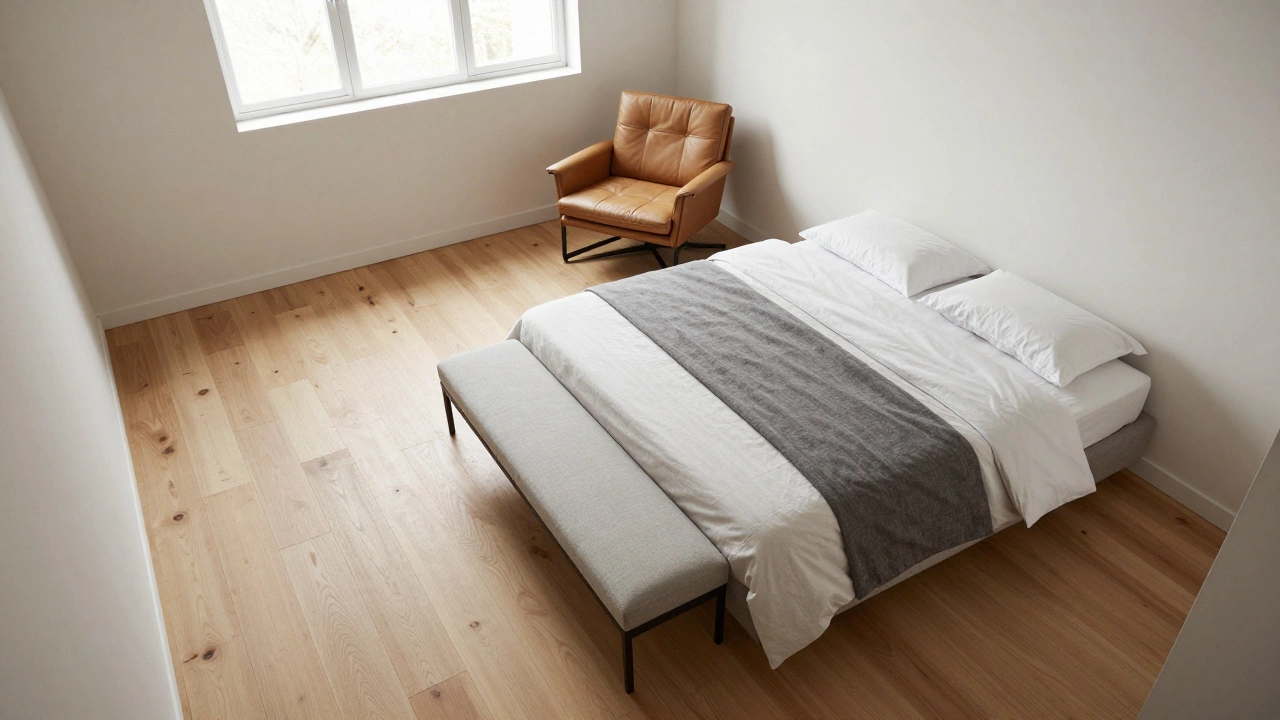
Before you buy anything, measure your room. Not just the length and width, but the clear floor space needed for movement. A good rule of thumb is to leave at least 24 inches (60 cm) of walking space between furniture pieces. If placing a couch against the wall leaves less than that distance to the bed or door, skip the couch.
Consider the scale of the furniture relative to the room. A massive sectional in a 10x12 foot bedroom will overwhelm the space. Look for smaller profiles. Love seats, which are typically 50-60 inches wide, are often the sweet spot for bedrooms. They provide enough seating for one person comfortably or two people snugly, without dominating the room.
Height matters too. Low-profile sofas can make a room feel larger because they don’t block sightlines. High-back chairs or tall sofas can make a small room feel boxy and confined. If your ceiling height is standard (8 feet), stick to lower furniture to maintain a sense of airiness.
Smart Alternatives to a Traditional Couch
If a full couch feels like too much, there are smarter ways to add seating without sacrificing floor space. These alternatives often serve dual purposes, maximizing utility in smaller rooms.
- Bench at the Foot of the Bed: A slim bench offers seating and a place to drop clothes or books. It fits neatly in the narrow gap between the bed and the opposite wall.
- Accent Chairs: Two small armchairs or a single accent chair take up significantly less visual weight than a sofa. They’re easy to move and can be tucked into corners.
- Ottomans with Storage: An ottoman serves as a footrest, a seat, and a storage bin for blankets or pillows. It’s versatile and doesn’t require back support, keeping the profile low.
- Window Seats: If you have a deep window sill, build or buy a cushioned seat. It utilizes dead space and provides a cozy nook without encroaching on the main floor area.
| Furniture Type | Space Required | Best For | Allergy Friendly? |
|---|---|---|---|
| Full Sofa | High (6+ ft) | Large master suites, lounging | No (fabric traps dust) |
| Love Seat | Medium (4-5 ft) | Reading, makeup application | Moderate |
| Accent Chair | Low (3 ft) | Corners, small gaps | Yes (if leather/vinyl) |
| Bench | Very Low (2 ft depth) | Foot of bed, entryway | Yes |
Styling Tips for a Cohesive Look
If you decide to bring a couch into the bedroom, it needs to look intentional, not accidental. The biggest mistake people make is bringing in a living room sofa that clashes with the bedroom’s mood. Bedrooms are generally softer, quieter, and more intimate than living rooms.
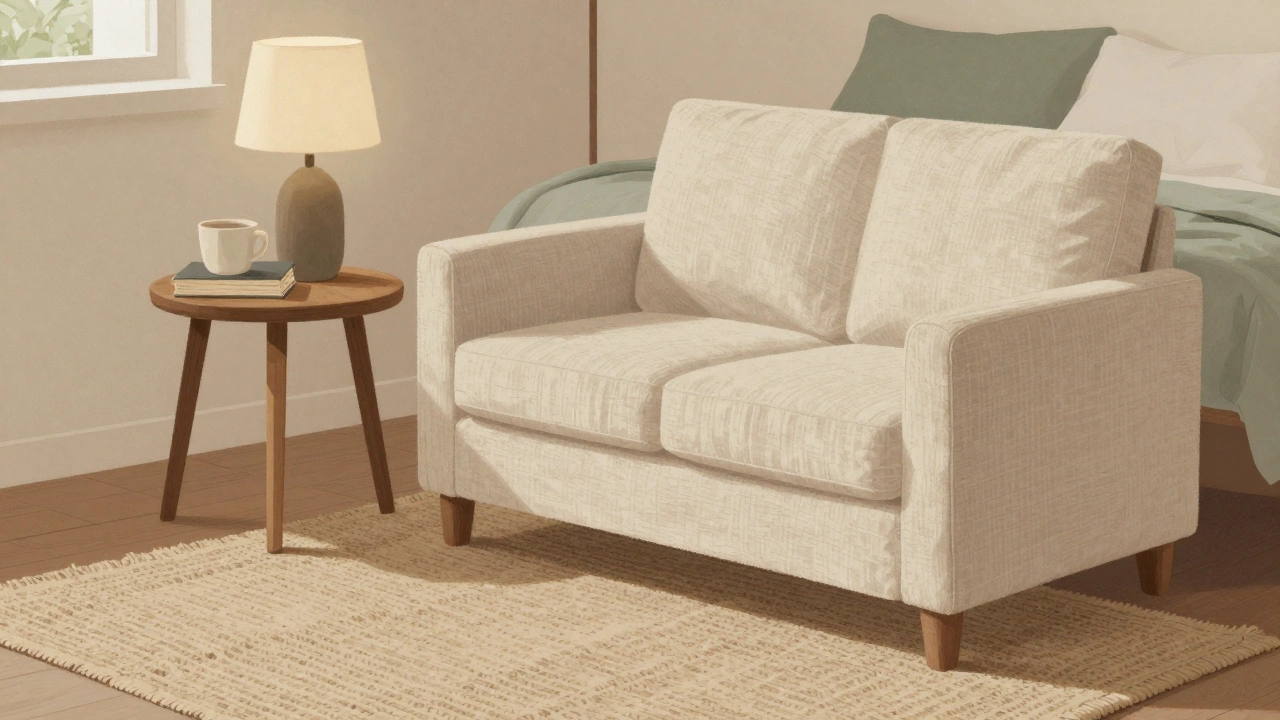
Stick to a consistent color palette. If your bedding is neutral, choose a couch in a complementary tone rather than a bold pattern that screams "living room." Texture plays a huge role here. A velvet or linen couch can blend seamlessly with bedroom textiles, whereas a shiny, modern plastic-looking sofa might feel out of place.
Lighting is key. Don’t rely solely on overhead lights. Add a floor lamp next to the couch to create a warm, inviting glow. This separates the seating area from the sleeping area visually. A small side table next to the couch completes the vignette, giving you a place for a drink or a book.
Finally, consider the rug. If your bedroom has carpet, a couch might sink in and look uneven. If you have hard floors, a rug under the couch can define the seating area and add warmth. Just ensure the rug is large enough so the front legs of the couch sit on it, anchoring the piece in the space.
Who Should Skip the Couch?
Not everyone needs extra seating in the bedroom. If you live in a studio apartment or a tiny flat, every square inch counts. In these cases, multifunctional furniture like a sofa bed or a Murphy bed with integrated seating is a better investment. You want flexibility, not fixed furniture that limits your options.
If you rarely spend time in your bedroom except to sleep, a couch is unnecessary clutter. Ask yourself: what will I do on this couch? If the answer is "nothing specific," save your money and keep the floor space open. Open space feels cleaner and calmer, which supports better rest.
Parents of young children might also reconsider. Kids often use beds for playing, and adding a couch creates more places for toys to hide and more surfaces to climb on. Safety and simplicity should win here.
What size couch fits in a small bedroom?
For a small bedroom, avoid full-size sofas. Opt for a love seat (50-60 inches wide) or a compact accent chair. Measure your available wall space and subtract at least 12 inches on each side for clearance. A depth of 30-35 inches is ideal to prevent blocking pathways.
Is a couch better than a chair in the bedroom?
It depends on your needs. A couch offers more lounging space and can accommodate two people, making it better for reading or watching TV. A chair takes up less space and is easier to arrange in tight corners. If you only need a spot to put on shoes, a chair or bench is sufficient.
Can a couch replace a nightstand?
No, a couch cannot functionally replace a nightstand. Nightstands provide surface area for lamps, phones, and glasses within arm's reach of the bed. A couch is too far away and lacks the stability for heavy items. However, a small side table next to a bedroom couch can serve a similar purpose for that seating area.
How do I clean a couch in the bedroom?
Vacuum the couch weekly to remove dust and pet hair. Use fabric-specific cleaners for stains. Since bedrooms accumulate skin cells and dust mites, consider using a vacuum with a HEPA filter. Leather couches are easier to wipe down but may show scratches more easily in a high-traffic room.
Does putting a couch in the bedroom increase property value?
Furniture generally does not increase property value unless it is built-in. However, staging a bedroom with a cohesive seating area can make the home appear more spacious and luxurious to potential buyers. When selling, it’s often better to remove personal furniture to help buyers visualize their own style.
Write a comment