
Posture & Metabolic Health Checker
Evaluate your current workspace setup to see how it impacts your core engagement and metabolism.
Your Ergonomic Score: 0/60
Here is the hard truth that most fitness influencers won’t tell you: there is no specific sitting position that burns belly fat directly. You cannot sit your way to a six-pack any more than you can drive your car faster by turning the steering wheel harder. Spot reduction-the idea that you can lose fat from one specific area by exercising or positioning that area-is a myth. However, how you sit does impact your metabolism, digestion, and muscle engagement, which indirectly influences how your body manages weight.
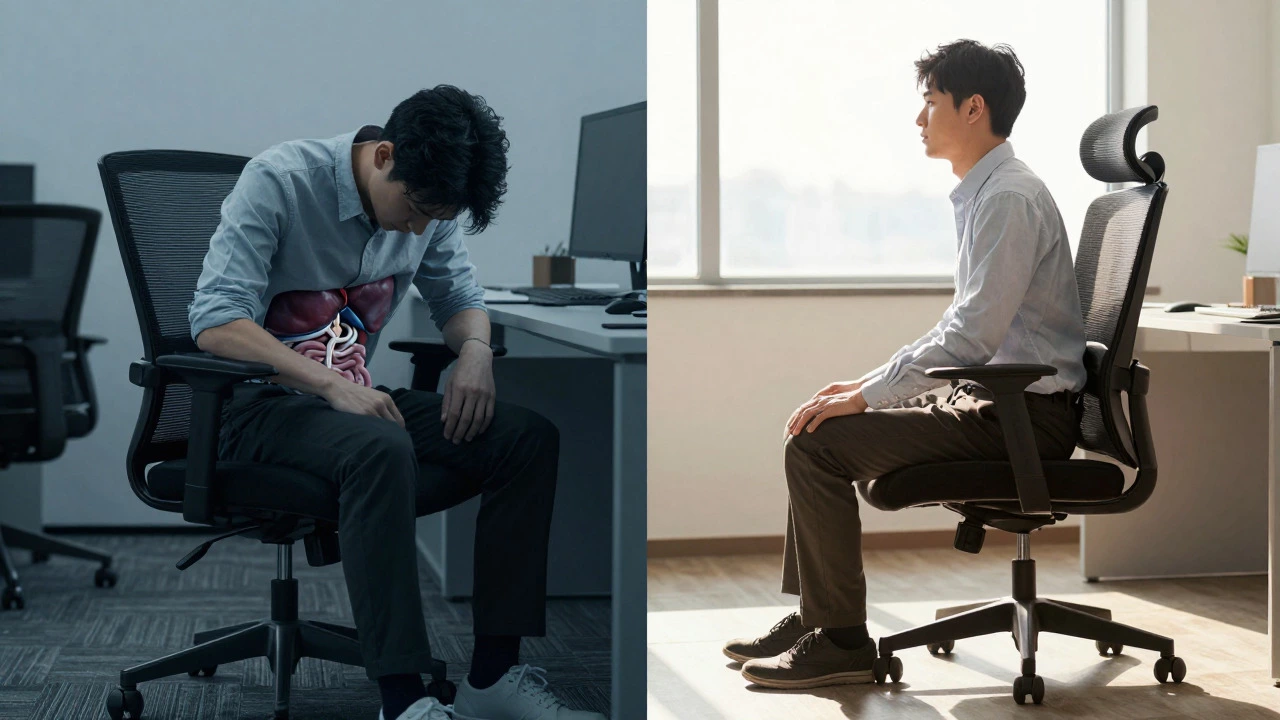
If you spend eight hours a day in an office chair that is designed to support proper spinal alignment and reduce physical strain during work, slouching isn't just bad for your back; it’s bad for your waistline. Poor posture compresses your abdominal cavity, restricts breathing, and signals your body to conserve energy rather than burn it. The "best" sitting position isn't about magic calorie burning; it's about optimizing your body's mechanics so you don't hinder your weight loss efforts through inactivity and poor form.
Why Posture Matters More Than You Think
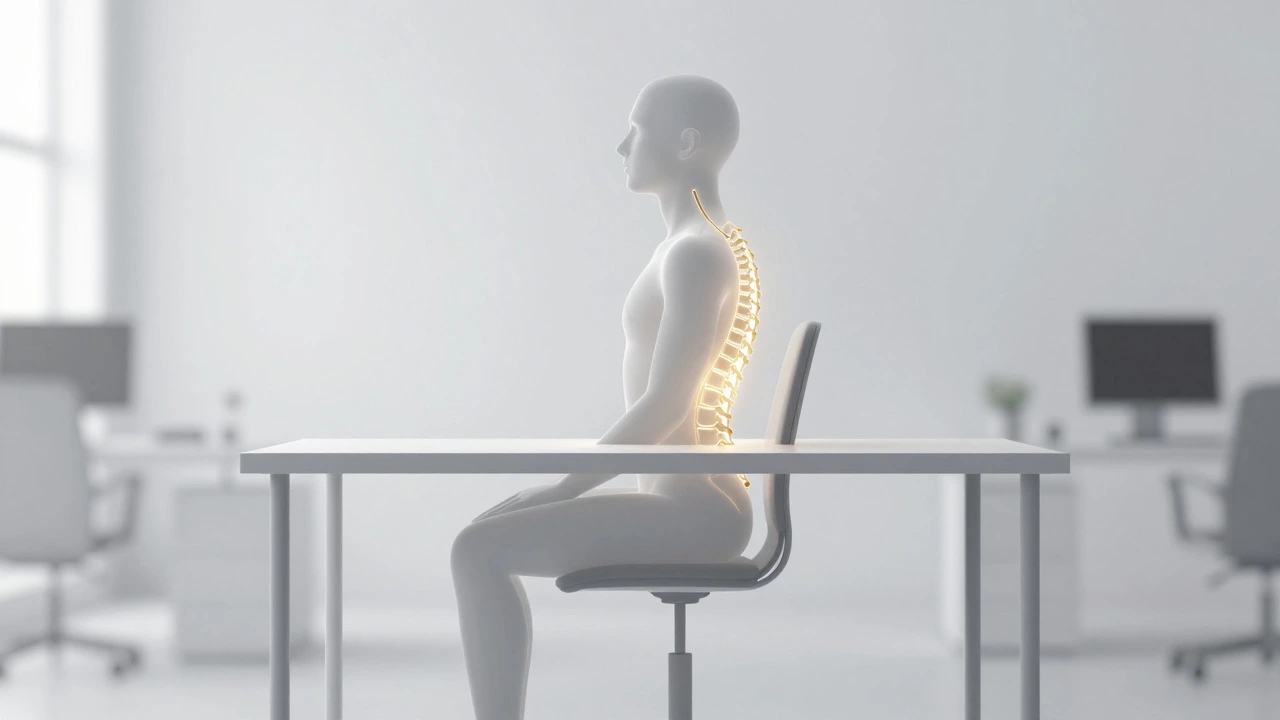
Your spine has natural curves that act as shock absorbers. When you slouch, you flatten these curves. This might feel comfortable in the short term, but it forces your core muscles-specifically the rectus abdominis and obliques-to relax completely. When these muscles are inactive for hours on end, they weaken over time. Weak core muscles mean less daily calorie expenditure because your body isn't working to stabilize your torso.
Consider the difference between standing up straight and slumping in a sofa. Standing requires micro-adjustments from your leg and core muscles to maintain balance. Slumping locks your joints into a static, low-energy state. Your metabolic rate drops. While this drop is small, combined with a sedentary lifestyle, it contributes significantly to visceral fat accumulation-the dangerous fat stored around your organs deep in the abdomen.
Furthermore, poor posture affects digestion. Slouching compresses the stomach and intestines. This can lead to bloating and slower digestion, making your belly look larger even if your actual fat percentage hasn't changed. It also impacts insulin sensitivity. Studies suggest that prolonged sitting, especially in poor postures, reduces the body's ability to regulate blood sugar effectively, leading to increased fat storage.
The Ideal Sitting Position for Metabolic Health
So, what should you do? If you are stuck at a desk, aim for the "neutral spine" position. This is not rigid military posture, but a balanced alignment that keeps your core engaged without tension. Here is how to achieve it:
- Hips Back: Sit all the way back in your chair. Your hips should be slightly higher than your knees (about 1-2 inches). This tilts your pelvis forward naturally, maintaining the lower back curve.
- Feet Flat: Both feet should rest flat on the floor. If they dangle, your circulation is restricted, and your lower back takes extra pressure. Use a footrest if your chair is too high.
- Knees at 90 Degrees: Your thighs should be parallel to the floor. Avoid crossing your legs, as this restricts blood flow and causes asymmetrical posture issues.
- Screen at Eye Level: Look straight ahead. If you look down at a laptop, your head pulls forward, straining your neck and forcing your shoulders to round. This collapses your chest and compresses your diaphragm.
- Elbows Supported: Keep your elbows close to your body and bent at roughly 90 degrees. Rest them on armrests or the desk. Floating arms cause shoulder tension.
In this position, your core muscles are lightly engaged to maintain stability. You aren't flexing hard, but you aren't turned off either. This constant, low-level engagement helps prevent muscle atrophy and keeps your metabolism humming slightly higher than in a slumped position.
The Role of Office Chairs in Weight Management
Your chair is a tool. A standard dining chair offers no lumbar support, forcing you to slouch after 20 minutes. A cheap mesh chair might sag, creating a hammock effect that pulls your spine out of alignment. An ergonomic task chair is a specialized seat designed to adjust to individual body dimensions to promote healthy posture changes the game. Look for adjustable lumbar support that fits the curve of your lower back. This support allows you to sit upright without muscular effort, freeing up your energy for other tasks.
However, even the best chair has a limit. The human body was not designed to sit still for eight hours. The concept of "sitting is the new smoking" exists for a reason. Prolonged static sitting decreases lipoprotein lipase activity, an enzyme that helps break down fats in the blood. When this enzyme slows down, fat accumulates more easily.
| Feature | Standard Dining Chair | Basic Office Chair | Ergonomic Task Chair | Standing Desk Converter |
|---|---|---|---|---|
| Lumbar Support | None | Fixed/Low | Adjustable/High | N/A (Standing) |
| Core Engagement | Low (Slouching) | Medium | Optimal (Neutral) | High (Active) |
| Circulation Impact | Poor (Hard edges) | Moderate | Good (Waterfall edge) | Excellent |
| Metabolic Boost | Minimal | Low | Moderate | Significant |
| Best For | Eating only | Short tasks | All-day work | Alternating positions |
Beyond Sitting: The Power of Movement
If you want to reduce belly fat, your strategy must go beyond finding the perfect pose. The most effective approach is dynamic sitting. This means changing positions frequently. Try this routine:
- Sit Properly: Spend 45 minutes in the neutral spine position described above.
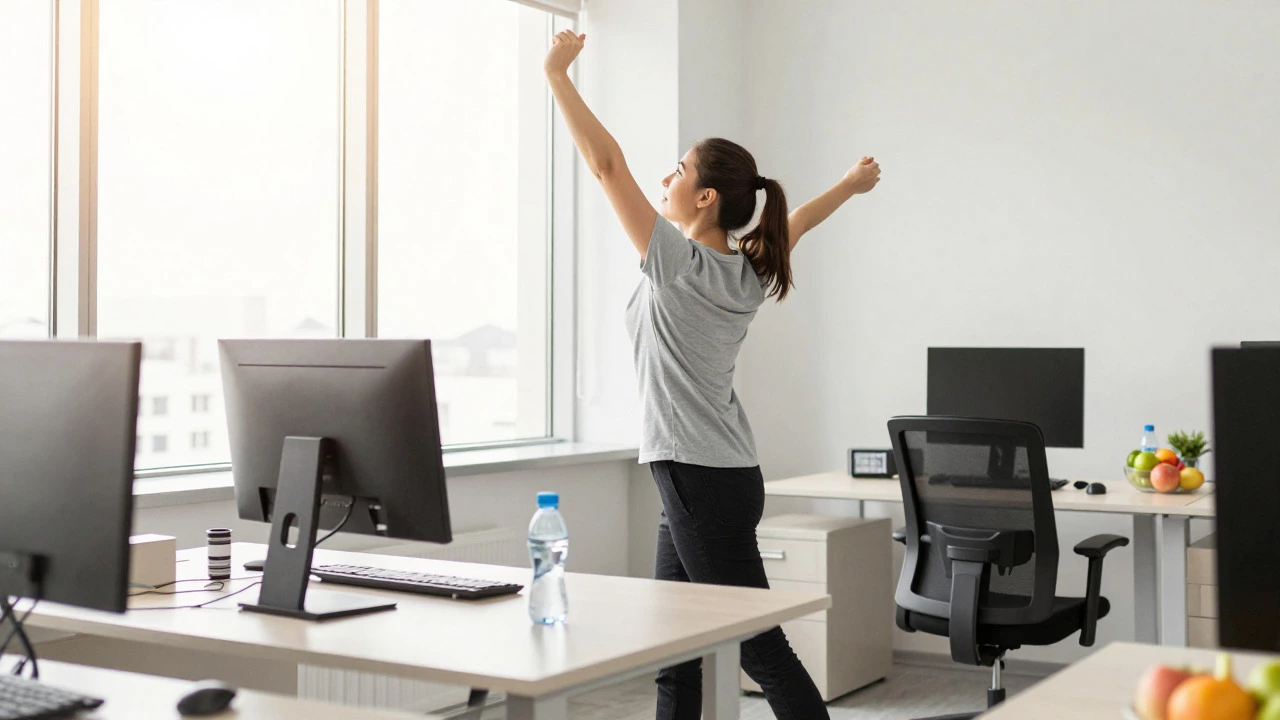
- Stand Up: Stand for 5 minutes. Stretch your hamstrings and glutes. Walk to get water. This breaks the cycle of inactivity.
- Lean Forward: Occasionally lean forward slightly from the hips, keeping your back straight. This engages the abs differently and stretches the lower back.
- Use a Stability Ball? Some people use exercise balls as chairs. While this forces core engagement, it lacks support and can lead to fatigue and poor posture over long periods. It’s better for short bursts (30 mins max) than all-day use.
Walking is far superior to any sitting position for fat loss. A brisk 10-minute walk after lunch lowers blood sugar spikes and activates muscles that sitting deactivates. Aim to interrupt every hour of sitting with 5 minutes of movement. This simple habit has been shown to improve insulin sensitivity and reduce visceral fat accumulation over time.
Diet and Lifestyle: The Real Drivers
You can have perfect posture, but if you consume more calories than you burn, belly fat will accumulate. Sitting position is a minor factor compared to diet and overall activity level. Focus on reducing processed sugars and refined carbs, which are primary drivers of abdominal fat. Increase protein intake to preserve muscle mass while losing weight. Muscle tissue burns more calories at rest than fat tissue, so maintaining strength is key.
Stress also plays a huge role. High cortisol levels, often caused by chronic stress, promote fat storage in the abdominal area. Poor posture can increase physical stress on the body, creating a feedback loop. By improving your sitting position, you reduce physical strain, which may help lower overall stress levels. Combine good posture with adequate sleep and stress management techniques like meditation or deep breathing.
Common Myths Debunked
Myth: Twisting your torso while sitting burns fat. Reality: Torso twists engage the obliques, which is great for muscle tone, but they burn negligible calories. You’d need to twist thousands of times to see a measurable change in fat loss. Do them for core strength, not weight loss.
Myth: Leaning back relaxes the belly and helps digestion. Reality: Leaning back excessively flattens the lower back and can compress the stomach if done incorrectly. Moderate recline (100-110 degrees) is actually healthier for the spine than sitting upright at 90 degrees, as it distributes weight evenly. Just ensure your lumbar support is adjusted.
Myth: Wearing a waist trainer while sitting reduces belly fat. Reality: Waist trainers temporarily compress the abdomen, making you look smaller. They do not burn fat. In fact, they can weaken core muscles and impair breathing and digestion, potentially worsening long-term posture and metabolic health.
Practical Steps to Start Today
Start by auditing your current setup. Is your monitor too low? Are your feet dangling? Make small adjustments first. Invest in a chair that supports your body type. If you work from home, consider a standing desk converter to alternate between sitting and standing. Set a timer to remind you to move every hour. Remember, consistency beats intensity. Small, sustainable changes in how you sit and move throughout the day will yield better results than extreme measures.
Finally, be patient. Reducing belly fat takes time. Improving posture takes practice. Don't expect overnight miracles. Focus on building habits that support your overall health. Good posture makes you look taller, more confident, and yes, slimmer. But real fat loss comes from a combination of nutrition, exercise, and active living. Let your chair support you, not define your results.
Does sitting up straight burn belly fat?
Sitting up straight does not directly burn belly fat. However, it engages core muscles slightly more than slouching, which can contribute to a higher metabolic rate over time. It also prevents the compression of the abdomen that makes belly fat appear more prominent. For actual fat loss, combine good posture with a calorie deficit and regular exercise.
What is the best chair for reducing belly fat?
No chair burns fat directly. However, an ergonomic task chair with adjustable lumbar support helps maintain a neutral spine, encouraging core engagement and preventing slouching. This supports better posture and metabolism. Alternating between sitting and standing using a standing desk converter is even more effective for metabolic health.
Can poor posture make my belly look bigger?
Yes. Slouching compresses the abdominal cavity and pushes internal organs forward, making the belly protrude. It also weakens core muscles, reducing their ability to hold the abdomen in. Improving posture can instantly make your midsection appear flatter and more toned, even without weight loss.
How long should I sit before standing up?
Aim to stand up and move for at least 5 minutes every hour. Research suggests that breaking up prolonged sitting periods improves insulin sensitivity and circulation. Even short walks or stretches can counteract the negative metabolic effects of sitting.
Is leaning back better than sitting upright?
Leaning back slightly (100-110 degrees) is often healthier for the spine than sitting perfectly upright at 90 degrees, as it distributes weight across the backrest rather than just the discs. However, ensure your chair provides adequate lumbar support to maintain the natural curve of your lower back. Excessive reclining without support can lead to slouching.
Do exercise ball chairs help lose belly fat?
Exercise ball chairs require constant core engagement to maintain balance, which can strengthen abdominal muscles. However, they do not burn significant calories. They can be useful for short periods to vary your posture, but they lack the support needed for all-day use and may lead to fatigue or poor form if used exclusively.
What exercises can I do while sitting to target belly fat?
While no exercise burns fat specifically from the belly, seated movements like pelvic tilts, seated crunches, and torso twists can strengthen core muscles. These exercises improve muscle tone and posture but should be combined with full-body workouts and cardiovascular exercise for effective fat loss.
How does stress affect belly fat and posture?
Chronic stress increases cortisol levels, which promotes fat storage in the abdominal area. Stress also leads to muscle tension and poor posture, such as hunching shoulders. Improving posture can reduce physical strain, helping to lower stress levels. Managing stress through relaxation techniques supports both better posture and reduced belly fat.
Write a comment