
Decking Material Selector
Your Project Profile
Select your options above and click the button to see which decking material suits your needs best.
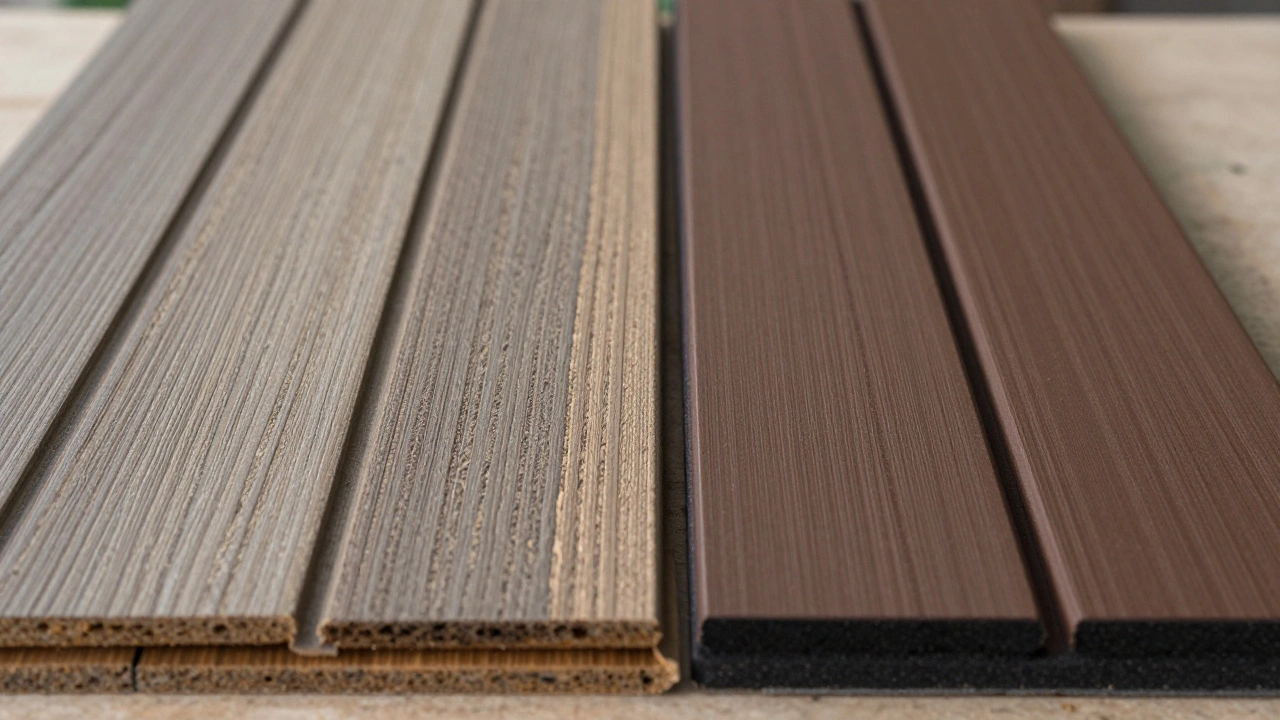
Have you ever stood in a garden center, staring at two piles of greyish-brown planks, wondering if they’re just different brands of the exact same thing? It’s a common confusion. Both Trex is a leading brand of composite decking made from reclaimed wood fibers and recycled plastics. and POLYWOOD is a premium brand of all-plastic outdoor lumber known for its durability and low maintenance. promise to save you from sanding, staining, and rotting. Both look like wood but don’t act like it. But are they actually the same product under different labels?
The short answer is no. While they share the same goal-replacing traditional timber-they are fundamentally different materials with distinct manufacturing processes, price points, and performance characteristics. Confusing them could lead to buying the wrong material for your project, whether you’re building a deck or choosing patio furniture.
Key Takeaways
- Material Composition: Trex is a hybrid of wood fiber and plastic (WPC), while POLYWOOD is 100% high-density polyethylene (HDPE) plastic.
- Maintenance: POLYWOOD requires zero sealing or painting; Trex needs regular cleaning to prevent mold and mildew growth on the wood fibers.
- Durability: POLYWOOD is more resistant to moisture absorption and cracking, making it better for harsh climates or direct water exposure.
- Cost: Trex is generally more affordable upfront, whereas POLYWOOD commands a premium price due to its longevity and warranty.
- Best Use: Choose Trex for standard decking budgets; choose POLYWOOD for high-traffic areas, furniture, or coastal environments.
Understanding the Core Difference: Wood Plastic Composite vs. All-Plastic
To understand why these two aren't interchangeable, we need to look at what they’re made of. This isn’t just marketing jargon; the ingredients dictate how the material behaves in the rain, the sun, and underfoot.
Trex is classified as a Wood Plastic Composite (WPC). Imagine taking sawdust-the waste product from lumber mills-and mixing it with recycled plastic bags and bottles. You heat this mixture and extrude it into boards. The result contains about 55% wood fiber and 45% plastic. Because it still has wood in it, it retains some natural properties of wood, such as the ability to absorb small amounts of moisture and the potential for organic growth like algae or mold if not cleaned regularly.
POLYWOOD, on the other hand, is an all-plastic lumber. It is made entirely from High-Density Polyethylene (HDPE). Think of the sturdy plastic milk jugs or detergent bottles you recycle. POLYWOOD shreds these containers, cleans them, and melts them down into solid, dense boards. There is zero wood content. This means it cannot rot, splinter, or support biological growth because there is no organic matter for bacteria or fungi to feed on.
| Feature | Trex (WPC) | POLYWOOD (All-Plastic) |
|---|---|---|
| Primary Composition | ~55% Wood Fiber, ~45% Recycled Plastic | 100% Recycled HDPE Plastic |
| Moisture Absorption | Low, but present (can swell slightly) | Negligible (virtually waterproof) |
| Mold & Mildew Resistance | Resistant, but can grow on surface if dirty | Highly resistant (no food source for mold) |
| Splintering | Very rare, but possible with damage | Impossible |
| Weight | Heavier due to wood density | Lighter and easier to cut/drill |
| Recyclability | Difficult to recycle due to mixed materials | Fully recyclable back into new products |
Performance in Real-World Conditions
You might be thinking, "If both last forever, does it really matter which one I pick?" In theory, yes. In practice, the difference becomes obvious when you live with the material for five years.
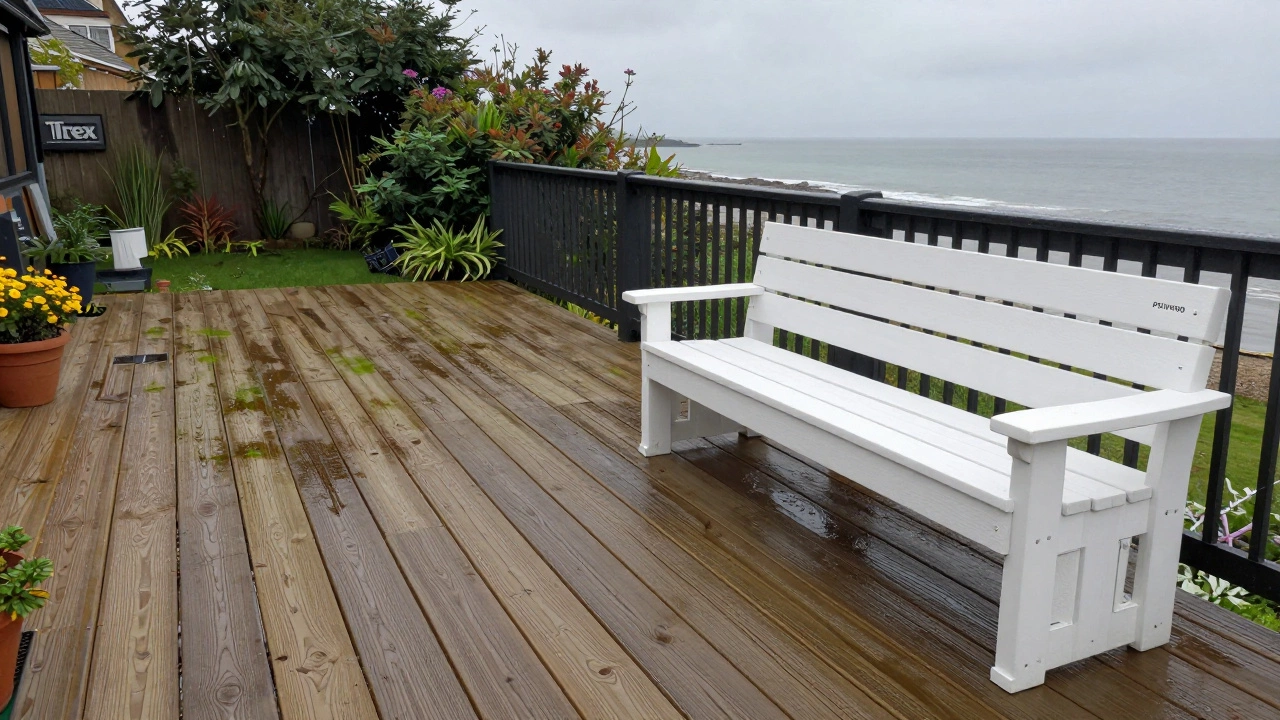
Weather Resistance Living in Birmingham, where rain seems to have a permanent residence permit, moisture is the enemy of outdoor structures. Trex handles rain well, but because it contains wood fibers, it can absorb tiny amounts of water over time. In freeze-thaw cycles, this absorbed moisture can sometimes cause minor expansion or contraction. POLYWOOD, being pure plastic, doesn’t care about the rain. It sits in puddles without absorbing a drop. If you live near the coast, salt air won’t degrade POLYWOOD either. Trex holds up fine, but POLYWOOD is often the preferred choice for seaside boardwalks because it never corrodes or rusts.
Heat Retention Here’s a trade-off you need to know. Dark colors absorb heat. Since POLYWOOD is plastic, it can get hot in direct sunlight, especially in black or dark brown shades. Trex, having wood fibers, tends to stay slightly cooler to the touch than solid plastic alternatives, though newer Trex lines with capped technology have improved this significantly. If you’re barefoot most of the time, lighter colors in either material will keep your feet happier.
Scratches and Dents Neither material is invincible. Heavy furniture dragged across Trex can leave scratches, and because it’s harder, those scratches can sometimes show the lighter core underneath. POLYWOOD is softer and more flexible. It resists scratching better in terms of appearance because the color goes all the way through the board. If you scratch POLYWOOD, it looks the same before and after. However, POLYWOOD can dent under extreme point pressure, whereas Trex is stiffer and less likely to indent.
Maintenance: The True Cost of Ownership
This is where most people make their decision. We buy composite materials to avoid work. So, which one actually delivers on that promise?
Trex Maintenance Trex is marketed as low-maintenance, and it is compared to pressure-treated pine. But "low-maintenance" doesn’t mean "no-maintenance." Because of the wood content, Trex can develop a layer of dirt, pollen, and eventually mold or mildew, particularly in shaded or damp areas. To keep it looking new, you need to sweep it weekly and wash it with a specialized cleaner once or twice a year. If you skip this, your deck might turn a greenish-grey color. It won’t rot, but it will look neglected.
POLYWOOD Maintenance POLYWOOD is truly hands-off. You can hose it down occasionally to remove dust, but you don’t need special cleaners. Since there’s no wood to harbor mold, it stays clean longer with less effort. You never have to seal, stain, paint, or wax it. For busy homeowners who want to forget about their outdoor space until they use it, POLYWOOD wins on convenience.
Aesthetic Differences: Does It Look Like Wood?
If you love the look of natural timber, both brands offer options, but they achieve it differently.
Trex has invested heavily in aesthetics. Their top-tier lines feature embossed textures that mimic the grain of real wood very convincingly. From a few feet away, it’s hard to tell the difference. They also offer a wide range of colors, from greys to browns to redwoods. However, because it’s a composite, the texture can feel slightly artificial if you run your hand over it closely.
POLYWOOD comes in solid colors and smooth finishes. It doesn’t try to fake wood grain as aggressively. Instead, it offers a sleek, modern look. Some people prefer this uniform appearance for contemporary garden furniture or minimalist decks. If you want a rustic, cabin-style look, Trex’s textured boards are likely a better fit. If you want a clean, polished resort vibe, POLYWOOD’s smooth finish works beautifully.
Price and Value Proposition
Let’s talk money. Budget constraints often drive purchasing decisions more than technical specs.
Upfront Cost Trex is generally more accessible. You’ll find it in most major home improvement stores, and the price per linear foot is lower than POLYWOOD. For a large deck project, this difference can add up to thousands of pounds. POLYWOOD is a premium product. Its manufacturing process is more intensive, and the raw material costs are higher. You pay for the peace of mind and the lack of future maintenance.
Long-Term Value While Trex is cheaper to buy, consider the cost of ownership. If you spend hours cleaning your Trex deck every spring, factor in your time and the cost of cleaning supplies. POLYWOOD’s warranty is often longer and more comprehensive, covering fading, staining, and structural integrity for decades. If you plan to stay in your home for 20+ years, POLYWOOD might break even or save money by eliminating maintenance labor.
Which One Should You Choose?
There is no single "best" material, only the best material for your specific situation. Here is a quick decision guide based on common scenarios.
- Choose Trex if:
- You have a moderate budget and want a high-quality composite deck.
- You prefer the textured look and feel of real wood grain.
- You don’t mind spending a weekend a year washing your deck.
- You are installing a large area where cost-per-square-foot matters.
- Choose POLYWOOD if:
- You want zero maintenance and hate cleaning outdoor spaces.
- You live in a humid, rainy, or coastal climate.
- You are building garden furniture, benches, or picnic tables that see heavy public use.
- You prioritize sustainability and want a fully recyclable product.
- Budget is less of a concern than longevity and ease of care.
Environmental Impact
Both brands pride themselves on sustainability, but their approaches differ. Trex diverts millions of pounds of wood scraps and plastic bags from landfills each year. By combining waste streams, they create a useful product. However, recycling WPC at the end of its life is difficult because separating wood from plastic is energy-intensive.
POLYWOOD uses 100% post-consumer recycled plastic. At the end of its very long life, the material can theoretically be ground up and reused again, creating a closed-loop system. For eco-conscious buyers who prioritize circular economy principles, POLYWOOD’s all-plastic composition offers a clearer path to eventual recycling.
Can I use Trex screws with POLYWOOD?
Yes, but you should use stainless steel screws for both. POLYWOOD is softer than Trex, so pre-drilling holes is highly recommended to prevent splitting or cracking during installation. Always check the manufacturer's guidelines for fastener spacing and type to ensure your warranty remains valid.
Does POLYWOOD fade in the sun?
Like all outdoor materials, POLYWOOD will experience some color change over time due to UV exposure. However, it is manufactured with UV inhibitors to minimize fading. Most noticeable fading occurs in the first six months, after which the color stabilizes. Trex also fades slightly, but both brands offer warranties against excessive fading.
Is Trex better for decking than POLYWOOD?
Trex is widely considered the gold standard for residential decking due to its balance of price, availability, and aesthetic appeal. POLYWOOD is excellent for decking too, but it is often overkill for simple backyard decks unless you live in an extreme climate or want absolutely zero maintenance. POLYWOOD shines in applications like park benches, railings, and garden furniture.
Can I paint POLYWOOD?
No, you cannot paint POLYWOOD effectively. Paint will not adhere to the non-porous plastic surface and will peel off quickly. The beauty of POLYWOOD is that the color runs through the entire board, so you never need to paint or stain it. Trex also should not be painted, as it will void the warranty and the paint will fail.
Where can I buy Trex and POLYWOOD in the UK?
Availability varies by region. Trex is widely available through major DIY retailers and specialist decking suppliers across the UK. POLYWOOD is less commonly stocked in big-box stores and is often found through specialized outdoor furniture manufacturers or online retailers focusing on premium sustainable materials. Always check current stock levels before planning your project.
Write a comment