

Grey Couch Pillow Stylist
Not sure which pillows will make your grey sofa pop? Diagnose your sofa's undertone, pick a style vibe, and see recommended combinations instantly.
Hold a white paper next to your couch. Does it look blue/purple (Cool) or brown/yellow (Warm)?
Recommended Palette
You bought the grey couch. It’s sleek, it’s modern, and it matches absolutely everything-which is exactly why you’re now staring at it in frustration. A neutral sofa is a blank canvas, but without the right accents, it can feel cold, flat, or just plain boring. The question on everyone’s mind: what color throw pillows actually make a grey couch look expensive and intentional?
Here is the truth most decorators won’t tell you: there is no single "correct" answer. If someone tells you that yellow is always the best choice, they are wrong. The right color depends entirely on your floor, your walls, the specific shade of grey (warm vs. cool), and the mood you want to create. I’ve styled dozens of living rooms here in Birmingham, from Victorian conversions with dark wood floors to new-build flats with light laminate, and the rules change every time.
The Golden Rule: Contrast and Temperature
Before you buy a single cushion, you need to diagnose your grey. Not all greys are created equal. This is where most people mess up. They pick a "cool" blue-grey pillow for a "warm" beige-grey sofa, and the result looks muddy rather than chic.
Grey Sofa is defined as a seating furniture piece featuring upholstery in varying shades of grey, which acts as a neutral base for interior decoration. To style it correctly, you must first identify its undertone. Hold a pure white piece of paper next to your couch. Does the grey look slightly blue/purple? That’s a cool grey. Does it look slightly brown/yellow? That’s a warm grey (often called taupe or charcoal).
- Cool Greys: Pair best with blues, greens, purples, and crisp whites.
- Warm Greys: Look stunning with terracotta, mustard, rust, cream, and olive.
If you ignore temperature, even the most expensive velvet cushions will clash. Once you know your temperature, you can move on to the fun part: picking colors that pop.
Top Color Combinations That Actually Work
Let’s get specific. You don’t need a color wheel PhD to make this work. Here are five combinations that consistently deliver high-impact results in real homes, not just magazine spreads.
| Style/Vibe | Primary Color | Accent Color | Texture Tip |
|---|---|---|---|
| Modern Minimalist | Charcoal & White | Light Grey | Smooth cotton or linen |
| Bohemian Warmth | Terracotta/Rust | Mustard Yellow | Kilim patterns or fringe |
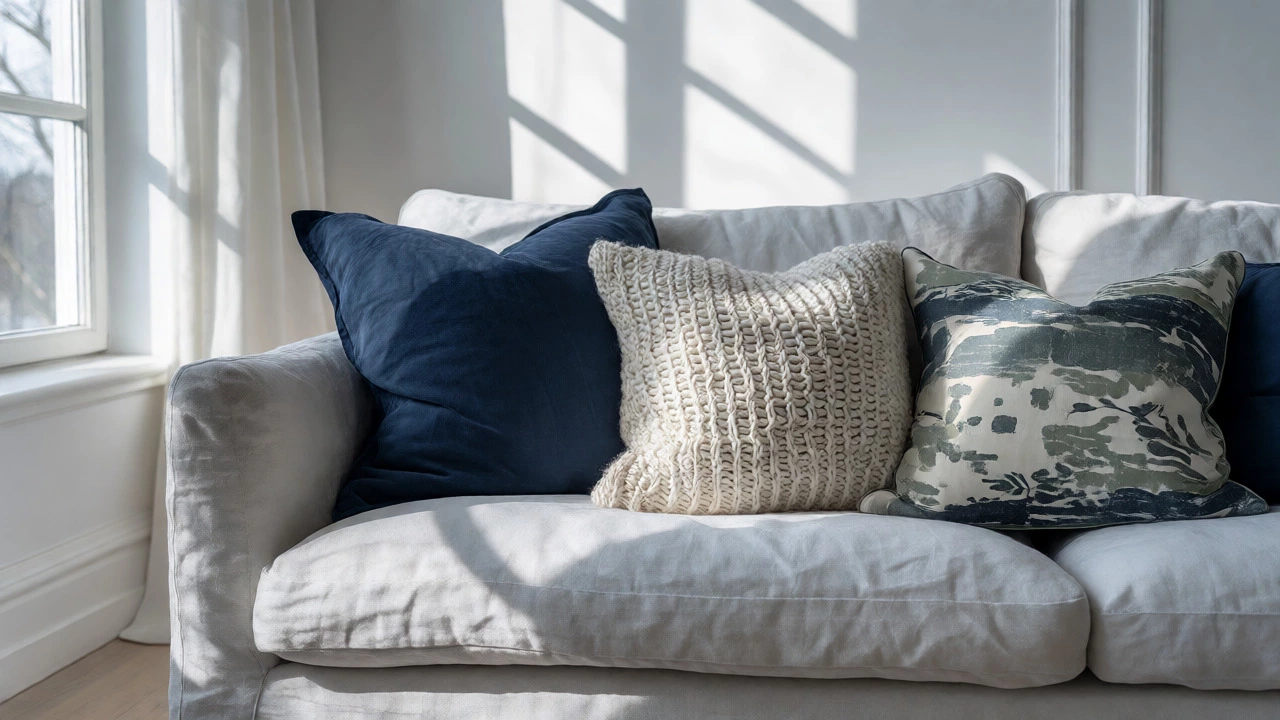
| Coastal Calm | Navy Blue | Sand/Cream | Chunky knit or rope details |
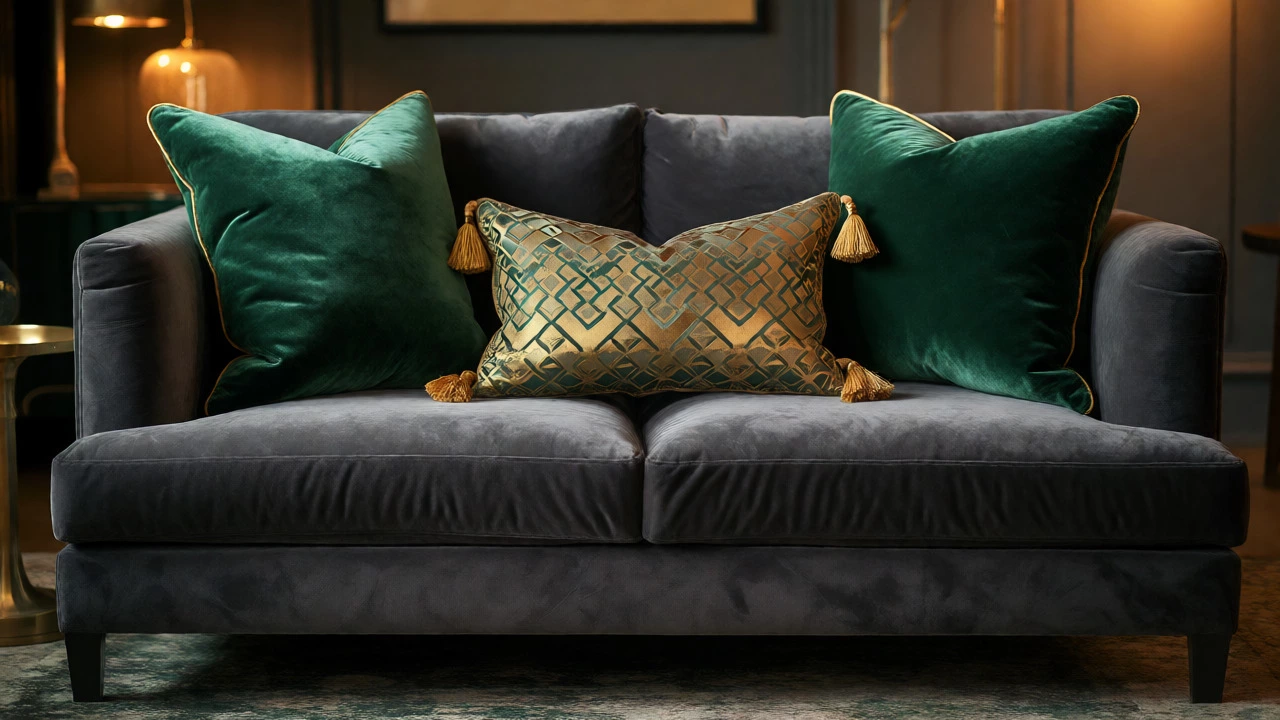
| Luxe Glamour | Emerald Green | Gold/Metallic | Velvet or silk |
| Scandi Hygge | Olive Green | Pale Pink | Wool or faux fur |
1. Navy Blue and Cream: The Safe Bet
If you are terrified of making a mistake, go navy. Navy Blue is a deep shade of blue that provides high contrast against light and medium greys while maintaining a sophisticated, non-aggressive palette. It works because it anchors the room. Light grey sofas can sometimes feel floaty; navy weighs them down visually. Add two solid navy pillows and one patterned pillow that mixes navy, white, and a hint of gold. This combo works in almost any lighting condition, whether you have north-facing windows in a UK apartment or bright south-facing sun in a suburban house.
2. Emerald Green and Gold: The Statement Maker
Want your living room to feel expensive? Use jewel tones. Emerald Green is a rich, saturated green hue that complements grey neutrals by adding depth and vibrancy without overwhelming the space. When paired with metallic accents-think brass zippers or gold tassels-it elevates a standard IKEA-style sofa into something that looks custom-made. This works exceptionally well if your grey couch is a darker charcoal. Lighter silver-greys might get lost against pale greens, so stick to deep emeralds or forest greens.
3. Mustard Yellow and Teal: The Energetic Duo
This is for the risk-takers. Yellow and grey are complementary opposites on the color wheel, meaning they create maximum visual energy. But be careful: bright lemon yellow can look cheap. Go for mustard or ochre. Pair it with teal or turquoise to balance the warmth. This combination screams mid-century modern. If you have wooden legs on your grey couch, this palette ties the wood tones into the rest of the room beautifully.
4. Blush Pink and Sage: The Soft Approach
Not everyone wants drama. If you prefer a calm, spa-like atmosphere, blush pink is surprisingly effective against grey. It softens the industrial feel of concrete or metal elements often found in grey-themed rooms. Sage green adds an organic touch that prevents the pink from looking too childish. This is perfect for bedrooms or nurseries where you want serenity over stimulation.
Beyond Color: Texture Is Your Secret Weapon
Here is where amateurs separate themselves from pros. You could pick the perfect colors, but if all your pillows are smooth polyester, the sofa will still look flat. Texture creates shadow, and shadow creates interest.
Mix at least three different textures in your arrangement. For example:
- A large square pillow in a smooth, matte fabric (like heavy cotton or linen).
- A smaller lumbar pillow in a tactile material (like chunky knit wool or boucle).
- An accent pillow with a sheen (like velvet or satin) or a rough texture (like jute or burlap).
Velvet is particularly powerful with grey couches. The way light hits velvet changes throughout the day, giving your static sofa a dynamic quality. In winter, swap out your linens for faux fur or sheepskin covers. It’s an easy seasonal update that makes the grey couch feel cozy rather than clinical.
The Pattern Playbook
Solid colors are great, but patterns add personality. The key is scale. Do not mix tiny geometric prints with large floral motifs unless you really know what you are doing. Stick to the rule of thirds: one large pattern, one small pattern, and solids to break them up.
Geometric patterns (chevrons, herringbone) work well with modern, clean-lined grey sofas. Florals soften up boxy sectionals. Abstract art prints are versatile enough to fit almost anywhere. If your grey couch has a subtle texture itself (like a nubby weave), keep the pillow patterns simple to avoid visual noise.
Common Mistakes to Avoid
I see these errors constantly when helping friends redecorate:
- Matching the wall color: If your walls are grey and your couch is grey, do not use grey pillows. You need contrast. Use a color that stands out against both.
- Too many sizes: Stick to standard sizes like 18x18 inches and 16x24 inches. Mixing wildly different sizes looks chaotic.
- Ignoring the rug: Your pillows should talk to your rug. If your rug has hints of orange, bring orange into your pillows. Cohesion comes from repetition of color across different surfaces.
- Buying sets: Never buy a pre-packaged set of four identical pillows. It looks like a hotel lobby. Curate your own mix.
How Many Pillows Do You Need?
It depends on the size of your couch. For a standard three-seater, start with three pillows per side. One large square, one lumbar, and one smaller accent. For a corner sofa or sectional, you’ll need more-aim for symmetry around the corners. Don’t overcrowd. You still need space to sit comfortably. If you have to remove pillows to sit down, you have too many.
Final Thoughts on Personalization
Ultimately, your home should reflect who you are. If you hate blue, don’t force navy pillows just because a blog said so. Love red? Use crimson velvet. Prefer earthy tones? Stick to browns and creams. The grey couch is forgiving. It absorbs mistakes better than a bold red or green sofa would. So experiment. Buy one pillow cover, test it for a week, and see how it feels in the morning light versus the evening lamp glow. That’s the only test that matters.
Does grey match with black pillows?
Yes, but use caution. Black and grey can look stark and masculine. To make it work, ensure there is significant contrast between the shades (e.g., light grey couch with black pillows) and introduce a third element, like white or metallic, to break up the monotony. Textured black fabrics like velvet work better than matte black.
Should throw pillows match the curtains?
They don't need to match exactly, but they should coordinate. If your curtains are solid, use patterned pillows that include the curtain color. If your curtains are patterned, use solid pillows pulled from one of the less dominant colors in the curtain print. Matching them exactly can sometimes look dated or overly planned.
What color pillows make a grey room look bigger?
Light colors reflect light, making spaces feel airier. Whites, creams, pale pastels, and light silvers are excellent choices for small rooms. Avoid heavy, dark colors like deep burgundy or black if you want to maximize the sense of space, as they absorb light and can make the area feel enclosed.
Can I mix patterns and solids on a grey couch?
Absolutely, and you should. A mix of solids and patterns creates visual interest and depth. A good formula is 50% solids, 50% patterns. Ensure the patterns vary in scale (large, medium, small) and share at least one common color to maintain cohesion.
Are leather pillows okay for a fabric grey couch?
Yes, mixing materials is a great design trick. Leather or faux-leather pillows add a sleek, modern edge and durable texture that contrasts nicely with soft fabric sofas. Brown leather pairs especially well with warm grey tones, while black leather suits cool greys.
Write a comment