
UK vs US Wardrobe Terminology Finder
Wardrobe
Tall hanging storageChest of Drawers
Tall folded storageTallboy
High drawer unitSideboard
Dining room storageClick a term on the left to see its American equivalent.
Have you ever watched an American movie or read a novel and noticed something odd about how people store their clothes? You might see characters walking into a small room attached to their bedroom, or perhaps they’re digging through a large wooden chest that looks suspiciously like a cabinet. If you are from the UK, Australia, or Europe, where the word "wardrobe" refers to a specific piece of freestanding furniture, this can be confusing. In the US, the concept of storage is split between architecture and furniture in ways that don't always translate directly.
The short answer is that there isn't just one single American equivalent to the British "wardrobe." Instead, the function is divided primarily between the closet (built-in) and the armoire (a tall, freestanding wooden cabinet used for storing clothes, often with hanging rails and shelves). However, depending on what exactly you are trying to buy or find, the term could also refer to a dresser (a low chest of drawers used for folding clothes) or a chest of drawers. Understanding these distinctions is crucial if you are moving to the States, shopping online from an American retailer, or simply trying to decorate a home with a transatlantic aesthetic.
The Built-In Solution: The Closet
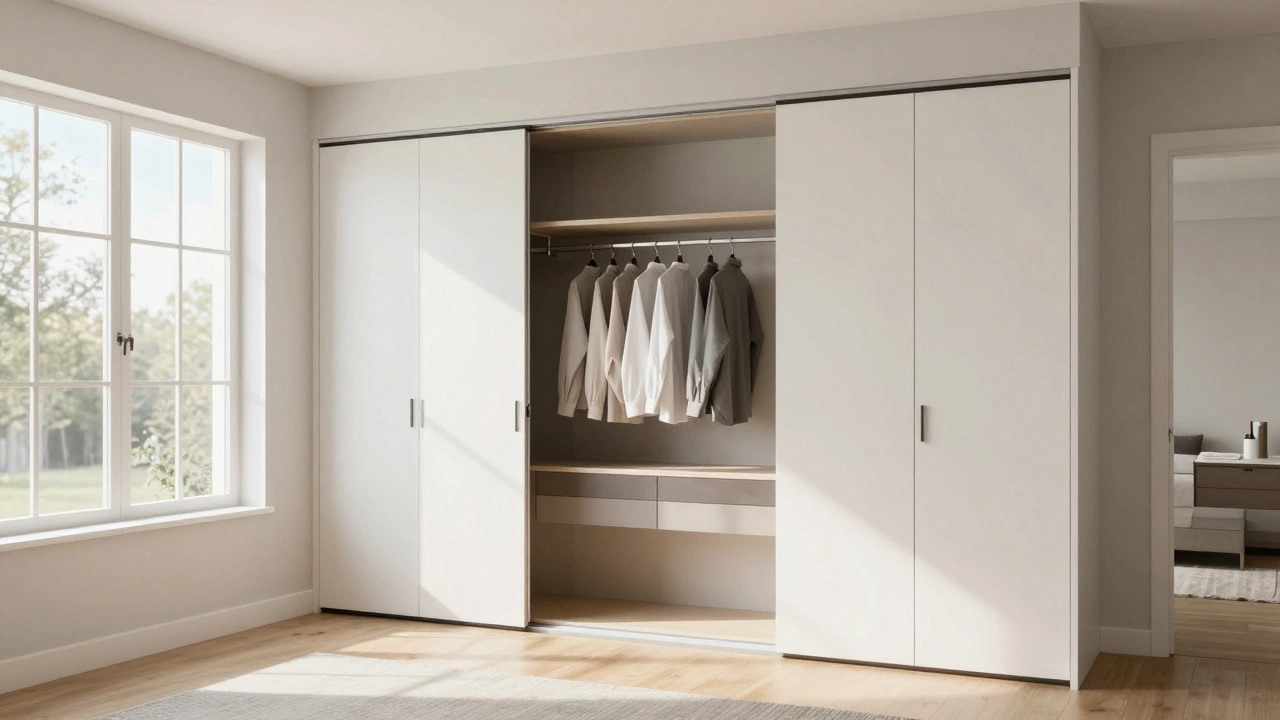
In the United Kingdom, it is common for older homes, especially Victorian terraces, to lack built-in storage. This necessity gave rise to the freestanding wardrobe as a standard fixture in almost every bedroom. In contrast, modern American housing construction prioritizes built-in storage. Since the mid-20th century, particularly after World War II, new homes in the US have been designed with walk-in closets or reach-in closets as standard features.
When an American says, "I put my clothes in the wardrobe," they usually mean they hung them up in their closet. A reach-in closet is a recessed space in the wall, covered by a door (often sliding or bifold), containing a metal rod for hanging clothes and sometimes a shelf above it. A walk-in closet is a dedicated small room within the bedroom suite, offering floor-to-ceiling shelving and multiple hanging rods.
This architectural difference changes how Americans think about furniture. Because the "hanging" function is handled by the house itself, Americans do not typically buy large, bulky wooden cabinets for their bedrooms unless they live in older buildings (like pre-war apartments in New York City) or tiny studios where built-ins are absent. For the average suburban homeowner, the closet *is* the wardrobe.
The Freestanding Alternative: The Armoire
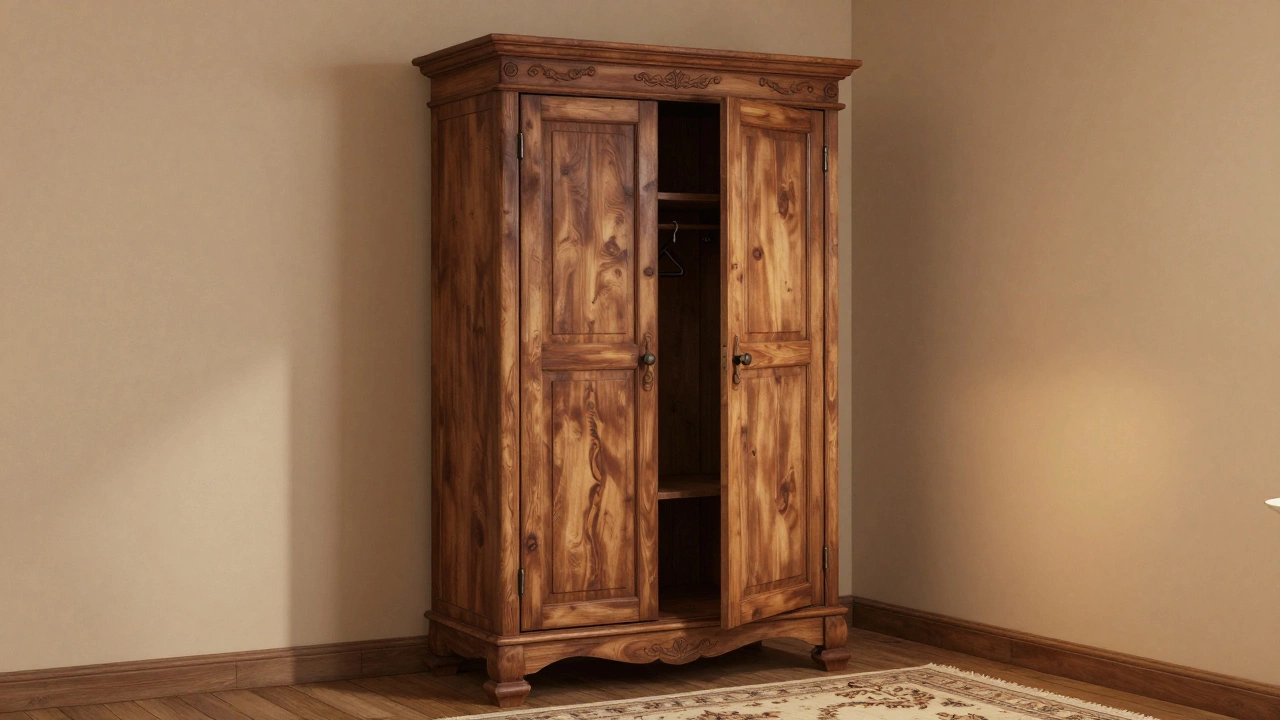
If you are looking for a piece of furniture that physically resembles the traditional British wardrobe-a tall, standalone unit made of wood with doors, shelves, and a hanging rail-the correct American term is an armoire. While the word has French origins, it is widely used in the US to describe this specific type of storage furniture.
However, there is a cultural nuance here. In the US, armoires are often viewed as decorative accents rather than essential utility items. They are popular in styles like Farmhouse, Rustic, or Vintage, but they are less common in modern minimalist interiors. An armoire tends to be larger and heavier than a typical dresser, often featuring intricate carvings or a more substantial footprint. If you search for "wardrobe" on major US retail sites like Wayfair or Amazon, you will mostly find results labeled as "armoires" or "closet organizers" that are portable.
| UK Term | Primary US Equivalent | Secondary US Equivalent | Key Difference |
|---|---|---|---|
| Wardrobe | Closet (Built-in) | Armoire (Freestanding) | US relies on architecture; UK relies on furniture. |
| Chest of Drawers | Dresser | Chest | "Dresser" implies a wide unit with a mirror; "Chest" is tall and narrow. |
| Sideboard | Buffet / Credenza | Console Table | Used for dining/storage, not clothing. |
The Drawer Confusion: Dresser vs. Chest
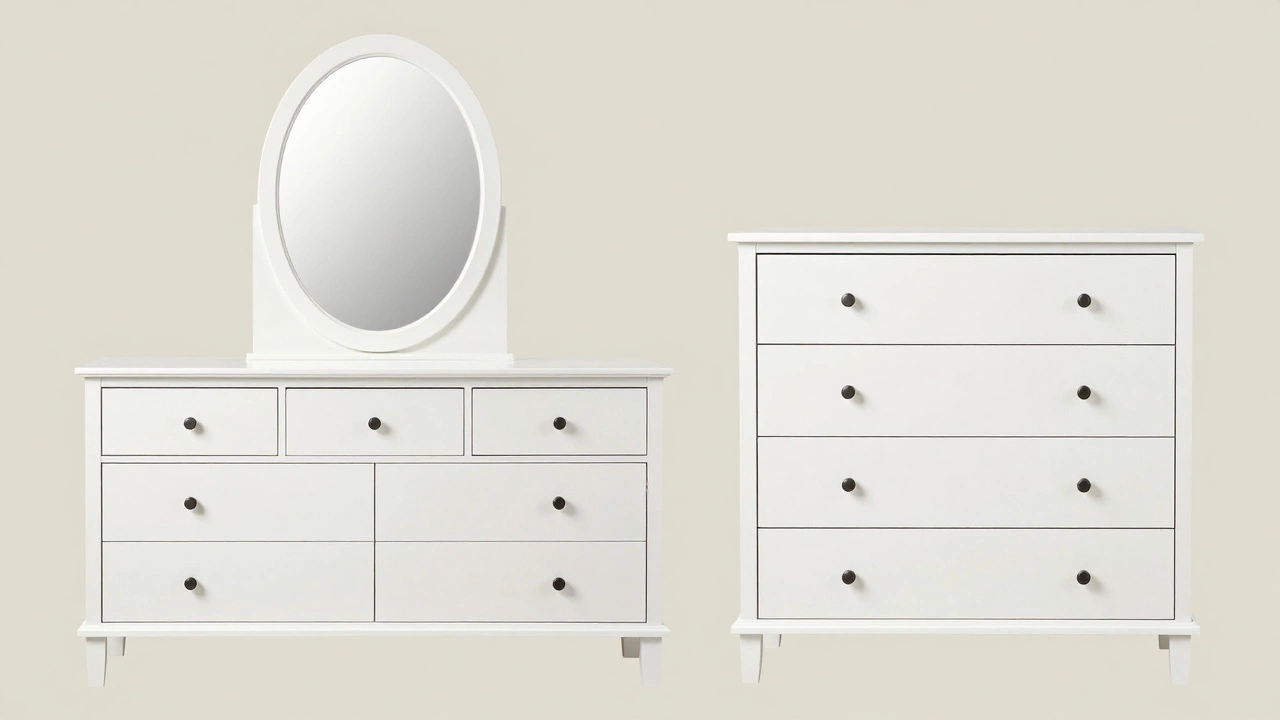
Another point of confusion arises when discussing folded clothes. In the UK, you might use a "chest of drawers" or a "tallboy." In the US, the terminology splits based on the shape and presence of a mirror. A dresser is typically a wide, low piece of furniture with several drawers, almost always accompanied by a matching mirror mounted on top or on the wall behind it. It is the primary surface for getting dressed.
A chest, on the other hand, is taller and narrower, with drawers stacked vertically. It does not come with a mirror. If you need to store folded sweaters, jeans, or underwear in an American home, you are likely using a dresser or a chest. These units complement the closet, which handles the hanging garments like suits, dresses, and shirts. This separation of duties-hanging in the closet, folding in the dresser-is the standard American bedroom layout.
Regional and Historical Variations
Not all American homes have closets. In historic cities like Boston, Philadelphia, or Chicago, many apartments were built before the standardization of built-in closets. In these cases, residents rely heavily on armoires, garment bags, or portable closet systems. Similarly, in high-density urban areas like Manhattan, studio apartments may lack closets entirely, forcing tenants to use space-saving solutions like over-the-door organizers or compact wardrobes imported from Asia or Europe.
The term "garment rack" is also prevalent in the US, particularly in fashion-forward circles or among renters who cannot modify walls. A garment rack is a simple metal frame with a hanging bar, used for displaying clothes or keeping frequently worn items accessible. It serves a similar purpose to a small, open wardrobe but is far less permanent and offers no protection from dust.
Shopping Tips for International Buyers
If you are searching for furniture online from an American retailer, your search terms matter. Searching for "wardrobe" may yield mixed results, including children's toy chests or small jewelry boxes. To find a true equivalent to a British wardrobe, try these strategies:
- Use "Armoire": This will give you tall, wooden, freestanding units with hanging space.
- Use "Closet Organizer System": If you need modular shelving and rods that fit inside a built-in closet or a small room.
- Check Dimensions Carefully: American furniture sizes can differ slightly from European standards. Always check the width, depth, and height in inches (and convert to centimeters if needed).
- Look for "Hutch": Sometimes, a hutch (a cabinet placed on top of a desk or table) is used for storage, though this is less common for clothing.
Additionally, be aware that American hardware standards differ. Drawer slides, hinges, and screw threads may not match those found in the UK or EU. If you are assembling flat-pack furniture, ensure you have the right tools or consider buying pre-assembled items if possible.
Why the Difference Matters for Interior Design
Understanding these terms helps you communicate better with designers, movers, and retailers. If you tell a US-based interior designer you want a "wardrobe," they might assume you mean a built-in closet design. If you clarify that you want a "freestanding armoire," they will source the correct furniture piece. This distinction affects room layout, lighting, and even the style of the bedroom. An armoire adds visual weight and texture to a room, while a closet is invisible until opened. Choosing between them depends on whether you prioritize aesthetics and flexibility (armoire) or space efficiency and integration (closet).
In summary, while the British wardrobe is a singular piece of furniture, its American counterparts are a system: the closet for hanging, the dresser for folding, and the armoire as a stylish alternative. Knowing which term to use ensures you get exactly what you need, whether you're renovating a home or just unpacking your first suitcase in a new country.
Is an armoire the same as a wardrobe?
Yes, in the US, an armoire is the closest freestanding equivalent to a British wardrobe. Both are tall, wooden cabinets used for storing clothes, typically featuring hanging rails and shelves. However, "armoire" is the preferred term in American English for this specific piece of furniture.
Do all American houses have closets?
Most modern American homes built after the 1950s have built-in closets in bedrooms and bathrooms. However, older homes, particularly in historic city centers, may lack them. In such cases, residents use armoires, garment racks, or portable closet systems.
What is the difference between a dresser and a chest of drawers?
In the US, a dresser is typically wider and lower, often sold with a matching mirror. A chest of drawers (or simply "chest") is taller and narrower, without a mirror. Both are used for storing folded clothes.
Can I buy a British-style wardrobe in the US?
Yes, but you may need to search for "armoire" or import from specialized retailers. Major US stores like IKEA sell wardrobes, but they are often designed to fit smaller spaces or integrate with other modular systems. Ensure you check dimensions, as US rooms are generally larger than European ones.
What should I call a closet organizer in the US?
You can call it a "closet organizer," "portable closet," or "closet system." Brands like ClosetMaid or Rubbermaid offer various options, from wire shelving units to plastic drawer systems that fit inside existing closets.
Write a comment