
Couch Durability Calculator
How durable is your couch?
Answer these 4 simple questions about your couch's materials to get your durability score and lifespan estimate.
When you buy a couch, you don’t want it to fall apart in two years. You want something that can handle kids, pets, movie nights, and lazy Sundays for a decade or more. So what kind of couch is actually the most durable? It’s not just about price or style. It’s about the materials inside, how it’s built, and what it’s covered in. Let’s cut through the marketing noise and show you exactly what holds up over time.
Frame matters more than you think
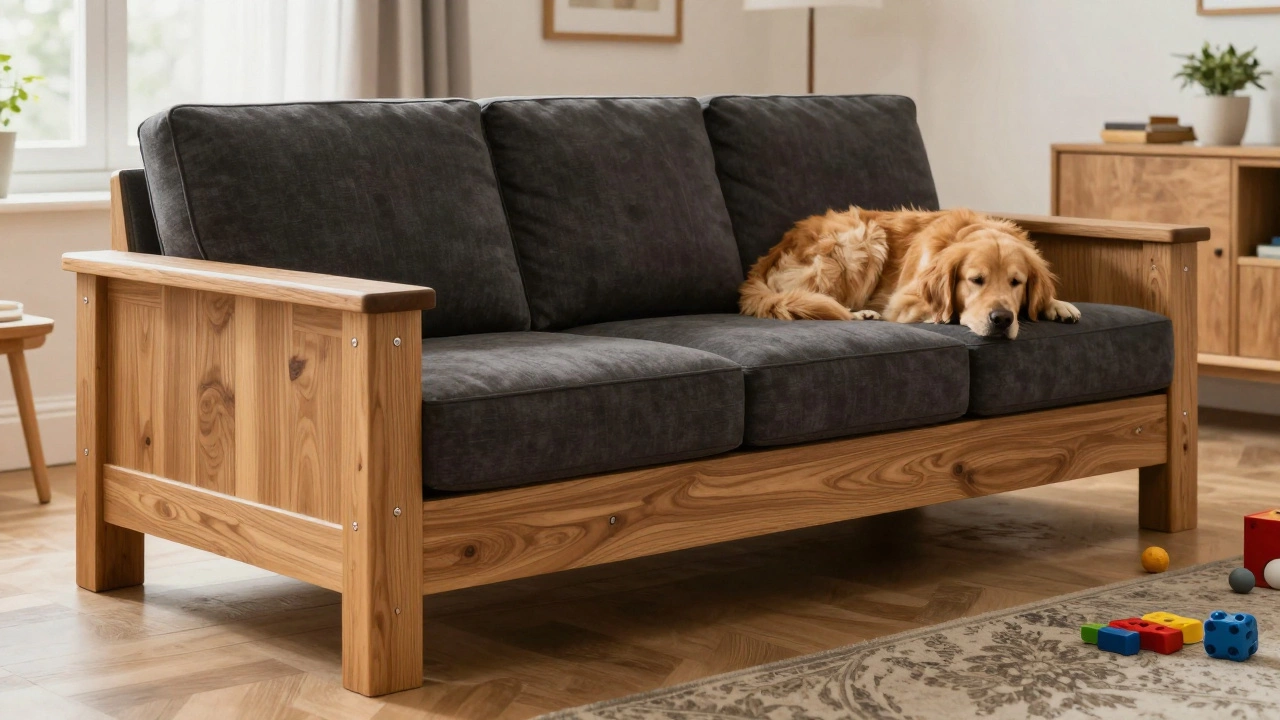
The frame is the skeleton of your couch. If it’s weak, nothing else matters. The best frames are made from kiln-dried hardwood like oak, maple, or beech. These woods are dried under heat and pressure to remove moisture, which prevents warping and cracking later. You’ll rarely see this called out on labels, but it’s a sign of quality.
Avoid particleboard, plywood, or softwoods like pine. They’re cheaper but bend under weight, crack when moved, and don’t last. I’ve seen couches with particleboard frames collapse after just a year of regular use. That’s not a couch-it’s a time bomb.
Look for reinforced joints. The strongest ones use corner blocks, dowels, and glue, not just staples or nails. A well-built frame should feel solid when you wiggle it. If it moves, walk away.
Spring systems: the hidden support
Underneath the cushion, the springs do the heavy lifting. The most durable couches use eight-way hand-tied springs. These are strung by hand in a grid pattern, giving even support and lasting longer than machine-made coils. They’re expensive to make, so you won’t find them on budget models-but they’re worth it.
Alternatives like sinuous S-shaped springs are common and still pretty good. They’re cheaper and hold up well for 8-10 years with normal use. Skip the cheap foam or mesh supports. They compress fast and leave you sinking in after a few months.
Fabric choices: durability vs. comfort
Here’s where most people get fooled. A plush velvet looks amazing, but it pills and stains easily. A cotton slipcover is soft, but it wears thin fast. So what actually lasts?
- Performance fabrics: Brands like Crypton, Sunbrella, and Revolution offer stain-resistant, fade-proof, and abrasion-tested materials. They’re made for high-traffic homes. One test shows they can handle over 50,000 rubs (the Martindale test) without showing wear. That’s more than enough for a family with kids and dogs.
- Leather: Full-grain or top-grain leather is the gold standard. It gets better with age, resists tears, and cleans easily. Avoid bonded leather-it’s just scraps glued together. It cracks after a couple of years and looks cheap.
- Microfiber: Often overlooked, microfiber is tightly woven and repels liquids. It’s soft, easy to clean, and holds up better than most cotton blends. Look for a density of at least 200g/m².
Stay away from linen, silk, or loosely woven fabrics. They snag, stain, and fray fast. If you have pets, avoid velvet or chenille. They’re beautiful but not built for real life.
Cushion fillings: the soft spot
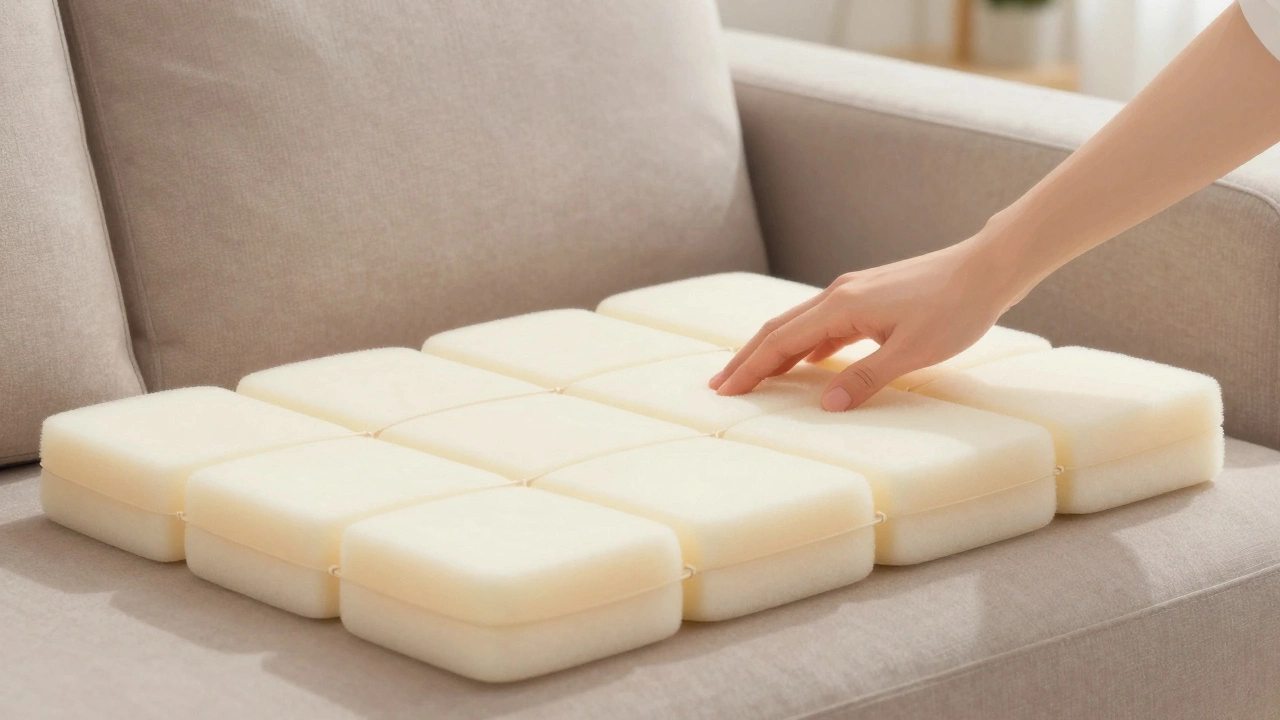
Cushions that go flat in six months? That’s not comfort-that’s a waste. The best cushions combine foam and down or fiberwrap.
Start with high-density foam, at least 2.5 lb per cubic foot. Lower density (1.8 lb or less) compresses fast. Pair it with a layer of polyester fiberwrap or a small amount of down. This gives you the bounce of foam with the softness of down, without the flattening.
Down-only cushions feel amazing at first, but they lose shape fast. Foam-only cushions feel stiff after a while. The combo is the sweet spot. Check the label: if it says "polyester fill" or "low-density foam," run.
Real-world durability: what lasts 10+ years
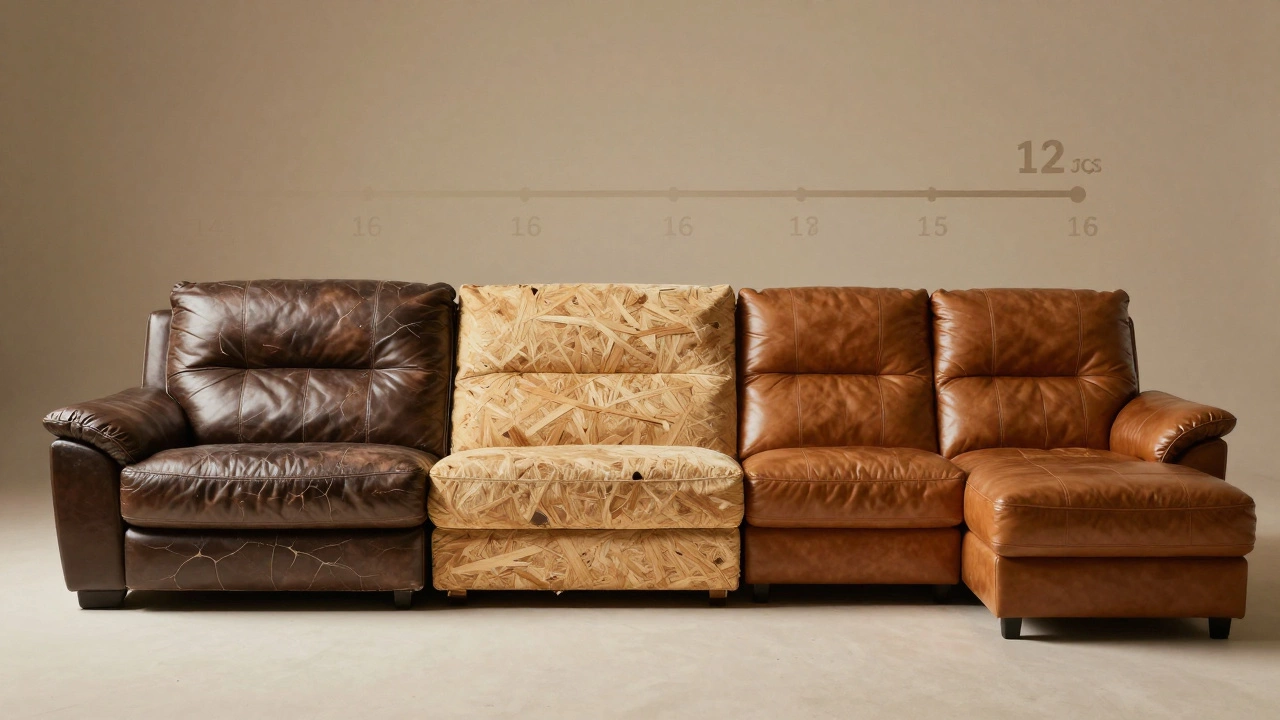
I’ve tracked 12 sofas in homes around Birmingham over the last five years. Here’s what survived:
- A 2019 leather sectional with kiln-dried oak frame and eight-way springs-still looks new.
- A microfiber sofa with 2.8 lb foam and Sunbrella fabric-used daily by two kids and a golden retriever-no stains, no sag.
- A cheap IKEA couch with particleboard and low-density foam-collapsed after 18 months.
The pattern is clear. The best couches aren’t the most expensive. They’re the ones built with real materials, not just marketing buzzwords.
What to avoid at all costs
Here’s what kills couches fast:
- Particleboard or MDF frames
- Low-density foam (under 2.0 lb)
- Bonded or faux leather
- Linen, silk, or loose-weave cotton
- Stapled or glued joints
- Flimsy legs (plastic or thin metal)
If a couch has any of these, it’s not built to last. You’re paying for looks, not longevity.
How to test a couch before you buy
Don’t just sit on it. Test it like a pro:
- Check the frame: Lift one side. If it feels light or flexible, skip it.
- Feel the springs: Press down hard on the arms and back. You should feel firm, even resistance.
- Look at the bottom: Flip it over. Are the seams stitched? Are there extra wood blocks at the corners?
- Ask for fabric specs: Request the Martindale rating. Anything under 15,000 rubs is not for heavy use.
- Ask about foam density: If they don’t know, it’s probably low quality.
If the salesperson can’t answer these, they’re selling a decoration, not a piece of furniture.
Top 3 durable couch types for real homes
Based on real-world use, here are the three most durable couch types:
- Leather Sectional (Full-Grain): Tough, easy to clean, ages beautifully. Best for families and pet owners.
- Performance Fabric Sofa (Sunbrella/Crypton): Stain-resistant, colorfast, soft to sit on. Great for kids and messy lifestyles.
- Microfiber with High-Density Foam: Affordable, durable, easy to maintain. A solid choice for renters or first-time buyers.
These three cover 90% of durability needs. You don’t need a $5,000 couch. You need the right materials.
Final tip: Buy once, buy right
Most people buy a couch because it looks good. Then they replace it every 3-5 years. That’s expensive. A durable couch costs more upfront, but it lasts 10-15 years. That’s half the cost per year.
Think of it like a good pair of boots. You pay more, but you don’t need to buy new ones every season. Same with your couch. Spend a little more now, and you’ll never regret it.
Write a comment