
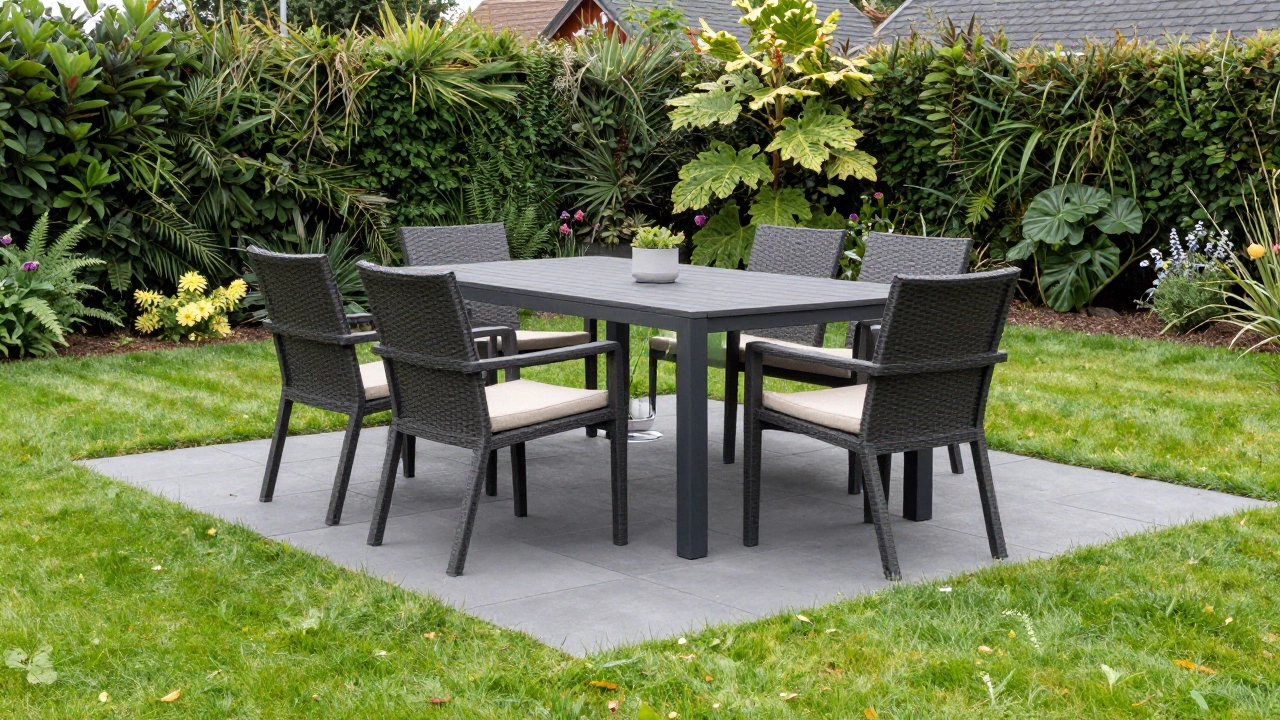
Garden Furniture Base Selector
Answer three simple questions to find the perfect foundation for your outdoor setup.
Recommended Solution
Why this works:
Installation Note:
Your personalized recommendation will appear here.
Imagine setting up your dream dining set on the lawn, only to find it sinking into mud after a week of rain. Or worse, you notice unsightly dark patches where the legs have crushed the grass permanently. This is the hidden problem with most outdoor setups: we focus on the chairs and tables but ignore what lies beneath them. The surface under your garden furniture does more than just look good; it determines stability, drainage, and the longevity of both your plants and your investment.
You don't need a full concrete patio to solve this. There are smarter, flexible options that provide a solid foundation without ruining your garden's aesthetic. Whether you have a delicate lawn, an existing deck, or bare soil, choosing the right base material prevents slipping, protects against moisture damage, and keeps your seating area level all season long.
Why You Need a Dedicated Base Layer
Placing heavy wooden or metal frames directly on soft earth seems convenient until the first storm hits. Soil compresses unevenly, causing wobbly tables and tilted chairs. More importantly, furniture legs trap moisture against the ground. In grass, this blocks sunlight and air, killing the turf underneath and creating permanent bald spots. On paved surfaces, trapped water can lead to mold growth or even freeze-thaw cracking in colder climates.
A proper base layer acts as a buffer. It distributes weight evenly, allowing water to drain away rather than pooling around the legs. It also creates a clean separation between your expensive furniture and abrasive or dirty ground surfaces. Think of it like wearing shoes on a muddy trail-it keeps you stable and clean, while protecting the terrain below.
Best Options for Lawns and Soft Ground
If your furniture sits on grass, you need materials that breathe and flex with the earth. Rigid slabs will sink or crack, so flexibility is key here.
- Rubber Interlocking Tiles: These are perhaps the most practical solution for lawns. Made from recycled rubber, they are durable, weather-resistant, and provide excellent grip. Because they interlock, they create a unified surface that doesn’t shift when you sit down. They allow water to pass through if chosen with perforations, preventing puddles. Plus, they cushion the impact if someone bumps into the table leg.
- Composite Decking Tiles: If you prefer a wood-like appearance without the maintenance, composite tiles made from plastic-wood blends are ideal. They resist rot, insects, and fading. Unlike real wood, they won’t splinter or warp when wet. Lay them directly over flat grass or a thin layer of sand for a polished look that feels warm underfoot.
- Artificial Grass Pads: For a seamless blend with your lawn, high-quality artificial turf squares work well. Look for ones with permeable backing. They provide a consistent green carpet that doesn’t die off under the shade of your furniture, keeping the area looking lush year-round.
Solutions for Patios, Decks, and Hard Surfaces
When your furniture rests on stone, concrete, or timber decks, the goal shifts from stability to protection. You want to prevent scratches, scuffs, and water stains on your hardscaping.
- Felt Pads and Rubber Feet: Simple but effective, these adhesive pads stick to the bottom of furniture legs. Felt protects delicate stone or finished wood decks from scratching, while rubber feet offer better grip on slippery tiles. Replace them every few months as they wear down.
- Outdoor Rugs: A synthetic outdoor rug defines the space and adds comfort. Choose rugs made from polypropylene or polyester, which dry quickly and resist mildew. Place a non-slip mat underneath to keep the rug-and your furniture-secure on smooth surfaces.
- Timber Planks or Slats: If you have a gravel or dirt patio, laying down treated timber slats creates a rustic, elevated platform. Ensure the wood is pressure-treated or naturally rot-resistant (like teak or cedar) to withstand ground contact. Leave small gaps between slats for drainage.
| Material | Best Surface | Pros | Cons |
|---|---|---|---|
| Rubber Tiles | Grass/Lawn | Durable, shock-absorbent, interlocking | Can be heavy to move initially |
| Composite Tiles | Flat Ground/Deck | Wood look, low maintenance, rot-proof | Higher upfront cost |
| Felt/Rubber Pads | Patio/Stone/Wood | Inexpensive, easy to install | Wears out quickly, needs replacement |
| Outdoor Rug | Patio/Concrete | Adds style, defines space | Can slip without mat, traps dirt |
| Gravel/Pea Stone | Bare Soil | Excellent drainage, natural look | Unstable for tall furniture, messy |
Installation Tips for a Stable Foundation
Even the best material fails if installed poorly. Start by leveling the ground. Remove any large rocks or roots that could cause tilting. For loose surfaces like gravel or sand, compact the soil first using a hand tamper or by walking over it repeatedly.
When using interlocking tiles, lay them out first without locking them together to ensure they fit perfectly within your desired area. Trim edges with a utility knife if needed. For rubber or composite bases, leave a small gap (about half an inch) around the perimeter to allow for expansion during hot weather and to let water escape freely.
Check the level frequently with a spirit level. Adjust by adding or removing sand underneath individual tiles until everything is flat. A wobbly base will always result in a wobbly table, no matter how sturdy the furniture itself is.
Maintenance and Long-Term Care
Your ground cover requires occasional attention to stay effective. Every few weeks, lift the corners of your base material to check for debris buildup, moss, or standing water. Sweep out leaves and dirt to maintain drainage. If you use felt pads, inspect them monthly for tears or loss of adhesion.
In winter, if you live in a region with freezing temperatures, consider removing lightweight bases like composite tiles or rugs. Freeze-thaw cycles can crack rigid materials or cause them to shift violently. Store them in a dry shed and replace them in spring. Heavy rubber tiles usually stay put fine, but ensure they aren’t trapping snow against the ground, which can kill grass underneath.
Common Mistakes to Avoid
One major error is using indoor carpet or fabric outdoors. These materials absorb moisture, leading to mold, mildew, and unpleasant odors. Always choose synthetic, UV-stabilized materials designed for exterior use. Another mistake is ignoring weight distribution. A heavy stone table needs a wider base than a lightweight aluminum chair set. Concentrated point loads will punch through soft bases, so spread the weight out.
Also, avoid sealing the ground completely impermeable unless you have professional drainage. Trapped water causes more problems than it solves, including root rot for nearby plants and structural instability for the furniture itself.
Can I put garden furniture directly on grass?
Technically yes, but it’s not recommended for long-term use. Direct contact kills the grass due to lack of sunlight and air, and the furniture will likely sink or tilt as the soil compacts unevenly. Use a breathable base like rubber tiles or composite decking to protect both the lawn and your furniture.
What is the best material to protect a wooden deck from furniture legs?
Felt pads or clear rubber coasters are best for wooden decks. They prevent scratching and denting while allowing some airflow. Avoid metal caps or hard plastic feet, which can gouge the wood fibers over time, especially if the furniture shifts slightly in the wind.
Do I need to seal the ground under my outdoor dining set?
No, you generally should not seal the ground completely. Proper drainage is crucial to prevent waterlogging, which can destabilize the furniture and harm surrounding plants. Use permeable materials like gravel, porous rubber tiles, or spaced decking planks instead of solid concrete slabs unless professionally installed with drainage channels.
How do I stop my garden furniture from sliding on a patio?
Use non-slip rubber mats or adhesive gripper pads under the furniture legs. For larger sets, placing a heavy outdoor rug with a non-slip backing underneath helps anchor the entire arrangement. Ensure the patio surface is clean and dry before applying any adhesives for maximum hold.
Will composite decking tiles rot if left on the ground?
High-quality composite tiles are resistant to rot, mold, and insect damage because they contain no organic wood pulp that decays easily. However, poor-quality composites may degrade over many years. To extend their life, ensure they are laid on a relatively flat surface and cleaned periodically to remove dirt that can retain moisture.
Write a comment