
Mothball Suitability & Safety Checker
Storage Protection Analysis
Result appears here
Select your pest concern, storage location, and household occupants, then click analyze.
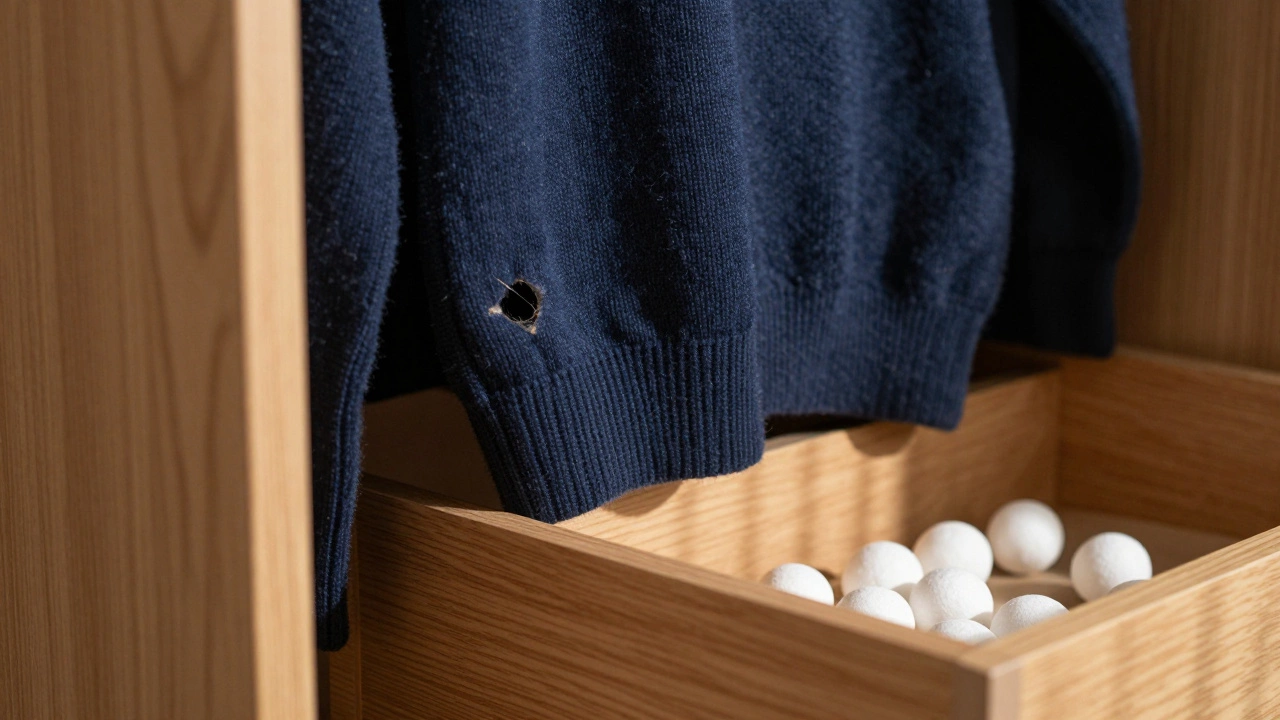
You open your winter coat from last season, and there it is-a tiny hole right in the chest pocket. Again. We have all been there. While many people reach for the small white spheres at the back of the cabinet, fewer understand exactly who those little defenders are fighting off. Mothballs are chemical pesticides designed to protect fabrics and stored goods from insect damage. They sit in corners of closets and drawers, slowly releasing gas into the air. But do they actually stop mice? What about silverfish? Or just the notorious webbing clothes moth?
The short answer is that these products target specific threats, primarily larvae that chew through wool and cotton. They are not a magic wand for every bug crawling around your house. Understanding this distinction saves you money, time, and potential health risks. If you are organizing your Storage Furniture, knowing what to use matters more than throwing them in blindly.
The Chemistry Behind the Protection
To understand what gets repelled, you need to know how the weapon works. Most Mothballs function through sublimation. This means the solid pellets turn directly into gas without becoming liquid first. As the room stays enclosed, the gas builds up until it becomes toxic to certain insects. There are two primary chemicals found in modern versions, and their performance differs significantly.
The first type uses naphthalene. You will recognize this by its distinct medicinal smell, similar to camphor. It was once the standard for decades. However, it is becoming harder to find due to safety regulations regarding toxicity for humans and pets. The second, more common version today, uses paradichlorobenzene. These dissolve slower and offer longer protection in large spaces like Wardrobes. Neither kills adult flying moths instantly, which is why timing and placement matter so much.
| Chemical Type | Effectiveness | Odour Intensity | Risk Level |
|---|---|---|---|
| Naphthalene | High volatility, fast action | Strong | Higher toxicity |
| Paradichlorobenzene | Slower release, steady protection | Moderate | Moderate toxicity |
Primary Targets: The Actual Moths
When someone asks what keeps away, the direct answer lies with the larvae of Webbing Clothes Moth. These creatures love keratin proteins found in animal fibres. They thrive in dark, undisturbed places like the back of your wardrobe. The gas released by the repellent penetrates deep into fabric folds where the eggs might be hidden.
Clothes moths are not the only visitor, however. Carpet beetles are another major nuisance. Their larvae behave similarly, chewing through upholstery and rugs while they wait to pupate. In tightly sealed storage units, the concentration of vapour from the balls is usually enough to drive these invaders out before they establish a colony. If you store seasonal blankets in plastic bins, placing a few sachets inside creates an invisible shield around the textile.
The Myths: What They Do Not Stop
This is where people waste money. Many assume these scent-filled discs act as a broad-spectrum barrier against everything living. They do not. One common misconception involves Rodents. Rats and mice are mammals, not insects. The gas levels that harm tiny bugs do not bother them significantly. In fact, some mice may even nest around them because the materials provide insulation. If you have seen gnaw marks on wood or wiring, these will not help.
Silverfish are another frequent confusion point. You might see these fish-shaped pests scurrying across your bathroom floor at night. While they dislike strong smells, they prefer damp environments rich in starch and glue. Unless you place the repellent directly on the paper or cardboard they are eating, the ambient gas won't stop them. Spiders also ignore the chemicals completely. They hunt prey rather than eat fabric or cellulose, so the toxins meant for larvae do not trigger their avoidance instincts.

Placement Strategies for Storage Furniture
Putting the product in the room isn't enough. You must create a trap zone. Think of your Storage Chests or drawers as small rooms. Gas needs space to build concentration. If you leave the cupboard door open, the fumes escape, and protection fails immediately.
- Seal the container: Use vacuum bags for loose knits. Without oxygen and vapour escape, moths cannot survive.
- Spatial distribution: Do not drop fifty in one corner. Spread three or four across different shelves. Gas settles, but movement helps coverage.
- Barrier method: Place the repellent on a piece of tissue between layers of sweaters rather than touching the expensive fabric directly.
In large Wardrobes with wooden construction, ventilation slats can allow the gas to leak. To counter this, use larger quantities or seal gaps around the frame temporarily during winter storage months. Wooden furniture itself does not need this protection, unless the joinery glue attracts pests. The focus remains strictly on textiles and organic debris within the unit.
Safety and Health Considerations
We cannot discuss chemical protection without addressing risk. The substances used here are toxic when ingested or absorbed in high concentrations over time. Children and pets are the most vulnerable groups. If you live in a shared space in Birmingham or elsewhere, consider that the smell permeates bedding nearby.
The vapour can cause headaches or nausea if you spend hours in a closed linen closet. Never leave these in active living rooms. Store them where you rarely breathe deeply-top shelves, sealed bins. Furthermore, do not throw the used pellets in the trash. Residual chemicals remain hazardous. Check local disposal guidelines, as many councils now restrict landfill options for chemical waste. Always wear gloves when handling fresh stock to prevent skin absorption.

Natural Alternatives to Consider
If the idea of chemicals makes you uncomfortable, nature offers options, though they require more maintenance. Cedar wood blocks work through essential oils rather than toxic gas. Cedar Oil masks the scent of the fabric, making it unattractive to moths. However, once the wood dries out after a year, you must sand or oil it to refresh the scent.
Dried herbs like lavender or rosemary are popular. They smell pleasant but lack the potency to kill larvae. They might deter adults from laying eggs, but established infestations will pass through. For serious protection in Storage Cabinets, freeze-dry cleaning your items before putting them away is the gold standard. Extreme cold kills the eggs effectively without any chemical residue left behind.
Maintaining Your Collection Long-Term
Protection is an ongoing battle. Even with the best defence, dirt attracts pests. Food stains on shirts or sweat on wool signal dinner time for larvae. Wash or dry clean items before storing them for six months. Inspect your Storage Drawers every three months. Replace the repellents when they shrink to half their size. That tells you the vapour supply is depleted.
A clean environment denies pests the nutrition they need. Vacuum crevices in the floorboards beneath your wardrobe. Remove lint and hair clippings that fall over time. Combine cleanliness with chemical barriers, and you create a defensive line that lasts through the year.
Do mothballs kill spider webs?
No, they do not. Spiders are predators, not fabric eaters. The gas targets insects that consume protein in wool, leaving spiders unaffected.
Can I use them in my car trunk?
It is not recommended. Cars heat up quickly, concentrating the gas to dangerous levels that affect human health if you enter the vehicle without ventilation.
How long does one pellet last?
Usually six to twelve months depending on temperature and ventilation. Hotter rooms cause faster sublimation, depleting the product sooner.
Are they safe around cats and dogs?
They pose significant risks. Pets can ingest them by mistake, leading to poisoning. Keep all units securely out of reach of paws and teeth.
Will they stop mould growth?
Not really. Mould requires moisture to grow, and these balls target dry-land pests. You need silica gel or humidity control to prevent mould in storage boxes.
Write a comment