
Bookshelf Colour Matcher
Select your room's characteristics to find the ideal bookshelf colour that complements your space.
Picture this: you’ve just bought a beautiful set of leather-bound classics or maybe a stack of well-loved paperbacks. You place them on your new shelf, and suddenly, something feels off. The wood tone clashes with your walls, or the white paint looks sterile against your warm rug. It’s not the books’ fault. It’s the shelf.
Choosing the right bookshelf colour isn’t just about picking a shade that matches your sofa. It’s about creating a visual anchor for your room, defining the mood, and making your collection look intentional rather than accidental. Get it wrong, and your books disappear into the background or fight for attention. Get it right, and the entire space feels curated, calm, and deeply personal.
The Psychology of Shelf Colours
Before we talk about specific paints or stains, let’s look at what colours actually do in a room. Furniture is heavy visually. A bookcase often takes up an entire wall. If you pick a colour that screams for attention, it might overwhelm the room. If you pick one that recedes too much, the structure can feel lost.
Natural Wood Tones are the safest and most versatile choice for most homes. They bring warmth and texture without dominating the space. Light woods like oak or ash keep rooms feeling airy and modern, while darker woods like walnut or mahogany add depth and tradition. The key here is consistency. If your floor is dark oak, a matching bookshelf creates a seamless flow. If your floor is light laminate, a contrasting medium-toned shelf adds necessary definition.
Then there’s White Paint, which is a classic choice for making spaces feel larger and brighter. White shelves act as a neutral canvas. They don’t compete with the spines of your books. This makes them ideal if you have a colourful collection. However, white shows dust and scuff marks easily. You’ll need to wipe it down more often. Also, pure bright white can look clinical in a cozy living room. Opt for off-white, cream, or eggshell finishes to soften the look.
Dark Shades: Drama and Sophistication
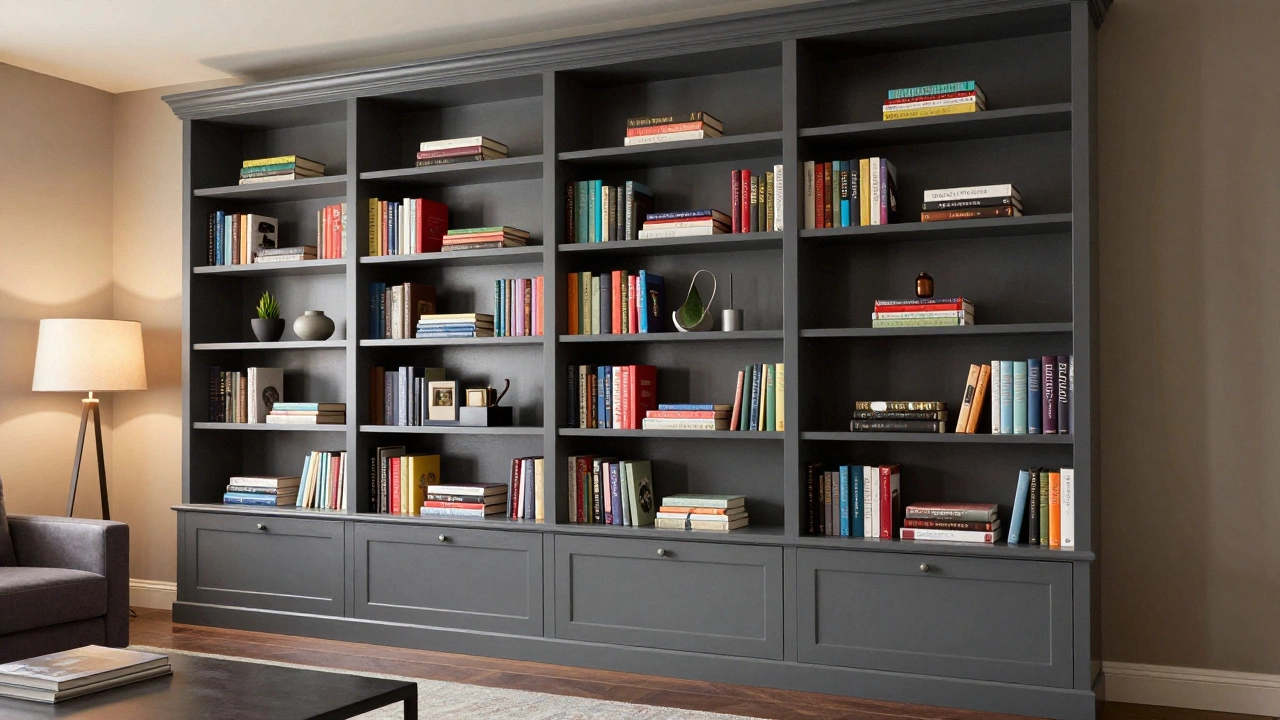
If you want your library corner to feel like a secret club, go dark. Charcoal, navy blue, forest green, or even black can transform a simple storage unit into a statement piece. Dark colours absorb light, which makes the room feel cozier and more intimate. This is perfect for reading nooks or home offices where you want to focus inward.
But there’s a catch. Dark shelves require good lighting. Without adequate ambient light or directed task lighting, a black bookcase can look like a void. It swallows the books behind it. To fix this, install LED strip lights inside the shelves or use a nearby lamp to bounce light off the surface. Also, consider the size of the room. In a small apartment with low ceilings, a floor-to-ceiling black bookshelf might feel oppressive. In a large living room with high ceilings, it grounds the space beautifully.
| Colour Type | Best For | Pros | Cons |
|---|---|---|---|
| Light Wood (Oak, Ash) | Scandinavian, Modern, Small Rooms | Airy, versatile, hides minor scratches | Can look cheap if finish is poor |
| Dark Wood (Walnut, Mahogany) | Traditional, Luxury, Large Rooms | Elegant, durable, timeless | Expensive, shows dust clearly |
| White/Cream | Minimalist, Coastal, Bright Spaces | Makes room feel bigger, highlights books | High maintenance, can look sterile |
| Charcoal/Black | Industrial, Moody, Accent Walls | Dramatic, sophisticated, hides clutter | Needs good lighting, absorbs heat |
| Coloured (Navy, Green) | Eclectic, Creative, Bold Styles | Unique personality, trendy | Harder to match later, dating risk |
Matching Your Room’s Palette
You shouldn’t choose a bookshelf colour in isolation. Look at the other elements in the room. What colour are your walls? What’s the tone of your flooring? Are there other large pieces of furniture nearby?
If your walls are painted a bold colour, like a deep teal or terracotta, a natural wood or white bookshelf will balance the intensity. If you go with a dark shelf against a dark wall, you need texture to separate them. Maybe open shelving with varied book sizes, or decorative objects that break up the mass. Conversely, if your walls are neutral-grey, beige, or white-you have the freedom to experiment. A navy blue bookshelf against a pale grey wall creates a crisp, professional look. A mustard yellow shelf adds a playful pop.
Consider the hardware too. Metal legs, brackets, or handles change the vibe. Black metal frames with white shelves give an industrial chic feel. Brass accents with dark wood lean towards mid-century modern. These small details tie the colour choice into a broader design narrative.
Practical Considerations: Maintenance and Longevity
Let’s be real. We live in messy houses. Kids spill juice. Pets shed fur. Dust settles everywhere. Your bookshelf colour should reflect your lifestyle, not just your aesthetic dreams.
Light colours show every speck of dust. Dark colours show every fingerprint and smudge. Medium tones, like greige or medium oak, are often the most forgiving. They hide daily wear and tear better than extremes. If you have young children, avoid glossy finishes. Matte or satin textures hide scratches and dents more effectively. Glossy white shelves will look scratched within months of toddler life.
Also, think about resale value. If you plan to sell your home in the next few years, stick to neutral or natural tones. Bold colours like bright red or electric blue might appeal to you now, but they can limit your buyer pool. Neutral shelves are easier for potential buyers to visualize their own books in.
Trends vs. Timelessness
In 2026, we’re seeing a rise in earthy tones. Sage greens, warm browns, and muted blues are popular. But trends fade. A sage green shelf might look fresh today, but could feel dated in five years. Natural wood never goes out of style. White is perennially popular because it adapts to any trend. If you love colour, consider painting only the back panel of an open shelf. This gives you the vibrancy you want without committing the entire structure to a fleeting trend. Or, use removable wallpaper on the back. It’s easy to swap out when your taste changes.
Another trend is mixing materials. A bookshelf with a wooden frame and metal shelves, or vice versa. This allows you to combine the warmth of wood with the sleekness of metal. It also lets you play with colour in smaller doses. A black metal frame with light wood shelves offers contrast without overwhelming the eye.
How to Test Before You Commit
Don’t buy paint or stain based on a swatch card alone. Lighting changes everything. A colour that looks perfect in the store under fluorescent lights might look muddy in your home’s natural light. Buy small sample pots. Paint a square on the actual shelf or on a board placed against it. Live with it for a few days. Check it in the morning, afternoon, and evening. See how it interacts with your books and decor.
If you’re renting and can’t paint, consider slipcovers or fabric wraps for modular shelves. Or, use coloured bookends and decorative boxes to inject colour without altering the furniture itself. This is a low-risk way to test different palettes.
Final Thoughts on Finding Your Fit
There is no single “best” colour for a bookshelf. The best colour is the one that makes you happy every time you walk into the room. It’s the one that complements your books, fits your lifestyle, and enhances your home’s architecture. Start with your existing palette. Decide if you want the shelf to blend in or stand out. Then, test, test, test. Your books deserve a stage that does them justice.
What is the most popular bookshelf colour in 2026?
Natural wood tones, particularly light oak and walnut, remain the most popular choices due to their versatility. However, muted earth tones like sage green and warm greys are gaining significant traction for those seeking a softer, more organic look.
Should my bookshelf match my wall colour?
Not necessarily. Matching can create a seamless, built-in look, which is great for small spaces. However, contrasting colours often add visual interest and depth. A dark shelf against a light wall, or vice versa, defines the furniture piece clearly.
Is white or wood better for bookshelves?
It depends on your goal. White makes rooms feel larger and highlights colourful book spines. Wood adds warmth and texture, fitting well with traditional or rustic decor. White requires more cleaning, while wood can show scratches depending on the finish.
Can I paint a wooden bookshelf?
Yes, absolutely. Sand the surface lightly, apply a primer suitable for wood, and then use high-quality acrylic or latex paint. Seal with a clear topcoat for durability, especially if the shelf gets heavy use.
How do I choose a bookshelf colour for a small room?
Opt for lighter colours like white, cream, or light wood to make the space feel airier. Avoid dark, heavy colours that can make the room feel cramped. Glass-fronted shelves or open shelving in light tones also help maintain a sense of openness.
Write a comment