
Closet vs. Wardrobe Decision Tool
Confused by the American preference for closets versus the British/European tradition of wardrobes? Answer these questions to find out which storage solution fits your life best.
| Feature | Closet (US Style) | Wardrobe (UK/EU Style) |
|---|---|---|
| Type | Built-in / Fixed | Freestanding / Portable |
| Best For | Homeowners, Small Spaces | Renters, Frequent Movers |
| Value | Adds Home Resale Value | Moves with You |
| Aesthetic | Clean Lines, Hidden Storage | Character, Design Focus |
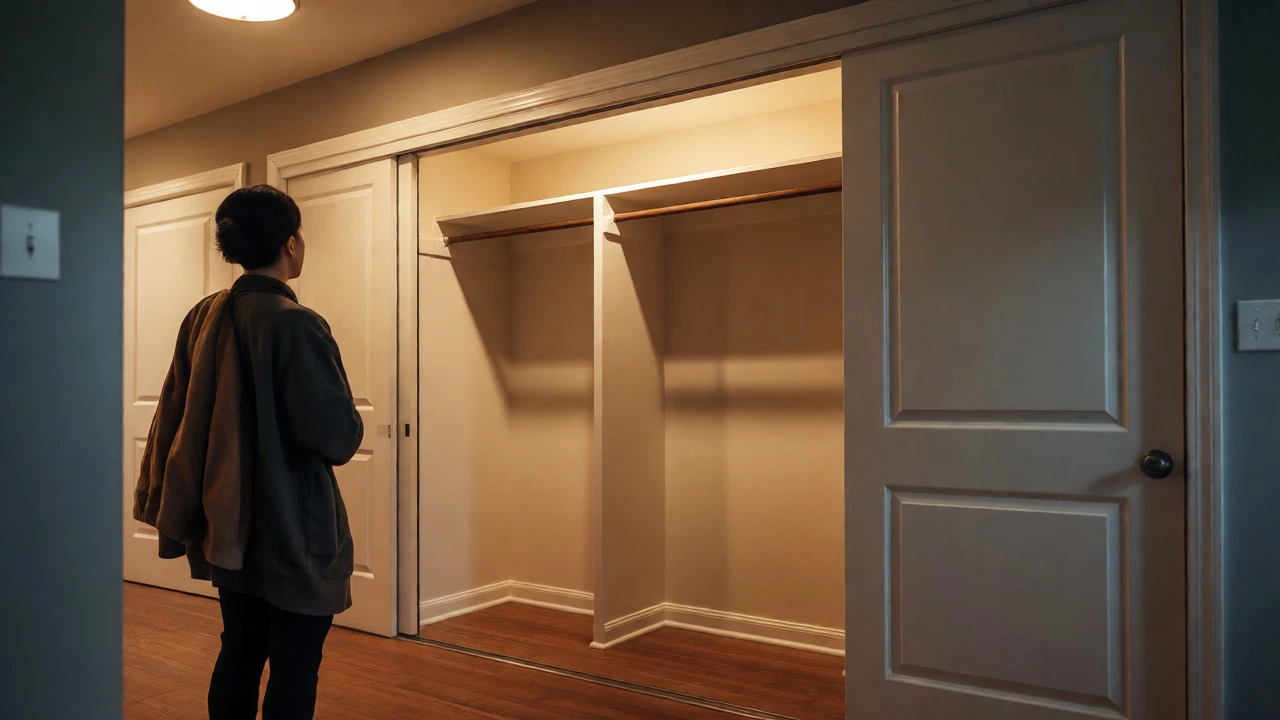
You walk into a friend’s house in New York and ask where you can hang your coat. They point to a door in the hallway. You open it, expecting a freestanding piece of furniture, but find built-in shelves instead. Confused? You’re not alone. This linguistic mix-up between closet and wardrobe trips up millions of people every year. It’s not just about semantics; it reflects how we design our homes and live our lives.
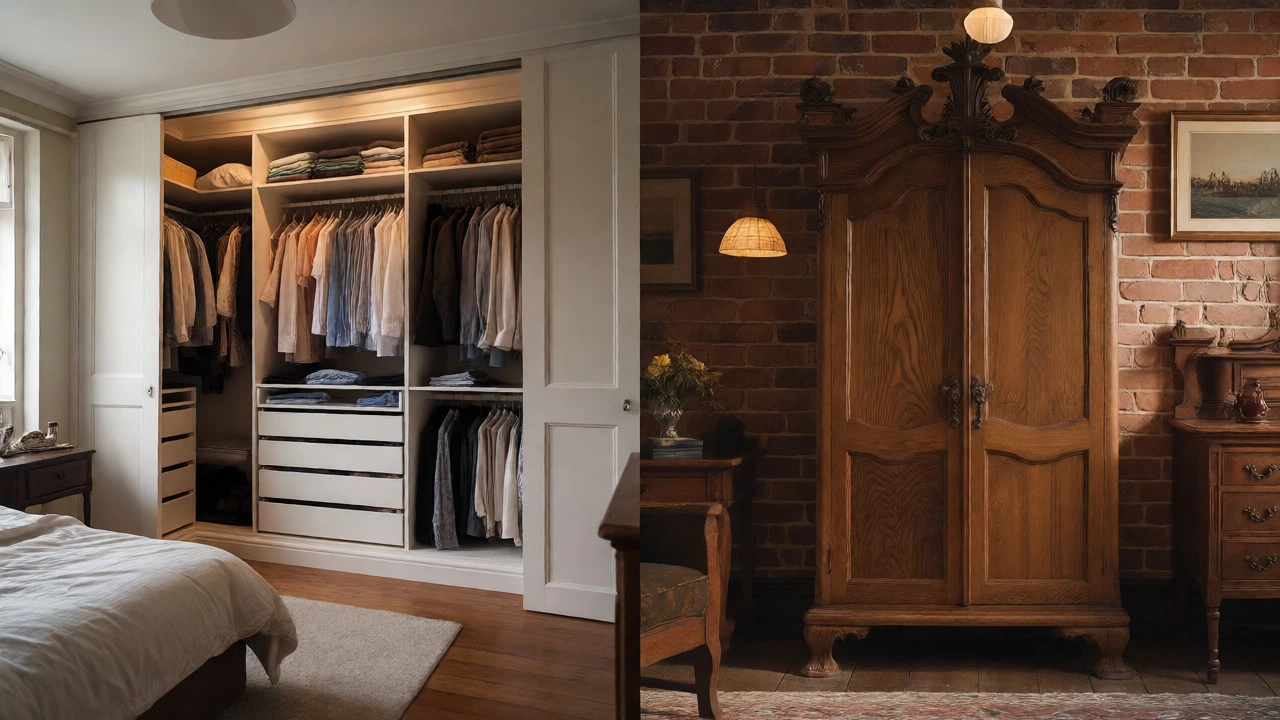
The core difference isn’t just vocabulary-it’s architecture. In the United States, a closet is typically a dedicated room or recessed space within a wall, often with sliding doors. In the UK and much of Europe, a wardrobe is a standalone cabinet you buy from a store like IKEA. Understanding why Americans prefer the former requires looking at housing trends, history, and practicality.
Architectural Roots: Built-In vs. Freestanding
American homes, particularly those built after World War II, were designed with efficiency and space-saving in mind. Builders started incorporating small rooms or alcoves specifically for storage. These spaces were cheap to construct-just drywall and a door-and they added value to the property. Over time, this architectural feature became standard. If you buy a new home in Texas or California today, you almost certainly have a walk-in closet in the master bedroom.
In contrast, older European homes were often built with solid stone or brick walls that were difficult to carve out for recesses. Furniture was also seen as a long-term investment that could be moved if you relocated. A large oak wardrobe was a family heirloom. Because these houses weren’t designed with integrated storage niches, residents relied on freestanding units. Hence, the word "wardrobe" stuck because the object itself-a tall, enclosed cabinet-was the primary storage solution.
| Feature | Closet (US Standard) | Wardrobe (UK/EU Standard) |
|---|---|---|
| Type | Built-in architectural feature | Freestanding furniture |
| Installation | Fixed during construction or renovation | Purchased and assembled separately |
| Space Usage | Utilizes dead wall space; maximizes floor area | Occupies floor space; can make rooms feel smaller |
| Mobility | Immovable; stays with the house | Portable; moves with the owner |
| Cost Implication | Included in home price; low maintenance | Separate purchase cost; potential assembly fees |
The Real Estate Factor: Why Closets Sell Homes
Here’s a hard truth: American real estate agents love closets. When listing a property, square footage matters, but usable storage space sells houses. A bedroom with a built-in closet feels larger because the furniture doesn’t eat into the living area. You can place a bed, a dresser, and still have room to walk. With a bulky wardrobe, you might lose two feet of walking space on each side of the bed.
This preference drives construction standards. Developers build apartments with "closet-ready" dimensions. Even in tiny studio apartments in Manhattan, you’ll find narrow, deep closets rather than wide wardrobes. Why? Because a closet can go floor-to-ceiling without blocking light or views. A wardrobe usually stops short of the ceiling, creating a dust trap above it. Americans hate dust traps. We want clean lines and hidden clutter.
Consider the economics. Buying a high-quality wooden wardrobe costs between £500 and £1,500. Building a custom closet system during a renovation might cost similar money, but it increases the home’s resale value. If you move out, you take your wardrobe with you. You leave your closet behind. For homeowners, that’s a win-win. For renters, it’s a different story, which leads us to the next point.
Renter Culture and Temporary Living
Not everyone owns their home. In cities like London, many young professionals rent. Landlords rarely install built-in closets in older Victorian conversions because drilling into historic brickwork is expensive and often restricted by heritage laws. So what do renters do? They buy wardrobes. This reinforces the cultural habit of viewing storage as furniture, not infrastructure.
In the US, even rental properties often come with closets because landlords know tenants expect them. If an apartment lacks a closet, it’s considered a flaw. You’ll see listings advertising "no closet" as a red flag. Tenants will pay less for such units. This market pressure ensures that builders keep installing them. It’s a self-reinforcing cycle: demand creates supply, and supply shapes expectations.
If you’re moving from the UK to the US, you might struggle initially. You arrive with a beautiful antique armoire, only to find a blank wall in your new apartment. Or worse, you find a shallow reach-in closet that barely fits your coats. Suddenly, you’re shopping for organizers, hooks, and over-the-door racks. You’re adapting to the American way of hiding things away.
Linguistic Drift: How Language Evolves
Language follows utility. As American homes standardized around built-in storage, the word "closet" expanded to cover all types of enclosed storage spaces. Today, Americans say "linen closet," "coat closet," and even "utility closet." The term has become generic for any small room used for storage.
Meanwhile, in the UK, "wardrobe" remains specific to clothing storage. If you need to store linens, you might use a "cupboard." If you store tools, it’s a "shed" or "garage." The distinction is clearer. But global media is blurring these lines. Netflix shows featuring American homes expose British viewers to the concept of the walk-in closet. Conversely, British interior design magazines showcase stylish freestanding wardrobes, influencing American tastes toward more decorative storage.
There’s also a subtle status signal here. In some circles, a "walk-in closet" implies luxury. It suggests you have enough space to stand inside your storage. A "wardrobe" sounds humble, functional, perhaps old-fashioned. When real estate agents describe a "spacious closet," they’re selling a lifestyle. When they mention a "built-in wardrobe," they’re being precise but less exciting. Words carry weight in marketing.
Practical Pros and Cons: Which Is Better?
Let’s get pragmatic. Neither option is objectively superior; it depends on your situation. Here’s how to decide based on your needs:
- Choose a Closet if: You own your home, you have limited floor space, you want a seamless look, or you plan to stay long-term. Built-ins maximize vertical space and hide visual clutter completely.
- Choose a Wardrobe if: You rent, you move frequently, you want to add character to a plain room, or you’re converting a non-standard space (like under a staircase). Freestanding units offer flexibility and portability.
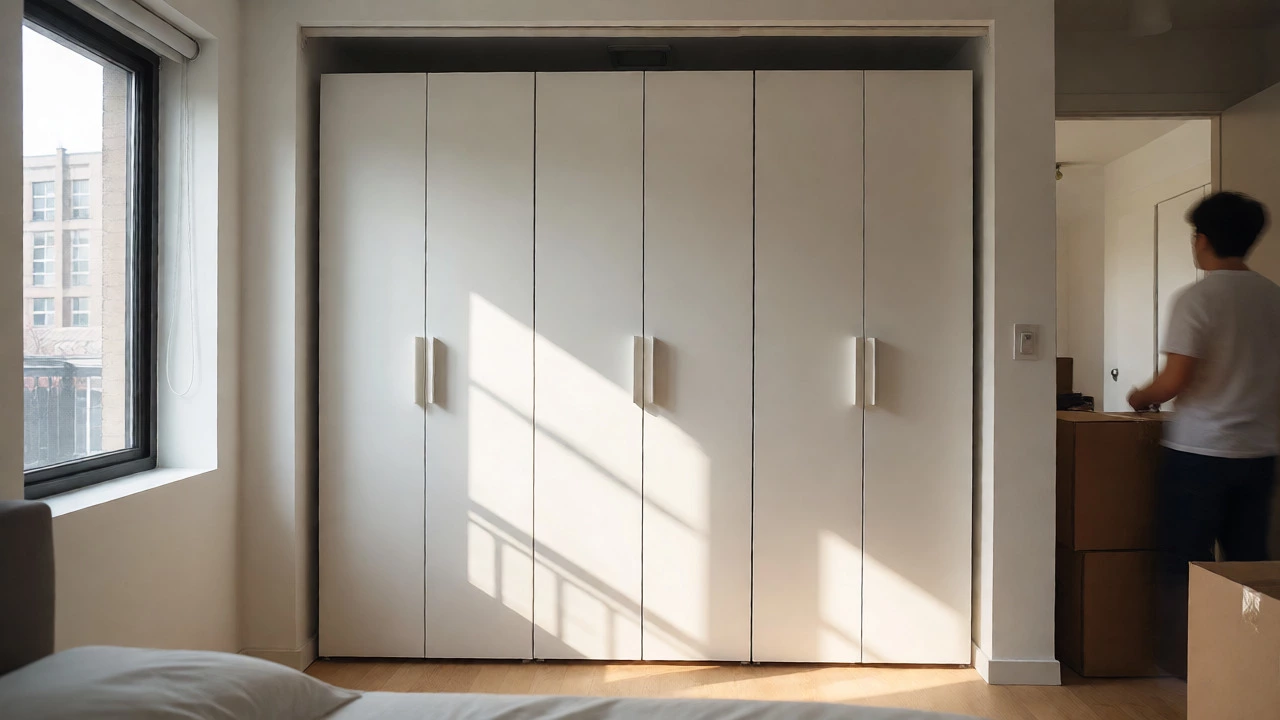
Many modern hybrids exist, too. Companies like IKEA offer modular systems like PAX that can be fitted into existing closet openings or stood alone against a wall. This bridges the gap. You get the customization of a built-in with the portability of furniture. It’s a smart compromise for urban dwellers who want the best of both worlds.
Another trend is the "open wardrobe" or rail system. Popularized by Scandinavian design, this uses exposed rods and shelves without doors. It looks airy and modern but requires constant tidying. Americans often reject this because it exposes mess. British designers embrace it as part of the aesthetic. Your tolerance for visual noise should dictate your choice.
Cultural Habits: What Goes Inside?
What you store reveals cultural differences. In the US, closets are multi-purpose. One closet holds clothes; another holds vacuum cleaners, holiday decorations, and extra bedding. The concept of a "general storage closet" is common. You toss everything in there to keep living areas tidy.
In the UK, storage is often more compartmentalized. Clothes go in the wardrobe. Linens go in the airing cupboard (a uniquely British feature near the boiler). Tools go in the garage. This separation stems from older home layouts where specific rooms had specific functions. As homes modernize, these distinctions blur, but the habit persists.
Climate plays a role, too. American winters in northern states require heavy coats, boots, and scarves. These items need substantial hanging space. A standard 24-inch deep closet accommodates hangers easily. A narrow wardrobe might force you to fold coats, leading to wrinkles and disorganization. Southern US climates, with lighter clothing, allow for shallower storage, sometimes making wardrobes viable again.
Future Trends: The Death of the Door?
Is the traditional closet disappearing? Some architects argue yes. Open-plan living favors transparency. Closed boxes block light and airflow. Instead, designers are using glass-fronted cabinets or open shelving units that function like wardrobes but fit into closet spaces. This hybrid approach satisfies the desire for built-in structure while maintaining an open feel.
Smart technology is entering the scene, too. Imagine a closet with automated lighting, humidity control, and inventory tracking. Startups are testing these features in luxury apartments. Would you trust a machine to organize your shirts? Maybe. But the fundamental question remains: do you want storage that belongs to the house, or storage that belongs to you?
For now, the divide holds. Americans say closet because their walls do the work. Brits say wardrobe because their furniture does. Both terms describe the same human need: keeping our belongings organized and out of sight. The next time you hear someone debate the terminology, smile. You know it’s not about words-it’s about how we build our world.
Can I convert a closet into a wardrobe?
Yes, but it’s unusual. Most people do the opposite. To put a freestanding wardrobe in a closet space, you must ensure the dimensions match. Standard closets are 24 inches deep. Many wardrobes are deeper (22-24 inches is common, but some are wider). Check clearance for door swings. If the closet has sliding doors, removing them might require carpentry skills. Alternatively, you can remove the closet doors entirely and treat the recess as a niche for a backless wardrobe unit.
Why are American closets so deep?
Standard depth is 24 inches (60 cm) to accommodate hangers holding jackets and coats without touching the back wall. Shallower closets (12-18 inches) are common in hallways for coats only, but bedroom closets need full depth for suits, dresses, and bulky winter wear. This standardization comes from building codes and mass-produced hardware availability.
Do British homes never have closets?
They do, especially in new builds and modern flats. However, they are often called "fitted wardrobes" or simply "storage cupboards." The term "closet" is understood but less commonly used in everyday speech. Older Victorian and Georgian homes rarely have them due to thick walls and historical preservation rules. In these cases, freestanding wardrobes remain the norm.
Which is cheaper: building a closet or buying a wardrobe?
Buying a basic flat-pack wardrobe is cheaper upfront (£100-£300). Custom-built closets cost more ($500-$2,000+) but add permanent value to the home. If you rent, the wardrobe is cheaper because you can take it with you. If you own, the closet pays for itself through increased resale appeal and space efficiency. Consider long-term ownership when calculating cost.
What is a 'walk-in' closet?
A walk-in closet is a room-sized storage space large enough for a person to enter and stand inside. Unlike reach-in closets where you pull items out, walk-ins have aisles and often islands or benches. They are a hallmark of luxury American homes, providing ample space for extensive wardrobes, shoes, and accessories. They require significant square footage, making them rare in small apartments.
Write a comment